Editor’s note: This article originally appeared in the November 20, 1978 issue of Fortune.
In the trade-off between energy and environmental quality, energy usually gets the benefit of the doubt. After all, what’s the use of ultra-pure air if your home is cold or your job has vanished? This consideration has ruled in the Carter Administration’s decision to engineer a large-scale shift from oil back to coal, which the U.S. has in abundance. Nobody has ever denied that use of coal inevitably invokes environmental penalties, but these penalties are usually accepted as a bearable cost of assuring the nation a secure source of energy.
Recently, however, a number of scientific findings have been coalescing to suggest that the environmental cost of any large-scale reversion to a coal-based economy could be dangerously high. In fact, some of the measures initiated in the past to reduce the damage have actually made things worse. And, some disturbing measurements of accumulating carbon dioxide in the atmosphere pose an urgent need to clarify the implications of the trend, lest a worldwide commitment to heavy coal use—a big contributor to the buildup—trigger irreversible changes in the world’s climate.
Though these issues have not escaped environmental leaders and policymakers, they have been discussed in uncharacteristically muted tones, usually out of public earshot. Perhaps this is because environmentalists are defensive about some apparently misguided air-pollution policies they promoted in the past, and fearful that any derogation of coal will promote nuclear energy, the alternative many of them dislike even more. Professor Richard Wilson, director of Harvard University’s Center for Energy and Environmental Policy, refers to the situation as a “conspiracy to whitewash coal.”
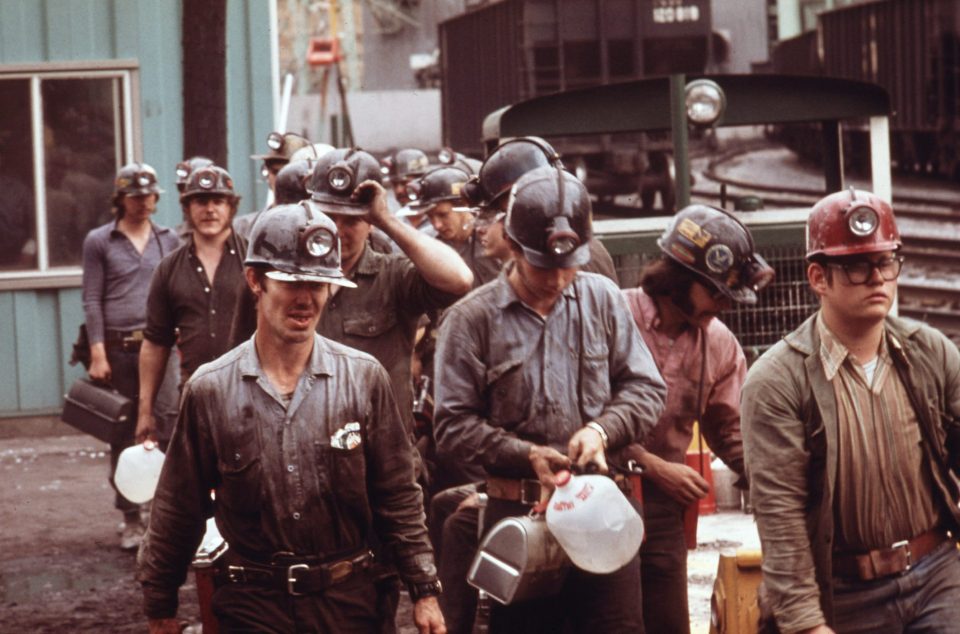
Coal production and consumption have always been burdened with an assortment of ancillary costs. Underground mining, for instance, has traditionally exacted more casualties per man-hour than any other major occupation. While a series of federal actions since 1968 have greatly improved mine safety, they have also contributed to a 25 percent drop in labor productivity and increased the cost of coal in other ways. One of the new federal programs compensates victims of the array of respiratory ailments that is loosely referred to as “black lung disease.” It is financed by a federal tax on coal, and costs more than $1 billion a year.
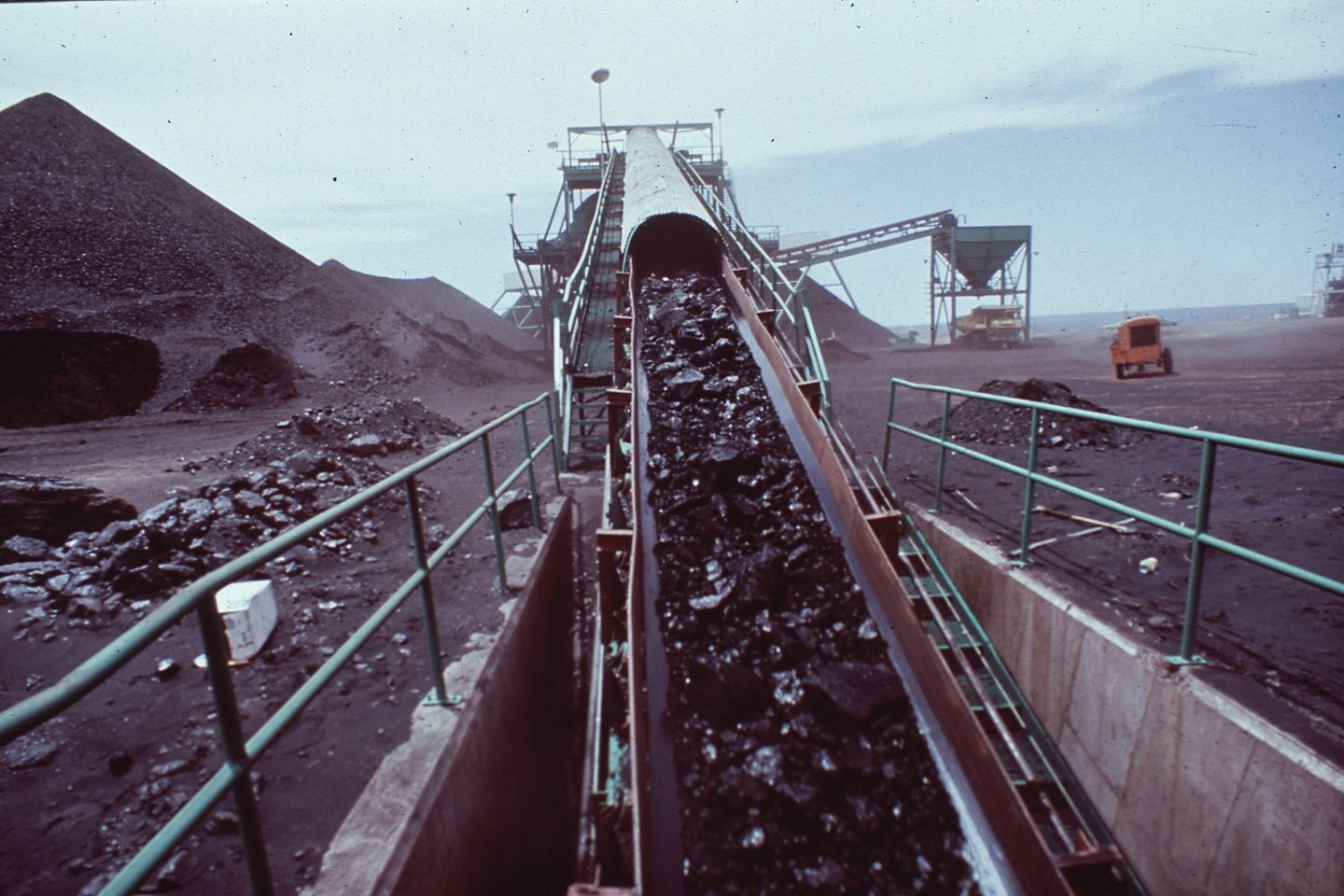
Along with its harmful effects on human health, coal mining has always imposed heavy aesthetic and ecological penalties. The notched profiles and flattened peaks of large sections of central Appalachia will probably rank among mankind’s most enduring marks upon the planet. Recent legislation requires operators to restore the landscape at new strip mines, but it is doubtful that such restoration is possible in the more arid western coal-mining regions.
Another blight that is likely to be with us into perpetuity is the acid drainage from abandoned mines. This has rendered some 10,000 miles of Appalachian streams biologically sterile. No satisfactory cure for acid mine-drainage seems to exist. The main remedy is to dose the mines or streams periodically with neutralizing lime, but this creates messy calcium-sulfate sludges in the stream beds that are hardly more wholesome than the acid.
For society at large, coal’s most noxious and obnoxious drawback has always been its smoke. Of all the fuels that man employs, coal produces the most copious and complex array of emissions thought to be damaging to health. But how these emissions actually do their damage has long been a matter of guesswork. It now appears that our control policies were based on the wrong guess.
For hundreds of years, most of the blame for the noxiousness of coal combustion has focused on the sulfur that is present in all coal in varying amounts and that combines with oxygen during combustion to form sulfur dioxide (SO[2]). In the late Fifties, epidemiologists came to suspect SO[2] as the principal culprit in what they referred to as the “urban factor”—the long-observed fact that mortality rates tend to be higher in cities than in the country. The most impressive evidence appeared when meteorological temperature inversions held pollutants trapped low over coal-burning industrial regions or cities for days at a time, leading to hundreds or thousands of “excess” hospitalizations and deaths from respiratory ailments.
Still, scientists have found puzzling anomalies in the evidence against sulfur dioxide. For example, laboratory workers who induced animals or human subjects to breathe SO[2] at concentrations even higher than those in polluted cities often found that the subjects didn’t seem particularly distressed. The conventional explanation for these results until recently was that in order for SO[2] to show harmful effects, it had to be breathed in conjunction with particulate matter such as soot or fly ash. Scientists assumed that the SO[2] attached itself to the particles, which then lodged in sensitive tissues of the respiratory passages and lungs. They also believed that much of the damage was caused by the oxides of nitrogen (NOX) and hydrocarbons emitted by factories, power plants, and automobiles.
Therefore, the control strategy that cities, states, and eventually the federal government employed was to set hypothetical thresholds, or “no effects” levels, below which the pollutants might be regarded as harmless. With science largely mute as to what such thresholds might be, the permissible levels were determined by the political process.
A variety of tactics were adopted to meet those levels. They included stiff emission controls on automobiles, which are abundant producers of NOX, hydrocarbons, and carbon monoxide. Factories and power plants were required to switch to low-sulfur fuels—oil, gas, or special coals—particularly during unfavorable weather conditions. Coal boilers were equipped with electrostatic precipitators that could remove more than 90 percent of the soot and fly ash, and pollution-emitting new plants were situated far from cities and fitted with tall smokestacks so that the pollutants could be diluted before they reached the ground.
Among the gratifying consequences of these measures was that by 1975, the tonnage of large particulates in the atmosphere of most large cities had declined remarkably, and SO[2] had declined somewhat. The air was noticeably clearer, and once the ancient layers of soot and grime had been scrubbed or sandblasted away, buildings suddenly stood revealed in pristine detail.
Yet some scientists continued to puzzle over contradictory evidence about SO[2], evidence that raised doubts about whether a threshold level could actually be said to exist and even whether the SO[2]/particulate complex was especially harmful. The evidence included findings from some long and painstaking experiments at the Harvard School of Public Health by toxicologist Mary 0. Amdur, who is now at M.I.T. Since 1949, Amdur had been exposing laboratory animals not only to SO[2] itself but also to a variety of sulfate compounds that are slowly formed as SO[2] mixes with oxygen and trace substances commonly found in polluted atmospheres. One of these sulfates, for instance, is ordinary sulfuric acid. Sulfates usually emerge in the form of ultrafine droplets or infinitesimal solid particles that tend to remain suspended in the atmosphere. Amdur found that several sulfates—principally sulfuric acid, but also sulfates of zinc and iron—were many times more irritating to the respiratory tracts of guinea pigs than oxides of nitrogen, hydrocarbons, and SO[2] plus particles. From the work of Amdur and others, most experts have concluded that most of the damage in urban air pollution comes from sulfates.
Obviously, the evidence about sulfates does not alter the practical necessity to control the SO[2] precursor. But it has powerful implications for what the control tactics should be. It means, for instance, that sulfur pollution is not a local problem, as was long assumed. Rather, since the minute sulfate particles can be carried by winds for thousands of miles, they are long-range agents that affect dispersed populations. As Harvard’s Richard Wilson points out, the tall-stack/electrostatic-precipitator remedies may well have the effect of worsening the hazard: when SO[2] is emitted close to the ground, it tends to adhere to leaves and other surfaces. The tall stacks provide the time for the SO[2] to convert to sulfates, which can be carried far and wide by winds. And while the 98 percent removal rate of modern electrostatic precipitators sounds impressive, the particles that actually get removed are precisely the large ones that human nasal and bronchial mechanisms would normally filter out anyway. The tiny particles that escape are the ones that can be carried down into the lungs. In any case, the precipitators can do nothing about the ultrafine, ultradamaging sulfate particles that are formed after the SO[2] leaves the stack.
All this helped to explain a puzzle that pollution monitors were already pondering: while SO[subscript 2] levels had been diminishing within the cities, the sulfate levels had often been increasing, not only in cities in the eastern U.S. but in the countryside as well. The prevailing winds in the U.S. flow from west to east, so the northeastern states tend to be on the receiving end of sulfates produced elsewhere.
Gauging the effects of these pollutants on human health is notoriously difficult. The problem comes in separating out all the other possible contributions to urban factor, such as climate, age, standard of living, stress, exercise, and eating and smoking habits. The most ambitious attempt to do this has been a decade-long statistical analysis by economists Lester Lave of Carnegie-Mellon University and Eugene Seskin of Resources for the Future. They have used a mathematical technique known as “linear multivariable regression analysis” to compare mortality rates from high-and low-pollution areas while adjusting for most of the differences in social, economic, and other variables. A recent summary of their work is the book Air Pollution and Human Health, a dense but resounding indictment of sulfates and suspended particulates.
The authors predict that reducing nationwide emissions of sulfates and particulates by 50 percent would lower the nation’s mortality rate by 4.7 percent: in other words, save nearly 90,000 lives a year. The authors find no evidence that any threshold exists; sulfates are presumably dangerous to susceptible people at almost any level.
Most controversial of all in a society that is spending even more to control emissions from autos than emissions from industry, the analysis of Lave and Seskin seems to exonerate auto pollutants. They claim to be able to predict the mortality rate in Los Angeles, for instance, strictly on the basis of sulfate and particulate levels alone.
EPA’s proposals confront that irrevocable law of nature: everything must go somewhere.
More obvious than their effects upon human health has been the apparent impact of the sulfates upon the ecology of certain regions. A strange silence reigns in the environmental movement about this threat, which seems far more serious than the logging depredations or menaces to snail darters that have brought the movement lunging into court. For as sulfates—as well as nitrates, which also get formed from pollutants—are wafted across the country on westerly winds, they eventually become incorporated into precipitation as dilute mixtures of sulfuric and nitric acid. Some of the rainwater gathered in New England in recent years measures several hundred times more acid than normal rainwater, or roughly the equivalent of vinegar.
This acid rain can have interesting effects on the earth it falls upon. Most of what is known about these effects comes from Scandinavia, which for decades has received acid blown in from all over industrial Europe. Because high acidity inhibits many aquatic species and the bacteria that cause decay, Sweden’s lakes are becoming empty of fish and all but a few choking species of matlike sphagnum moss that can tolerate high acidity. Foresters have also discovered that the growth rate of Sweden’s largely coniferous forests has been declining since the 1920’s, a phenomenon they attribute to acid rain and snow.
Only in this decade have U.S. scientists found that many lakes in the northeastern U.S. are in the same general shape. Many of the lakes in New York’s Adirondacks, which had abundant trout in the 1930’s, are devoid of these fish now. And some northeastern forests have apparently been stunted in the same way as Sweden’s.
A 1977 amendment to the federal Clean Air Act requires that “best available control technology” be installed in all large new coal-fired boilers regardless of the sulfur content of the coal they burn. Practically speaking, “best available control technology” means immense and expensive fabric filters known as “baghouses” (to remove particulates) and “flue-gas desulfurizers,” better known as scrubbers (to remove sulfur dioxide). Baghouses take out about 99 percent of the particulate tonnage but still allow most of the smallest particles to escape. As for scrubbers, they can extract well over 90 percent of the sulfur dioxide, but their reliability in continuous operation is still unproved.
The 1977 amendments left it largely up to the EPA to decide how much scrubbing each plant would have to do. The EPA recently proposed that all coal-burning power plants be required to remove each day at least 85 percent of the sulfur dioxide they produce. The legislation and the EPA’s proposed regulations reflect not so much rampant fanaticism about sulfur emissions as they do political pressures from eastern states where high-sulfur coal is mined. The cheapest way for many utilities to reduce sulfur emissions would be to buy low-sulfur coal from the west. The government’s insistence that all plants must scrub alike not only deliberately diminishes the attractiveness of western coal, but also raises the cost of electricity.
For all the stringency of the new proposals, sulfur emissions are likely to continue increasing in years ahead. For one thing, smaller coal-burning facilities will be exempted from the requirement to install scrubbers. And, in fact, the uniform scrubbing regulations may mean slightly higher emissions than some less restrictive regulations. One reason is that utilities will no longer have an incentive to burn low-sulfur coal. Furthermore, because full scrubbing adds around 20 percent to the cost of producing power and heat, the likely response of companies will be to rely more heavily on older plants not covered by the regulations. Another effect will be to encourage utilities to run more of the fuel-guzzling oil- and gas-burning turbine generators that they normally use for peaking purposes. So the upshot will probably be an increase in oil imports variously estimated at from 200,000 to 700,000 barrels per day by 1990.
The EPA’s final ruling isn’t due until March, and the proposals are currently getting a thorough drubbing from almost everybody—industry, the Department of Energy, the Council on Wage and Price Stability, and the Council of Economic Advisers. Both the DOE and the utility industry have proposed less costly variations of a sliding-scale scheme that would require plants burning high-sulfur coal to scrub more than those burning low-sulfur coal.
All scrubbers and particulate removers lead to a confrontation with that irrevocable law of nature; namely, that everything has to go somewhere. Most of today’s scrubbers spew out copious amounts of white, soupy calcium-sulfite sludge that has to be disposed of. The particulates removed by the baghouses along with the bottom ash from the boilers also have to be got rid of somehow. New coal plants must be located where huge sludge ponds, like the one pictured at the beginning of this article, can be constructed. Many plants sell their ash, primarily for construction of roadbeds.
But both ash and sludge contain a rich variety of heavy metals and assorted other chemicals, many of which are known to be carcinogenic or otherwise toxic. These materials can leach out and possibly endanger streams, flood-plains, and sources of drinking water, such as aquifers. Under the provisions of the 1976 Resource Conservation and Recovery Act, it is likely that the EPA will declare ash and sludge to be “hazardous” wastes, ineligible either for sale or for disposal by conventional open dumping. No one knows what, then, is to become of them.
Society, by now, seemingly accepts considerable environmental damage, together with what may be hundreds of thousands of premature deaths, as part of the price it must pay for the blessings of industrial civilization. But a much more severe consequence of worldwide burning of fossil fuels, especially coal, apparently lurks in the wings. It not only seems to be immune to any kind of technical fix but poses threats to the world’s food supply. This is the famous “greenhouse effect,” which in the last year or two has been making its way off the pages of the Sunday supplements and into the worried councils of academia and government. The effect involves carbon dioxide, which during the past twenty years has been found to be increasing in the world atmosphere, directly in step with mankind’s combustion of fossil fuels.
While otherwise innocuous, CO[2] in the atmosphere acts as a one-way filter for energy from the sun to create the greenhouse effect. Visible light waves pass through the gas unimpeded, but upon striking the earth, they are converted into the longer infrared waves of heat. Since CO[2] is practically opaque to infrared, the heat gets trapped. Other things being equal, the earth and its lower atmosphere should inevitably grow warmer.
All fossil fuels—coal, oil, and natural gas—produce CO[2] when burned. For a given amount of heat, however, coal produces about 24 percent more CO[2] than oil and 76 percent more than natural gas. Decaying vegetation also produces CO[2], while growing plants absorb it. The ultimate “sink” for CO[2] is the ocean, where it combines with carbonate ions to form harmless bicarbonate ions. But the ocean’s CO[2]-absorbing capacity is limited by the rate at which CO[2]-saturated surface water mixes with unsaturated deeper water.
A panel of experts convened recently by the National Academy of Sciences tentatively concluded that at the rate at which fossil-fuel burning has been accelerating—not only in the industrial countries but also in the much more populous developing countries—the atmospheric load of CO[2] could double during the next sixty to seventy-five years. While most experts hedge their predictions, they suggest that the end result of such a doubling could be an average world temperature increase of from 2 to 7 degrees Fahrenheit. The temperature increase would not be evenly distributed: higher latitudes of the globe, i.e., the polar regions, might experience increases of 12 degrees or more, while equatorial regions would show little change. Primarily, it is the pole-to-equator temperature difference that drives and determines the convoluted path of the dominant winds around the globe. And these patterns, in turn, largely determine where the rain falls and where it doesn’t. A diminished pole-to-equator differential of the order of 12 degrees would doubtless alter these paths and bring about a traumatic relocation of agriculturally productive lands, if not a reduction in their area.
To be sure, increasing CO[2] levels may trigger various feedback mechanisms to help offset the effects. For instance, a warming trend might vaporize more water, providing not only more rain but also clouds to reflect away sunlight and help cool things off. On the other hand, there may just as easily be feedback processes that amplify the greenhouse effect: increasing soil temperature might hasten decay and CO[2] production; increasing ocean temperature would reduce the water’s CO[2]-absorbing capacity: a shrinkage in the area of polar ice would reduce the reflection of sunlight, etc.
Prodded by the recent warnings, the Department of Energy has belatedly launched a five- to ten-year study to try to pin down the uncertainties about the greenhouse effect and the implications it has for the nation’s—and the world’s—commitments to coal and other fossil fuels. The urgency is emphasized in the National Academy report: “If this decision is postponed until the impact of climate change is felt, then for all practical purposes, the die will already have been cast.”
Society’s dilemma is that for all the concerns about short-range damage to health and environment and long-range prospects of climatological change, the consequences of a shortfall in energy could be another sort of disaster. However much oil remains to be found, it probably will not last more than a few decades at projected worldwide rates of energy consumption. The conventional substitutes for oil and gas are coal and nuclear-fission energy, both of which are most conveniently used by first being converted into electricity. Other things being equal, most electric utilities would probably prefer to use nuclear energy; it costs, on average, about 20 percent less than coal generation in most parts of the country, and that advantage will probably grow as the new regulations are imposed upon coal.
Soft technologies constitute a dangerous distraction that could bankrupt governments everywhere.
Moreover, the hazards of nuclear-power generation seem almost negligible compared with coal’s. No lives have been lost in nuclear-power, production during several thousand plant years of operation. And even the worst postulated nuclear accidents, predicted to occur perhaps once in a million plant years, carry casualty estimates that are small compared with the number of deaths that coal combustion apparently causes every year.
Even the formidable problem of nuclear-weapons proliferation remains essentially unaffected by decisions about whether or not to build more nuclear plants in the U.S. And the much-discussed problem of storing fission wastes long-term—though obviously undemonstrated—seems to present hazards that are technically simple to deal with, compared with the clear and present dangers from coal.
After some initial waffling about the need for nuclear power, the Administration has been urging utilities to build nuclear plants. But the government’s inability to untangle its licensing, fuel, and waste-storage policies has all but destroyed the electrical companies’ brief infatuation with nuclear power. While only a few years ago most of the generating capacity being ordered was nuclear, all that has been ordered during the past two years has been designed for fossil fuels, primarily coal. Much of the Administration’s confusion stems from its close association with the environmentalists who helped shape the present air-pollution policies and attitudes toward nuclear power. Many of them now occupy high-level government positions.
Environmentalists and others have sought a way around the coal-versus-fission dilemma by looking for technological alternatives to both. These alternatives include advanced technologies such as thermonuclear fusion or processes for converting coal into pollution-free solids, liquids, or gases. The closer these alternatives come to reality, however, the less economically promising most appear. Because of inefficiencies of any coal-conversion process, furthermore, all of them would probably increase the total production of CO[2].
The latest vision to captivate policymakers is the prospect of clean, safe, and boundless energy—e.g., from sun and wind—harnessed by the so-called soft technologies. Anything that would minimize fossil-fuel use would be welcome, but every indication is that the contribution of soft technologies to the national energy supply will be minor, unless there is an immense diversion of society’s resources into subsidies. To the extent that soft technologies are believed to represent an all-out alternative to coal and nuclear power, they constitute a dangerous distraction that could bankrupt governments all over the world.
Right now, for instance, the most glamorous soft technologies are various approaches to solar heating and cooling. Solar heating is more or less perfected and, some homeowners calculate, economically justifiable—at least in limited systems installed in specially constructed, well-insulated, well-sited new homes in certain parts of the country.
But to make a significant impact on the national energy picture, solar would have to find its way not only into the majority of new houses but into a large fraction of the eighty-five million homes that already exist. A walk through any neighborhood in a northern clime would probably persuade even the non-engineer that only a small minority of the dwellings could realistically be retrofitted for solar heating. As for solar cooling, it appears to be so awkward and expensive that it can probably be dismissed as a practical proposition. Southern regions that need cooled buildings even more than they need heated ones will probably have to continue with electricity.
It appears that we have little choice but to continue burning coal—and probably even more of it in years ahead than we already do. Even if all the government-imposed constraints on nuclear power were lifted—and the utilities convinced of it—it is doubtful that enough plants could be constructed and fueled to serve the needs of the next few decades. Besides that, nuclear energy doesn’t appear to be applicable to many manufacturing processes where coal is consumed. But with the immense invoice of known and hidden costs that come with coal, including some that we can only guess at, a prudent civilization would hold its consumption of coal to a minimum.