
From boardrooms to red-eye flights, nootropics have been a tool used to enhance focus, memory, mental energy, and stress resilience. They are targeted brain supplements that may help you to stay clear, calm, and productive without relying solely on caffeine or prescription stimulants.
We did a deep dive into what nootropics are, examined how they may support executive-level performance, and tested them ourselves to see how they stack up. Read on for more about our picks for the five best nootropics of 2026.
Best Nootropics of 2026
- Best Nootropics Overall: Noocube Brain Productivity
- Best Nootropics for Focus: Onnit Alpha Brain
- Best Lion’s Mane Nootropics: Hello100 Lion’s Mane
- Best Vegan Nootropics: Nootrum Lion’s Mane Mushrooms
- Best Nootropics for Energy: Transparent Labs Cognition
Best Nootropics Comparison Table
Best Nootropics Overall: Noocube Brain Productivity
Noocube Brain Productivity
| Fortune score | 4/5 |
at Noocube
- Our thoughts: Solid blend of classic nootropic ingredients at approachable doses, designed for consistent use rather than a quick fix
- Who it’s for: Folks who want capsule-based cognitive support
- What makes it different: Includes several clinically studied ingredients in a single, travel‑friendly capsule supplement, with flexible dosing from two to four capsules per day
Pros
- Includes multiple research‑backed nootropic ingredients in one formula
- Capsules are average size, tasteless, and relatively easy to swallow
- Flexible dosing instructions based on tolerance and needs
Cons
- Per‑serving price is on the higher side
- Key ingredients are mostly at the lower end of clinically studied ranges
- Benefits are likely subtle and gradual rather than immediate or dramatic
Our Thoughts on Noocube Brain Productivity
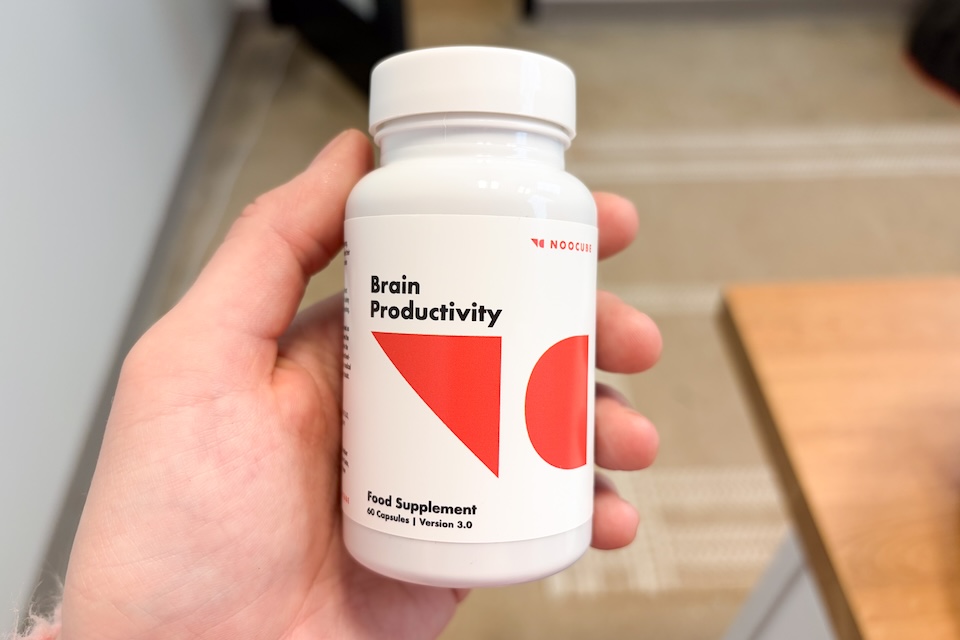
Noocube Brain Productivity is our best overall pick because it brings together several of the most commonly studied nootropic ingredients into a straightforward capsule, ideal for a daily routine. The formula combines Bacopa monnieri (for memory and learning), L‑theanine (for calm focus), L‑tyrosine and choline (for mental performance and alertness), and other supportive compounds, but avoids adding in heavy stimulants that could disrupt sleep or cause jitters.
Our tester, Pete found Noocube Brain Productivity approachable and easy to fit into his daily routine. He described the bottle as “a small white plastic container with a screw top lid” that’s travel‑friendly, with a simple label design, though he noted that “the text on the label is quite small.” He rated his first impression of the packaging and presentation highly at 5 out of 5, and found the dosing guidelines clear enough to follow.
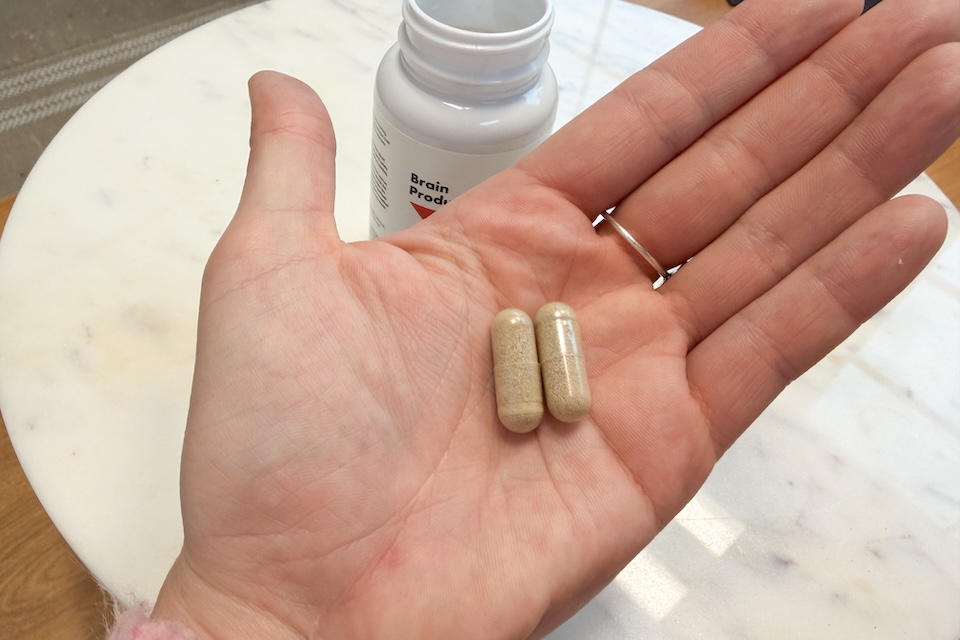
In terms of swallowability and taste, Pete reported that the supplement comes in clear capsules with a light brown powder inside and that the capsules were “average in size and easy to swallow.” He rated capsule form/swallowability a 3 out of 5 and taste a 3 out of 5.
Pete did not notice acute changes from a single day of use, noting, “I didn’t notice any effects in focus, memory, or alertness, but I did only use this supplement for one day, so it may be something you experience over time.” As with all our nootropic supplements, they require a little bit of consistent use to reap the full benefits. Our team plans to update this page in the future to include long-term results.
He rated side effects 5 out of 5, reporting no negative effects or digestive issues, which is important for something you may take daily. In his overall assessment, he highlighted that the product includes “several ingredients that are supported by clinical research, including the Bacopa monnieri, choline bitartrate, L‑theanine, and L‑tyrosine,” while emphasizing that these are “dosed at the lower end of the clinically studied ranges in most cases.”
Best Nootropics for Focus: Onnit Alpha Brain
Onnit Alpha Brain
| Fortune score | 4/5 |
at Onnit
- Our thoughts: Thoughtful blend of classic nootropic ingredients
- Who it’s for: Folks who want a pre-formulated focus supplement in capsule form
- What makes it different: Uses multiple proprietary blends combining Bacopa, Alpha‑GPC, L‑tyrosine, and L‑theanine in a two‑capsule daily serving
Pros
- Includes several well-known nootropic ingredients linked to focus and cognition
- Simple routine, only two capsules per day
- Tasteless capsules that are average size and reasonably easy to swallow
Cons
- Uses proprietary blends, so individual ingredient dosages are unknown
- More expensive than other options on our list
- Our tester did not notice clear focus or mood benefits from short-term use
Our Thoughts on Onnit Alpha Brain
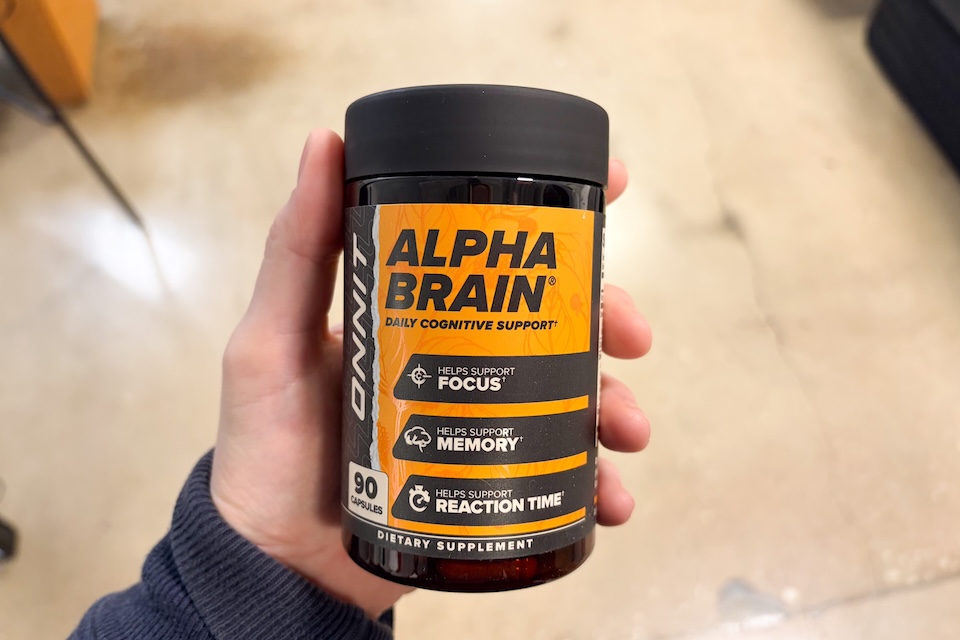
Onnit Alpha Brain is our pick for the best nootropic for focus because it’s built specifically around daytime cognition; areas like concentration, mental speed, and getting into a “locked‑in” work mode. The formula pulls together classic nootropic ingredients, like Bacopa, Alpha‑GPC, L‑tyrosine, and L‑theanine, all of which have some research for supporting attention, memory, or mental performance, in a simple two‑capsule serving you can take with breakfast or a light meal.
Our tester, Pete described Alpha Brain’s packaging as polished and user‑friendly. He especially liked that the lid “feels like it has a rubber coating… which makes it easy to grip to open and close.” He rated his first impressions 5 out of 5, noting that “the label design is excellent, all of the font is easy to read and the label highlights the product’s key features.”
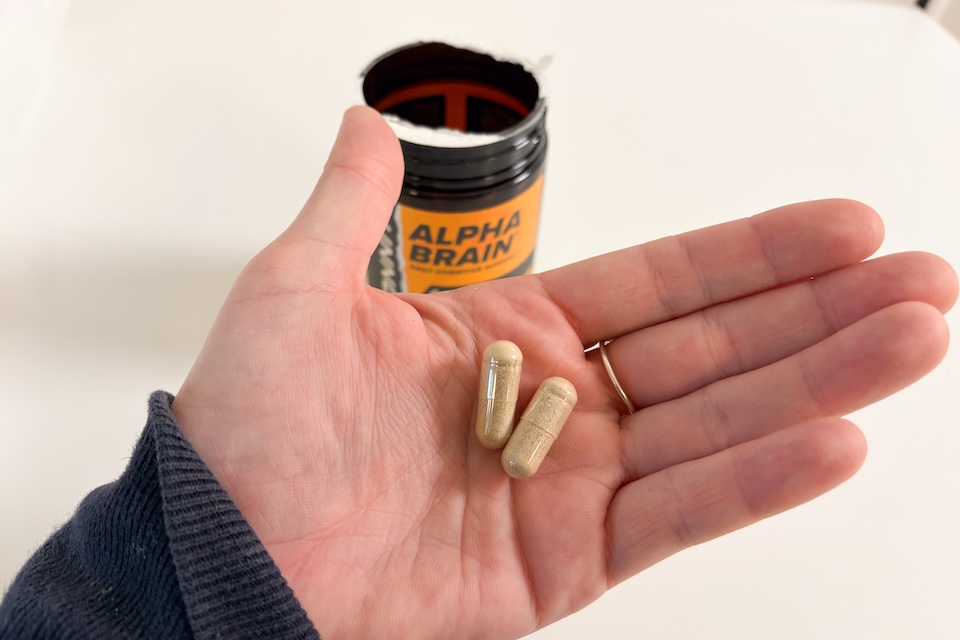
In terms of user experience, Alpha Brain comes in clear capsules with light brown powder inside, with a recommended serving size of two capsules per day. Pete found the capsules average in size and rated swallowability a 3 out of 5 and taste a 4 out of 5, explaining that the capsules were tasteless and generally easy to swallow.
Pete’s short‑term experience with the product was neutral: “I didn’t notice any beneficial effects in terms of focus, memory, reaction time, or mood when using this product,” he explained. Though, he rated side effects 5 out of 5, reporting no digestive issues or negative reactions
In his overall assessment, he highlighted that Alpha Brain “contains a bunch of ingredients that are associated with cognitive support, including Bacopa, Alpha‑GPC, L‑tyrosine, and L‑theanine.” However, these ingredients are included in proprietary blends, meaning we don’t know the actual amount of each ingredient.
Best Lion’s Mane Nootropics: Hello100 Lion’s Mane
Hello100 Lion’s Mane
| Fortune score | 4/5 |
at Hello100
- Our thoughts: Clean, single‑mushroom formula with an evidence‑aligned 1,000 milligram serving
- Who it’s for: Folks who want a simple lion’s mane supplement for potential cognitive and brain‑health benefits without added stimulants
- What makes it different: Uses focused lion’s mane dose in small, tasteless capsules
Pros
- 1,000 milligrams lion’s mane dose aligns with clinical research
- Small, clear capsules that are easy to swallow and essentially tasteless
- No reported digestive issues or negative side effects in testing
Cons
- No usage instructions on the label beyond serving size
- No immediate changes in focus or mood from short‑term use
- More expensive than other options on our list
Our Thoughts on Hello100 Lion’s Mane
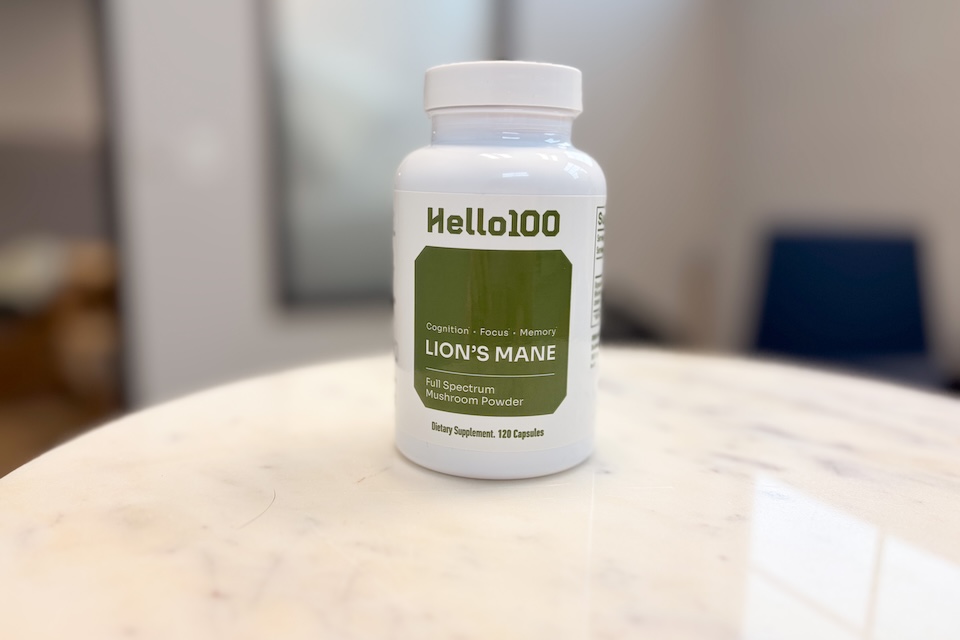
Hello100 Lion’s Mane is our pick for best lion’s mane nootropic because it does one thing and does it cleanly: provides 1,000 mg daily serving of lion’s mane in capsule form. Lion’s mane has emerging human research for supporting cognition, memory, and overall brain health, and this product stays close to commonly used supplemental ranges without layering on stimulants or long proprietary blends.
Our tester Pete described the Hello100 Lion’s Mane packaging as clean. This supplement comes in a white plastic container with a screw top lid that opens and closes easily, according to Pete. “The label has a clean look, and the large font makes the text easy to read,” he added, rating his first impression 5 out of 5. However, he called out a key drawback on the label: “There is no suggested use or instructions on the label. The only information is the ‘serving size two capsules’ on the supplement facts label,” which led him to rate instruction clarity just 1 out of 5.
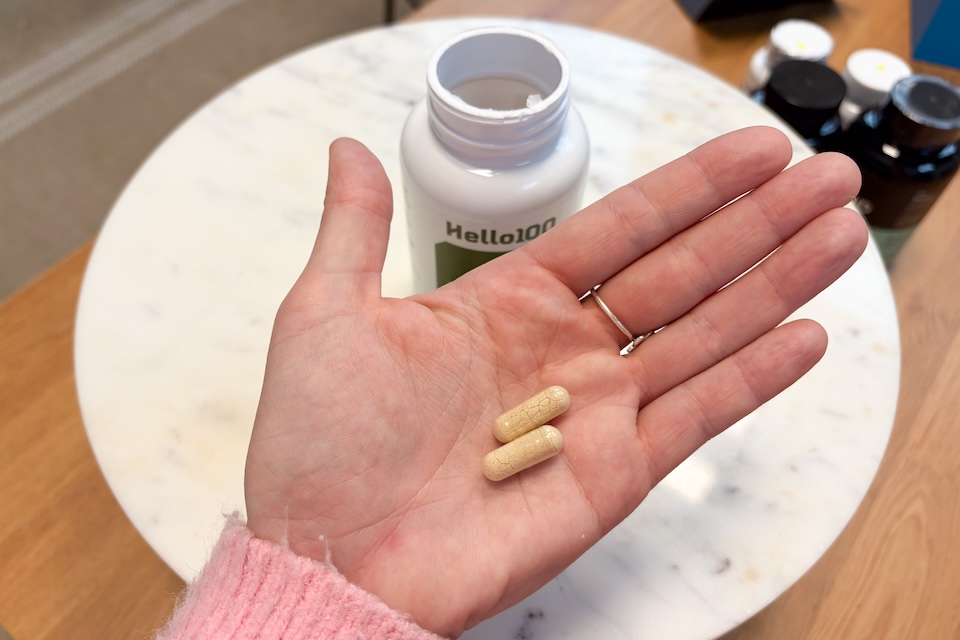
In terms of form and feel, the product contains light brown lion’s mane powder in clear capsules. The recommended serving size is two capsules, and Pete found them on the smaller side, which he described as “tasteless and easy to swallow.”
Pete took the supplement for a day and didn’t experience dramatic changes, which fits the way lion’s mane is typically used: “I only used this supplement for a day, and I really didn’t notice any benefits in terms of focus or mood. I didn’t have any digestive issues or negative side effects.”
He rated side effects 5 out of 5 due to the absence of any adverse reactions. In his broader assessment, he emphasized that “lion’s mane is a mushroom that’s popular in traditional medicine” and stressed that “the beneficial nootropic effects can definitely vary from person to person, and more human trials are needed to demonstrate clear efficacy.”
Best Vegan Nootropics: Nootrum Lion’s Mane Mushrooms
Nootrum Lion’s Mane Mushrooms
| Fortune score | 4/5 |
at Nootrum
- Our thoughts: Simple, mushroom‑only formula at a reasonable price with clear dosing
- Who it’s for: Vegans and plant‑forward folks who want a capsule‑based mushroom nootropic
- What makes it different: Uses a cellulose capsule and lion’s mane alone, with flexible “with or without food” directions and a mid‑range price per serving
Pros
- Vegan‑friendly cellulose capsules and mushroom‑only formula
- Clear instructions: two capsules daily, with or without food
- No negative side effects or digestive issues reported in testing
Cons
- No immediate changes in cognition or mood from short‑term use
- Average capsule swallowability and neutral taste
- Moderately priced
Nootrum Lion’s Mane Mushrooms is our pick for the best vegan nootropic because it’s a focused lion’s mane supplement in a vegan‑friendly capsule, without animal‑derived gelatin or extra stimulants. The product only includes lion’s mane, which is appealing for folks who want a plant‑based, low‑risk option they can take daily. With clear once‑daily capsule directions and a mid‑tier price point, it’s a strong fit for vegans and anyone who prefers a minimalist, mushroom‑only nootropic over multi‑ingredient stacks.
Our tester Pete described the Nootrum packaging as polished and eye‑catching: “This supplement comes in a black plastic container with a screw top lid that opens and closes easily. The Nootrum logo is gold in color and pops against the black label. The white font is easy to read against the black label.” He rated his first impressions a 5 out of 5, noting that it feels like a higher‑end mushroom supplement, rather than a generic bottle.
He found the directions straightforward. As a dietary supplement, adults take two capsules daily, or as directed by a healthcare professional. The capsules can be taken with food or on an empty stomach, which earned a 5 out of 5 for instruction clarity and ease of use. Pete rated swallowability 3 out of 5 and taste 3 out of 5, describing the capsules as tasteless and generally easy to get down.
“I didn’t notice any immediate benefits in terms of cognition or mood. I also didn’t experience any negative side effects or digestive issues,” Pete said, and rated side effects 5 out of 5, thanks to the clean tolerability profile. In his broader takeaway, he said, “I see mushroom supplements, like this one from Nootrum, as a low‑risk and natural way to potentially support brain health, memory, and focus,” adding that “you would need to take this for several weeks to start seeing the benefits,” which aligns with how we’d position this as a vegan, long‑game nootropic rather than a quick‑hit focus booster.
Best Nootropics for Energy: Transparent Labs Cognition
Transparent Labs Cognition
| Fortune score | 4/5 |
at Transparent Labs
- Our thoughts: Provides noticeable alertness
- Who it’s for: Folks who want a daily workday nootropic for energy and focus and can tolerate a moderate caffeine dose
- What makes it different: Fully disclosed, third‑party tested formula (no proprietary blends) combining classic nootropics with moderate caffeine and published COAs online
Pros
- Includes citicoline, rhodiola, phosphatidylserine, and L‑theanine
- 100 milligrams caffeine per serving for a noticeable but not extreme energy boost
- Third‑party tested, with test results available on the brand’s site
Cons
- Capsules slightly larger than average, only moderate swallowability
- Premium price
- Not suitable close to bedtime or for people very sensitive to caffeine
Our Thoughts on Transparent Labs Cognition
Transparent Labs Cognition is our pick for the best nootropic for energy because it pairs a moderate caffeine dose with a well‑built stack of supportive ingredients. The formula includes citicoline, rhodiola, phosphatidylserine, and L‑theanine, all of which have some research behind their roles in cognitive performance, fatigue resistance, or stress response, with 100 milligrams of caffeine added per serving for an immediate lift. The brand discloses exact doses (no proprietary blends) and third‑party tests its products, so you know exactly what you’re getting and can plan around your daily caffeine intake.
Our tester Pete gave Transparent Labs Cognition high marks for design and packaging, noting, “Cognition comes in a small white plastic container with a screw top lid that opens and closes easily,” and that “the label is well‑designed and includes the supplement facts, usage directions, and a few of the potential benefits.” He rated his first impressions a 5 out of 5, highlighting that the 60‑capsule bottle is small enough to be travel‑friendly and easy to work into a daily routine.
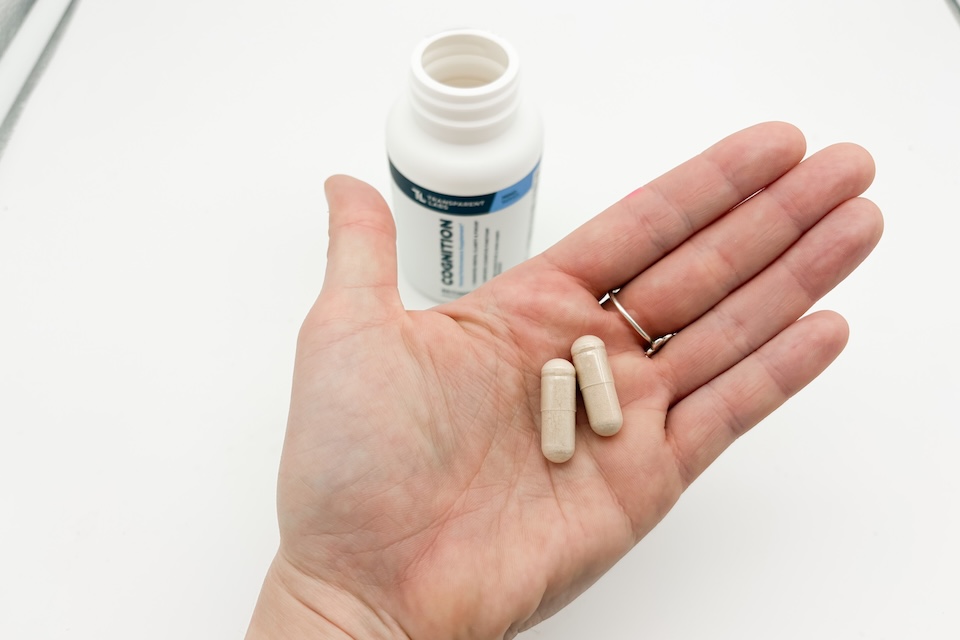
As a dietary supplement, you take two capsules with a glass of water one to two times daily. Do not exceed four capsules in a 24‑hour period—which Pete rated 3 out of 5 for clarity. He rated swallowability as 3 out of 5 and taste as 3 out of 5, describing the capsules as tasteless and generally easy to take, if a bit on the larger side.
In terms of effects, he said, “This product does contain caffeine, so I did experience a slight boost in my alertness and focus, but it’s hard to judge the benefits on overall cognitive function. I did only use this product once and most nootropics require extended use to see real benefits.” He rated side effects 5 out of 5, reporting no digestive issues or negative reactions.
In his overall assessment, Pete emphasized the strength of the formula. “This product has an evidence-based formulation centered around well‑studied compounds like citicoline, rhodiola, phosphatidylserine, and L‑theanine. Due to the caffeine content, it should help with focus and mental alertness, while the other ingredients may help with overall cognitive function.” He also pointed out that the supplement is third‑party tested and that you can find the test results directly on Transparent Labs’ website, which adds trust for users who care about ingredient accuracy, purity, and stimulant content.
What is a Nootropic?
Nootropics are supplements intended to support mental performance. They’re typically used for focus, memory, motivation, and resistance to mental fatigue. Nootropics can include vitamins, herbal extracts, and amino acids. Common examples include caffeine, L‑theanine, certain B‑vitamins, adaptogens (like ashwagandha or rhodiola), and choline. You’ll typically see them sold as capsules, tablets, drink mixes, shots, and sometimes gummies or ready‑to‑drink beverages.
How We Tested and Selected the Best Nootropics
Our testing process involves evaluating each product on its formula, user experience (taste, texture, and swallowability), third‑party testing, and overall value.
Formula
We collaborate with a registered dietitian (RD) to review each formula for both safety and potential effectiveness. Together, we look for ingredients with scientific support for cognitive or mood benefits and doses that align with the ranges used in research. We also check for unnecessary additives, aiming to avoid excessive artificial sweeteners, colors, and preservatives when possible.
Swallowability
We prepare each product exactly as the brand instructs. For powders, we pay close attention to how easily they dissolve, how much shaking or stirring they require, and if any grittiness or clumping remains. Products that dissolve smoothly and feel easy to drink or swallow score higher, since that impacts how likely you are to take them consistently.
Taste and Texture
Flavor is a major part of our testing, because even a well‑formulated nootropic won’t help if you avoid taking it. When possible, we incorporate informal or blind taste tests so that tasters aren’t influenced by brand, price, or label claims. We note the overall flavor profile (pleasant, neutral, bitter, or artificial‑tasting) and the mouthfeel as well.
We also rate sweetness on a simple 1‑to‑5 scale, with 1 being barely sweet and 5 being very sweet. This helps readers quickly see whether a product might suit their preferences.
Third-Party Testing
Because supplements are not regulated in the same way as prescription drugs or many foods, we put a strong emphasis on products that use independent, third‑party testing. This kind of testing typically checks that the ingredients and doses on the label match what’s in the bottle.
We prioritize brands that clearly name their testing partners, share certificates of analysis when possible, and follow good manufacturing practices.
Value
We weigh all of the aforementioned factors to determine overall value. A higher‑priced product can still be a good value if it offers strong ingredient quality, testing, and a great experience, while a cheaper option may rank lower if it cuts corners on dosing, transparency, or taste. Our goal is to highlight products that have the best balance of safety, effectiveness, and affordability for everyday use.
How to Find the Best Nootropics for You
Finding the right nootropic is about matching ingredients, format, and safety to your body, lifestyle, and goals. A thoughtful approach helps you avoid hype, minimize risk, and focus on products that actually fit your needs.
Your Personal Needs
Different folks try nootropics for very different reasons: some want sharper focus at work, others want calmer mood, better sleep, or support with memory and learning. Getting clear on your main goal is the fastest way to narrow the field and avoid taking a supplement that doesn’t match your goals.
If you’re an endurance athlete, strength athlete, shift worker, student, or busy parent, your cognitive demands and sleep schedule will shape what’s useful and sustainable for you personally. For example, a stimulant-heavy stack might help short-term alertness but be a poor choice if you are already managing symptoms of anxiety or insomnia. Taking a quick inventory of your baseline (sleep, stress, diet, caffeine use, medications) can help you and your doctor choose the right product for you.
Form
Nootropics come as capsules, tablets, powders, gummies, drinks, and even ready-to-drink pouches. The best form for you is the one you can take consistently without dreading the taste or the routine.
If you dislike swallowing pills, taking a flavored powder, beverage, or gummy may be more realistic; if you care about sugar content and dosing precision, capsules or tablets are often better. Some people also prefer single-ingredient capsules so they can adjust doses slowly, while others like all‑in‑one drink mixes for convenience before work or training.
Formula
Before you buy any nootropic, scan the full ingredient list. Many products combine herbs, vitamins, amino acids, and stimulants, and these can interact with medications or medical conditions. Pay attention to:
- Active ingredients and doses
- Added caffeine or other stimulants
- Common allergens (such as soy, gluten, dairy)
- Artificial colors, sweeteners, and flavorings
Some folks prefer or need sugar‑free formulas; others may want products that use natural sweeteners or no sweeteners at all. If the product also has protein or carbs, be sure to check how it fits into your daily calorie and macro targets.
Cost
Nootropics can be expensive, especially branded stacks with long ingredient lists. Cleaner formulas with clinically relevant doses, transparent sourcing, and third‑party testing often cost more.
Third-Party Testing
Because dietary supplements are not regulated like prescription drugs, independent testing becomes especially important with brain‑health products. Third‑party certification (for example, NSF, USP, Informed Sport/Choice) can help confirm that what’s on the label is in the bottle, and that contaminants like heavy metals, certain drugs, or banned substances are below established limits.
Look for brands that:
- Clearly state which lab tests their products and for what (purity, potency, contaminants)
- Provide certificates of analysis (COAs) on their website, by request, or via QR code
Benefits of Nootropics
- Nootropics may help support everyday focus, attention, and mental clarity.
- Certain ingredients can promote a calmer mood and stress resilience in demanding situations.
- Some nootropics may enhance learning, memory, and information recall over time.
- A few compounds may reduce mental fatigue and support sustained productivity during long work or study sessions.
How to Take Nootropics
Most nootropic supplements are designed to be taken by mouth with a liquid, which helps with absorption and reduces the chance of stomach upset. Capsules and tablets are usually taken with water; powders or drink mixes should be fully dissolved in the recommended amount of water or another beverage.
Some powdered nootropic blends can be mixed into smoothies, yogurt, or other foods. Avoid heating nootropic products unless the manufacturer explicitly states this is acceptable, since high temperatures can alter or degrade certain compounds.
Because many nootropics need consistent, long‑term use to show any effect, building them into a stable daily routine (for example, with breakfast or at the same time each workday) is usually more effective than taking them sporadically. If a product contains stimulants, earlier‑in‑the‑day dosing is generally safer for sleep; if it targets relaxation or sleep, it may be better to take in the evening.
What to Avoid in Nootropics
While many nootropic products are marketed as safe and “natural,” there are clear red flags to avoid. Some supplements contain pharmaceutical‑grade stimulants or ingredients not allowed in dietary supplements without listing them accurately on the label. Others may be contaminated with heavy metals or made in facilities that do not follow good manufacturing practices, which can increase safety risks.
Be cautious with products that:
- Make dramatic claims or promise prescription‑level effects without side effects.
- Hide ingredients behind proprietary blends without disclosing exact amounts.
- Lack third‑party testing or company transparency.
Frequently asked questions
What is the most effective nootropic on the market?
There’s no one most effective nootropic out there. We selected Noocube Brain Productivity as our best overall pick, as the the formula combines Bacopa monnieri (for memory and learning), L‑theanine (for calm focus), L‑tyrosine and choline (for mental performance and alertness), and other supportive compounds, but avoids including heavy stimulants that could disrupt sleep or cause jitters.
Do any nootropics actually work?
Some nootropics have evidence for specific uses. However, for healthy individuals using over‑the‑counter products, the evidence is limited, often based on small or short‑term studies, and results vary between different folks.
Are nootropics safe for anyone?
Nootropics are not safe for everyone, so we recommend that you talk with your doctor before trying them.