
Good morning. Beverage giant Coca-Cola contributed $85 billion to U.S. GDP in 2025, or roughly $10 million every hour. That’s according to an independent study commissioned by the company, which also found it supported nearly 1 million American jobs and spent about $37 billion with U.S. suppliers last year.
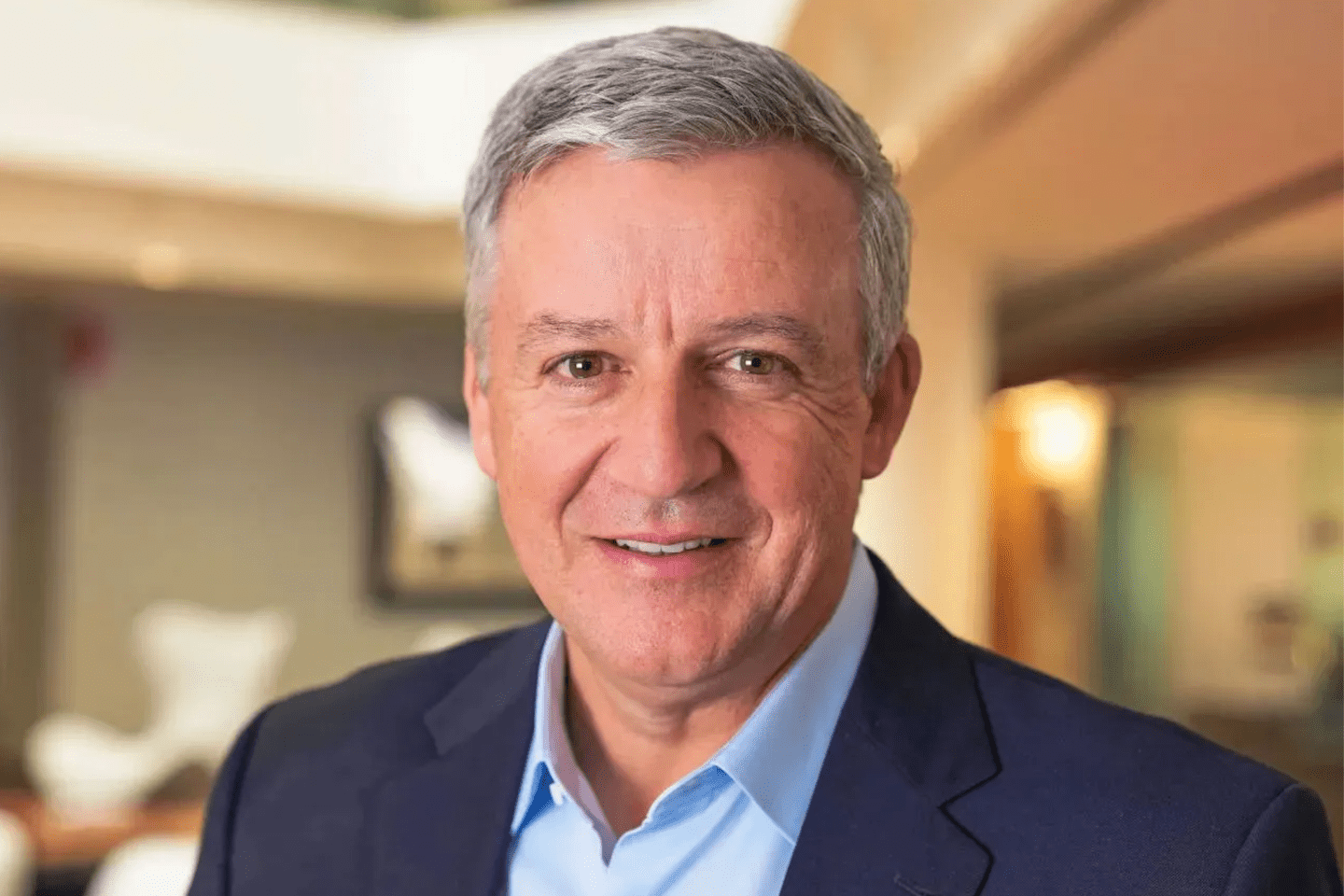
I spoke with Coca-Cola President and CFO John Murphy on Monday. He was in the Washington, D.C. office, meeting with constituents from around the country. Murphy said those conversations test the report’s value, as he’s hearing first-hand about local impact.
Murphy also detailed a $10 billion infrastructure investment planned from 2026 through 2030 across the system, covering multiple projects. One piece of that investment is new or expanded facilities in Rancho Cucamonga, California; Colorado Springs, Colorado; Indianapolis, Indiana; Birmingham, Alabama; Coopersville, Michigan; St. Cloud, Minnesota; Orlando, Florida; and Webster, New York. Capacity expansions typically add jobs, he said, citing hundreds of new roles at Webster, while equipment upgrades may not.
The $10 billion is a system-wide figure, not solely Coca-Cola’s own capex, he explained. The company runs an asset-light model: Coca-Cola invests in its brands while bottling partners fund the plants, trucks, and equipment needed to make and deliver products. Coca-Cola owns a couple of capital-intensive businesses, including Fairlife, whose spending counts toward its own capex. “The lion’s share of the $10 billion represents the plans that our bottling partners have to continue to invest at the local level in manufacturing, in distribution, in sales and distribution,” he said.
Murphy framed the investment as a growth play not a tariff hedge, noting the Coca-Cola system already keeps 98 cents of every dollar spent on its beverages inside the U.S. economy, leaving little room for reshoring. “If you think about the availability of capital, the disposable income that’s at large across the U.S., it’s a market with boundless growth potential ahead,” he said.
Murphy, a nearly 40-year veteran of the Coca-Cola system, said the report captures how far the company has come.
“We were once a business that was a local business in the state of Georgia,” he said, and now being present in every state, county and town in America is something the study “brings to life in a very compelling and granular way.” The $85 billion figure, he added, reflects the industry’s scale and weight in the U.S. economy. “It gives one a sense of pride at the role that we play, but also a sense of responsibility,” he said.
The study builds on a more limited 2023 version, when fewer bottling partners participated—one reason GDP contribution rose from $58.8 billion then to $85 billion now. Murphy attributed the rest to business momentum, including growth in Fairlife and Bodyarmor. “We’re seeing growth in categories that historically we have not had a significant presence in,” he said. “They are also reasons for the number to be that much bigger.”
Asked how he balances short-term discipline with long-term investment, Murphy called it “a discipline that one learns and builds up over time.” He measures the short term by whether commitments are delivered daily, while “the long term is the sum of many short terms.”
That mindset, he said, comes down to viewing the business with a steward’s eye: “We’re here as stewards of a great business, and someday we’ll pass that baton to somebody else.”
Sheryl Estrada
Sheryl.Estrada@fortune.com
Leaderboard
Brian Ezzell was promoted to CFO of Flowserve Corporation (NYSE: FLS), a manufacturing company, effective Oct. 1. Ezzell, who currently serves as Flowserve's VP of financial planning and analysis (FP&A), treasurer, and investor relations, previously spent four years as VP of enterprise FP&A at Kimberly-Clark, where he had finance responsibility for its $14 billion global supply chain. He succeeds Amy Schwetz, who is departing for a leadership role at another company.
Amy B. Schwetz was appointed CFO of Flex (Nasdaq: FLEX), a manufacturing company, joining Oct. 5 to lead the company's Regulated Manufacturing Services and Integrated Technology Services segments, and is expected to become full company CFO once Flex completes the planned separation of its Cloud and Power Infrastructure segment into a new independent company, Axiom Solutions International. She succeeds Kevin Krumm, who is expected to transition to CFO of Axiom upon completion of the split, projected for the first quarter of 2027.
Big Deal
Bank of America Institute's September 2026 "Consumer Checkpoint" report finds U.S. consumer spending stayed resilient in August, with card spending per household up 4.5% year-over-year, as shoppers favored value and big-box retailers over traditional retail heading into the back-to-school season.
Spending and wage growth have largely converged across income groups, meaning the gaps between how much low-, middle-, and high-income households are earning and spending have narrowed, according to the report. One exception is Millennials, where a "K-shaped" divergence persists—some in the generation are pulling ahead with strong income and spending growth, while others fall behind, even as that pattern fades elsewhere in the population. Another finding is that most age and income groups are carrying smaller credit card balances relative to their limits, a sign they aren't leaning on debt to get by, while lower- and middle-income households still hold elevated savings.
Going deeper
Fortune's Eleanor Pringle reports that debt hawks are increasingly alarmed as the 10-year Treasury yield approaches 5%, warning the move could signal a brewing national debt spiral. "At the time of writing, yields on the 10-year note sat at 5.027%, having climbed steadily since February of this year," Pringle writes. Read more here.
Overheard
"The question is not necessarily how do we bring down our human capital, but how do we train our people to do more, strategically, across the business? I’m not a CEO sitting back saying cut, cut, cut."
—Kate Dohaney, the CEO of the U.K. mobile network, Giffgaff, part of the Virgin Media O2 Group, told Fortune in an interview discussing how company leaders are responding to the AI wave.