- In today’s CEO Daily: The idea of giving workers more access to the tools of wealth-building is getting traction
- The big leadership story: How Asian healthcare companies are grappling with a fast-aging region
- The markets: Global markets are inching higher ahead of Nvidia’s earnings today
- Plus: All the news and watercooler chat from Fortune.
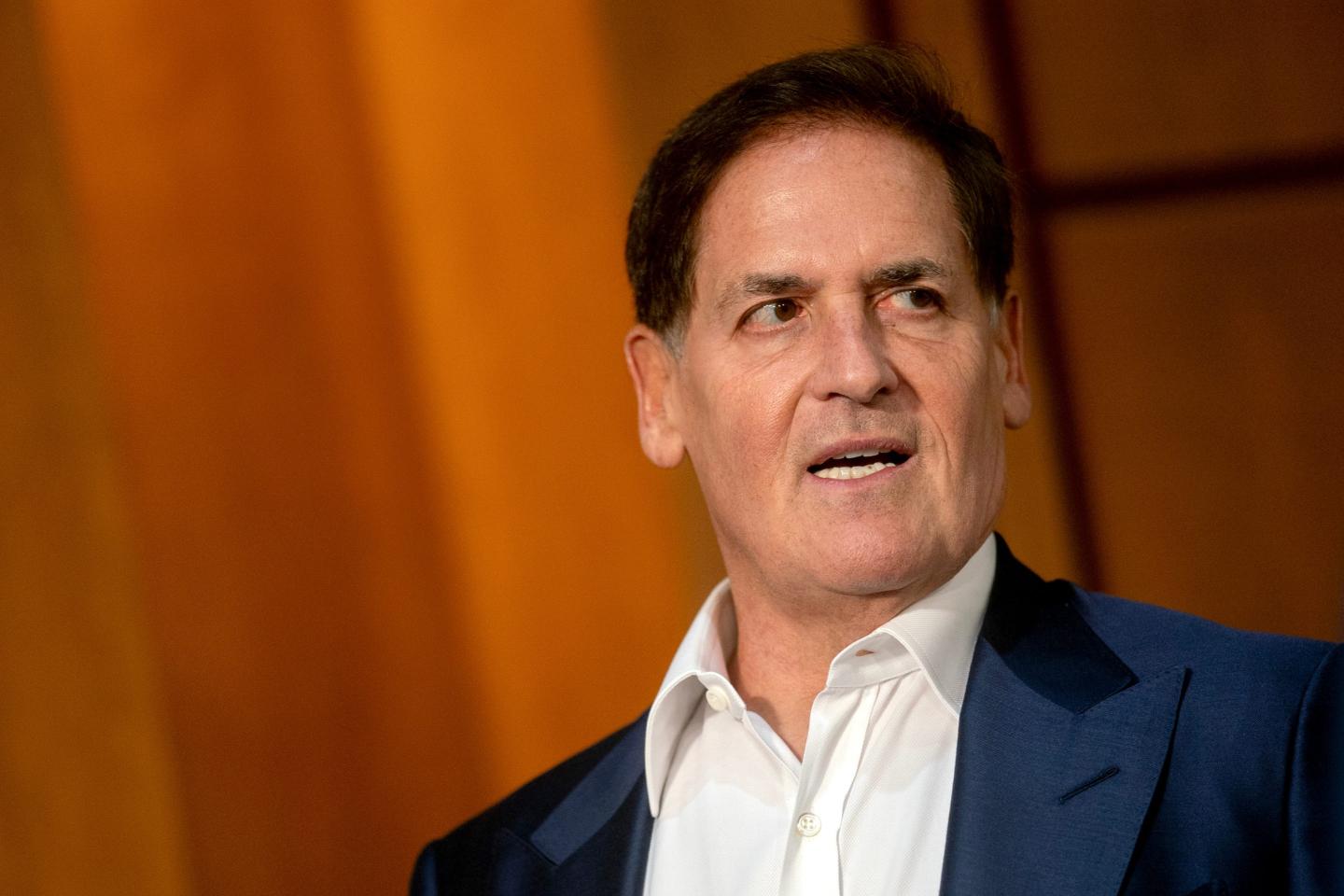
Good morning. In a week where we’ve been flooded with dubious long-shot ideas—President Trump now wants to rename Lake Ontario as Lake America amid his escalating trade war against Canada—let’s pause to consider an intriguing one. As my colleague Eleanor Pringle reported this week, entrepreneur Mark Cuban wants to address America’s growing wealth inequality by making employers choose between paying higher taxes or giving every member of staff company stock. As the Shark Tank star wrote on X: “It’s exactly what I have done for employees in companies I have started. Most wealthy people get that way from selling their companies or taking them public.”
As a mandate, Cuban’s idea is unlikely to fly: Congress would have to pass a law to raise corporate taxes on companies that don’t grant equity to every employee. That’s not likely in any regime, never mind one in which the president made $2.2 billion last year. But the concept of giving workers more access to the tools of wealth-building are intriguing and getting traction in different ways:
Employee Stock Ownership Plans (ESOPS) are growing in popularity for private companies, in part fueled by retiring baby boomers who want to keep their companies independent without selling to private equity. While politicians may not agree on taxes, they all love employee ownership. The Senate passed two bills last year to encourage ESOPS, of which there were around 6,600 ESOPS, covering around 15 million people in 2023. The federal government first created tax incentives for companies to implement employee ownership in the 1970s when stagflation was rampant and Washington wanted to generate more retirement assets for working Americans. Ronald Reagan loved ESOPS, as does Bernie Sanders. While they can be expensive, complex and a headache to maintain, ESOPS boast voluntary quit rates that are roughly one-third the national average and workers retire with more than double the savings on non-ESOP counterparts.
Employee Benefits. Companies already offer access to equity grants, restricted stock units, profit-sharing, and stock options. The problem, as Cuban identifies, is that those tools are often deployed to enrich the best paid people at the company, further widening the CEO-to-worker wage gap. One antidote may be Trump Accounts, which are designed to democratize access to the markets and compounding returns. These tax-deferred accounts, seeded with $1,000 in federal money for every child born during Trump’s second term, have been opened for more than 7 million children since being launched last month. CEOs have been lining up to provide incentives for employees to open these accounts with philanthropists like Michael Dell and Ray Dalio donating funds to help lower-income families fund the accounts for older children. As Dell told me when announcing a $6.25 billion donation with his wife Susan: “When children have accounts like this, their outlook on life just changes.”
But the problem that Cuban identifies is not going away. While pay-transparency laws and talent shortages can create more equitable gains for employees, the reality is that wealth gains remain modest at the bottom and substantial at the top. Women make about 82 cents for every dollar that a man makes, a figure that’s gone down. And affordability has dropped. The most useful tool for some leaders in this environment may be a mirror.
Contact CEO Daily via Diane Brady at diane.brady@fortune.com
Top leadership news
Asia’s largest private hospital group bets on preventive care as the region ages
IHH Healthcare is launching a clinical longevity program called Healthspan in Singapore, with plans to expand it across Asia as lifestyle diseases rise. “There’s no point in living longer if you’re not healthy,” CEO Prem Kumar Nair told Fortune.
Trump’s proposed H-1B visa fee could hit startups hardest
The Trump administration is proposing a $103,265 surcharge for H-1B visas that the Department of Homeland Security estimates would significantly affect 11,051 small businesses, or 76% of those analyzed. Wharton’s Britta Glennon told Fortune that startups have fewer ways to adapt because “talent is such a huge part of whether they are able to succeed.”
Why Kraft Heinz uses Europe to test products
Kraft Heinz is tapping Europe’s fragmented markets as a testing ground for new products like zero-sugar ketchup before taking them global. “If a product can survive in Europe, it can survive almost anywhere,” Europe chief growth officer Karen Owen said.
The markets
S&P 500 futures are down 0.1% this morning. The last session rose 0.3%. South Korea’s KOSPI rose 1.0% and Japan’s Nikkei 225 is up 0.6%. China’s CSI 300 rose 0.9%, while Hong Kong’s Hang Seng Index is up 0.6%. India’s NIFTY 50 is down 0.2%, while the STOXX Europe 600 is up 0.1% in early trading. Bitcoin is hovering around $78,500.
Around the watercooler
Dolly Parton’s philanthropy inspiration was her father who couldn’t read or write: ‘I saw how crippling that could be’ by Sydney Lake
Scott Bessent, Stanley Druckenmiller and a hedge-fund legend hoist on his own petard by Nick Lichtenberg
Apollo chief economist says ‘China Shock 2.0 is here’ as new wave of Chinese technology floods global markets—and it’s bad news for American companies by Mia Osmonbekov
A troubling recent rogue AI incident is just one reason why the U.K. AI Security Institute deserves far greater scrutiny by Jeremy Kahn
Today's edition of CEO Daily is curated and edited by Joseph Abrams, Jason Ma, Nicholas Gordon, and Lee Clifford.