
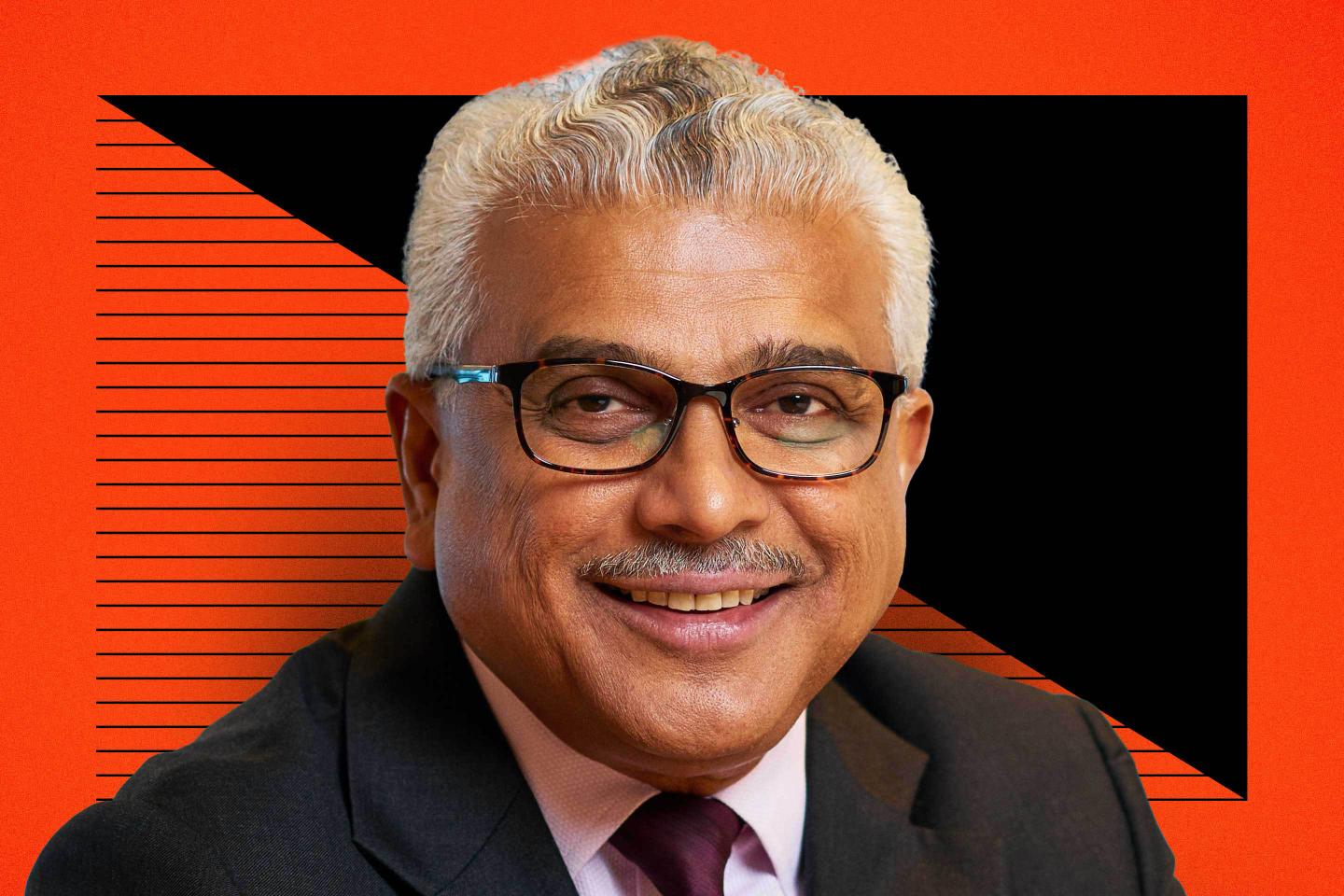
“There’s no point in living longer if you’re not healthy.”
So says Prem Kumar Nair, CEO of Asia’s largest private health group, IHH Healthcare, as he grapples with an Asia that’s wealthier, longer-lived, and far more willing to spend money on the finer things in life. “As populations grow more affluent and people indulge in good food and wine, we’re seeing a rise in lifestyle diseases: diabetes, hypertension and high cholesterol,” he points out in an interview with Fortune.
Asia is getting older. One in four people in the region will be older than 65 by 2050, according to the Asian Development Bank. Asians generally have longer life expectancies than those outside the region—but longer lives aren’t the same as healthier ones. A Stanford study published in April found that population aging accounted for 33.6% of the increase in disease burden across mainland China, Japan, Singapore, South Korea and Taiwan.
IHH is stepping in with “Healthspan”, a new preventive health and longevity program launched in July. Unlike the aesthetics-driven wellness industry, IHH’s Healthspan is built around clinical intervention. Though the program is now only offered in Singapore, Prem eventually hopes to bring it to IHH’s nine other markets, which include India, Turkey and Greater China.
“For many people, longevity means aesthetics: coloring your hair, and taking a whole lot of vitamins and supplements. But for a healthcare provider like us, longevity is anchored very strongly in clinical science,” Prem says.
Take sarcopenia, the age-related loss of muscle mass. “We’ll encourage older patients to do resistance training, not for them to build biceps, but to make sure that their muscles can hold them up and they don’t fall and sustain knee or hip fractures,” Prem explains.
IHH’s Healthspan program also leans on GLP-1 drugs, the class of medications (including Ozempic and Wegovy) that has become, in Prem’s words, “the poster boy of longevity”. Yet these drugs are tapped not for cosmetic weight loss, he stresses, but to prevent obesity-driven arthritis and metabolic disease.
As Asia’s population ages, IHH is also building more ambulatory care centers—smaller, community-based facilities that handle procedures like endoscopies and total knee replacements without a hospital admission—in dense, rapidly graying cities like Singapore and Hong Kong. For example, the group’s Parkway MediCentre, which is located in Singapore’s Woodleigh district, offers chronic disease management services and consultations with dermatology and obstetrics and gynaecology specialists.
This marks a larger shift in how healthcare is administered globally, with many aging societies transitioning from hospital-centric care to more personalized and accessible options which are embedded in neighborhoods and communities.
“We have transitioned from being a mega hospital player to a healthcare ecosystem player in all the countries that we are in,” Prem says. “That’s going to be the future of healthcare.”
Dual-listed in Singapore and Malaysia
IHH Healthcare was incorporated in 2010, as a holding company for Malaysian sovereign wealth fund Khazanah Nasional Berhad’s healthcare investments, which included Singapore-based Parkway, India-based Apollo, and Malaysia-based Pantai and IMU Health.
The entity was converted into a public company in 2012, and went public via a dual IPO on Malaysian bourse Bursa Malaysia and the Singapore Stock Exchange (SGX). IHH’s $2 billion IPO was the third-biggest listing globally that year, after Facebook and Malaysian palm oil firm Felda Global Ventures Holding.
IHH shares are up by more than 20% over the past 12 months.
Today, IHH Healthcare has expanded to 89 hospitals across 10 countries; the firm, with 2025 revenue of approximately $6 billion, ranks No. 58 on Fortune’s Southeast Asia 500 list.
IHH’s early growth came primarily through acquisitions. In 2015, the firm acquired India-based Globe Healthcare; three years later, it took over Fortis Healthcare, another Indian brand.
That approach changed when Prem joined IHH in 2020, following 27 years at competitor Raffles Medical Group, when he instead redirected the company to focus on organic growth within its existing markets and businesses. (Since he took the helm, IHH Healthcare has added a total of 4,000 beds to its hospitals.)
“A lot of investors were asking us whether M&As were an efficient way to grow, since each time we grow inorganically, we have to integrate the different entities,” Prem says. “Eventually, we decided that the best form of growth is growing within our existing markets and clusters… organic growth is always better since the operational efficiency is there, as we’re leveraging existing businesses and already have hospital executives in the country.”
COVID: ‘All hands on deck’
The most significant event in Prem’s tenure—at least in his eyes—came right as he started the job, when the COVID-19 pandemic landed in Singapore. He was then IHH’s Singapore CEO, and the global health emergency didn’t lead to a “normal transition.” Between 2020 and 2021, Singapore enacted several rounds of “circuit breakers”: nationwide partial lockdowns which banned social gatherings, shuttered physical offices and mandated the donning of masks outdoors.
“It was crisis management from the start,” he recalls. During the early days of the pandemic, Prem and his team dispatched medical staff to Singapore’s checkpoints for virus screening, as well as to foreign worker dormitories to care for workers who fell ill. (The purpose-built residences, where 10 to 24 construction workers share a living space, became the epicenter of the nation’s outbreak, accounting for nearly 90% of cases.)
Yet the pandemic affirms Prem’s view that the public and private sectors need to work together in a health crisis. “During peace time, we have our respective roles: The public sector works to provide affordable, accessible healthcare, while the private sector looks after patients who prefer quicker response times, more privacy and have the means to pay a premium,” he explains. “But when you’ve got a pandemic? It’s all hands on deck.”
IHH is a global player, with a presence in multiple countries both in Asia and beyond. That’s been a hedge against volatility in any one particular market.
“Being diversified has helped us a lot… there were times when Turkey faced macroeconomic issues like inflation, but Malaysia, Singapore and our other markets buoyed our economic performance,” Prem says.
Apart from deepening its presence in existing markets, IHH is also considering expanding into adjacent countries, though Prem admits that no concrete plans have yet been made.
“All of the countries we’re in will at some point become saturated; competition is a given, so we have to look at new markets,” Prem concludes. “Other players like Thompson and Raffles Medical have gone into Vietnam, and we’re also looking at Indonesia, which has changed its regulations to allow foreign doctors to practice and private hospitals to be fully owned by internationals.”
Future of healthcare
Now four decades into his career in healthcare, Prem thinks the mix of specialties in Asia’s healthcare institutions is changing. Just ten years ago, cardiology was the biggest speciality in most hospitals. But rates of cardiac disease have fallen in recent years, as the medical community pivots to managing cholesterol levels, hypertension and diabetes—all risk factors for heart disease. (A recent study found that from 1990 to 2021, the age-standardized mortality rate of cardiovascular disease in Asia fell by 26%.)
“Cancer is now becoming the biggest subspecialty in all our hospitals,” Prem says. “We’re investing a lot in cancer testing, genomic medicine and precision medicine.”
In 2019, IHH led a $20 million Series A funding round for Singapore-based genomic medicine firm Lucence, which makes ultra-sensitive blood tests called liquid biopsies that can detect over ten types of cancer at an early stage. IHH also invests in proton therapy machines, which provide a more precise form of radiation treatment using accelerated proton particles rather than traditional X-rays, and is often used to treat complex cancers like those in the head, neck, brain and liver.
“We’re a strategic investor, not a financial investor,” Prem explains. “So whatever we invest in, we actually use and validate.”
In February, IHH launched a program called IHH Catalyst, which brings together healthcare entrepreneurs, clinicians and operational leaders to identify and nurture promising health start-ups. The inaugural edition took place in India, and selected a crop of businesses focusing on India’s priority health domains like oncology, chronic disease management and preventive care. IHH will soon bring the initiative to North Asia, led by Gleneagles Hong Kong and Parkway Shanghai.
IHH is also bullish about AI. A few years ago, IHH converted its data and digital department into an AI transformation team, focused solely on identifying AI-enabled healthcare solutions.
Its most tangible success so far, NurseShift.ai, automates hospital rostering and slashes the time nursing supervisors spend on the task by 51%, according to Prem, and has won a health innovation award from Singapore’s Ministry of Health. It is being rolled out beyond Singapore to Malaysia and Hong Kong.
IHH is also working on a new project to build AI-enabled clinical pathways, where models analyze the symptoms and risk factors of each patient, then suggest a treatment plan which doctors can consider, edit and approve.
“One of the key reasons behind resource wastage is variation in healthcare,” Prem explains. “Different specialists are trained differently, so they all do things differently. Some specialists may keep you in the hospital for two days, while others could opt for a week, but AI can help in standardizing this by giving clinicians a framework to build upon.”
Still, Prem thinks there’s still room for human medical judgment in the hospital. The medical staff are ultimately the ones performing the procedure, so there must be consensus,” Prem says. “We must also allow for exceptions, since the profiles of patients can be quite different.”
“Healthcare and medicine can be complex in that way.”
In Fortune’s “Asia Agenda” column, released at least twice a month, we speak with Asia’s top business leaders about how they are building for the future and the lessons they’ve drawn from leading companies in one of the world’s fastest growing and most dynamic regions. Explore all of our profiles here.