
In 1886, a traveling salesman named Henry Heinz crossed the Atlantic with a suitcase full of tinned goods. Upon arrival in London, he walked into Fortnum & Mason, a department store known for supplying luxury foods to the city’s wealthy, hoping it would stock his tins next to its chocolate and tea. Fortnum & Mason agreed, introducing Heinz baked beans to Britain for the first time.
It was a glamorous debut for what would become one of Europe’s most stocked condiments. Nearly a century and a half later, Heinz controls almost half of Europe’s ketchup category sales by value, according to Karen Owen, Kraft Heinz’s chief growth officer for Europe. Globally, the brand sells over 650 million bottles a year.
Kraft Heinz is one of the world’s largest food and beverage companies, generating approximately $25 billion in net sales in 2025. It’s portfolio of brands includes Philadelphia, Kool-Aid, and Lunchables.
American retailers and restaurant chains have sometimes struggled to gain a foothold in Europe. Walmart pulled out of Europe after failing to compete with local discounters, and Taco Bell faced rollout delays in the region, in part because it had to adapt to stricter food quality compared to the U.S.
Kraft Heinz has had its own difficulties in the region. By Owen’s account, the company spent several years underinvesting in Europe, denting market share and consumer awareness. That’s been compounded by tighter household budgets and the growth of private-label goods in Europe. In the second quarter of 2026, net sales in Kraft Heinz’s international developed markets segment, which groups Europe with developed Pacific markets, fell 3.5%.
Europe as a blueprint
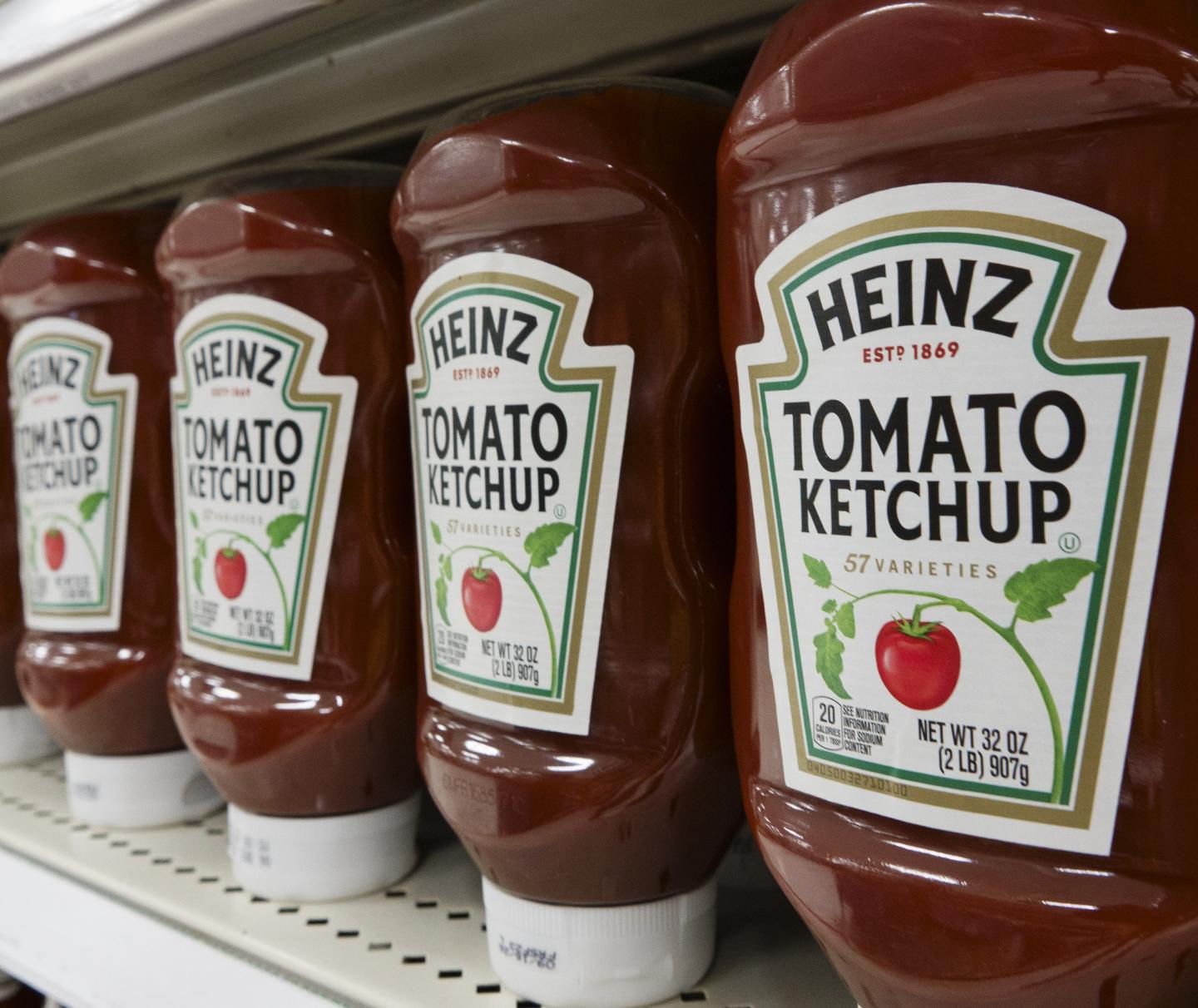
Despite these challenges, Heinz has a strong track record of innovation in Europe. The company relaunched its underperforming mayonnaise with a new recipe in 2016, which has since reached 20% market share in the U.K. and 13% in Germany. It has launched new iterations of established classics to cater to different countries’ tastes and created a fully recyclable Heinz Tomato Ketchup bottle.
“We tend to lead the way,” Owen says, when asked whether Europe writes its own playbook or follows the U.S. “If a product can survive in Europe, it can survive almost anywhere…we’re the testing ground.”
That success is now being adapted to Kraft Heinz’s troubled American business. The company announced a corporate split in September 2025, which was later paused in favor of a $700 million reinvestment plan. When presenting the turnaround strategy at the Consumer Analyst Group of New York conference in February, Kraft Heinz chief executive Steve Cahillane said Europe is a source of “tangible, repeatable blueprints” the company intends to replicate in America.
Why Europe works as a laboratory
Owen traces the brand’s success in Europe to how deeply it has embedded itself in the region’s culture.
For all its American roots, Heinz doesn’t feel like an American brand, least of all to the people running it. “I thought it was British until I started working here,” Owen admits.
Heinz’s London office houses a working chef’s kitchen where recipes are tested every week, and retail partners are brought in to taste products. A near-identical kitchen in Amsterdam uses the same ovens as one if its partners, Domino’s Pizza, to see exactly how a sauce performs in a franchise kitchen. A pilot plant at the company’s Dutch R&D center was built specifically to work out if a recipe developed by a chef can survive industrial-scale production without losing its flavor. “That attention to detail,” Owen says, “is what it takes to succeed in Europe.”
The difficulty of operating in European makes it a useful testing ground for new products. The EU is a patchwork of dozens of distinct markets, spanning the bloc’s 24 official languages. That fragmentation, she says, is a “useful filter” for deciding what’s worth scaling globally.
German consumers, in her account, scrutinize ingredients and health claims more closely than most, while British consumers respond more to emotion and nostalgia. “Please everyone, and you’ve effectively stress-tested a product against half the world’s tastes,” she adds. “If a product clears several culturally distinct European markets, it’s a strong signal it will work in the U.S. or elsewhere.”
The impact of weight-loss drugs
That logic is being tested as the food sector undergoes a significant disruption. Weight-loss drugs are impacting buying habits, with 70% of GLP-1 users purchasing fewer snacks and confectionery, according to PwC. There are fewer people using weight-loss drugs in Europe than the U.S. However, in Germany—one of Heinz’s largest markets—more than four million households now use or have considered using weight-loss drugs, according to YouGov.
For Kraft Heinz, that’s accelerating a shift already underway in Europe toward shorter ingredient lists, smaller portions, and more high-protein products. “It is a natural fit for a European consumer base already conditioned to scrutinize what’s in its food,” Owen says.
In 2025, Heinz’s zero-sugar, zero-salt ketchup was launched to cater to the rising demand for healthy options in the continent. Producing it meant a multi-million-dollar overhaul of the manufacturing process, swapping traditional cooking methods for a cold-extraction that preserves more of the tomato’s natural sugars and flavor. It includes 35% more tomato than the original product. Sales are up more than 20% year-on-year, Owen says, making it one of the fastest-growing products in the European portfolio. The recipe is now going to be used globally.
Heinz’s no-added-sugar pasta sauce followed the same playbook. The product launched in Europe in 2022, and then in the U.S afterwards.
Winning over Gen Z
Europe is also where Kraft Heinz is putting its assumptions about Gen Z to the test.
This cohort makes up roughly a quarter of the world’s population, and its collective spending power is projected to hit $12 trillion by 2030, according to NielsenIQ and GfK. But winning them over is proving difficult for brands. Most (94%) brands are trusted less by Gen Z than by the general population, according to Morning Consult.
“Gen Z consumers are much more demanding regarding quality standards and are significantly less loyal than previous generations,” Owen says. “It’s generally harder to convince younger consumers to even attempt a trial for the first time.”
In Europe, Kraft Heinz’s response has been to partner with brands younger consumers already trust. A sauce collaboration with Morley’s, the South London fried chicken chain, proved popular enough to earn a permanent spot in Heinz’s lineup. In Spain, Heinz partnered with Popeyes to launch two sauces inspired by the chain’s Cajun chicken, tapping into what Owen calls the “growing, Gen Z-driven trend of dipping.” The Heinz and Popeyes collaboration was introduced as a retail product two months later.
The company is now pursuing a similar strategy across the Atlantic. In June 2026, Heinz launched three mayo-based dipping sauces exclusively at Walmart. Yet another sign that what works in Europe continues to shape what Kraft Heinz tries next in America.