
In 2023, Danish drugmaker Novo Nordisk briefly surpassed the luxury conglomerate LVMH to become Europe’s most valuable company by market capitalization. Its share price was propelled upward by soaring sales of its breakthrough weight-loss drugs Ozempic and Wegovy.
After pioneering GLP-1 treatments to combat obesity, Novo Nordisk has struggled to build on this success. Eli Lilly, its U.S. rival and the maker of Mounjaro, has eaten into Novo Nordisk’s market share and expects to launch its own weight-loss pill in Europe and the U.K. in early 2027. Since 2024, Eli Lilly’s share price has almost doubled, while Novo Nordisk’s has dropped by 70%.
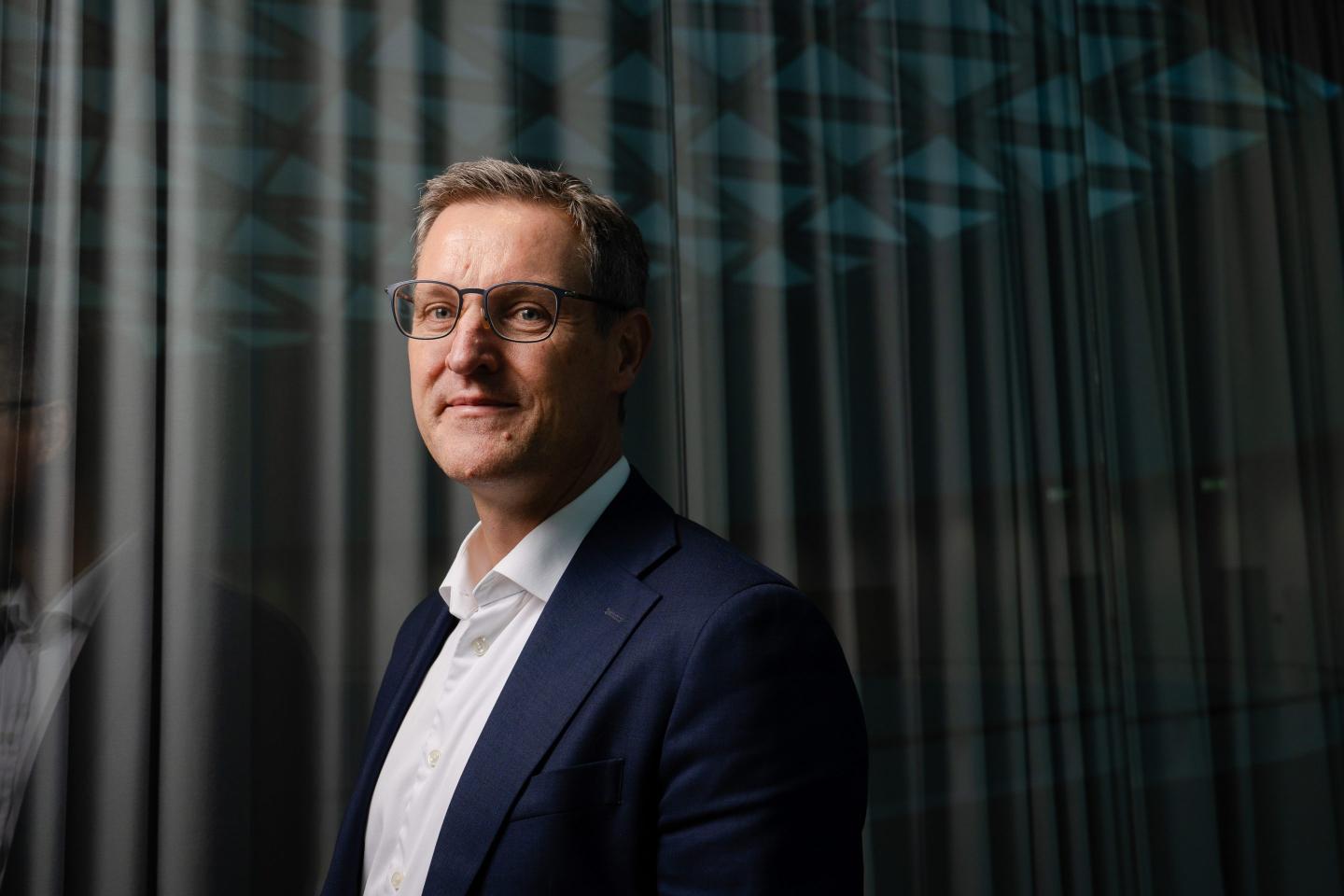
Karsten Munk Knudsen, CFO at Novo Nordisk, admits it has been a “rocky road” for the business. In September 2025, it announced that it would be cutting 9,000 jobs as it aimed to reduce costs by $1.2 billion. Overall headcount is now 12,000 lower than a year ago.
“We managed our resources and our cost base in a very disciplined manner because we were in a period of low growth,” he says, adding that the business has no plans to pursue a second round of companywide redundancies. “We really need to ensure we invest in the growth assets we have, such as the Wegovy pill, and continue to invest significantly in R&D so we have future winners and growth drivers.”
One drug Novo Nordisk had pinned its hopes on as a future growth driver was ziltivekimab—a cardiovascular drug. Analysts at Goldman Sachs highlighted that the drug could allow Novo Nordisk to expand into a new market and reduce its reliance on its weight-loss franchise.
“We need to ensure we invest in the growth assets we have, such as the Wegovy pill, and continue to invest significantly in R&D so we have future winners and growth drivers.”
Karsten Munk Knudsen, CFO, Novo Nordisk
However, its phase III trials proved unsuccessful last week after it failed to prevent heart attacks, strokes, or cardiovascular deaths. Novo Nordisk’s share price dropped 10% on the news. “Having a phase III product fail is never fun,” Knudsen says. “But it’s part of our industry because we take chances and we take risks, because we are up against science and biology, and there are no guarantees in that space.”
The trial setback has done little to allay investor concerns over Novo Nordisk’s long-term growth prospects and its potential to produce another blockbuster drug. Novo Nordisk’s share price dropped almost 6% following the release of its first-half financial results on Aug. 4. The company raised its full-year outlook and reported a 7% increase in adjusted sales to DKK 78.5 billion ($12.1 billion).
More than 90% of Novo Nordisk’s sales are generated by its obesity and diabetes drugs, but Knudsen has confidence that the obesity market still has room for growth. Novo Nordisk CEO Mike Doustdar revealed it will launch its Wegovy pill in Germany “soon,” with more European countries likely to follow, after EU approval was secured in July. “It is a huge market that is yet to be fully tapped into,” he said. “We’re looking at some 80% volume growth at a global scale, so [the weight-loss drug market] is growing at a very rapid pace.”
JPMorgan Global Research forecasts that the market for GLP-1s and other weight-loss drugs will reach $200 billion by 2030. Other Wall Street analysts have been more reserved in their estimates. Jefferies predicts the market will peak at $80 billion.
A potential mega-merger between U.K. drugmaker AstraZeneca and U.S. competitor Bristol Myers Squibb could also disrupt the pharmaceutical industry. The Financial Times reported earlier this week that discussions to merge the two companies had taken place. The deal would make the pairing the fourth-largest drugmaker in the world, with a combined valuation of nearly $400 billion.
Although Knudsen is reluctant to comment on speculation, he adds that any megadeal would probably be followed by cost cutting as the companies explore synergies and streamline functions. Securing antitrust clearance could also create a stumbling block.
Strategic acquisitions are also a core part of Novo Nordisk’s own growth strategy. Knudsen confirms that the business is exploring bolt-on acquisitions to help strengthen its R&D pipeline. “We continue to invest significantly in our own R&D, but you also get good ideas in other geographies and other companies,” he says. “We are always on the lookout for assets that would fit into our R&D pipeline, provided that it has the right scientific merits and a rational financial profile.”
Novo Nordisk’s expansion into cardiovascular disease treatments initially came via the acquisition of AstraZeneca spinoff, Corvidia, in 2020. The acquisition cost $725 million upfront, with additional payments potentially taking the deal to $2.1 billion. The phase III trial, which followed 6,300 people, was a significant addition to the development costs.
While Knudsen admits the pursuit of an effective cardiovascular drug has been a “costly venture,” he says it doesn’t change Novo Nordisk’s commitment to establishing a presence in this market. “We believe strategically it’s a natural adjacency, and in society there’s a huge unmet need, so we’re committed to that space,” he adds.
Despite the setbacks and growing U.S. competition, Knudsen remains confident that Novo Nordisk has the global infrastructure, manufacturing footprint, and R&D pipeline to overcome any recent adversity. He says: “The important part for us is that we’re tracking ahead of plan, and we’re getting into a good growth mode. I’m sure the capital markets will eventually reward our performance in a fair way.”