• Home
  • Latest
  • Fortune 500
  • Finance
  • Tech
  • Leadership
  • Lifestyle
  • Rankings
  • Multimedia

New

Watch Fortune Daily, our new video show that brings you inside the Fortune newsroom and the boardroom

Watch Fortune Daily, our new video show that brings you inside the Fortune newsroom and the boardroom

Watch Fortune Daily, our new video show that brings you inside the Fortune newsroom and the boardroom

Watch Fortune Daily, our new video show that brings you inside the Fortune newsroom and the boardroom

Watch Fortune Daily, our new video show that brings you inside the Fortune newsroom and the boardroom

Watch Fortune Daily, our new video show that brings you inside the Fortune newsroom and the boardroom

Watch Fortune Daily, our new video show that brings you inside the Fortune newsroom and the boardroom

Watch Fortune Daily, our new video show that brings you inside the Fortune newsroom and the boardroom

Watch Fortune Daily, our new video show that brings you inside the Fortune newsroom and the boardroom

Watch Fortune Daily, our new video show that brings you inside the Fortune newsroom and the boardroom

Economynational debt

An 130-year-old theory from an obscure Swedish economist explains why investors will keep funding America’s near-$40 trillion pile of debt

Eleanor Pringle
By
Eleanor Pringle
Eleanor Pringle
Senior Reporter, Economics and Markets
Down Arrow Button Icon
Eleanor Pringle
By
Eleanor Pringle
Eleanor Pringle
Senior Reporter, Economics and Markets
Down Arrow Button Icon
August 4, 2026, 6:55 AM ET
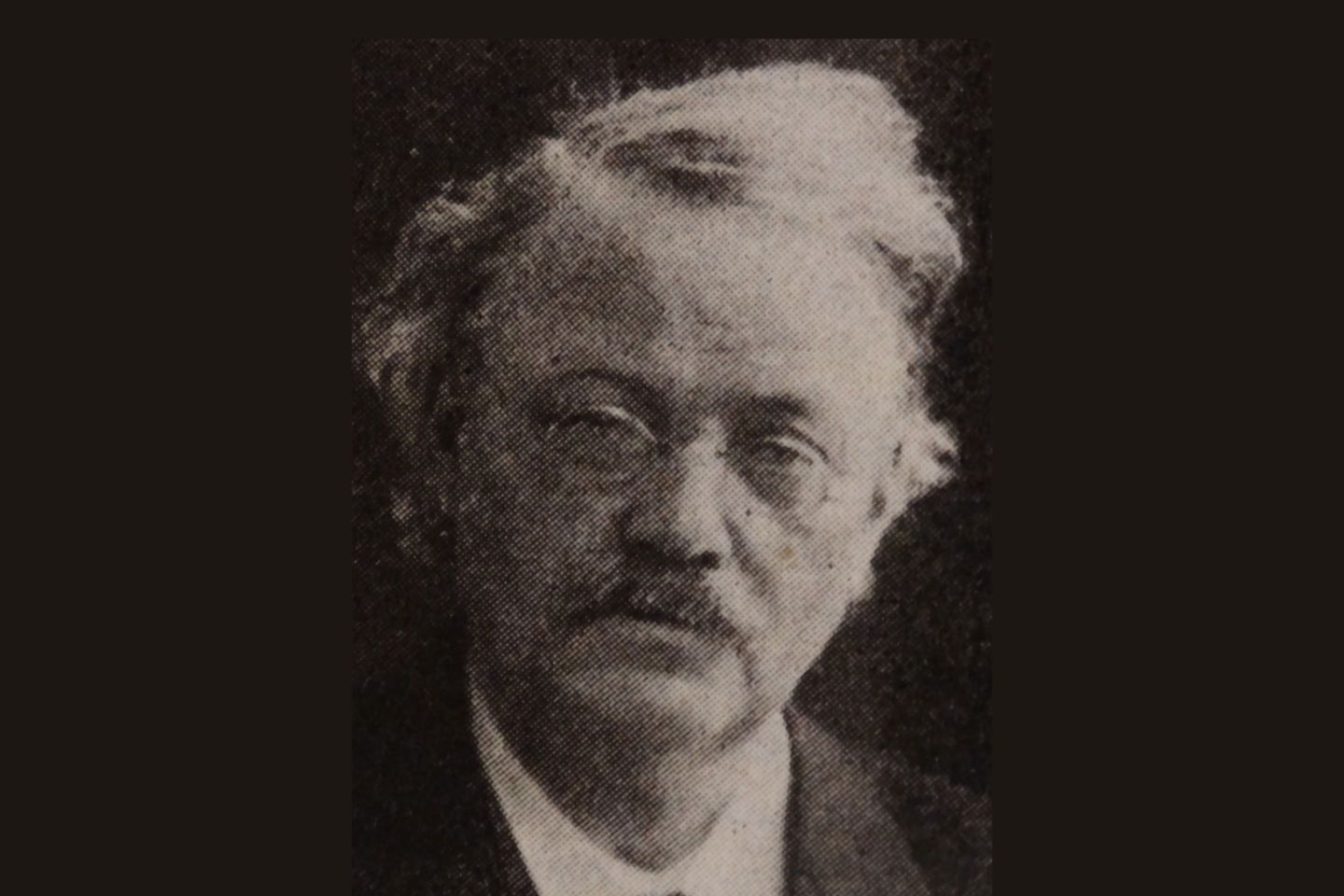
Portrait of Knut Wicksell (1851-1926) Swedish economist. Dated 20th Century. (Photo by Universal History Archive/Universal Images Group via Getty Images)
Portrait of Knut Wicksell (1851-1926) Swedish economist. Dated 20th Century. Universal History Archive/Universal Images Group - Getty Images
Add Fortune on Google for similar content.

In the pantheon of famous economists, Knut Wicksell is hardly a household name. Unlike Adam Smith, the Swedish interest-rate expert never made it to the face of a banknote. Yet a theory he developed more than a century ago is suddenly relevant again.

In 1898, Wicksell shared the idea that inflation and economic instability stem from an imbalance: It occurs when market interest rates (set by the Fed and by banks) are out of sync with “the natural rate of interest.”

The “natural” rate, Wicksell proposed, is the level of return investors get from investing in the economy as a whole (for instance via stocks) as opposed to the interest they might get from cash deposits or bonds. The U.S. economy is so strong that its natural rate is far above its official rates, which is why interest on American debt is relatively low given its size.

Recommended Video

Deutsche Bank believes an updated version of Wicksell’s theory explains why investors can’t quit the U.S., despite the fact that many indicators of its economic health are flashing red: The might of the U.S. economy coincides with its eye-watering debt: some $39.77 trillion at the time of writing, requiring service payments of $24 billion a week.

So far, lenders to the U.S. haven’t demanded wildly higher rates of return on their loans, reflecting the dollar’s unique role in global finance and confidence in America’s economy. However, if growth rates remain dwarfed by deficit levels, perceptions of risk may shift, prompting a market recalibration, as JPMorgan Chase CEO Jamie Dimon has previously warned.

In a note by Deutsche Bank’s chief investment office, Dr. Ulrich Stephan, Dr. Dirk Steffen, and Elena Ahonen, write that these sustained deficits show a country that is “fundamentally living beyond its means,” but that America’s role in the international financial system has so far allowed it to “enjoy risk-free market interest rates that were below its estimated natural rate of interest.”

That advantage is narrowing, the trio writes.

The silver bullet

The risk balance of investing in the U.S. vs simply keeping money in the bank has meaningfully shifted in a world of AI led by U.S. hyperscalers, the Deutsche team argues.

“The high return on equity (ROE) available on some U.S. sectors (e.g. tech) is now complementing or, to some degree, supplanting the structural/geopolitical factors which have so far supported inward investment in the U.S. during the post-WW2 period,” the trio writes. “To oversimplify: you could argue that U.S. deficits are, in effect, being increasingly funded by its tech sector.”

They explain: “In the last few years, investor interest in the U.S., and thus its ability to sustain deficits, has … been supported by the country’s relatively high productivity growth and high return on equity, largely the result of the country’s successful technology sector and dominant position in artificial intelligence.”

Arguments from the likes of Bridgewater Associates founder Ray Dalio that the U.S. is living beyond its means remain “fundamentally true”, the team adds, but suggest investors are now happy to funnel funds into U.S. deficits because, as a country, it offers higher returns on investments compared to other destinations.

Yet this dominance creates a fiscal loop: If the U.S. government stopped investing in AI, then confidence in the sector would shake. This spending, in itself, requires further borrowing. “The U.S. economy can therefore be seen, in some ways, as both a gainer and a victim of its own success,” the team concludes.


Fortune Daily turns today's biggest business headlines into fast, actionable insights on markets, tech, leadership, and the forces reshaping the global economy. Watch here.
About the Author
Eleanor Pringle
By Eleanor PringleSenior Reporter, Economics and Markets
LinkedIn icon

Eleanor Pringle is an award-winning senior reporter at Fortune covering news, the economy, and personal finance. Eleanor previously worked as a business correspondent and news editor in regional news in the U.K. She completed her journalism training with the Press Association after earning a degree from the University of East Anglia.

See full bioRight Arrow Button Icon
Add Fortune on Google for similar content.

Latest in Economy

Finance
Lorem ipsum dolor sit amet, consectetur adipiscing elit, sed do eiusmod tempor incididunt ut labore et dolore magna aliqua. Ut enim ad minim veniam
By Fortune Editors
October 20, 2025
Finance
Lorem ipsum dolor sit amet, consectetur adipiscing elit, sed do eiusmod tempor incididunt ut labore et dolore magna aliqua. Ut enim ad minim veniam
By Fortune Editors
October 20, 2025
Finance
Lorem ipsum dolor sit amet, consectetur adipiscing elit, sed do eiusmod tempor incididunt ut labore et dolore magna aliqua. Ut enim ad minim veniam
By Fortune Editors
October 20, 2025
Finance
Lorem ipsum dolor sit amet, consectetur adipiscing elit, sed do eiusmod tempor incididunt ut labore et dolore magna aliqua. Ut enim ad minim veniam
By Fortune Editors
October 20, 2025
Finance
Lorem ipsum dolor sit amet, consectetur adipiscing elit, sed do eiusmod tempor incididunt ut labore et dolore magna aliqua. Ut enim ad minim veniam
By Fortune Editors
October 20, 2025
Finance
Lorem ipsum dolor sit amet, consectetur adipiscing elit, sed do eiusmod tempor incididunt ut labore et dolore magna aliqua. Ut enim ad minim veniam
By Fortune Editors
October 20, 2025

Most Popular

Finance
Lorem ipsum dolor sit amet, consectetur adipiscing elit, sed do eiusmod tempor incididunt ut labore et dolore magna aliqua. Ut enim ad minim veniam
By Fortune Editors
October 20, 2025
Finance
Lorem ipsum dolor sit amet, consectetur adipiscing elit, sed do eiusmod tempor incididunt ut labore et dolore magna aliqua. Ut enim ad minim veniam
By Fortune Editors
October 20, 2025
Finance
Lorem ipsum dolor sit amet, consectetur adipiscing elit, sed do eiusmod tempor incididunt ut labore et dolore magna aliqua. Ut enim ad minim veniam
By Fortune Editors
October 20, 2025
Finance
Lorem ipsum dolor sit amet, consectetur adipiscing elit, sed do eiusmod tempor incididunt ut labore et dolore magna aliqua. Ut enim ad minim veniam
By Fortune Editors
October 20, 2025
Finance
Lorem ipsum dolor sit amet, consectetur adipiscing elit, sed do eiusmod tempor incididunt ut labore et dolore magna aliqua. Ut enim ad minim veniam
By Fortune Editors
October 20, 2025
Finance
Lorem ipsum dolor sit amet, consectetur adipiscing elit, sed do eiusmod tempor incididunt ut labore et dolore magna aliqua. Ut enim ad minim veniam
By Fortune Editors
October 20, 2025
Fortune Secondary Logo
Rankings
  • 100 Best Companies
  • Fortune 500
  • Global 500
  • Fortune 500 Europe
  • Most Powerful Women
  • World's Most Admired Companies
  • See All Rankings
  • Lists Calendar
Sections
  • Finance
  • Fortune Crypto
  • Features
  • Leadership
  • Health
  • Commentary
  • Success
  • Retail
  • Mpw
  • Tech
  • Lifestyle
  • CEO Initiative
  • Asia
  • Politics
  • Conferences
  • Europe
  • Newsletters
  • Personal Finance
  • Environment
  • Magazine
  • Education
Customer Support
  • Frequently Asked Questions
  • Customer Service Portal
  • Privacy Policy
  • Terms Of Use
  • Single Issues For Purchase
  • International Print
Commercial Services
  • Advertising
  • Fortune Brand Studio
  • Fortune Analytics
  • Fortune Conferences
  • Business Development
  • Group Subscriptions
About Us
  • About Us
  • Press Center
  • Work At Fortune
  • Terms And Conditions
  • Site Map
  • About Us
  • Press Center
  • Work At Fortune
  • Terms And Conditions
  • Site Map
  • Facebook icon
  • Twitter icon
  • LinkedIn icon
  • Instagram icon
  • TikTok icon
  • YouTube icon

Latest in Economy

JPMorgan Chase, Accenture and others are teaming up on a new venture to standardize how AI token use is measured
AICFO Daily
JPMorgan Chase, Accenture and others are teaming up on a new venture to standardize how AI token use is measured
By Sheryl EstradaAugust 4, 2026
2 hours ago
t
EconomyWhite House
Trump called his own housing bill a ‘yawn.’ Now he’s heading for a west coast tour with a 32% approval rating on the economy
By Darlene Superville and The Associated PressAugust 4, 2026
2 hours ago
m
Retailearnings
McDonald’s U.S. sales growth stalls to 0.8% as gas prices bite
By Michelle Chapman and The Associated PressAugust 4, 2026
2 hours ago
Portrait of Knut Wicksell (1851-1926) Swedish economist. Dated 20th Century. (Photo by Universal History Archive/Universal Images Group via Getty Images)
Economynational debt
An 130-year-old theory from an obscure Swedish economist explains why investors will keep funding America’s near-$40 trillion pile of debt
By Eleanor PringleAugust 4, 2026
3 hours ago
Could a UN-backed plan to reopen Hormuz break the deadlock? 
NewslettersFortune Gulf Brief
Could a UN-backed plan to reopen Hormuz break the deadlock? 
By Melissa HancockAugust 4, 2026
4 hours ago
ph
EconomyRestaurants
The real reason a Pizza Hut frozen in the 1990s still draws crowds isn’t nostalgia
By The ConversationAugust 3, 2026
18 hours ago

Most Popular

Bars, bowling alleys, and movie theaters cost too much to run and visit. Americans have run out of places to hang out and we're paying with our health
North America
Bars, bowling alleys, and movie theaters cost too much to run and visit. Americans have run out of places to hang out and we're paying with our health
By Catherina GioinoAugust 2, 2026
2 days ago
Sam Altman says a 'cool use case' for ChatGPT is a daily AI podcast about your kids. The replies were brutal
AI
Sam Altman says a 'cool use case' for ChatGPT is a daily AI podcast about your kids. The replies were brutal
By Holly Van Leuven and Morning BrewAugust 3, 2026
1 day ago
How Zohran Mamdani's pied-à-terre tax exposed an epidemic of 'ghost cars' instead
Personal Finance
How Zohran Mamdani's pied-à-terre tax exposed an epidemic of 'ghost cars' instead
By Catherina GioinoAugust 4, 2026
7 hours ago
Electric air taxis are finally ready for takeoff
Magazine
Electric air taxis are finally ready for takeoff
By Alexei OreskovicAugust 3, 2026
1 day ago
Current price of oil as of August 3, 2026
Personal Finance
Current price of oil as of August 3, 2026
By Joseph HostetlerAugust 3, 2026
1 day ago
Wall Street bulls are starting to admit the earnings bubble is real—and the 60/40 portfolio may be the first casualty
Investing
Wall Street bulls are starting to admit the earnings bubble is real—and the 60/40 portfolio may be the first casualty
By Nick LichtenbergAugust 3, 2026
22 hours ago

© 2026 Fortune Media IP Limited. All Rights Reserved. Use of this site constitutes acceptance of our Terms of Use and Privacy Policy | CA Notice at Collection and Privacy Notice | Do Not Sell/Share My Personal Information
FORTUNE is a trademark of Fortune Media IP Limited, registered in the U.S. and other countries. FORTUNE may receive compensation for some links to products and services on this website. Offers may be subject to change without notice.