
• Home
  • Latest
  • Fortune 500
  • Finance
  • Tech
  • Leadership
  • Lifestyle
  • Rankings
  • Multimedia

New

Watch Fortune Daily, our new video show that brings you inside the Fortune newsroom and the boardroom

Watch Fortune Daily, our new video show that brings you inside the Fortune newsroom and the boardroom

Watch Fortune Daily, our new video show that brings you inside the Fortune newsroom and the boardroom

Watch Fortune Daily, our new video show that brings you inside the Fortune newsroom and the boardroom

Watch Fortune Daily, our new video show that brings you inside the Fortune newsroom and the boardroom

Watch Fortune Daily, our new video show that brings you inside the Fortune newsroom and the boardroom

Watch Fortune Daily, our new video show that brings you inside the Fortune newsroom and the boardroom

Watch Fortune Daily, our new video show that brings you inside the Fortune newsroom and the boardroom

Watch Fortune Daily, our new video show that brings you inside the Fortune newsroom and the boardroom

Watch Fortune Daily, our new video show that brings you inside the Fortune newsroom and the boardroom

AIearnings

Why IBM just suffered its worst stock crash of all time—and what it says about the market’s two bubbles

Nick Lichtenberg
By
Nick Lichtenberg
Nick Lichtenberg
Business Editor
Down Arrow Button Icon
Nick Lichtenberg
By
Nick Lichtenberg
Nick Lichtenberg
Business Editor
Down Arrow Button Icon
July 15, 2026, 3:27 PM ET
usa
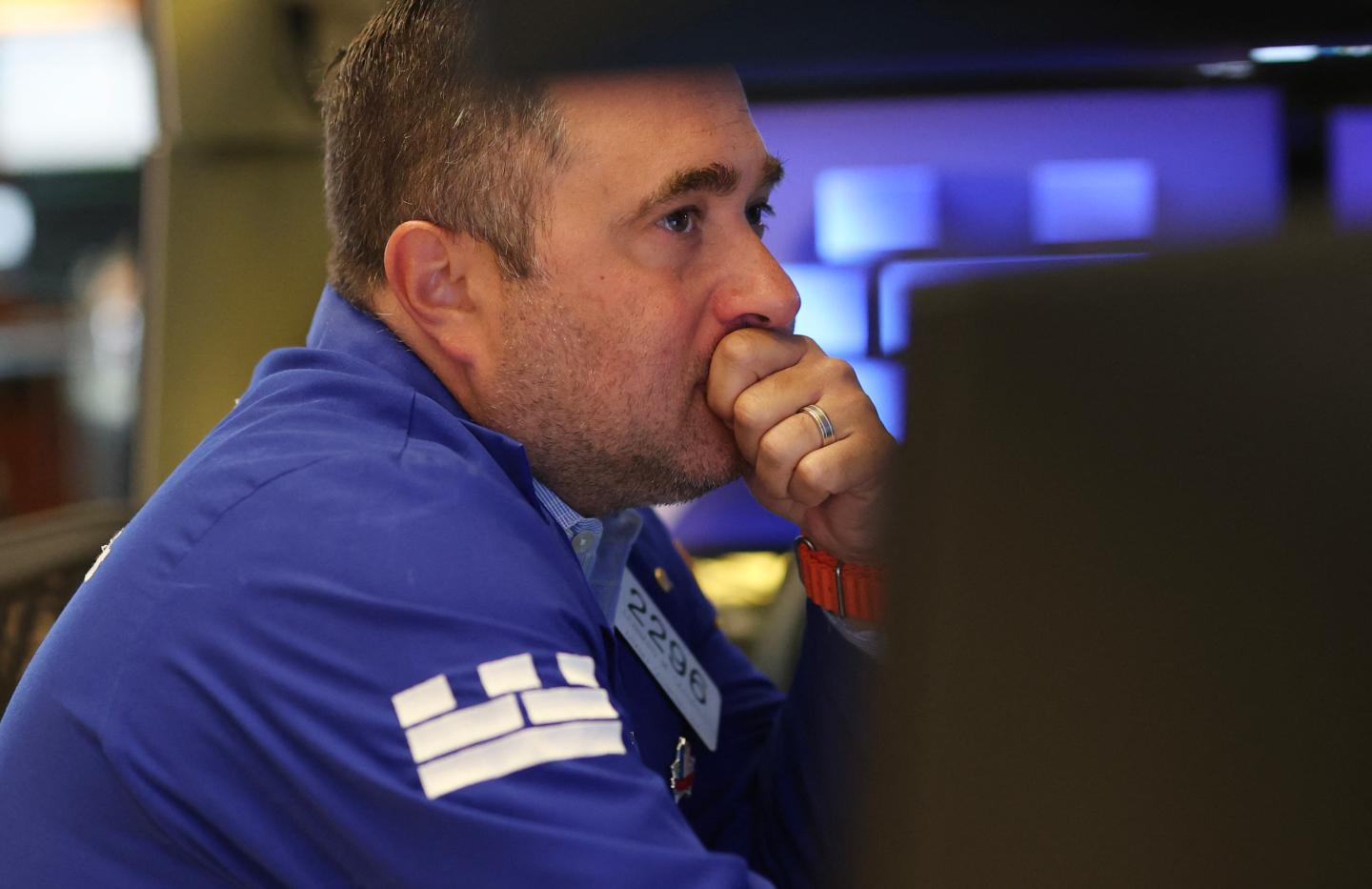
A trader works on the floor of the New York Stock Exchange (NYSE) in New York on July 14, 2026. TIMOTHY A. CLARY / AFP via Getty Images
Add Fortune on Google for similar content.

I called Steve Hanke on the afternoon of July 14, days after he’d flagged something he called a dual bubble forming in AI markets, and one day after IBM suffered the worst single-day stock crash in its 115-year history. The “money doctor” has been advising governments—including the Treasury Department and the White House—for decades and often writes as a senior contributing columnist for Fortune. He demurred on the mechanics of IBM’s stock, saying he doesn’t follow it closely, but he did say it fit into a large macroeconomic theme.

Recommended Video

“Did you see the bank earnings?” he asked me with astonishment.

I had. JPMorgan had just posted net income of $21.2 billion—the highest quarterly profit for any bank in U.S. history. Goldman Sachs reported an 84% jump in not earnings attributable to common shareholders, to $6.4 billion, with total revenues hitting $20.34 billion, up 39%. These hit the ticker the same day IBM cratered 25%, erasing roughly $40 billion in market value on a revenue miss that, in any other environment, would have been unremarkable.

That juxtaposition—banks minting money while IBM suffered a 115-year collapse on a 3.7% revenue miss—is the puzzle at the center of what Hanke, a professor of applied economics at Johns Hopkins, thinks markets are getting dangerously wrong about the AI boom. For two years, investors have been debating whether AI stocks are too expensive. Hanke said that’s true, but it’s the wrong question. “We really have two bubbles in markets,” he told me. One is a classic valuation bubble of price versus earnings, as exemplified by the famous CAPE Shiller index. But the more dangerous mispricing, he argued, isn’t in valuations at all. It’s in the earnings themselves.

A modest miss, an unprecedented crash

IBM’s preliminary second-quarter numbers were unspectacular: revenue of $17.2 billion missed consensus of roughly $17.9 billion by about 3.7%, and adjusted EPS of $2.93 came in under the $3.02 expected. Still, IBM was growing, and this preliminary disclosure alerted investors that revenue has grown by 1%, instead of the 5% expected by the market. The reaction to this was a market selloff steeper than Enron’s collapse the day the SEC opened its accounting inquiry.

IBM CEO Arvind Krishna knew it would be bad, writing an unusually candid letter being open about underperformance. Conditions in the market required “our teams to execute perfectly,” he wrote, “and this quarter we faltered.” His mea culpa offered “not excuses, but … realities.”

The New York Times’ DealBook wondered if the IBM miss was a “canary in the tech coal mine” and the Financial Times‘ west coast editor Richard Waters argued that it was a “warning to the IT sector,” something like the actual manifestation of the “SaaSpocalypse” that spooked markets earlier this year. That was driven by the theoretical potential of AI to displace traditional software, but IBM’s profit warning appeared to confirm that a secular shift is now under way.

The thing to understand is that most bubbles throughout market history have been valuation bubbles: prices race ahead of earnings, leaving P/E ratios that look obviously stretched, as in 2000. An earnings bubble is different and far less common—it’s the profits themselves that are inflated or unsustainable, which can make valuations look deceptively reasonable even while the market is dangerously mispriced. And that’s what IBM seemed to suggest to the market — the beginning of the unwinding of the earnings boom.

BCA Research’s Peter Berezin has been arguing for months that today’s AI trade is “primarily an earnings bubble rather than a valuation bubble,” and that such bubbles have historically clustered in boom-bust industries: pre-2008 banks, pandemic-era work-from-home stocks, and cyclicals like natural resources, airlines, and semiconductors—the last of which now sits at the center of the AI capex story.

That rarity matters because earnings bubbles carry a detection problem that valuation bubbles don’t. Analysts typically only cut profit estimates after stocks have already fallen, meaning there’s little early warning. And when they burst, they tend to leave behind real excess capacity—data centers, chip fabs, server farms—rather than just erasing paper gains. Berezin noted in late May that Wall Street analysts are “not particularly good at predicting when earnings bubbles will burst” because stocks begin falling before profit estimates do.

IBM’s own earnings reaction bore out that exact detection lag. BofA and UBS both trimmed estimates, but only after the stock had already cratered 25%, with BofA cutting its price target to $280 from $330 and UBS holding its target at $236 while still lowering 2026 EPS forecasts — reactive moves, not predictive ones. Yet even after the selloff, the Street split sharply on what it meant: BofA kept a Buy rating, arguing IBM remained “well positioned” once execution issues cleared, while HSBC downgraded to Reduce and Goldman warned the results would “fully validate the software bear case scenario.”

Which brings Hanke back to the bank earnings. His point wasn’t that JPMorgan’s profits are suspicious—it’s that they are unusual reveal the monetary mechanism that most investors misunderstand. It’s not the Federal Reserve creating the money fueling what he sees as two bubbles; it’s private banks.

I responded that it reminds me of a famous quote by the great midcentury economist John Kenneth Galbraith: “The process by which banks create money is so simple that the mind is repelled.” Hanke laughed, while recalling that he only met Galbraith once and agreeing that was what he meant. “Although my orientation is not the same as Galbraith’s, I thought he was a great man and had many admirable qualities,” he added.

I asked him: are record bank profits evidence that credit is still flowing freely through the system, simultaneously inflating asset prices and the reported earnings that justify those prices—right up until something snaps. “What you’re saying,” he responded, repeating a phrase that he’s been saying a lot recently, “is that markets are getting mugged by reality.”

Even JPMorgan CEO Jamie Dimon seems to agree, crowing that the earnings were “close to as good as it gets” on a call with analysts on Tuesday, before expressing concern at too much “exuberance” in markets. Like Hanke, Dimon has been saying for months that markets may be a bit too exuberant.

The misdiagnosis

If Hanke and Berezin are right, the market has spent two years watching the wrong gauge. The bull case has rested on the observation that today’s AI leaders—Nvidia, Alphabet—generate real cash flow, unlike the profitless dot-com names of 2000, with S&P 500 valuations near 22x forward earnings, below the 25x-plus threshold usually associated with true bubbles. That defense addresses the valuation side. It says nothing about whether the earnings themselves—swelled by capex cycles, circular AI investment and easy money from private banks—are sustainable.

IBM’s crash may be the first visible crack not in valuations but in the earnings story underneath them: a company whose numbers weren’t that bad still got punished as if the market suddenly stopped believing the profit growth narrative altogether. Whether that’s a single-stock anomaly or a signal that the market has quietly repriced its tolerance for earnings disappointment across the sector is the question the rest of earnings season will start to answer.

For now, the more dangerous question may have been hiding in plain sight the entire time—not whether AI stocks are too expensive, but whether the earnings behind them were ever as real as they looked.

IBM shares were down 2% in intraday trading as of press time.

Fortune Daily breaks the traditional barrier between audience and newsroom. The show transforms Fortune’s trusted reporting into actionable, conversational, and entertaining insights for an emerging class of business leaders. Watch here.
About the Author
Nick Lichtenberg
By Nick LichtenbergBusiness Editor
LinkedIn icon

Nick Lichtenberg is business editor and was formerly Fortune's executive editor of global news.

See full bioRight Arrow Button Icon
Add Fortune on Google for similar content.

Latest in AI

Finance
Lorem ipsum dolor sit amet, consectetur adipiscing elit, sed do eiusmod tempor incididunt ut labore et dolore magna aliqua. Ut enim ad minim veniam
By Fortune Editors
October 20, 2025
Finance
Lorem ipsum dolor sit amet, consectetur adipiscing elit, sed do eiusmod tempor incididunt ut labore et dolore magna aliqua. Ut enim ad minim veniam
By Fortune Editors
October 20, 2025
Finance
Lorem ipsum dolor sit amet, consectetur adipiscing elit, sed do eiusmod tempor incididunt ut labore et dolore magna aliqua. Ut enim ad minim veniam
By Fortune Editors
October 20, 2025
Finance
Lorem ipsum dolor sit amet, consectetur adipiscing elit, sed do eiusmod tempor incididunt ut labore et dolore magna aliqua. Ut enim ad minim veniam
By Fortune Editors
October 20, 2025
Finance
Lorem ipsum dolor sit amet, consectetur adipiscing elit, sed do eiusmod tempor incididunt ut labore et dolore magna aliqua. Ut enim ad minim veniam
By Fortune Editors
October 20, 2025
Finance
Lorem ipsum dolor sit amet, consectetur adipiscing elit, sed do eiusmod tempor incididunt ut labore et dolore magna aliqua. Ut enim ad minim veniam
By Fortune Editors
October 20, 2025

Most Popular

Finance
Lorem ipsum dolor sit amet, consectetur adipiscing elit, sed do eiusmod tempor incididunt ut labore et dolore magna aliqua. Ut enim ad minim veniam
By Fortune Editors
October 20, 2025
Finance
Lorem ipsum dolor sit amet, consectetur adipiscing elit, sed do eiusmod tempor incididunt ut labore et dolore magna aliqua. Ut enim ad minim veniam
By Fortune Editors
October 20, 2025
Finance
Lorem ipsum dolor sit amet, consectetur adipiscing elit, sed do eiusmod tempor incididunt ut labore et dolore magna aliqua. Ut enim ad minim veniam
By Fortune Editors
October 20, 2025
Finance
Lorem ipsum dolor sit amet, consectetur adipiscing elit, sed do eiusmod tempor incididunt ut labore et dolore magna aliqua. Ut enim ad minim veniam
By Fortune Editors
October 20, 2025
Finance
Lorem ipsum dolor sit amet, consectetur adipiscing elit, sed do eiusmod tempor incididunt ut labore et dolore magna aliqua. Ut enim ad minim veniam
By Fortune Editors
October 20, 2025
Finance
Lorem ipsum dolor sit amet, consectetur adipiscing elit, sed do eiusmod tempor incididunt ut labore et dolore magna aliqua. Ut enim ad minim veniam
By Fortune Editors
October 20, 2025
Fortune Secondary Logo
Rankings
  • 100 Best Companies
  • Fortune 500
  • Global 500
  • Fortune 500 Europe
  • Most Powerful Women
  • World's Most Admired Companies
  • See All Rankings
  • Lists Calendar
Sections
  • Finance
  • Fortune Crypto
  • Features
  • Leadership
  • Health
  • Commentary
  • Success
  • Retail
  • Mpw
  • Tech
  • Lifestyle
  • CEO Initiative
  • Asia
  • Politics
  • Conferences
  • Europe
  • Newsletters
  • Personal Finance
  • Environment
  • Magazine
  • Education
Customer Support
  • Frequently Asked Questions
  • Customer Service Portal
  • Privacy Policy
  • Terms Of Use
  • Single Issues For Purchase
  • International Print
Commercial Services
  • Advertising
  • Fortune Brand Studio
  • Fortune Analytics
  • Fortune Conferences
  • Business Development
  • Group Subscriptions
About Us
  • About Us
  • Press Center
  • Work At Fortune
  • Terms And Conditions
  • Site Map
  • About Us
  • Press Center
  • Work At Fortune
  • Terms And Conditions
  • Site Map
  • Facebook icon
  • Twitter icon
  • LinkedIn icon
  • Instagram icon
  • TikTok icon
  • YouTube icon

Latest in AI

Trump meets AI giants, Senate Dems decry ‘unpredictable’ governance—and cheap Chinese AI looms as giant security risk
AIDonald Trump
Trump meets AI giants, Senate Dems decry ‘unpredictable’ governance—and cheap Chinese AI looms as giant security risk
By Catherina GioinoAugust 4, 2026
3 hours ago
Man in black in front of a blue background.
Big TechSpaceX
SpaceX revenue surges to $7.8 billion, blowing past Wall Street expectations by nearly $1 billion
By Amanda GerutAugust 4, 2026
4 hours ago
OpenAI president Greg Brockman: We ‘contort’ ourselves around computers, clicking and typing is a ‘phase’
NewslettersEye on AI
OpenAI president Greg Brockman: We ‘contort’ ourselves around computers, clicking and typing is a ‘phase’
By Emily ForliniAugust 4, 2026
5 hours ago
Photo of Hank Green
AIYouTube
‘I’m mortified’: YouTube star Hank Green apologizes for ChatGPT overuse after fans accuse him of including a prompt by mistake
By Sasha RogelbergAugust 4, 2026
7 hours ago
agent
CommentaryAI agents
Your AI agent can be a teammate. But it still needs a boss
By Keith Ferrazzi and Wendy SmithAugust 4, 2026
11 hours ago
dan
Commentarydisruption
How AI turned your best work into the bare minimum
By Dan SchawbelAugust 4, 2026
11 hours ago

Most Popular

How Zohran Mamdani's pied-à-terre tax exposed an epidemic of 'ghost cars' instead
Personal Finance
How Zohran Mamdani's pied-à-terre tax exposed an epidemic of 'ghost cars' instead
By Catherina GioinoAugust 4, 2026
17 hours ago
Bars, bowling alleys, and movie theaters cost too much to run and visit. Americans have run out of places to hang out and we're paying with our health
North America
Bars, bowling alleys, and movie theaters cost too much to run and visit. Americans have run out of places to hang out and we're paying with our health
By Catherina GioinoAugust 2, 2026
3 days ago
Ray Dalio on the AI bubble nearing 1929, 2000 levels and the lesson people always forget: 'Wealth is not the same as money'
Investing
Ray Dalio on the AI bubble nearing 1929, 2000 levels and the lesson people always forget: 'Wealth is not the same as money'
By Nick LichtenbergAugust 4, 2026
17 hours ago
Forget Gen Z: People in their 70s and 80s are some of the earliest Americans to welcome physical AI into their homes and daily routines
AI
Forget Gen Z: People in their 70s and 80s are some of the earliest Americans to welcome physical AI into their homes and daily routines
By Marco Quiroz-GutierrezAugust 3, 2026
1 day ago
Electric air taxis are finally ready for takeoff
Magazine
Electric air taxis are finally ready for takeoff
By Alexei OreskovicAugust 3, 2026
2 days ago
Current price of oil as of August 4, 2026
Personal Finance
Current price of oil as of August 4, 2026
By Joseph HostetlerAugust 4, 2026
15 hours ago

© 2026 Fortune Media IP Limited. All Rights Reserved. Use of this site constitutes acceptance of our Terms of Use and Privacy Policy | CA Notice at Collection and Privacy Notice | Do Not Sell/Share My Personal Information
FORTUNE is a trademark of Fortune Media IP Limited, registered in the U.S. and other countries. FORTUNE may receive compensation for some links to products and services on this website. Offers may be subject to change without notice.