
Good morning. Heard about the hottest lifehack in Silicon Valley these days? I won’t bother with a hint: It’s keeping your kids away from technology.
I’m exaggerating, but only a little. Fortune colleague Marco Quiroz-Gutierrez rounded up all the tech luminaries who have stated for the record in recent years that they limit their kids’ screen time and it turns out, well, there are quite a few: YouTube’s Steve Chen, Peter Thiel, Snap’s Evan Spiegel, Elon Musk…to say nothing of Apple’s Steve Jobs and Microsoft’s Bill Gates before them.
I’d carry on about the irony of it all, but the “downtime” setting just kicked in on my device.
More tech news follows. Have a productive day. —Andrew Nusca
Want to send thoughts or suggestions to Fortune Tech? Drop a line here.
Apple accuses OpenAI of stealing trade secrets in lawsuit
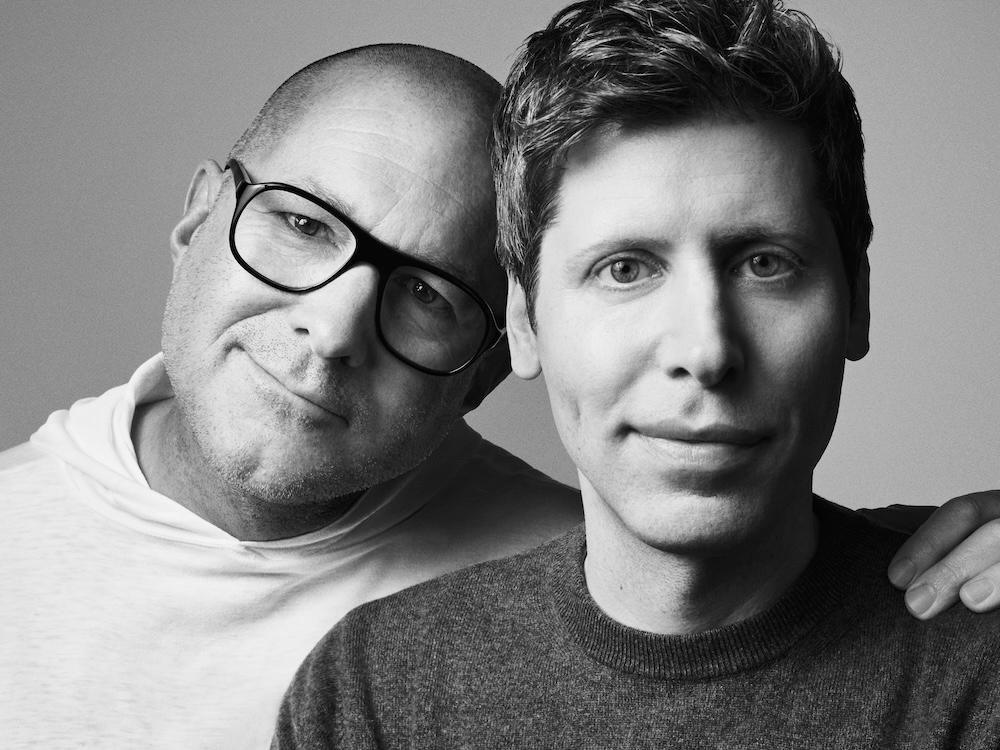
Apple sued OpenAI on Friday for allegedly stealing its trade secrets, an extraordinary move that pits the $4.6 trillion iPhone maker against the fast-growing AI startup as it prepares to release a new class of hardware products that have been shaped in large part by Apple’s former design boss.
In the lawsuit, Apple accused two former employees now working at OpenAI of systematically stealing confidential data, including information about unreleased hardware products, technical specifications, and details about vendors and contractors in Apple’s supply chain.
The complaint also listed OpenAI as a defendant, as well as io Products, a hardware design firm acquired by OpenAI last year that was co-founded by Apple’s former design boss, Jony Ive.
“At every level, from members of its Technical Staff to its Chief Hardware Officer, and in coordination with business partners, OpenAI has been stealing Apple’s trade secrets and confidential information,” Apple said in the 41-page complaint. “OpenAI’s nascent hardware business now rests on the shakiest of foundations, rotten to its core by its illegal reliance on misappropriated trade secrets.”
OpenAI told Fortune in a statement that “we have no interest in other companies’ trade secrets. We remain focused on building innovative technology that empowers people everywhere.”
The lawsuit marks a dramatic escalation between two companies that were once working together to bring OpenAI’s ChatGPT into Apple’s software platforms and Apple’s Siri digital assistant. The partnership between Apple and OpenAI faded over time, and in January, Apple announced that it was turning to Google for its Apple Intelligence efforts. —Sebastian Herrera
SK Hynix shares soar 13% in New York debut, slide 12% in Seoul
Quite a bit of whiplash for SK Hynix over the weekend.
Shares of the South Korean chipmaker rose almost 13% on Friday in their debut on the Nasdaq, driven by the protracted, AI-driven global memory shortage.
Yet the company’s shares in Seoul fell more than 12% on Monday, deepening a slide that began in late June.
What gives? Investors secured their profits, yes, as concerns grew that the memory industry, highly cyclical by nature, may be headed toward oversupply.
Exhibit A: SK Hynix and rival Samsung last week pledged to invest hundreds of billions of dollars in new South Korean chip plants. Exhibit B: SK Group’s chairman hinted in a televised interview last week that it was considering a second U.S. production facility after breaking ground on its first, in Indiana, in April.
Shares of Samsung, which last week reported quarterly profits that were 19X (!) that of one year ago, fell 7%. Same situation: No investor wants to be the last one to leave the party.
In the big picture, things are good for SK Hynix. A decade ago, the company bet big on so-called high-bandwidth memory; today, HBM is a central component of the AI revolution, most notably for Nvidia products. SK Hynix is now one of the largest corporations in South Korea—its shares have more than tripled this year—and is a member of the Kospi Index, which is up 77% year to date.
With proceeds of $16.5 billion, SK Hynix’s debut on the Nasdaq last week is the biggest-ever initial share sale in the U.S. by a foreign company. The company timed its Wall Street debut well, arriving amid the biggest quarter for deals in five years, thanks to—obviously!—AI. —AN
Wyoming blames Meta data center for water system contamination
Officials in Cheyenne, Wyoming say Meta’s data center construction is responsible for the contamination of part of the town’s recycled water system.
The Board of Public Utilities traced the presence of a bacterium discovered in its wastewater treatment facility earlier this year to Goat Systems LLC, a Meta contractor for the tech company’s in-progress 715,000-square-foot data center campus, according to recent public notices from the BOPU.
The bacterium did not enter Cheyenne’s drinking water supply and was found in systems used for irrigation purposes only. Cupriavidus gilardii is a rare organism typically found naturally in water and soil. Infections are extremely rare, the BOPU said, but can pose a threat to elders and immunocompromised individuals.
It was discovered during routine testing in February, prompting the BOPU to temporarily suspend the city’s reclaimed water irrigation program and terminate Meta’s discharge privileges. The board classified the incident as “significant non-compliance with federal pretreatment regulations.”
A Meta spokesperson told Fortune the company is supporting Fortis, its general contractor, in its efforts to resolve the problem, and that Fortis began testing its own water through a third-party environmental specialist, who found no traces of the bacterium.
“Meta is committed to being a good neighbor in Cheyenne,” the spokesperson said.
Pollutants from data center construction and operations are part of the mounting anxieties Americans have around the exploding growth of AI infrastructure around the country. A recent Gallup poll found that about 70% of Americans somewhat or strongly oppose the construction of data centers in their local area. While half of respondents cited environmental concerns, such as excess water usage and deforestation, 16% of respondents cited pollutants, including air and water contamination, among reasons for their opposition. —Sasha Rogelberg
More tech
—SpaceX-owned Cursor is building a general-purpose AI agent to compete with Anthropic’s Claude Cowork.
—New Apple Pencils are expected next year alongside an iPad Pro refresh.
—Phia, the shopping app co-founded by Phoebe Gates, reportedly claimed credit for sales it didn’t actually drive.
—TSMC will build two advanced chip packaging plants in southern Taiwan.
—James Murdoch may have made as much as $7.5 billion from his pre-IPO investment in SpaceX.
—OpenAI’s latest AI model likely has similar vulnerabilities to the one that led to U.S. export controls on Anthropic’s Fable.
—Museum professionals worry that AI tools will undermine trust in their institutions.