
Good morning. On Fortune’s radar today:
- At the Fed, some on Wall Street expect “mutiny.”
- Hamas agrees to disarm.
- Markets: Risk-on, everywhere!
- Chart: We’re using a lot less oil.
- Thank retirees for keeping unemployment down.
- Love Island winners are becoming more boring because of inflation.
➡️ Did someone forward you this email? If you would like to receive this information directly, every morning before the markets open in New York, sign up here.
ONE BIG THING
Hamas agrees to disarm if Israel withdraws from Gaza
Hamas has told the BBC that it has agreed to disarm itself as part of President Donald Trump’s peace plan for Gaza. The agreement is dependent on Israel withdrawing from Gaza. Israel has declined comment so far—raising a huge question about whether a lasting peace can be achieved.
Trump was exultant on his social media platform last night: “This agreement is a critical step towards Gaza finally being governed by a new Palestinian government that will work closely with the Board of Peace to help the Palestinian people. At the same time, Israel will have the security it deserves, with Gaza no longer used as a base for terror attacks,” he said.
“This is a major milestone in the implementation of the Trump 20-Point Plan. The agreement will be carried out in carefully structured phases. As disarmament is completed, Israeli forces will withdraw, and the International Stabilization Force will work with a new Palestinian police force to take responsibility for Gaza being safe for its residents and its neighbors.”
The two sides are at the beginning of what will be a long and complicated process. The most immediate issue is, will Hamas agree to disarm before Israel withdraws or must Israel withdraw first and hope that Hamas sticks to its word?
THE MARKETS
Everything is up!
And just like that, traders shrugged off yesterday’s fear and doubt and became optimistic about the future again. Every single major global index is up this morning—and U.S. futures are up before the bell in New York too. Risk on, everybody!
Among the factors driving the mood are Amazon’s Q2 earnings call last night. Its stock is up 12% in overnight trading after it reported strong demand for its AWS cloud business. Fortune’s Amanda Gerut has the details here.
South Korea’s notoriously volatile KOSPI spiked up nearly 18%, one of its largest single-day gains ever. The index is dominated by two chip stocks, SK Hynix and Samsung, and traders were presumably buoyed by the fact that Amazon, Microsoft and Apple all said on their earnings calls this week that they had strong demand for their services—implying a need for the chips that deliver them.
The price of oil declined despite a new round of attacks by Iran on Egypt, Kuwait, and Bahrain.
- S&P 500 futures were up 0.52% this morning. The index was up 1.66% yesterday.
- In Europe, the Stoxx 600 up 0.79% in early trading and the U.K.’s FTSE 100 was up 0.67% before lunch.
- Asia: South Korea’s KOSPI was up 17.91%. Japan’s Nikkei 225 was up 4.03%. India’s Nifty 50 was up 0.22%. China’s CSI 300 up 0.85%.
- Brent crude was $86 per barrel this morning, down from a high of $91 yesterday.
- Bitcoin declined to $63.7K.
MORE FROM FORTUNE
As the AI industry calls for help to “pace” AI development. Has OpenAI already hit pause on some development? - Beatrice Nolan
Andy Jassy said Amazon will spend $220 billion this year—and still won’t have enough capacity to meet demand - Amanda Gerut
Tim Cook signed off on his final Apple earnings call with a warning about a ‘hundred year flood’ in memory chip pricing - Alexei Oreskovic
The rise of ‘conspicuous waiting’: The 19th-century economic theory that explains why Gen Z posts their place in line - Tatiana Sataua
Millennials say they’ll refuse to care for aging Boomer parents—but they’ll be forced to as their inheritance shrinks to 40 cents on the dollar - Nick Lichtenberg
Meet the jet-setting fashion editor who turned a New York manicure at 23 into Nails.Inc—Despite selling for $40 million, she still wakes at 5:45 a.m. - Orianna Rosa Royle
This Dutch bookseller thought a request for 3,000 copies was ‘spam or phishing.’ Instead, AI companies are scanning and destroying books to train AI - Tatiana Sataua
WHAT HAPPENED WITH WARSH ON WEDNESDAY
At the Fed, ‘mutiny, if need be’
Wall Street is still arguing about that Fed hold, perhaps the most confusing FOMC decision in the last 10 years. The base interest rate is below headline inflation, and has been for years. By that logic, the Fed should have raised the rate. About a third of speculators in Fed futures thought that would happen—an unusual level of uncertainty going into the meeting.
Although Fed chair Kevin Warsh delivered what most expected—no change to the 3.5% level—his remarks sent stocks tumbling on the day and bond yields rising. It even wiped 1.41% off the value of the U.S. dollar—an unusually sharp move for the world’s reserve currency.
Three FOMC members dissented in favor of hiking rates. There has not been a split like that since 2016, when Janet Yellen was the chair, according to Thierry Wizman and Gareth Berry at Macquarie.
The pair now expect the dissenters to (politely) “mutiny, if need be” against Warsh before the next meeting in September. “We expect that the FOMC was wracked by something more serious than a ‘family fight,’” they told clients. “The regional Fed presidents, and perhaps members of the Board, are willing to discuss their views in the open and will be doing so over the next few days and weeks. We expect them to do a lot of damage control, and to highlight how they, if not Warsh, are ready to tighten policy.”
“One way or another, the increasingly hawkish disposition of the senior Fed officials will emit from the comments and appearances they offer in the next few days and weeks … The higher long-term yields go, the more strident the broader group of ‘dissenters’ will become. Warsh can suppress dissent only so much,” they said in an email.
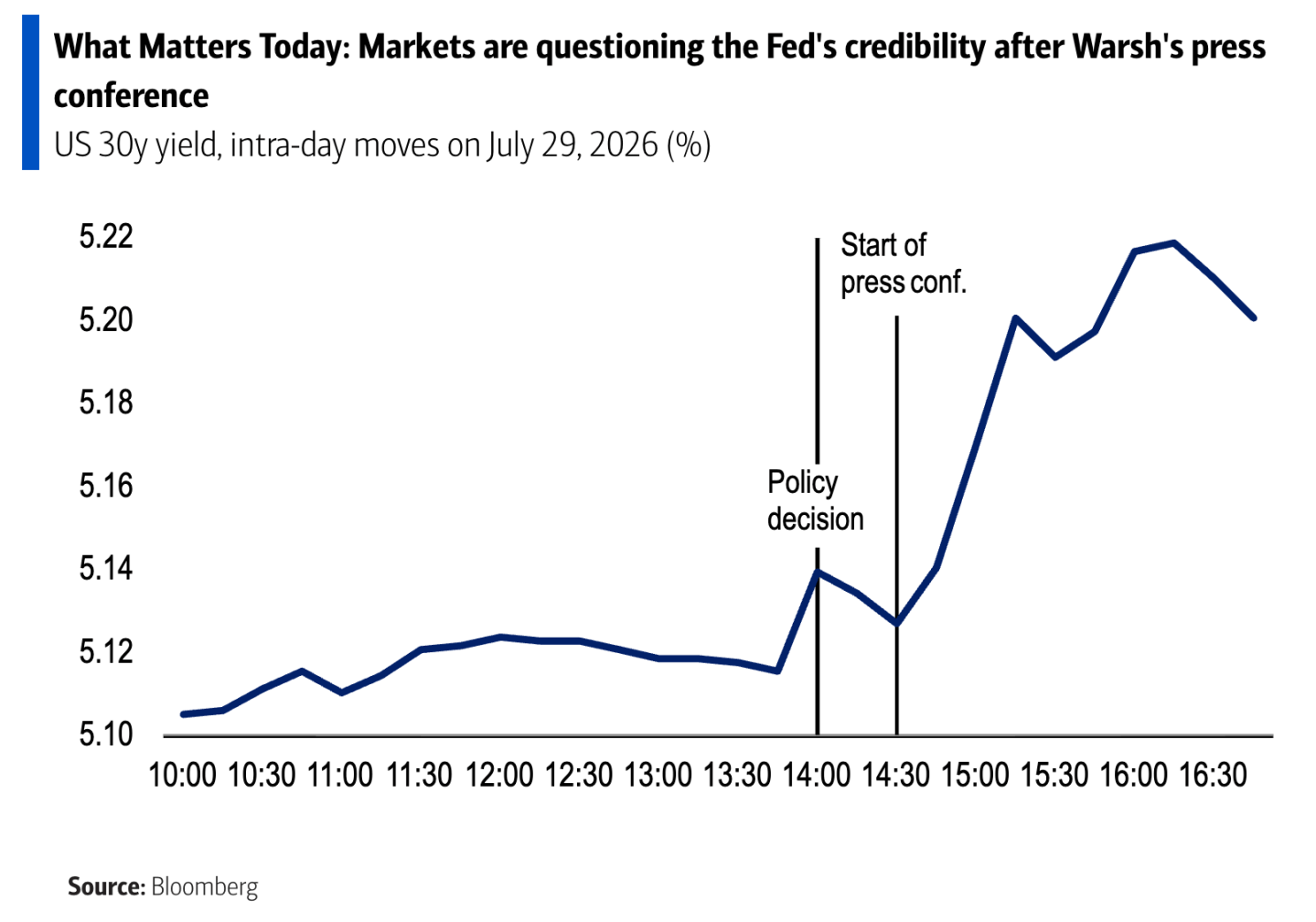
The longer Warsh spoke, the less bond buyers liked it
Bank of America’s Aditya Bhave was unimpressed by Warsh’s reluctance to raise rates. (Although Bhave did not have the advantage of knowing that PCE inflation and GDP growth were both going to come in lower than expected the very next day, while Warsh probably did have an inkling about that.) “Ironically, we think the need to re-establish credibility increases the probability that the Fed will hike in September, all else being equal,” Bhave told clients. He also created this chart showing the bond market having a heart attack as Warsh spoke:
It is possible for a central bank to not cause chaos, apparently
Over at UBS, the typically arch Paul Donovan—who compared Warsh to Gollum from Lord of the Rings two days ago—contrasted the Fed to the central banks of Japan and the U.K. Like the Fed, they also left their interest rates unchanged this week, but chaos did not ensue. “Neither decision prompted a U.S.-style selloff in longer-dated bonds. Bank of England governor Bailey knows how to communicate with markets, and there is no need for a monetary policy uncertainty risk premium in U.K. government bonds,” Donovan noted.
OIL’S NOT WELL
The war with Iran is teaching the world to use less oil
The world’s oil refineries are producing less and less oil, according to Yulia Zhestkova Grigsby and her colleagues at Goldman Sachs. As the war with Iran has made oil more expensive—and harder to ship out of the region—customers are buying less of it once it is refined.
Refinery “runs”—the amount of oil they process per day—are down by 6 million barrels per day, “the lowest seasonal level since Covid,” Grigsby said in a note.
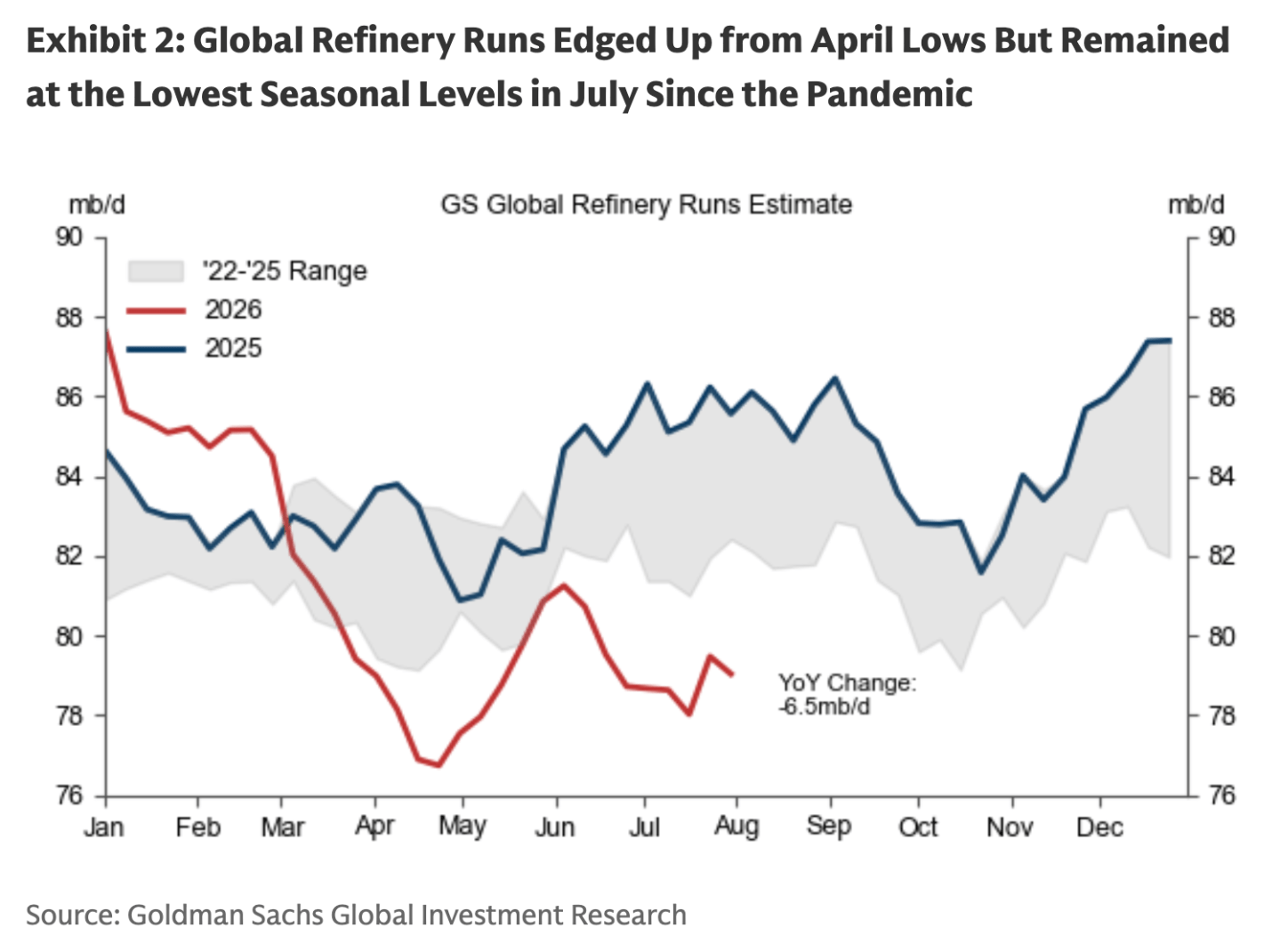
CHART OF THE DAY
Most business investment is AI-related, but the real world is catching up
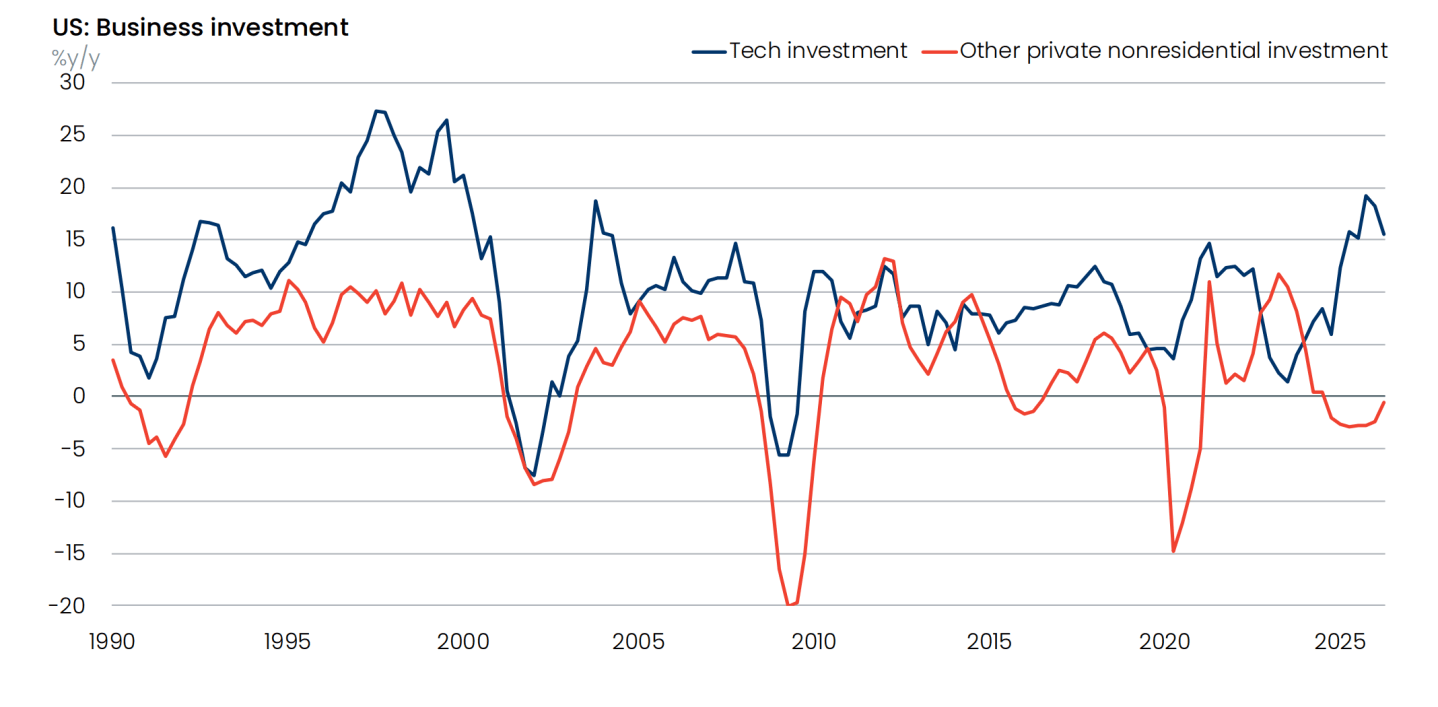
The latest GDP numbers came out yesterday and showed an interesting reversal of a worrying trend. For a while now, business investment has only been positive due to heavy investment in AI. Absent AI, corporate capex would be largely negative. However, as this chart from Oxford Economics’ Michael Pearce shows, non-tech investment turned a corner and may be heading back into positive territory.
NUMBER OF THE DAY
11,000
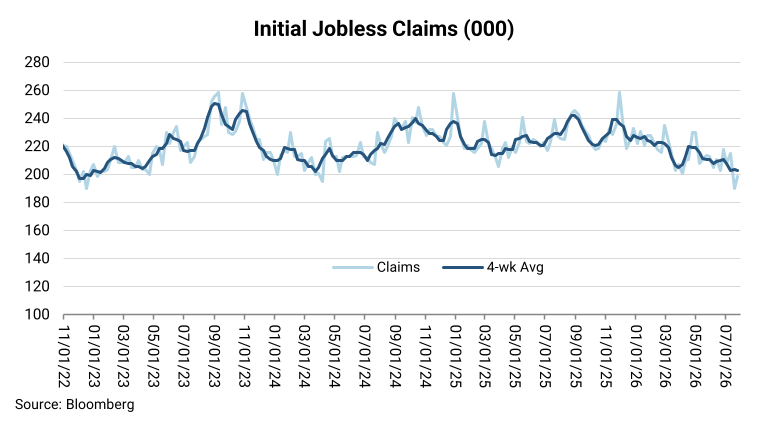
The number of Americans who turn 65 every day, according to Thomas Simons and Michael Bacolas at Jefferies. The high rate of retirements, removing workers from the official workforce, is keeping the labor market in a good place, which is why unemployment remains relatively low and unemployment claims are in decline, they say.
THE FRONT PAGES TODAY
How Leopold Aschenbrenner, the ‘golden child’ of the AI trade, was laid low - FT
Anthropic's models compromised real-world systems during testing - Axios
Deadly storms and a global supply squeeze are sending copper prices soaring - CNBC
‘The Boss Wants This Money’: Inside Trump’s Unprecedented Fundraising Operation - WSJ
Solar to Soon Pass Coal as China’s Top Power Capacity Source - Bloomberg
Accept Your Fate. Don’t Wear Shorts to the Office - NYT
Bosses of canoodling Central Park lawyers were also hooking up — and one just got a $100M payday - NY Post
ONE MORE THING
What Love Island winners spend their money on

Harsh reality awaits the winners of Love Island USA, according to Fortune’s Ellie Pringle. Most people assume that the winning couple takes home $100,000 and then signs a series of brand deals, raking in cash from content creation programs. A life of glamorous endorsements and exotic travel surely awaits!
Nope.
The winners of this year’s series said they will use their bounty to pay off their student loans and pay down some bills. Love Island winners are becoming more boring because of inflation: The prize money hasn't changed since the show started in 2019. If it had kept pace with inflation, it would be worth $130,000.
[Love Island image via Ben Symons/Peacock - Getty Images]
- Would you like to sponsor this newsletter? Contact Polly Raven (polly.raven@fortune.com) for details.