
Millennials and Gen Xers are facing down one of the greatest transfers of wealth in history—with some $124 trillion expected to change hands by 2048. But as wealth inequities simultaneously reach new extremes, the transfer has amplified questions about whether wealthy families are moving fast in their promises of impactful giving.
According to a new report from the Milken Institute about the shifting dynamics of philanthropy, the tension is setting the stage for a “reckoning” in the sector as younger generations gain more influence over family checkbooks.
“Wealth inequalities have never been greater than they are right now, and we have this sharper eye on the wealthy,” said Melissa Stevens, the executive vice president of Milken Institute Strategic Philanthropy and report’s coauthor. “It has raised the stakes.”
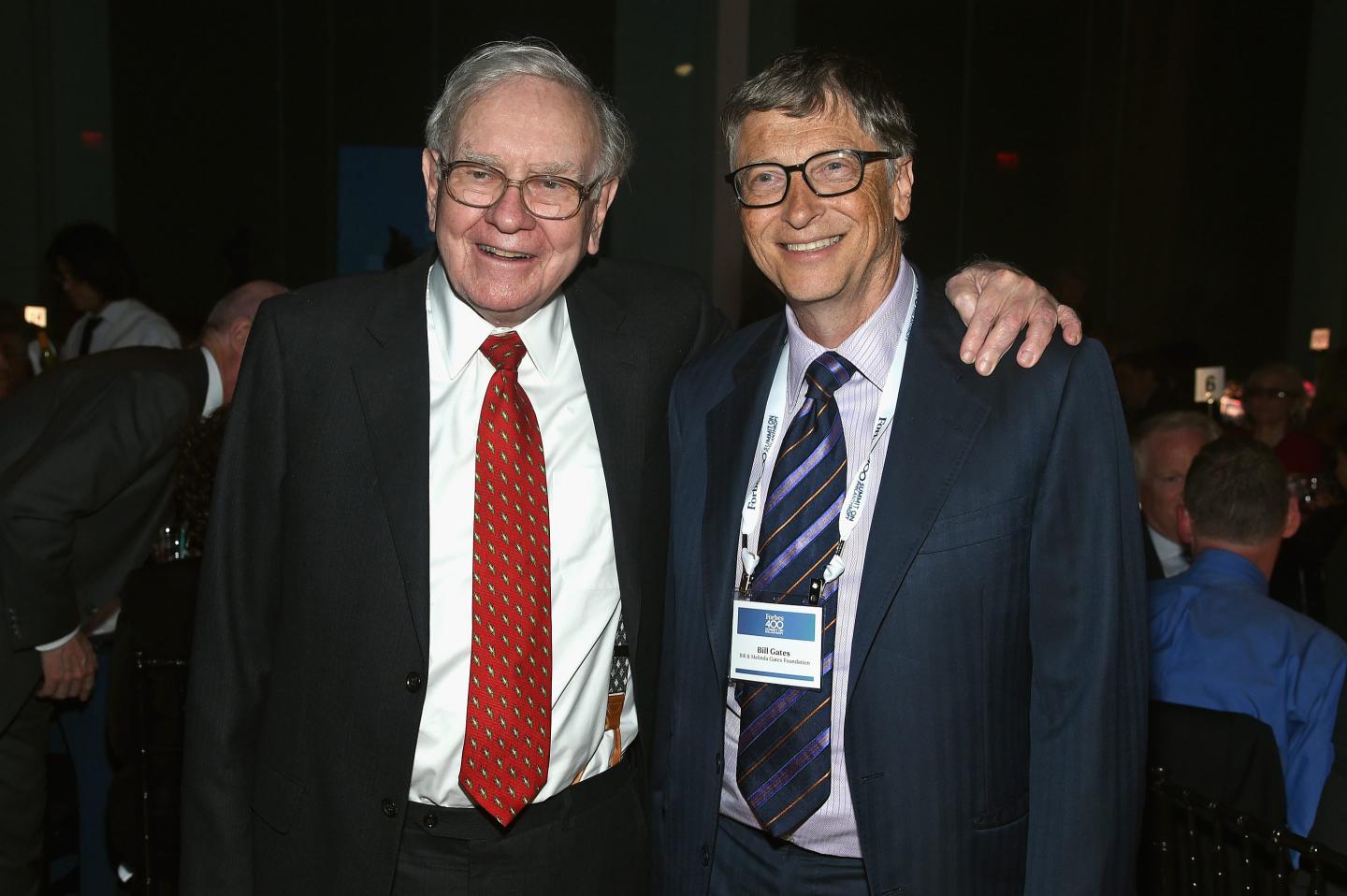
For decades, philanthropy has centered on legacy-building and long-term giving, and some of the world’s wealthiest families have already committed to giving away much of their fortunes through initiatives like the Giving Pledge, launched by Warren Buffett, Bill Gates, and Melinda French Gates in 2010. But as scrutiny over ultra wealth has intensified, many younger heirs have realized their family commitments haven’t always moved fast enough.
Katherine Lorenz, leader of the Giving Pledge’s Next Gen group—a network of heirs and family members involved in shaping philanthropic strategy—said she’s already seeing that shift take hold. Rather than waiting decades for wealth to be distributed, many children and grandchildren of wealthy families are urging older generations to move faster, take more risks, and place more trust in the communities they hope to help.
“I see more younger generation folks pushing on their parents to give more,” Lorenz told Fortune. “[They’re saying], ‘You made enough money, mom and dad. It’s time to give it away and to give it away faster.’”
She added, “Many of them are ready to deploy the capital faster. Sometimes the barrier is the older generation.”
Younger heirs are rewriting the rules of philanthropy
Wealth among the top 1% has been on a historic rise over the last few years. According to Oxfam, billionaire wealth jumped by more than 16% last year alone, to a record high of $18.3 trillion. And it has only fueled increasing apoplectic feelings—especially among young people.
Nearly one-third of adults ages 18 to 29 say they believe it is morally wrong to be “extremely rich,” according to a 2026 Pew survey, compared with just 10% of adults ages 65 and older. While some of that divide may reflect the economic realities facing younger Americans—from soaring housing costs to student debt and the rising cost of everyday necessities—it has also shaped how many heirs view their responsibility to use wealth more urgently—and more strategically.
“They’re not thinking necessarily of themselves as philanthropists,” Stevens said. “They’re thinking of themselves as their angel investors, impact investors, change makers, [and] advocates.”
Instead of simply writing checks to grant award winners, the younger generation is increasingly focused on funding systemic change through impact investing, advocacy, and venture-style philanthropy, Stevens said. Many are prioritizing causes such as climate change, racial justice, and gender equity over other generations’ broader focus on topics like health and education.
Lorenz also said there’s an increased interest in addressing the systems that have caused harm—rather than just putting “Band-Aids on a gaping wound.” She used housing issues as an example. While it’s important to worry about whether or not you can help people avoid sleeping on the street tonight, it’s just as important to ask questions like, “Why do we have so many unhoused people? What is happening, and how do we get fewer people in this situation?”
One of the most prominent examples of the shifting philanthropic dynamics has been MacKenzie Scott. The 56-year-old former wife of Amazon founder Jeff Bezos has distributed some $26 billion over the last six years, largely in unrestricted gifts, allowing recipients—such as HBCUs, DEI groups, and disaster relief organizations—to determine how the money can best be used.
“She is just an exemplar of trust-based philanthropy,” Stevens said. “[It’s] really leaning into that partnership with community in terms of learning from, listening to, and creating with those communities, rather than coming in with some predetermined solution.”
Women, in particular, are expected to play an increasingly influential role in the philanthropic transformation. By 2048, they are projected to inherit roughly $47 trillion—about 56% of all inherited wealth globally. Stevens expects more will likely follow the example of Scott and work together with communities to bring solutions-based impact with their giving.
From oil tycoon family to nearly $1 billion in philanthropy
Lorenz understands the rising tension personally, growing up in an ultrahigh-net-worth family: Her grandfather, George Mitchell, was an oil and real estate tycoon. His company Mitchell Energy & Development was No. 811 on the Fortune 1000 list in 2001, and that same year, it was purchased by Devon Energy for $3.1 billion.
From an early age, Lorenz was drawn to the question of how to put wealth to use. After graduating from North Carolina’s Davidson College in 2001, she spent time in Nicaragua and then Oaxaca, Mexico, where she stayed for about six years and started a nonprofit serving rural Indigenous communities. But it was abroad, she said, that she confronted a central paradox of global philanthropy: the assumption that wealth and expertise naturally translate into solutions.
“You think you have the answer, and you come into communities and realize actually they have more answers than you have,” the now 47-year-old said. “You learn more from them than they learn from you. I had many years of that eye-opening [experience]—thinking I’m coming to help, but really I’m not adding much at all.”
By age 25, she began working at her family’s foundation, the Cynthia and George Mitchell Foundation, where she began applying those lessons—simplifying grantmaking processes and shifting more decision-making power toward local communities.
After her grandfather signed the Giving Pledge in 2010, Lorenz took the helm of the foundation the following year. Then, in 2013, he died, leaving behind 10 children, 27 grandchildren, and a philanthropic legacy that had become much more complicated to steward.
“It doesn’t matter how much you professionalize, how many policies you put in place, how many structures are there,” Lorenz said. “In the end, I would just say family dynamics kind of trump all, in both good ways and bad ways.”
In total, through the foundation’s nearly five decades, it has given away nearly $1 billion to causes mostly around sustainability—including land, water, and energy—as well as education. For Lorenz, the work is just as much about preserving her grandfather’s legacy as accelerating it—a mindset, she hopes, more heirs continue to share.