• Home
  • Latest
  • Fortune 500
  • Finance
  • Tech
  • Leadership
  • Lifestyle
  • Rankings
  • Multimedia

Trendingnow

1

Former U.S. Secret Service agent says bringing your authentic self to work stifles teamwork: 'You don’t get high performers, you get sloppiness'

2

Current price of oil as of June 22, 2026

3

Current price of silver as of Monday, June 22, 2026

1

Former U.S. Secret Service agent says bringing your authentic self to work stifles teamwork: 'You don’t get high performers, you get sloppiness'

2

Current price of oil as of June 22, 2026

3

Current price of silver as of Monday, June 22, 2026
CommentaryUnited Nations

United Nations: business can’t build economic resilience from the sidelines

By
Sanda Ojiambo
Sanda Ojiambo
Down Arrow Button Icon
By
Sanda Ojiambo
Sanda Ojiambo
Down Arrow Button Icon
June 23, 2026, 5:30 AM ET
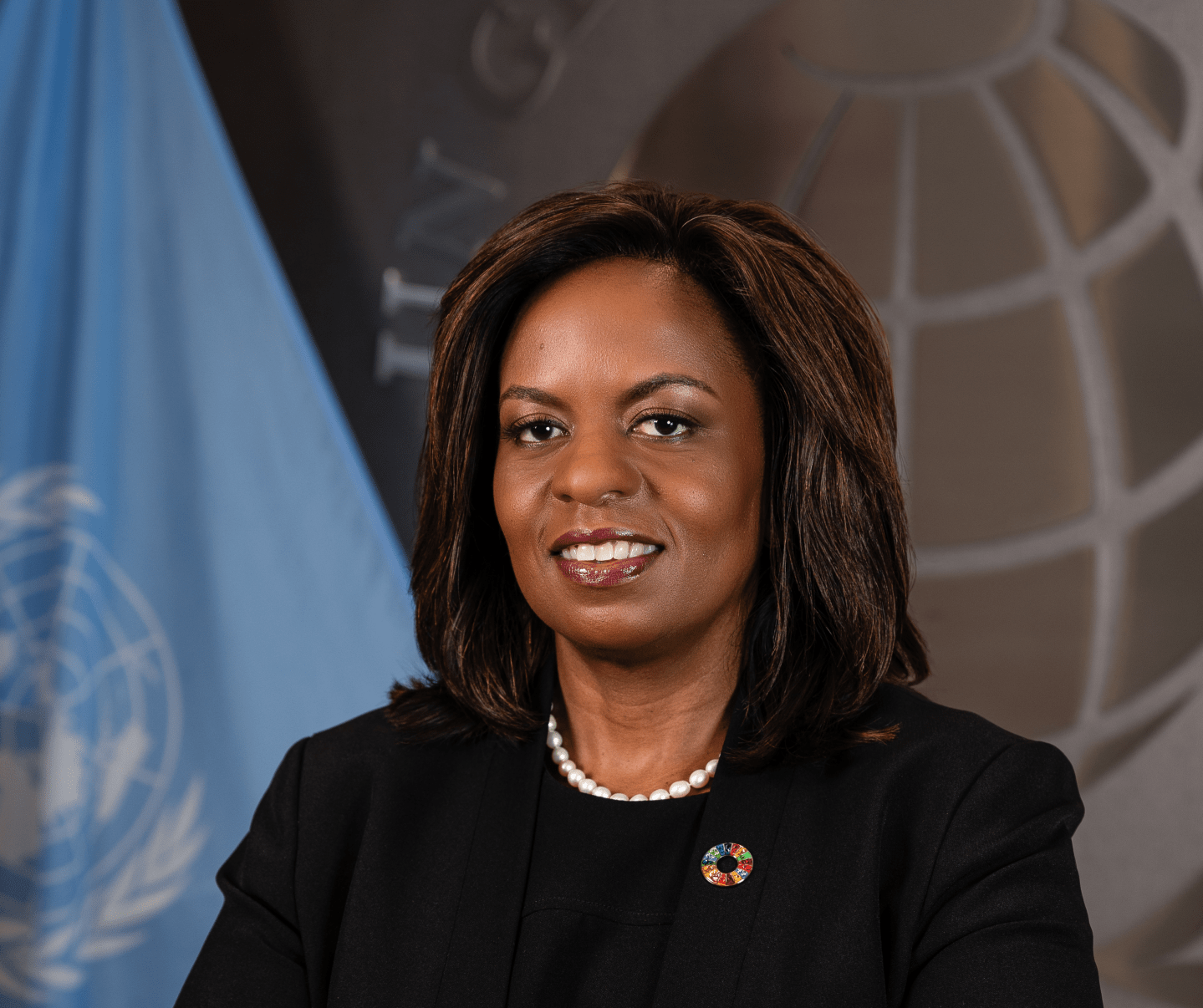
Sanda Ojiambo is CEO and Executive Director of the United Nations Global Compact.
Sanda Ojiambo is CEO and Executive Director of the United Nations Global Compact.courtesy of United Nations
Add Fortune on Google for similar content.

Genuine alignment across governments, multilateral institutions and business can be hard to find. Economic resilience is one area where interests increasingly converge. The challenge is how to build economic resilience at scale in a world defined by geopolitical fragmentation, market volatility and compounding risk.

Recommended Video

Foreign direct investment flows remain uneven. Official development assistance is under pressure. And the estimated $4 trillion annual financing gap for the Sustainable Development Goals (SDGs), the United Nations’ 17 global goals to end poverty, protect the planet and promote prosperity for all by 2030, continues to widen.

Yet within that gap lies a major, underdeveloped opportunity. While much of the financing shortfall will ultimately require public spending and concessional support, an estimated $2.6 trillion of the gap sits in energy and infrastructure. These sectors are well suited for blended finance structures because they combine long-term capital needs with tangible, scalable assets capable of attracting private investment.

At the same time, companies are under growing pressure to invest in resilience: strengthening supply chains, securing energy systems, adapting infrastructure and accelerating industrial transformation. Yet many of the markets and sectors where those investments are needed most are also the same ones where risk, both real and perceived, remains highest.

This is precisely where blended finance matters.

At its core, blended finance is designed to rebalance risk. Public, concessional or catalytic capital absorbs part of the downside, improving the risk-return equation for private investors and helping unlock investment that otherwise would not happen.

When done well, it can deliver tangible results: cleaner steel production in the United Kingdom, expanded digital connectivity in Ethiopia, improved water security in Mexico, and renewable energy deployment in countries such as Zimbabwe, where blended finance is helping expand access to clean power while strengthening economic resilience.

But while blended finance has grown significantly over the past decade, it still has not achieved the scale the world requires. One reason is increasingly difficult to ignore: blended finance is too often designed for business, rather than with business.

For years, the architecture of blended finance has largely been shaped by governments, multilateral development banks and development finance institutions. These actors play an indispensable role. Public capital is often the only funding capable of absorbing early-stage risk and creating the conditions for private investment to flow.

But businesses bring something equally critical: operational reality.

Companies understand where projects stall. They understand supply chains, procurement timelines, customer demand, construction risk and the practical constraints of operating in frontier and emerging markets. They know where capital structures become commercially unworkable and where transaction timelines fail to align with business reality.

Yet despite being the primary implementers of many of these projects, businesses are still too rarely involved early in the design process.

The consequences are visible across the market. Transactions are often bespoke, complex and difficult to replicate. Due diligence can take years. Reporting requirements vary across institutions. Legal structures differ from deal to deal. Many companies, particularly outside the financial sector, still lack practical guidance on how blended finance structures can support their long-term investment strategies.

The issue is not simply mobilizing more capital. It is building a system companies can actually use at scale.

We already know what more effective collaboration can look like.

In the United Kingdom, Tata Steel’s transition at Port Talbot combined a £500 million government grant with approximately £750 million in corporate investment to support lower-carbon steelmaking while preserving industrial capacity and thousands of jobs. In Mexico, Grupo Modelo worked alongside the German Agency for International Cooperation (GIZ), Coca-Cola and other partners to deploy nature-based solutions that strengthen water security while expanding financing opportunities for local farmers.

In both cases, business was not a passive beneficiary. Companies helped shape how risk was allocated, how projects could scale and how commercial logic aligned with national development priorities.

That distinction matters.

Businesses are not simply sources of capital. They are operators, employers, builders and long-term stakeholders in economic systems. A company with deep supplier relationships, procurement power and local market knowledge can often help reduce commercial risk more effectively than financial structuring alone.

This is why the next phase of blended finance must move beyond viewing companies solely as recipients of capital and toward recognizing them as co-architects of investment structures.

That shift is already beginning.

Through initiatives such as the UN Global Compact CFO Coalition for the SDGs, companies, governments, development finance institutions and investors are increasingly working together to move blended finance from fragmented, bespoke transactions toward more practical, scalable models.

Our new report, Business-Led Blended Finance: A Practical Playbook, reflects that evolution. It is designed specifically for real economy companies, helping them navigate blended finance structures, manage risk and engage earlier in project design.

The broader point is simple: public capital alone will never close the global development financing gap. Private capital must play a much bigger role. But private capital will only move at the scale required if businesses are actively involved in shaping how these systems work from the beginning.

Economic resilience cannot be built by governments alone, nor by markets operating in isolation. It will require practical collaboration across both.

Blended finance works best not when it is done for business, but when it is built with business.

The opinions expressed in Fortune.com commentary pieces are solely the views of their authors and do not necessarily reflect the opinions and beliefs of Fortune.

About the Author
By Sanda Ojiambo
See full bioRight Arrow Button Icon
Add Fortune on Google for similar content.

Latest in Commentary

Finance
Lorem ipsum dolor sit amet, consectetur adipiscing elit, sed do eiusmod tempor incididunt ut labore et dolore magna aliqua. Ut enim ad minim veniam
By Fortune Editors
October 20, 2025
Finance
Lorem ipsum dolor sit amet, consectetur adipiscing elit, sed do eiusmod tempor incididunt ut labore et dolore magna aliqua. Ut enim ad minim veniam
By Fortune Editors
October 20, 2025
Finance
Lorem ipsum dolor sit amet, consectetur adipiscing elit, sed do eiusmod tempor incididunt ut labore et dolore magna aliqua. Ut enim ad minim veniam
By Fortune Editors
October 20, 2025
Finance
Lorem ipsum dolor sit amet, consectetur adipiscing elit, sed do eiusmod tempor incididunt ut labore et dolore magna aliqua. Ut enim ad minim veniam
By Fortune Editors
October 20, 2025
Finance
Lorem ipsum dolor sit amet, consectetur adipiscing elit, sed do eiusmod tempor incididunt ut labore et dolore magna aliqua. Ut enim ad minim veniam
By Fortune Editors
October 20, 2025
Finance
Lorem ipsum dolor sit amet, consectetur adipiscing elit, sed do eiusmod tempor incididunt ut labore et dolore magna aliqua. Ut enim ad minim veniam
By Fortune Editors
October 20, 2025

Most Popular

Finance
Lorem ipsum dolor sit amet, consectetur adipiscing elit, sed do eiusmod tempor incididunt ut labore et dolore magna aliqua. Ut enim ad minim veniam
By Fortune Editors
October 20, 2025
Finance
Lorem ipsum dolor sit amet, consectetur adipiscing elit, sed do eiusmod tempor incididunt ut labore et dolore magna aliqua. Ut enim ad minim veniam
By Fortune Editors
October 20, 2025
Finance
Lorem ipsum dolor sit amet, consectetur adipiscing elit, sed do eiusmod tempor incididunt ut labore et dolore magna aliqua. Ut enim ad minim veniam
By Fortune Editors
October 20, 2025
Finance
Lorem ipsum dolor sit amet, consectetur adipiscing elit, sed do eiusmod tempor incididunt ut labore et dolore magna aliqua. Ut enim ad minim veniam
By Fortune Editors
October 20, 2025
Finance
Lorem ipsum dolor sit amet, consectetur adipiscing elit, sed do eiusmod tempor incididunt ut labore et dolore magna aliqua. Ut enim ad minim veniam
By Fortune Editors
October 20, 2025
Finance
Lorem ipsum dolor sit amet, consectetur adipiscing elit, sed do eiusmod tempor incididunt ut labore et dolore magna aliqua. Ut enim ad minim veniam
By Fortune Editors
October 20, 2025
Fortune Secondary Logo
Rankings
  • 100 Best Companies
  • Fortune 500
  • Global 500
  • Fortune 500 Europe
  • Most Powerful Women
  • World's Most Admired Companies
  • See All Rankings
  • Lists Calendar
Sections
  • Finance
  • Fortune Crypto
  • Features
  • Leadership
  • Health
  • Commentary
  • Success
  • Retail
  • Mpw
  • Tech
  • Lifestyle
  • CEO Initiative
  • Asia
  • Politics
  • Conferences
  • Europe
  • Newsletters
  • Personal Finance
  • Environment
  • Magazine
  • Education
Customer Support
  • Frequently Asked Questions
  • Customer Service Portal
  • Privacy Policy
  • Terms Of Use
  • Single Issues For Purchase
  • International Print
Commercial Services
  • Advertising
  • Fortune Brand Studio
  • Fortune Analytics
  • Fortune Conferences
  • Business Development
  • Group Subscriptions
About Us
  • About Us
  • Press Center
  • Work At Fortune
  • Terms And Conditions
  • Site Map
  • About Us
  • Press Center
  • Work At Fortune
  • Terms And Conditions
  • Site Map
  • Facebook icon
  • Twitter icon
  • LinkedIn icon
  • Instagram icon
  • Pinterest icon

Latest in Commentary

ravi
CommentaryAI agents
Yale School of Management: surveillance pricing is just the beginning. AI agents will be the real test of corporate trust
By Ravi Dhar and Jon IwataJune 23, 2026
41 minutes ago
elon
CommentaryElon Musk
Elon Musk’s trillion dollars aren’t real — and that’s the point
By Douglas P. McCormickJune 23, 2026
41 minutes ago
ms
CommentaryCareers
Gen Z: if you want to succeed at work, you need to start friction-maxxing
By Michelle SobelJune 23, 2026
1 hour ago
rp
CommentaryLaw
Cooley CEO: Big Law won’t survive if it treats AI as just an efficiency tool
By Rachel ProffittJune 23, 2026
2 hours ago
gg
CommentaryWorld Cup
CPJ: press freedom must endure the American World Cup
By Gypsy Guillén KaiserJune 23, 2026
2 hours ago
Sanda Ojiambo is CEO and Executive Director of the United Nations Global Compact.
CommentaryUnited Nations
United Nations: business can’t build economic resilience from the sidelines
By Sanda OjiamboJune 23, 2026
3 hours ago

Most Popular

Former U.S. Secret Service agent says bringing your authentic self to work stifles teamwork: 'You don’t get high performers, you get sloppiness'
Success
Former U.S. Secret Service agent says bringing your authentic self to work stifles teamwork: 'You don’t get high performers, you get sloppiness'
By Sydney LakeJune 21, 2026
2 days ago
Current price of oil as of June 22, 2026
Personal Finance
Current price of oil as of June 22, 2026
By Joseph HostetlerJune 22, 2026
23 hours ago
Current price of silver as of Monday, June 22, 2026
Personal Finance
Current price of silver as of Monday, June 22, 2026
By Joseph HostetlerJune 22, 2026
23 hours ago
NBC’s Tom Llamas climbed from 15-year-old intern to the top anchor chair—and still isn’t satisfied: ‘If you're not growing, you're dying'
Success
NBC’s Tom Llamas climbed from 15-year-old intern to the top anchor chair—and still isn’t satisfied: ‘If you're not growing, you're dying'
By Preston ForeJune 21, 2026
2 days ago
The Fed is fed up with inflation and will bring down the hammer with a series of rate hikes this year, reversing earlier cuts, BofA says
Economy
The Fed is fed up with inflation and will bring down the hammer with a series of rate hikes this year, reversing earlier cuts, BofA says
By Jason MaJune 22, 2026
20 hours ago
By 7 a.m., Bank of America’s CEO has already read 5 newspapers, his email inbox, and hit the gym—he says if you’re late to meetings, you’re ‘selfish’
Success
By 7 a.m., Bank of America’s CEO has already read 5 newspapers, his email inbox, and hit the gym—he says if you’re late to meetings, you’re ‘selfish’
By Preston ForeJune 22, 2026
21 hours ago

© 2026 Fortune Media IP Limited. All Rights Reserved. Use of this site constitutes acceptance of our Terms of Use and Privacy Policy | CA Notice at Collection and Privacy Notice | Do Not Sell/Share My Personal Information
FORTUNE is a trademark of Fortune Media IP Limited, registered in the U.S. and other countries. FORTUNE may receive compensation for some links to products and services on this website. Offers may be subject to change without notice.