• Home
  • Latest
  • Fortune 500
  • Finance
  • Tech
  • Leadership
  • Lifestyle
  • Rankings
  • Multimedia

Trendingnow

1

He worked 100-hour weeks to save a nearly bankrupt boat company. At 83, he’s just turned down $400 million for it—and gave it all to charity instead

2

Costco's $14 million email settlement: Who qualifies for an up-to $500 payment and how to claim before the Aug. 24 deadline

3

Mamdani’s pied-à-terre tax was designed to hit the wealthy, but it’s sending most New Yorkers to their estate lawyers

1

He worked 100-hour weeks to save a nearly bankrupt boat company. At 83, he’s just turned down $400 million for it—and gave it all to charity instead

2

Costco's $14 million email settlement: Who qualifies for an up-to $500 payment and how to claim before the Aug. 24 deadline

3

Mamdani’s pied-à-terre tax was designed to hit the wealthy, but it’s sending most New Yorkers to their estate lawyers
Commentarygeopolitics
Asia

Asia drives 60% of global growth, but the region’s CEOs can’t escape geopolitics. Here’s how they can stay competitive

By
Yasushi Sasaki
Yasushi Sasaki
Down Arrow Button Icon
By
Yasushi Sasaki
Yasushi Sasaki
Down Arrow Button Icon
July 30, 2026, 5:00 PM ET
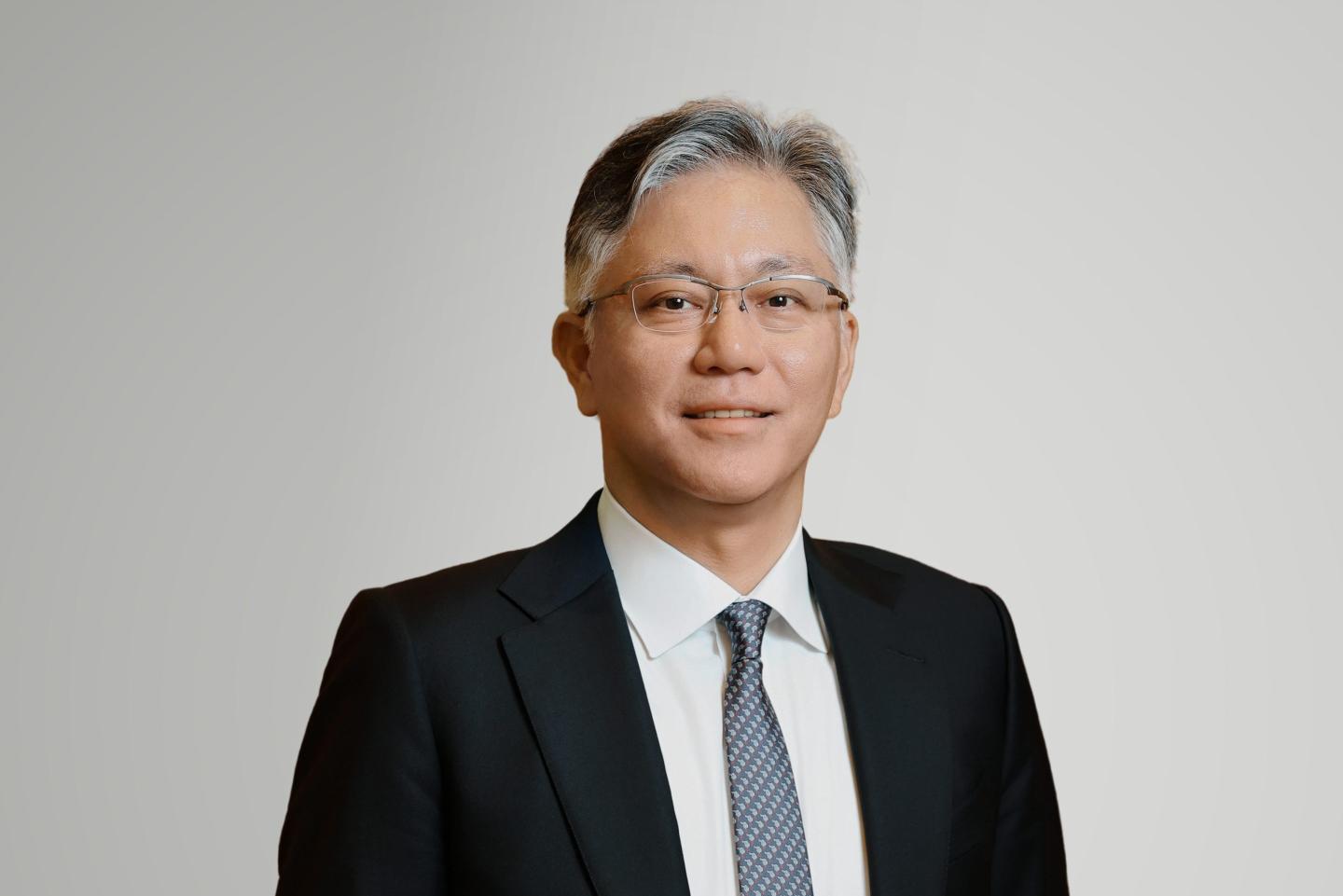
Yasushi Sasaki, Asia-Pacific chair for Boston Consulting Group
Yasushi Sasaki, Asia-Pacific chair for Boston Consulting GroupCourtesy of BCG
Add Fortune on Google for similar content.

Between tariffs, trade disputes, and the closure and reopening of the Strait of Hormuz, “disruption” has moved from being a buzzword to a permanent fixture in the CEO lexicon.

Asia is one of the world’s most dynamic regions in the world. Its demographic scale, industrial depth, and technological capabilities puts it at the centre of future growth. According to the IMF, it drives 60% of global growth.

But even as trade continues to flourish, CEOs can’t escape geopolitics. Asian businesses are navigating the simultaneous effects of fuel price shocks, power shortages, and grid instability. Fragmentation in the form of armed conflicts, tariff disputes and the dissolution of trade blocs is at an all-time high. Geopolitical competition is reshaping trade and investment decisions, as governments try to control key inputs and technologies.

Therefore, CEOs can’t avoid disruption either. Instead, they need to figure out how to excel within it. Corporate executives need to assume that volatility will persist, rather than fade away—and use it to redesign their organizations.

So, how should APAC CEOs stay competitive in a fragmented world?

Specialize in more than one market

Asia is the world’s manufacturing backbone, thanks to dense supplier ecosystems, cost advantages, and deep networks of talent. Asian firms can iterate products, respond to signals, and scale production at a pace unmatched by Western firms.

But many companies in the region are optimized to just one market, because historically this is how they have succeeded: Operations finely tuned to local regulations, supply chains and customer bases have given many an edge. That same efficient localization impacts flexibility, however, and becomes costly when exogenous shocks hit businesses.

To sustain operational momentum, firms need to learn to specialize across multiple economies.

Many midsized firms build resilience into their operations through the China+1 strategy, in which they establish manufacturing centres outside China to mitigate the risk of tariffs or government intervention. They build true multinational networks that can absorb complex supply shocks. Firms that remain optimized for one market concentrate their risk. Any shock to their home market could spell disaster.

OEM manufacturers are vulnerable to this concentration of risk in a single market. China is an important market for many firms, but those in Japan and South Korea, for example, find it hard to expand there. Expanding to India might be a better way to capture growth, but this takes time and a willingness to accept short-term efficiency costs—a trade-off that many firms keep deferring.

To build a system that can flex under geopolitical pressure, firms should consider anchoring advanced manufacturing and high value components in markets where capabilities are strongest, often in Mainland China, Japan, Korea, or Taiwan. Labor-intensive assembly can be distributed across ASEAN, while final market localization expands in India and other growth markets.

Tap Asian sources of capital

Tap Asian sources of capital

Historically, large PE funds in North America drove Asia’s biggest deals. But now, sovereign wealth funds, domestic institutions and Asian corporates are funding manufacturing, infrastructure and technology at a scale that would have been unthinkable a decade ago.

Historically, large PE funds in North America drove Asia’s biggest deals. But now, sovereign wealth funds, domestic institutions and Asian corporates are funding manufacturing, infrastructure and technology at a scale that would have been unthinkable a decade ago.

Given this new flow of capital, corporate leaders now have more options. As funding pools within the region have grown, intraregional mergers have become a more viable path to scale than they have been in the past—one that doesn’t depend on external goodwill or favourable exchange rates.

But capital diversification presents its own risks. Spread relationships too thin and you lose the trust that comes from a deep relationship with a single funder. The real skill for executives is determining how to balance breadth against depth—and defending that decision to shareholders.

Take geopolitical risk management seriously

In a world where policy, trade, and security considerations increasingly shape markets, executives need to actively manage geopolitical risk. Business leaders may not be able to anticipate the specific nature of external shocks, but the more they optimize for resilience, the more effectively they will be able to anticipate and mitigate disruption.

Companies need to invest in functions dedicated to tracking policy developments and trade dynamics. These capabilities must then be embedded into core decision-making so that strategies are grounded in a clear understanding of government priorities and geopolitical realities.

Take energy as an example. Companies must treat energy security as a strategic domain closely tied to policy, rather than just a question of where they get their power from. CEOs will need to build flexibility through a mix of long-term contracts, diverse power sources, and backup capacity, while working with local jurisdictions to help shape and keep abreast of policy direction.

Turning fragmentation into an advantage

It is now clear that the world is not going to back to the way it used to be. Asian CEOs must therefore build resilience across three dimensions.  

Operationally, they need to prioritize flexibility over pure efficiency, viewing diversification as an asset and designing systems across markets and production networks. Doing so means aligning capabilities with geography rather than optimizing for a single centre of efficiency.

Financially, building resilience means accessing capital from more sources, including those closer to home, and deploying it in ways that strengthen long term positioning. This means leveraging strategic partnerships to build scale and capability.

Geopolitically, it requires developing the capability to anticipate and respond to policy and regulatory shifts, embedding these insights into core strategic decisions.

Together, these choices define an integrated resilience model that lets companies operate in an uncertain environment.

Fragmentation also creates a rare opportunity to rethink the fundamentals of the business. Across industries, companies are reassessing long-held assumptions about supply chains, capital structures, and market access as they respond to shifting constraints and opportunities.

Looking ahead, success in APAC will be defined less by maximum efficiency and more by adaptability. The companies that will lead are those that treat fragmentation not as a constraint, but as a catalyst to redesign their operating models, capital strategies, and decision-making frameworks.

The opinions expressed in Fortune.com commentary pieces are solely the views of their authors and do not necessarily reflect the opinions and beliefs of Fortune.

The Fortune Leaders Forum will convene Fortune 500 executives and founders of leading Asian companies to help define the future of leadership in an age of convergence and complexity. September 8 in Macau. Apply here.
About the Author
By Yasushi Sasaki
See full bioRight Arrow Button Icon
Add Fortune on Google for similar content.

Latest in Commentary

Finance
Lorem ipsum dolor sit amet, consectetur adipiscing elit, sed do eiusmod tempor incididunt ut labore et dolore magna aliqua. Ut enim ad minim veniam
By Fortune Editors
October 20, 2025
Finance
Lorem ipsum dolor sit amet, consectetur adipiscing elit, sed do eiusmod tempor incididunt ut labore et dolore magna aliqua. Ut enim ad minim veniam
By Fortune Editors
October 20, 2025
Finance
Lorem ipsum dolor sit amet, consectetur adipiscing elit, sed do eiusmod tempor incididunt ut labore et dolore magna aliqua. Ut enim ad minim veniam
By Fortune Editors
October 20, 2025
Finance
Lorem ipsum dolor sit amet, consectetur adipiscing elit, sed do eiusmod tempor incididunt ut labore et dolore magna aliqua. Ut enim ad minim veniam
By Fortune Editors
October 20, 2025
Finance
Lorem ipsum dolor sit amet, consectetur adipiscing elit, sed do eiusmod tempor incididunt ut labore et dolore magna aliqua. Ut enim ad minim veniam
By Fortune Editors
October 20, 2025
Finance
Lorem ipsum dolor sit amet, consectetur adipiscing elit, sed do eiusmod tempor incididunt ut labore et dolore magna aliqua. Ut enim ad minim veniam
By Fortune Editors
October 20, 2025

Most Popular

Finance
Lorem ipsum dolor sit amet, consectetur adipiscing elit, sed do eiusmod tempor incididunt ut labore et dolore magna aliqua. Ut enim ad minim veniam
By Fortune Editors
October 20, 2025
Finance
Lorem ipsum dolor sit amet, consectetur adipiscing elit, sed do eiusmod tempor incididunt ut labore et dolore magna aliqua. Ut enim ad minim veniam
By Fortune Editors
October 20, 2025
Finance
Lorem ipsum dolor sit amet, consectetur adipiscing elit, sed do eiusmod tempor incididunt ut labore et dolore magna aliqua. Ut enim ad minim veniam
By Fortune Editors
October 20, 2025
Finance
Lorem ipsum dolor sit amet, consectetur adipiscing elit, sed do eiusmod tempor incididunt ut labore et dolore magna aliqua. Ut enim ad minim veniam
By Fortune Editors
October 20, 2025
Finance
Lorem ipsum dolor sit amet, consectetur adipiscing elit, sed do eiusmod tempor incididunt ut labore et dolore magna aliqua. Ut enim ad minim veniam
By Fortune Editors
October 20, 2025
Finance
Lorem ipsum dolor sit amet, consectetur adipiscing elit, sed do eiusmod tempor incididunt ut labore et dolore magna aliqua. Ut enim ad minim veniam
By Fortune Editors
October 20, 2025
Fortune Secondary Logo
Rankings
  • 100 Best Companies
  • Fortune 500
  • Global 500
  • Fortune 500 Europe
  • Most Powerful Women
  • World's Most Admired Companies
  • See All Rankings
  • Lists Calendar
Sections
  • Finance
  • Fortune Crypto
  • Features
  • Leadership
  • Health
  • Commentary
  • Success
  • Retail
  • Mpw
  • Tech
  • Lifestyle
  • CEO Initiative
  • Asia
  • Politics
  • Conferences
  • Europe
  • Newsletters
  • Personal Finance
  • Environment
  • Magazine
  • Education
Customer Support
  • Frequently Asked Questions
  • Customer Service Portal
  • Privacy Policy
  • Terms Of Use
  • Single Issues For Purchase
  • International Print
Commercial Services
  • Advertising
  • Fortune Brand Studio
  • Fortune Analytics
  • Fortune Conferences
  • Business Development
  • Group Subscriptions
About Us
  • About Us
  • Press Center
  • Work At Fortune
  • Terms And Conditions
  • Site Map
  • About Us
  • Press Center
  • Work At Fortune
  • Terms And Conditions
  • Site Map
  • Facebook icon
  • Twitter icon
  • LinkedIn icon
  • Instagram icon
  • TikTok icon
  • YouTube icon

Latest in Commentary

Asia drives 60% of global growth, but the region’s CEOs can’t escape geopolitics. Here’s how they can stay competitive
Commentarygeopolitics
Asia drives 60% of global growth, but the region’s CEOs can’t escape geopolitics. Here’s how they can stay competitive
By Yasushi SasakiJuly 30, 2026
1 hour ago
byd
CommentaryChina
McKinsey auto leader: China’s auto industry is faster, cheaper and better. Here’s how the West can close the gap 
By Philipp KampshoffJuly 30, 2026
12 hours ago
f
CommentaryPandemic
Dr. Fauci, the Lockdown Czar, just won’t go away
By Steve H. HankeJuly 29, 2026
24 hours ago
f
CommentaryMarkets
Dr. Fauci, the Age of Big Players in science and what his diary reveals about the disputed origins of Covid
By Steve H. Hanke and Roger KopplJuly 29, 2026
1 day ago
Nnamdi Iregbulem is a partner at Lightspeed Venture Partners
CommentaryVenture Capital
Button-mashing never worked in StarCraft. Tokenmaxxing won’t work in AI
By Nnamdi IregbulemJuly 29, 2026
1 day ago
orla
Commentarybenefits
The Benefits Activation Gap: what claims data teaches us about employee engagement
By Orla NixonJuly 29, 2026
1 day ago

Most Popular

He worked 100-hour weeks to save a nearly bankrupt boat company. At 83, he’s just turned down $400 million for it—and gave it all to charity instead
Success
He worked 100-hour weeks to save a nearly bankrupt boat company. At 83, he’s just turned down $400 million for it—and gave it all to charity instead
By Preston ForeJuly 29, 2026
1 day ago
Costco's $14 million email settlement: Who qualifies for an up-to $500 payment and how to claim before the Aug. 24 deadline
Retail
Costco's $14 million email settlement: Who qualifies for an up-to $500 payment and how to claim before the Aug. 24 deadline
By Sydney LakeJuly 29, 2026
1 day ago
Mamdani’s pied-à-terre tax was designed to hit the wealthy, but it’s sending most New Yorkers to their estate lawyers
Real Estate
Mamdani’s pied-à-terre tax was designed to hit the wealthy, but it’s sending most New Yorkers to their estate lawyers
By Catherina GioinoJuly 30, 2026
15 hours ago
'Am I paying for the vibes?' Gen Z says it hates capitalism, but their spending patterns show they just don't like being ripped off
Retail
'Am I paying for the vibes?' Gen Z says it hates capitalism, but their spending patterns show they just don't like being ripped off
By Nick LichtenbergJuly 30, 2026
11 hours ago
Current price of oil as of July 30, 2026
Personal Finance
Current price of oil as of July 30, 2026
By Joseph HostetlerJuly 30, 2026
12 hours ago
The millennial generation is split in 2: an older crowd with boomer-style comfort, a younger set going 'back to the early 1900s'
Real Estate
The millennial generation is split in 2: an older crowd with boomer-style comfort, a younger set going 'back to the early 1900s'
By Nick LichtenbergJuly 25, 2026
5 days ago

© 2026 Fortune Media IP Limited. All Rights Reserved. Use of this site constitutes acceptance of our Terms of Use and Privacy Policy | CA Notice at Collection and Privacy Notice | Do Not Sell/Share My Personal Information
FORTUNE is a trademark of Fortune Media IP Limited, registered in the U.S. and other countries. FORTUNE may receive compensation for some links to products and services on this website. Offers may be subject to change without notice.