• Home
  • Latest
  • Fortune 500
  • Finance
  • Tech
  • Leadership
  • Lifestyle
  • Rankings
  • Multimedia

Trendingnow

1

'I literally was crying last night because I’m nervous about what I’m going to find out': a record 51% of Americans aren't 'cost secure' on health

2

Jeff Bezos pledged $10 billion for climate change. With the 2030 clock ticking, his wife, Lauren Sánchez Bezos, is leading the charge to spend it

3

A new trade war may be brewing. This time, Europe is taking a page from Trump's playbook — 'We no longer live in a world of pink ponies and rainbows'

1

'I literally was crying last night because I’m nervous about what I’m going to find out': a record 51% of Americans aren't 'cost secure' on health

2

Jeff Bezos pledged $10 billion for climate change. With the 2030 clock ticking, his wife, Lauren Sánchez Bezos, is leading the charge to spend it

3

A new trade war may be brewing. This time, Europe is taking a page from Trump's playbook — 'We no longer live in a world of pink ponies and rainbows'
InnovationInfrastructure

Over 40,000 American bridges have structurally deficient ratings. Why aren’t we using quantum sensors on them?

By
Alex Krasnok
Alex Krasnok
and
The Conversation
The Conversation
Down Arrow Button Icon
By
Alex Krasnok
Alex Krasnok
and
The Conversation
The Conversation
Down Arrow Button Icon
June 21, 2026, 10:31 AM ET
b
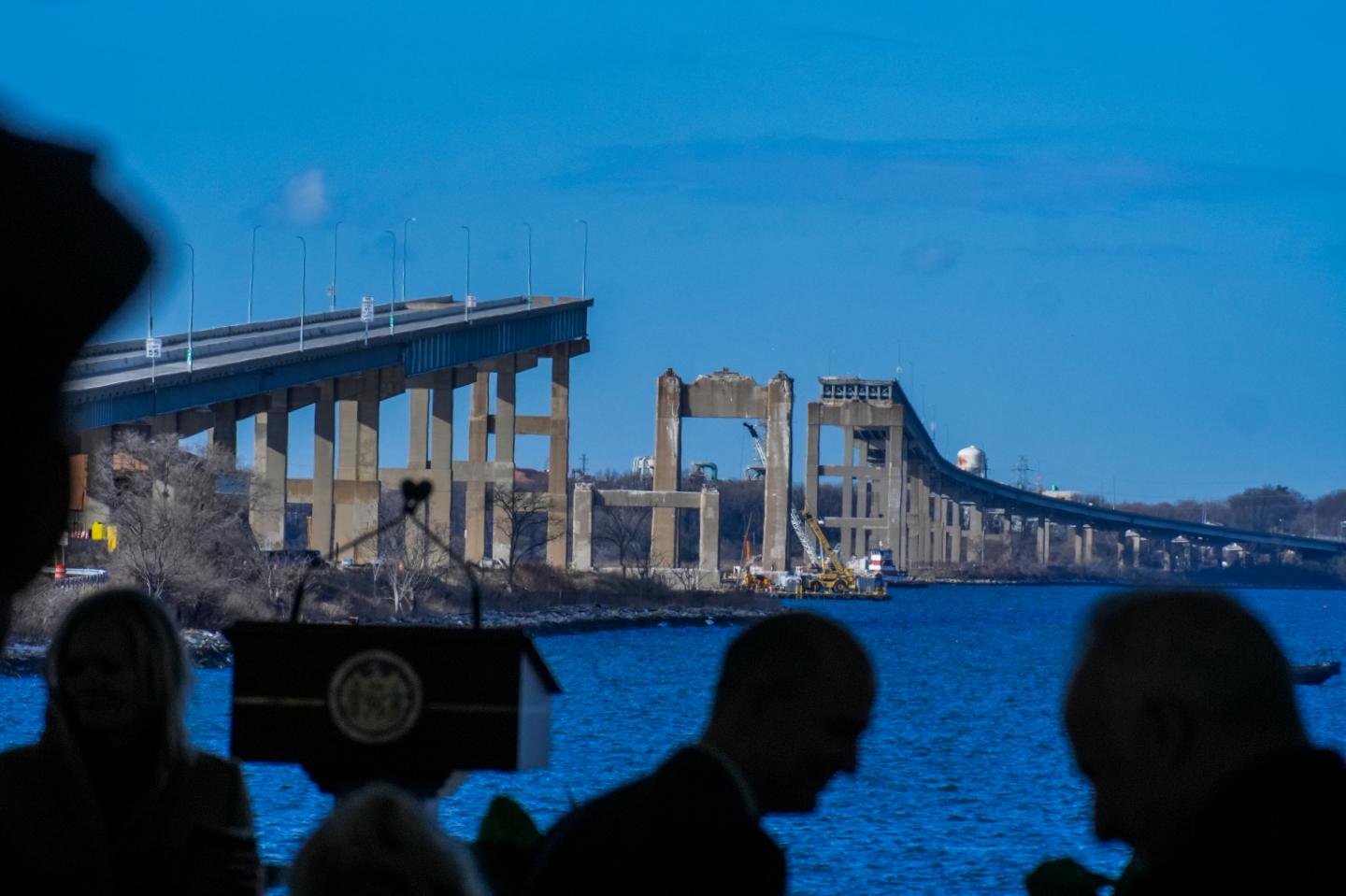
A damaged Francis Scott Key Bridge sits under the rising sun at a ceremony to commemorate the one year anniversary of the collapse of the Francis Scott Key Bridge on March 26, 2025, in Dundalk, MD. A year ago, six men working on the bridge lost their lives, with one survivor, when a cargo ship collided with the bridge.Jahi Chikwendiu/The Washington Post via Getty Images
Add Fortune on Google for similar content.

Every bridge has parts that drivers never see: steel buried in concrete, welds tucked under girders, and soil packed around foundations below the waterline. A bridge can look fine from the road while rust spreads around steel hidden inside concrete. A small fatigue crack can lengthen. A flood can wash soil away from a pier. By the time cracks, loose concrete or lane closures appear, the cheapest repair window may already have closed.

Recommended Video

When it comes to these damaged bridges, this problem is national. The United States has more than 624,000 highway bridges. About 220,000 need major repair or replacement, and 41,677 are rated poor, also called structurally deficient. While “poor” does not mean unsafe, it does mean at least one key bridge element received a poor rating, indicating deterioration or cracking that will require significant repair.

As a researcher who studies photonics and quantum sensing, I work on devices that measure faint or hidden signals. My lab applies physics to develop devices, including quantum sensors. Advanced sensors of this type might one day be able to help engineers pinpoint where to look to determine whether hidden damage in infrastructure is worsening. However, they cannot replace human inspectors.

Inspections keep bridges safe, but are snapshots

Federal bridge inspections – rooted in National Bridge Inspection Standards mandated by Congress in 1968 – exist because past failures showed that small defects can threaten large structures.

Under current federal rules, many bridges must be inspected in, at most, 24-month intervals. Higher-risk bridges, such as those carrying heavy interstate traffic, those with aging structures or known defects, or those built over saltwater, may require shorter intervals. Lower-risk bridges with lighter traffic and sound materials may qualify for longer intervals.

Those inspections remain essential, but they are snapshots. A bridge may change during the months between visits. Corrosion can spread below a deck that looks sound. A small crack can sit inside a weld. A river can displace soil from a foundation while the roadway above looks unchanged. Sensors extend inspections by tracking these change that form between scheduled checks.

Hidden damage can grow quietly

The three common hidden threats to bridges are corrosion, fatigue and scour. Corrosion begins when water, oxygen and salts reach steel. A concrete layer usually protects steel, but cracks, salt spray and chloride ions from seawater or deicing salts can break that protection. The rust then expands, much like ice widening a crack in a sidewalk. It pushes the concrete outward and can cause the material to come loose or the layers to separate.

Fatigue damage is the bridge version of bending a paper clip back and forth. Just as a paper clip eventually snaps after repeated bending, a bridge’s steel components weaken and break down under continuous cycles of stress. Thousands of heavy vehicles can make tiny cracks grow near welds, bolted connections or older steel details.

Scour damage is different: Moving water removes soil around the bridge’s foundations. The bridge above can look stable, while the support below loses the ground it needs.

Waiting costs more

The earlier engineers can identify damage to aging bridges, the more time and options they have to fix them. The average U.S. bridge is about 47 years old. Many bridges are near or past the 50-year life they were designed for, and about 45% have exceeded their planned design lives.

Typically, it’s less costly to preserve bridges in fair condition than those already in poor condition. Making all the identified necessary U.S. bridge repairs would cost about US$467 billion.

Past failures show why small details matter. As one example, the 2007 I-35W bridge collapse in Minneapolis was partially due to undersized gusset plates – steel plates that connect the intersecting beams in a bridge’s structural framework – along with added weight and construction loads. The collapse killed 13 people and injured 145. https://www.youtube.com/embed/pu-Ra95jl5k?wmode=transparent&start=0 Monitoring bridges can pinpoint structural damage that could eventually lead to devastating collapses.

Sensors alone are not a cure for such failures, but better measurements can help engineers notice when important details are changing.

Sensors help engineers look, listen and scan

Sensor systems are easiest to categorize based on what they do.

Some sensors see: Drones can photograph cracks and loose concrete, infrared cameras can show heat patterns linked to damaged deck zones, and LiDAR, short for light detection and ranging, can build three-dimensional maps.

Some sensors listen: Ultrasonic testing and impact-echo probes send sound waves into concrete or steel, acoustic emission sensors listen for active cracking, and accelerometers track how a bridge vibrates.

Some sensors scan below the surface. Specialized radio tools try to locate hidden steel, trapped moisture, empty pockets or crumbling layers inside the concrete. Meanwhile, magnetic and electrical instruments attempt to guess whether that buried steel is rusting away.

The value of sensors often comes from combining methods. One bridge deck inspection robot uses subsurface radar, electrical tools that measure moisture, and a standard camera to collect data. It then builds simple visual maps showing the exact health of the bridge deck. Fiber-optic sensing could be another route. Researchers have shown that existing telecommunication cables can record bridge vibration signatures.

Sensors are evidence, not verdicts

While instruments provide crucial clues about a structure’s condition, they do not automatically dictate the solution. Engineers still need to examine the bridge design, inspection history, traffic loads, weather, material condition and measurement uncertainty before deciding whether to repair, restrict traffic or close a bridge.

Field data is messy. Wet concrete can blur radar results. Traffic, wind and temperature can mask vibration changes.

The best systems answer narrow questions: Where is the concrete deck beginning to split into horizontal layers underneath the surface? Is this crack actively widening? Is a suspension cable losing its structural strength because its inner steel wires are rusting away? Is the fast-moving water washing away the critical soil supporting the bridge’s underwater foundations after a storm?

Quantum sensors are a frontier

Quantum sensors may help when the signs of structural distress are weak, buried or noisy. These devices use quantum systems, such as atoms or electron spins, as highly sensitive probes.

By measuring how these atomic properties shift in response to extremely subtle changes in gravity, motion or magnetic fields, the sensors can detect flaws that traditional instruments miss.

For bridges, the nearest-term opportunity is likely magnetic inspection. My team and I co-authored a review, which has not yet been peer-reviewed, on quantum magnetometers for infrastructure inspection. These sensors identify signals from induction responses, magnetic flux leakage, stress, corrosion and operational currents.

In plain terms, these sensors may help map weak magnetic fields near steel, cables or electrical conductors. Changes or disruptions in these local magnetic fields can reveal hidden rust, snapped wire strands inside a thick suspension cable, or abnormal stress points in the steel before a crack even forms.
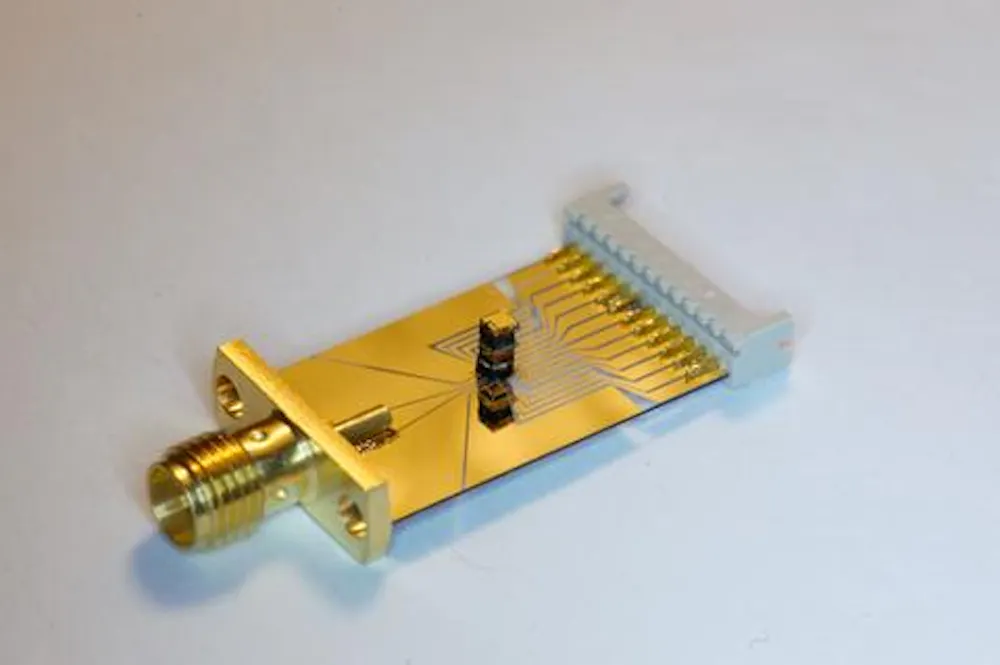
a small piece of electronics
Atomic magnetometers are a type of sensor that use atoms in a vapor cell to measure faint magnetic fields. They can operate at room temperature. J. Kitching/NIST

The hard part is not building a record-setting sensor in a quiet lab, but rather making a device that works on a noisy bridge, near traffic, weather, steel and electrical interference. Quantum sensors will matter only where they beat cheaper classical tools in real inspection conditions.

The goal is not to make every bridge smart. The goal is to make damage harder to hide. Sensors give engineers more ways to see inside concrete, steel, soil and water, turning some surprise closures into repairs planned months earlier.

The public may never notice the best use of bridge sensors. That is the point: The safest infrastructure technology often works before a problem becomes visible from the road.

Alex Krasnok, Assistant Professor of Electrical & Computer Engineering, Florida International University

This article is republished from The Conversation under a Creative Commons license. Read the original article.

The Conversation
The Fortune 500 Innovation Forum will convene Fortune 500 executives, U.S. policy officials, top founders, and thought leaders to help define what’s next for the American economy, Nov. 16-17 in Detroit. Apply here.
About the Authors
By Alex Krasnok
See full bioRight Arrow Button Icon
By The Conversation
See full bioRight Arrow Button Icon
Add Fortune on Google for similar content.

Latest in Innovation

Finance
Lorem ipsum dolor sit amet, consectetur adipiscing elit, sed do eiusmod tempor incididunt ut labore et dolore magna aliqua. Ut enim ad minim veniam
By Fortune Editors
October 20, 2025
Finance
Lorem ipsum dolor sit amet, consectetur adipiscing elit, sed do eiusmod tempor incididunt ut labore et dolore magna aliqua. Ut enim ad minim veniam
By Fortune Editors
October 20, 2025
Finance
Lorem ipsum dolor sit amet, consectetur adipiscing elit, sed do eiusmod tempor incididunt ut labore et dolore magna aliqua. Ut enim ad minim veniam
By Fortune Editors
October 20, 2025
Finance
Lorem ipsum dolor sit amet, consectetur adipiscing elit, sed do eiusmod tempor incididunt ut labore et dolore magna aliqua. Ut enim ad minim veniam
By Fortune Editors
October 20, 2025
Finance
Lorem ipsum dolor sit amet, consectetur adipiscing elit, sed do eiusmod tempor incididunt ut labore et dolore magna aliqua. Ut enim ad minim veniam
By Fortune Editors
October 20, 2025
Finance
Lorem ipsum dolor sit amet, consectetur adipiscing elit, sed do eiusmod tempor incididunt ut labore et dolore magna aliqua. Ut enim ad minim veniam
By Fortune Editors
October 20, 2025

Most Popular

Finance
Lorem ipsum dolor sit amet, consectetur adipiscing elit, sed do eiusmod tempor incididunt ut labore et dolore magna aliqua. Ut enim ad minim veniam
By Fortune Editors
October 20, 2025
Finance
Lorem ipsum dolor sit amet, consectetur adipiscing elit, sed do eiusmod tempor incididunt ut labore et dolore magna aliqua. Ut enim ad minim veniam
By Fortune Editors
October 20, 2025
Finance
Lorem ipsum dolor sit amet, consectetur adipiscing elit, sed do eiusmod tempor incididunt ut labore et dolore magna aliqua. Ut enim ad minim veniam
By Fortune Editors
October 20, 2025
Finance
Lorem ipsum dolor sit amet, consectetur adipiscing elit, sed do eiusmod tempor incididunt ut labore et dolore magna aliqua. Ut enim ad minim veniam
By Fortune Editors
October 20, 2025
Finance
Lorem ipsum dolor sit amet, consectetur adipiscing elit, sed do eiusmod tempor incididunt ut labore et dolore magna aliqua. Ut enim ad minim veniam
By Fortune Editors
October 20, 2025
Finance
Lorem ipsum dolor sit amet, consectetur adipiscing elit, sed do eiusmod tempor incididunt ut labore et dolore magna aliqua. Ut enim ad minim veniam
By Fortune Editors
October 20, 2025
Fortune Secondary Logo
Rankings
  • 100 Best Companies
  • Fortune 500
  • Global 500
  • Fortune 500 Europe
  • Most Powerful Women
  • World's Most Admired Companies
  • See All Rankings
  • Lists Calendar
Sections
  • Finance
  • Fortune Crypto
  • Features
  • Leadership
  • Health
  • Commentary
  • Success
  • Retail
  • Mpw
  • Tech
  • Lifestyle
  • CEO Initiative
  • Asia
  • Politics
  • Conferences
  • Europe
  • Newsletters
  • Personal Finance
  • Environment
  • Magazine
  • Education
Customer Support
  • Frequently Asked Questions
  • Customer Service Portal
  • Privacy Policy
  • Terms Of Use
  • Single Issues For Purchase
  • International Print
Commercial Services
  • Advertising
  • Fortune Brand Studio
  • Fortune Analytics
  • Fortune Conferences
  • Business Development
  • Group Subscriptions
About Us
  • About Us
  • Press Center
  • Work At Fortune
  • Terms And Conditions
  • Site Map
  • About Us
  • Press Center
  • Work At Fortune
  • Terms And Conditions
  • Site Map
  • Facebook icon
  • Twitter icon
  • LinkedIn icon
  • Instagram icon
  • Pinterest icon

Latest in Innovation

b
InnovationInfrastructure
Over 40,000 American bridges have structurally deficient ratings. Why aren’t we using quantum sensors on them?
By Alex Krasnok and The ConversationJune 21, 2026
2 hours ago
Sam Altman thinks AI will surpass human intelligence by 2030.  His rival AI billionaires say it’ll be even sooner
AISam Altman
Sam Altman thinks AI will surpass human intelligence by 2030. His rival AI billionaires say it’ll be even sooner
By Marco Quiroz-GutierrezJune 21, 2026
6 hours ago
p
CommentaryInternet
GoDaddy Corporate Domains chief: The next Internet land rush is happening right now
By Phil LodicoJune 20, 2026
1 day ago
Why odds of SpaceX merger with Tesla keep climbing every time the stock shoots up
Big TechSpaceX
Why odds of SpaceX merger with Tesla keep climbing every time the stock shoots up
By Shawn TullyJune 20, 2026
1 day ago
SpaceX executives celebrate the IPO with confetti
C-SuiteSpaceX
Meet the SpaceX insiders Elon Musk trusts to run his $2.4 trillion dollar empire
By Lily Mae LazarusJune 20, 2026
1 day ago
g
CommentaryVenture Capital
I watched enterprises buy AI that solved the wrong problem. So I left Dell and built a startup to fix it
By Ganesh PadmanabhanJune 19, 2026
2 days ago

Most Popular

'I literally was crying last night because I’m nervous about what I’m going to find out': a record 51% of Americans aren't 'cost secure' on health
Health
'I literally was crying last night because I’m nervous about what I’m going to find out': a record 51% of Americans aren't 'cost secure' on health
By Ali Swenson, Amelia Thomson-Deveaux and The Associated PressJune 20, 2026
23 hours ago
Jeff Bezos pledged $10 billion for climate change. With the 2030 clock ticking, his wife, Lauren Sánchez Bezos, is leading the charge to spend it
Environment
Jeff Bezos pledged $10 billion for climate change. With the 2030 clock ticking, his wife, Lauren Sánchez Bezos, is leading the charge to spend it
By Sydney LakeJune 19, 2026
2 days ago
A new trade war may be brewing. This time, Europe is taking a page from Trump's playbook — 'We no longer live in a world of pink ponies and rainbows'
Economy
A new trade war may be brewing. This time, Europe is taking a page from Trump's playbook — 'We no longer live in a world of pink ponies and rainbows'
By Jason MaJune 20, 2026
18 hours ago
Nvidia CEO Jensen Huang says electricians and plumbers will be needed by the hundreds of thousands in the new working world
Success
Nvidia CEO Jensen Huang says electricians and plumbers will be needed by the hundreds of thousands in the new working world
By Preston ForeJune 20, 2026
1 day ago
Former VP Kamala Harris says she went through a nine-hour interview to land the job—but she couldn’t escape ‘gold medal depression’ even when she won
Success
Former VP Kamala Harris says she went through a nine-hour interview to land the job—but she couldn’t escape ‘gold medal depression’ even when she won
By Emma BurleighJune 21, 2026
6 hours ago
The Great Recession’s missing children are finally bringing college’s financial crisis into sight. Welcome to the ‘enrollment volatility’ era
Economy
The Great Recession’s missing children are finally bringing college’s financial crisis into sight. Welcome to the ‘enrollment volatility’ era
By Tristan BoveJune 20, 2026
1 day ago

© 2026 Fortune Media IP Limited. All Rights Reserved. Use of this site constitutes acceptance of our Terms of Use and Privacy Policy | CA Notice at Collection and Privacy Notice | Do Not Sell/Share My Personal Information
FORTUNE is a trademark of Fortune Media IP Limited, registered in the U.S. and other countries. FORTUNE may receive compensation for some links to products and services on this website. Offers may be subject to change without notice.