
Good morning. On Fortune’s radar today:
- See the new Fortune 500 ranking for 2026 here.
- Markets: Mixed as oil is on the rise again.
- Wall Street thinks Trump can’t reopen the Strait of Hormuz.
- Some people suspect yesterday’s job openings number was simply wrong.
- How long it takes to earn enough money to buy a World Cup ticket, ranked by country.
- Mark Cuban will (maybe) give you a lot of money if you send him an email.
ONE BIG THING
The new Fortune 500 ranking is out!
The Fortune 500, in its 72nd year, ranks the biggest U.S. companies, both private and public, by revenue. And this year, for the first time in more than a decade, it has a new No. 1, as Amazon ends Walmart’s 13-year winning streak. Together, the companies on the list combined for $21.0 trillion in revenue and $2.1 trillion in profits last year, while employing 30.5 million people worldwide. Read more about the 2026 list at the links below.
From our exclusive reporting:
- How Amazon dethroned Walmart at the top of the ranking - Phil Wahba
- Intel’s new CEO cut management layers in half. The stock is up nearly 500% - Jeff John Roberts
- An AI overhaul at Macy’s is fueling the 168-year-old retailer’s turnaround - Phil Wahba
- How Kelly Ortberg is rebuilding Boeing from the inside out - Shawn Tully
THE MARKETS
Stocks are mixed as oil heads back toward $100-per-barrel
- S&P 500 futures were down 0.17% this morning. The index rose 0.13% yesterday to set another new record, at 7,609.78.
- In Europe, the Stoxx 600 was down 0.49% in early trading and the U.K.’s FTSE 100 was down 0.22% before lunch.
- Asia: Japan’s Nikkei 225 was up 2.5%. India’s Nifty 50 was down 0.33%. China’s CSI 300 was up 0.49%. South Korea’s markets are closed.
- Brent crude was $98 this morning.
- Bitcoin was at $67K.
Is it 1987, again?
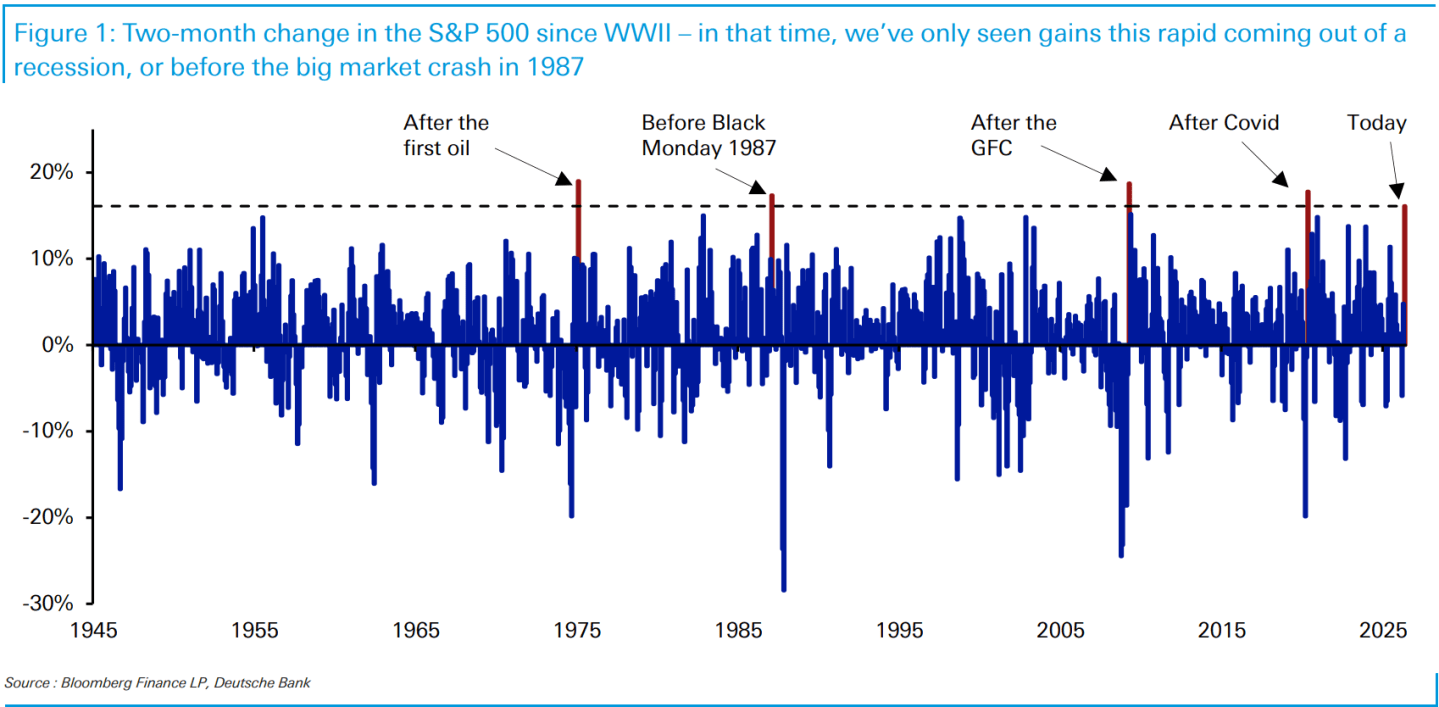
Deutsche Bank spotted something it says is “alarming” in the S&P 500. Recent gains in stocks have been so fast that there have only been four occasions since World War II when they approached this pace. “On three of those four occasions, it was a classic post-recession bounceback, when the economy was emerging from the first oil shock, the [Great Financial Crisis], and Covid-19. However, the other time it happened was in 1987,” the team said in a note to clients.
The mere mention of “1987” will send chills down the spines of traders of a certain age. “Over January and February that year, there was a big +17% rally, and the momentum continued until the summer. But then it came to a sudden halt, with the S&P down by a third in less than two months, including a single-day decline of -20.5%,” Deutsche said. That, of course, was Black Monday.
IRAN
Wall Street is losing faith in Trump’s ability to reopen the Strait of Hormuz
The U.S. and Iran engaged in more military strikes last night, with the U.S. bombing Qeshm Island in the Strait of Hormuz, and Iran sending drones at Kuwait’s international airport and missiles targeting Bahrain that were intercepted, the BBC reports.
Wall Street—which on Monday and Tuesday had dared to hope that the U.S. and Iran were making progress on a deal to end the conflict—is much more pessimistic this morning. The price of Brent crude oil rose to $98 per barrel this morning, up from $93 24 hours ago.
Here’s what analysts told clients this morning:
- “The Gulf crisis is far from resolved and every day the Strait of Hormuz remains shut brings us closer to the tipping point (some see that in September) where inventory drawdowns can no longer offset shut-in production.”—ING’s Chris Turner.
- “Oil prices look too cheap relative to when markets see Hormuz traffic flows normalizing.”—RBC’s Peter Schaffrik et al.
- “We’ve seen increasing pessimism that a US-Iran deal to re-open the Strait of Hormuz is imminent. … Prior to that, we saw little sign yesterday of concrete steps towards an imminent deal.”—Deutsche Bank’s Jim Reid et al.
President Trump attempted to reassure the world that peace talks were ongoing. Posting on Truth Social yesterday, he said:
- “Fake News Reports that the Islamic Republic of Iran, and the U.S.A., stopped speaking a few days ago are false and erroneous. The conversations between us have been going on continuously, including four days ago, three days ago, two days ago, one day ago, and today. Where they lead, one never knows, but as I told Iran, “‘It’s time, one way or another, for you to make a Deal. You’ve been doing this for 47 years, and it cannot be allowed to go on any longer!’”
Why is this taking so long?
Prior to the conflict, the Trump Administration made several tactical assumptions that turned out to be wrong, according to this must-read analysis from The New York Times.
The White House underestimated Iran’s willingness to close the Strait, and keep it closed, because officials believed that would force Tehran into the “economic suicide” of giving up its own oil exports, the report suggests. The administration believed that because it assumed Iran would mine the Strait, thus preventing any shipping from passing. In reality, Iran used very few mines. Instead, it is harassing shipping with cheap drones fired from onshore locations—thus allowing its own ships to navigate the Strait while enemy vessels remain stranded.
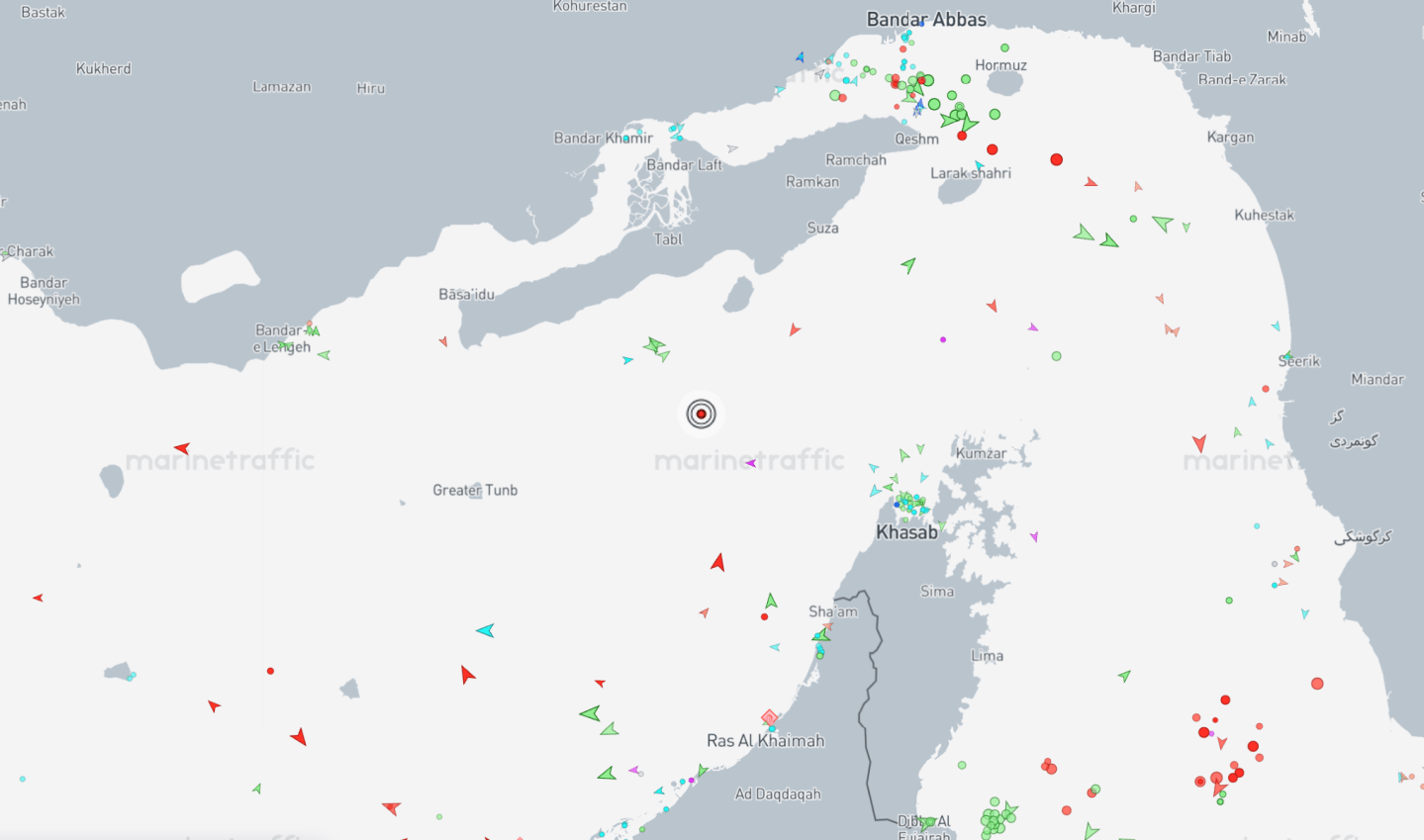
- Where is the Rich Starry? The Chinese-owned tanker that Fortune has been tracking—it’s the large dot in the middle of this map from MarineTraffic.com—has not moved since mid-April.
“ILLUSORY”
Some people on Wall Street suspect yesterday’s job openings number is wrong
It’s becoming a bit of a theme among macro analysts this year: The U.S. federal government publishes some economic data, and then Wall Street economists say, “Er, this doesn’t look right.” Yesterday, the official number of new job openings (JOLTS, in econ lingo) rose to 7.6 million in April. That was well above analysts’ guesstimates—they thought it would be only be 6.87 million. As you can see on this chart from Sam Tombs and Oliver Allen at Pantheon Macroeconomics, the jump in job vacancies does look awfully sudden:
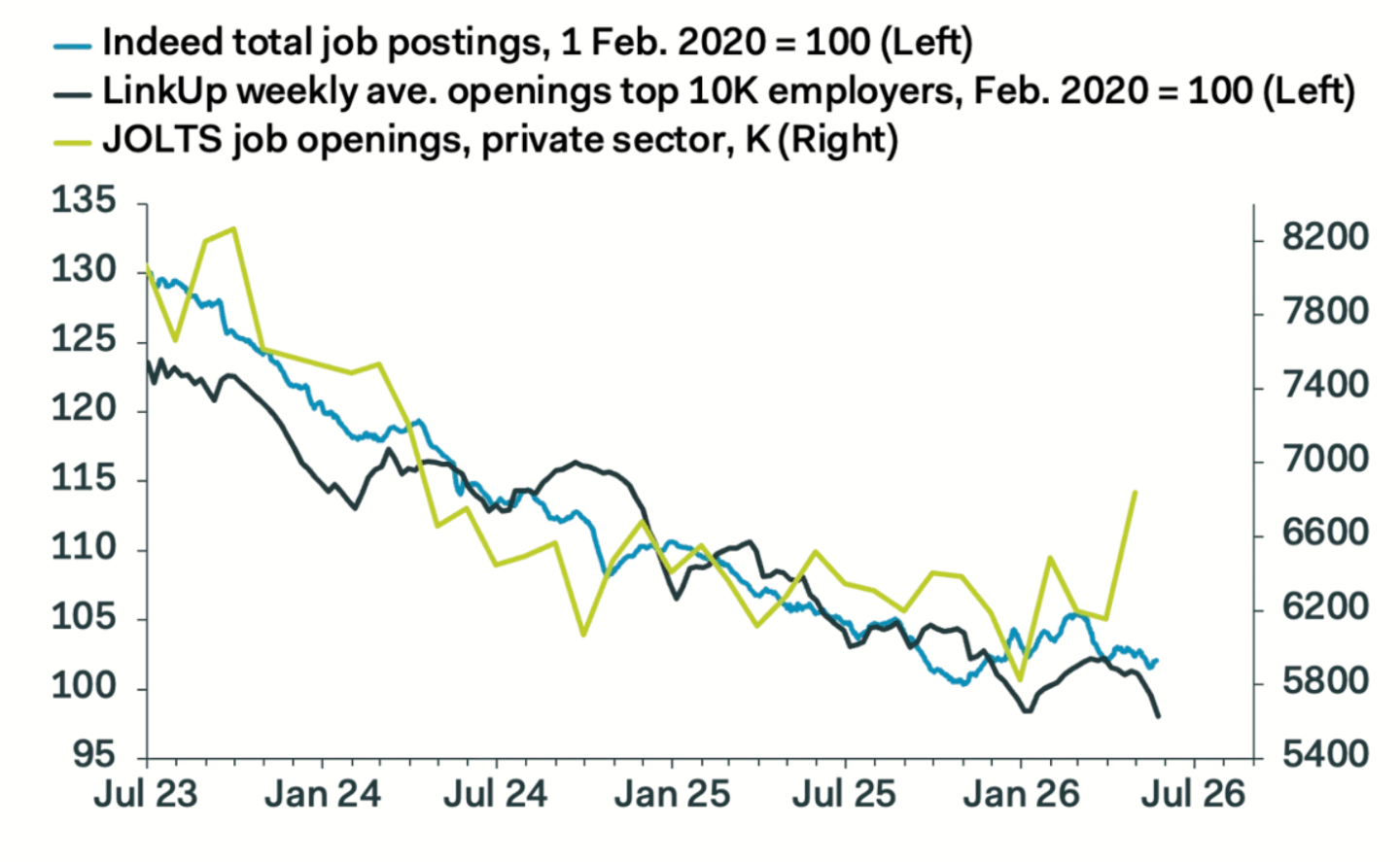
“We strongly expect April’s jump in job openings to be revised away in time,” they told clients. The vast majority of the increase came from a single sector, “professional and business services.” The Labor Department has revised this number before. “We think it is just as likely that April's big increase in openings also proves illusory,” they said.
Oxford Economics’ Matthew Martin also raised an eyebrow, noting that the rate of total hiring actually dropped in the same period. “The result should be taken with a grain of salt,” he said in a note seen by Fortune.
MORE FROM FORTUNE
Microsoft seeks to be AI’s center of gravity again. CEO Satya Nadella is in San Francisco to make the case - Sebastian Herrera
Victoria’s Secret CEO rejected ‘woke-washing’ and endless sales cycles—and it’s paying off - Eva Roytburg
Chipotle COO calls hiring one of the ‘most painful processes’—so his AI bot ‘Ava Cado’ cut it from 12 days to 4 - Preston Fore
Southwest exec says the free bag and assigned seating overhaul is already paying off - Preston Fore
CHART OF THE DAY
There’s inflation in the number of Wall Street analysts monitoring inflation
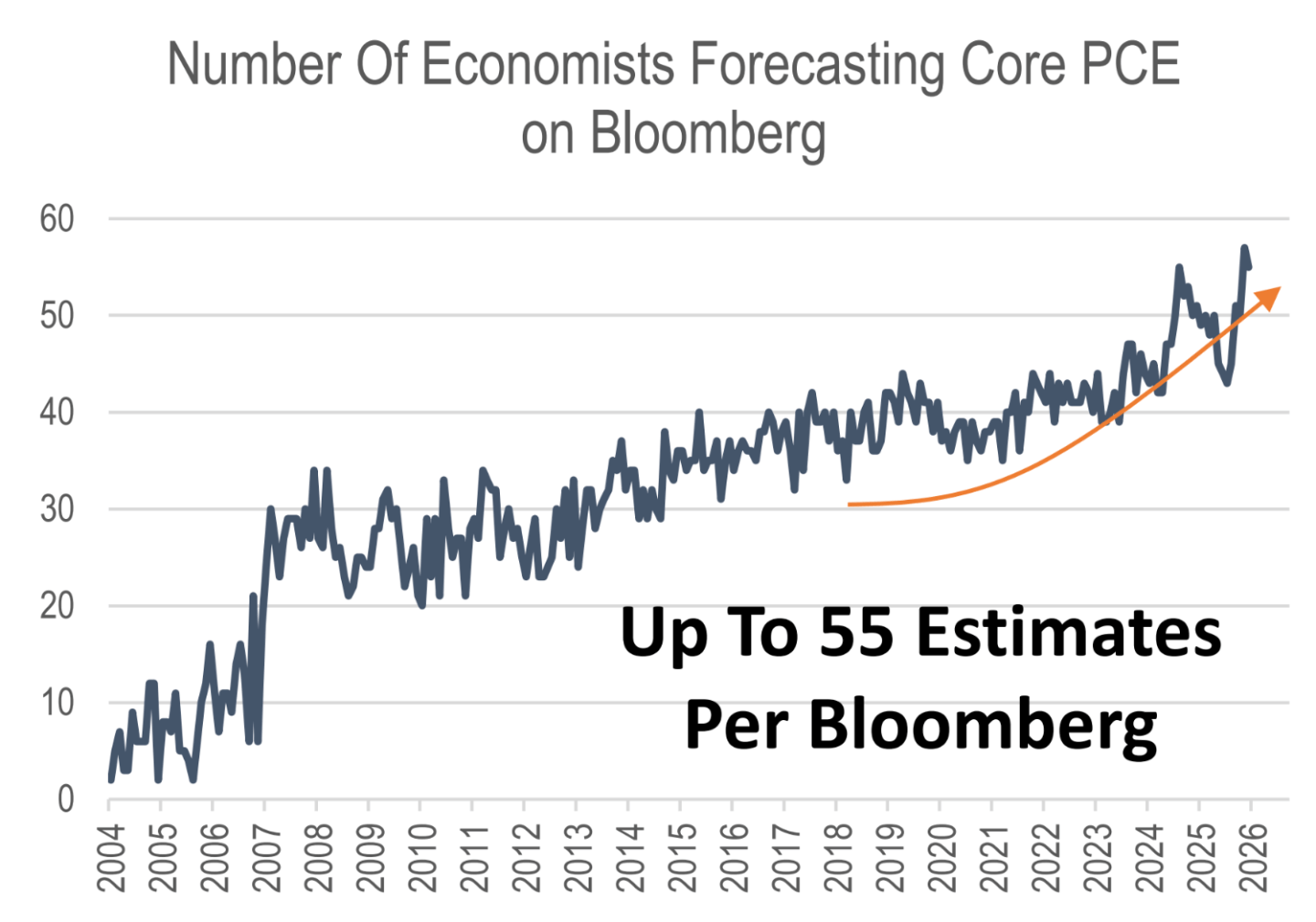
What’s Wall Street’s biggest economic worry right now? Inflation, probably. Consider that there are more economists—55!— registering monthly forecasts with Bloomberg of “core” inflation (i.e. personal consumption expenditure, or PCE), than at any time in history, according to Piper Sandler. “There have never been so many inflation watchers,” Michael Kantrowitz and his colleagues at Piper say, “Wall Street is more tuned into inflation data than we've ever seen before!”
NUMBER OF THE DAY
4.7
The number of years it would take a person on the average wage in Iran to earn enough money to buy tickets, fly to the U.S., pay for a hotel, transport and food, and watch one World Cup match, as calculated by AskGamblers.com. At the other end of the scale, it would take an American just 1.8 days of working on average wages to afford the same thing.
THE FRONT PAGES TODAY
US announces new tariffs over forced labour concerns - BBC
Inside Alexandr Wang’s bid to revive Meta’s AI edge - FT
Perplexity CEO: One metric will determine who wins the AI race - CNBC
Scott Pelley fired from "60 Minutes" following testy exchange - Axios
SpaceX Seeks $135 a Share for $75 Billion IPO, Reuters Says - Bloomberg
Trump Signs Executive Order Seeking Oversight of A.I. Models - NYT
ONE MORE THING
You might as well email Mark Cuban and ask him for money because there is a non-zero chance he will send you a lot of it
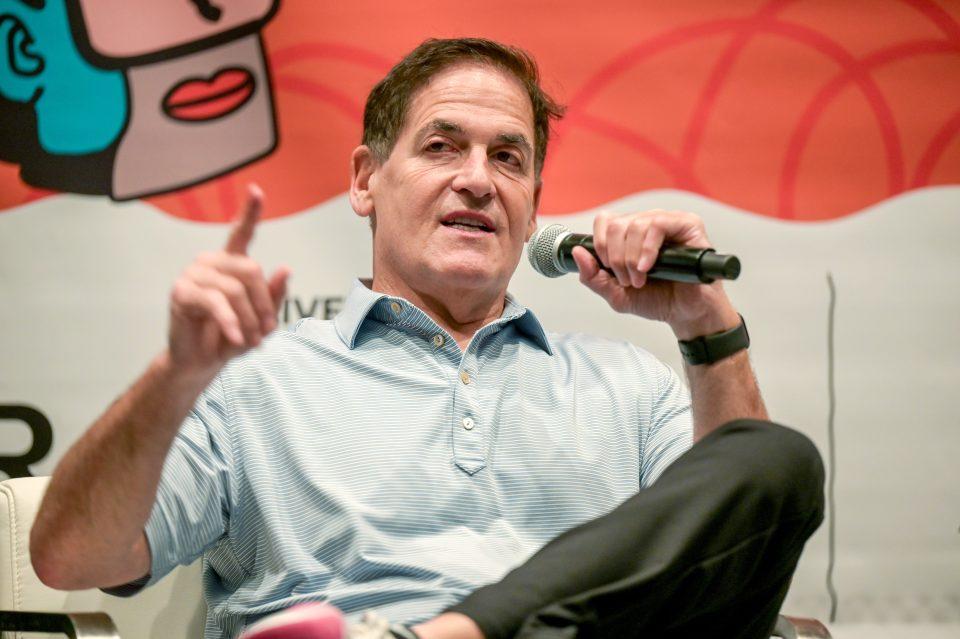
Mark Cuban once bought a $25 million Dallas mansion sight unseen, calling it his one “why the f–k not purchase.” But one of his most lucrative gambles started even more casually: with a cold email from a stranger he says he’s still never met. A young entrepreneur named Tim Ellis—an ex-intern at Blue Origin (Jeff Bezos’ space company)—once cold-emailed him with an investment pitch for a startup that would use 3D printing to make parts for rockets. Without even meeting Ellis, Cuban sent him $500,000. That company, Relativity Space, is now valued at $4 billion. And Cuban has still never met Ellis. “It was all email, never met him,” he said on a podcast spotted by Fortune’s Sydney Lake.