• Home
  • Latest
  • Fortune 500
  • Finance
  • Tech
  • Leadership
  • Lifestyle
  • Rankings
  • Multimedia

Trendingnow

1

Jeff Bezos wants the bottom half of earners to pay zero income tax—he says nurses making just $75K should save $12K a year

2

Despite a $500 million net worth, Shaq just finished his fourth degree. He warns graduates: 'Your character will take you further than your resume'

3

Bolt CEO says he let go of his entire HR team for creating problems that didn’t exist: ‘Those problems disappeared when I let them go’ 

1

Jeff Bezos wants the bottom half of earners to pay zero income tax—he says nurses making just $75K should save $12K a year

2

Despite a $500 million net worth, Shaq just finished his fourth degree. He warns graduates: 'Your character will take you further than your resume'

3

Bolt CEO says he let go of his entire HR team for creating problems that didn’t exist: ‘Those problems disappeared when I let them go’ 
CommentaryRobotics

Former NASA Robotics Chief: America is building the wrong kind of robots — and China knows it

By
Robert Ambrose
Robert Ambrose
Down Arrow Button Icon
By
Robert Ambrose
Robert Ambrose
Down Arrow Button Icon
May 23, 2026, 5:00 AM ET

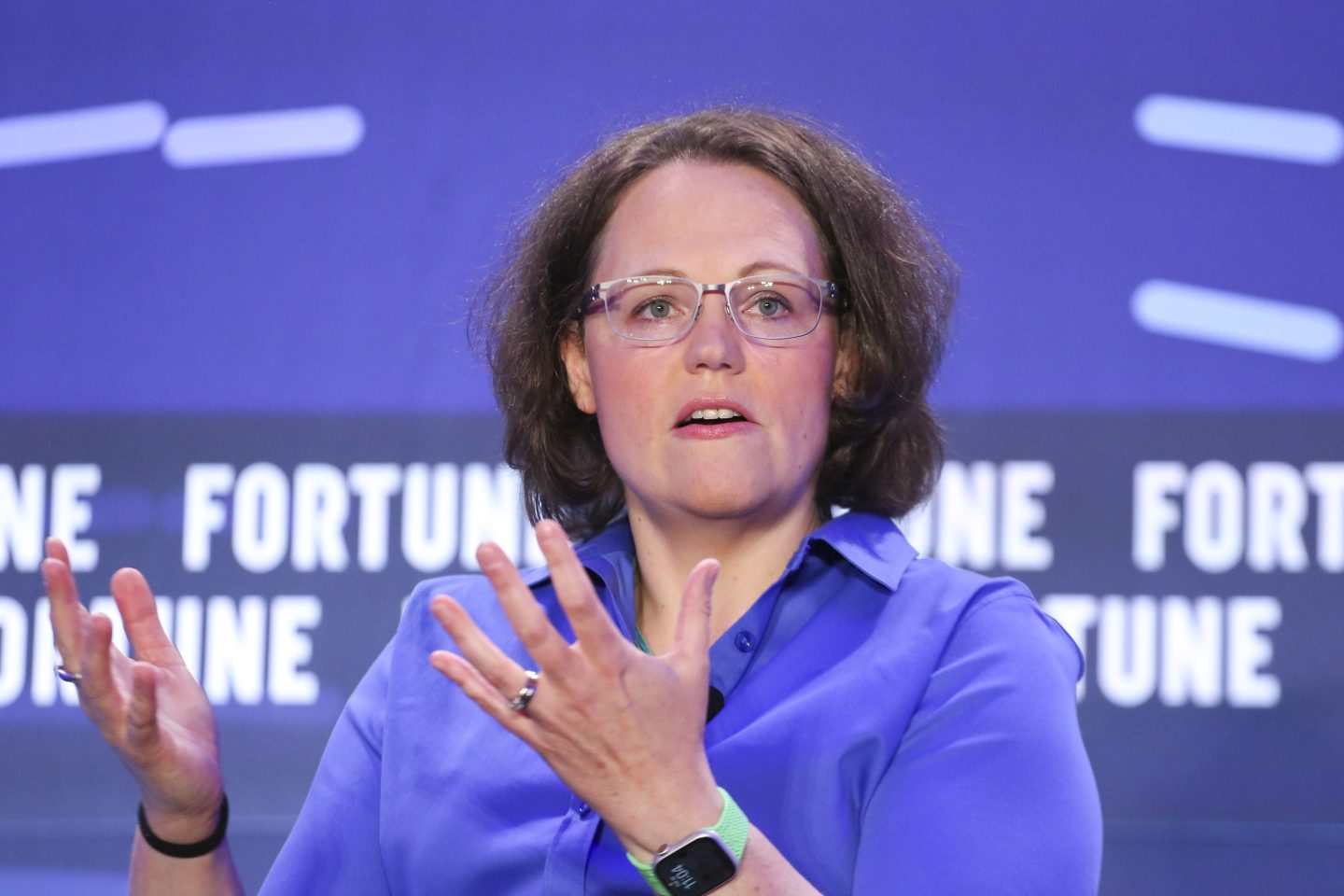
Dr. Robert Ambrose is Chairman of Robotics and Artificial Intelligence at alliant and former Chief of the Software, Robotics and Simulation Division at NASA.

ambrose
Dr. Robert Ambrose is Chairman of Robotics and Artificial Intelligence at alliant and former Chief of the Software, Robotics and Simulation Division at NASA.courtesy of Robert Ambrose

When China lined up a troupe of humanoid robots to dance in front of the German Chancellor earlier this year, a lot of people saw an impressive display of the nation’s technological prowess — but I saw something else. I’m from Texas. I know bragging when I see it.

Recommended Video

Looking beyond the robots’ footwork, China’s demonstration reveals a widening gap between spectacle and strategy — a gap that America, for all its robotics talent, is in real danger of falling into.

We are building impressive robots. We are not building the right ones.

Walk into any major robotics demo in the U.S. and you’ll observe fluid movements, precise manipulation, and maybe even a backflip. The most advanced Boston Dynamics robots can pick up and carry large objects that would risk injuring any human worker. On performance alone, we look competitive.

The problem is that performance in controlled settings is all we’re measuring. A recent Stanford report found that robots scoring nearly 90% success rates in controlled simulations succeed at just 12% of real household tasks. This gap between demo and deployment is not a rounding error — it is the whole problem. The U.S. is optimizing its humanoid robots for a sprint and calling it a marathon strategy.

Take the case of Figure AI’s 02 model. It logged 1,250 hours at BMW’s Spartanburg plant and moved 90,000+ components. By current metrics, it was a success. Look closer and the robot did one task: picking up sheet metal parts and placing them on a welding fixture for ten months straight. A mid-sized manufacturer — one already running automated systems — cannot justify thousands of dollars in investment for a machine that does one thing.

Successful one-off robot deployments obscure the real question: is this investment worth it at scale?

What NASA Taught Me About Brittle Machines

At NASA, decades of designing humanoid robots for environments that don’t forgive narrow thinking revealed that the machines that failed were the ones built for a single scenario. The ones that succeeded could multitask and be reprogrammed– for deployment in different settings. The arm built for the Space Shuttle, for example, was designed to position an astronaut who would catch and later release a satellite. It turned out the robot was better at making the catch itself — but positioning astronauts proved useful for other tasks, like repairing the Hubble Space Telescope.

The United States continues to build humanoids that are extraordinary in the conditions they were trained for and brittle everywhere else. Right now, in most factories, several humans generate better ROI than one humanoid robot.

We humans might not be the strongest or fastest, but we make up for it with adaptability. A single warehouse associate can pick up orders, restock shelves, flag a safety issue, and reroute around a spill — all before lunch. This fluid task-switching is the core of human labor value. If humanoid robots are supposed to take over U.S. factory floors, they need to be designed to be even more flexible than us.

The Policy Environment Isn’t Ready Either

To get there, we must first prime the policy environment. American manufacturers — particularly those in the mid-to-enterprise range that form the backbone of U.S. industrial output — have almost no structured pathway to adopt humanoid robotics at scale. Large manufacturers like BMW can absorb a ten-month single-task pilot as an R&D line item. A mid-sized auto supplier or contract manufacturer cannot.

The absence of a proper federal incentive structure will prolong the stagnation. Current federal R&D tax credits reward robotics discovery, not deployment. A manufacturer that spends $800,000 integrating a humanoid system gets essentially the same tax credit as one that buys a new forklift.

Even with $2.5 billion in venture capital already poured into robotics, private investment alone cannot spur effective deployment. Instead, the nation needs a distinct, robotics-focused “manufacturing deployment” tax incentive, stackable with the existing R&D credit — one that rewards those who make robots functional in real factories by offsetting integration costs, workforce transition expenses, and process redesign work. The U.S. can also expand the Manufacturing Extension Partnership, which already offers specialized consulting to small and mid-sized manufacturers, to provide humanoid deployment concierges at relatively low federal cost. Finally, NIST, working with NASA and others, should establish humanoid interoperability standards so manufacturers can combine multiple robotic systems safely.

What the Right Deployment Actually Looks Like

U.S. factories will also have to transform. Most industrial workflows were designed around human flexibility, improvisation, and self-directedness. Robots — even adaptable ones — will require something different: fleet-based tasking similar to how rideshares route cars, clear safety parameters for mixed human-robot environments, and new protocols for humanoids to interact with single-purpose machines.

What both the U.S. and China still misunderstand is the assumption that humanoids will replace jobs wholesale. Rather, they’ll generate value by filling the gaps that current automation can’t reach — the “in-between” work that’s too variable for a fixed conveyor system and too repetitive to justify a skilled employee. A mid-sized company will appreciate being able to shift humanoids into operating single-purpose machines like loading a washer, without having to replace the washer itself.

Moving materials between workstations, restocking inventory in busy warehouses, tending machines built for human interaction, and conducting inspections in dangerous and confined spaces aren’t glamorous use cases. But they represent operational problems that adaptable humanoids can begin to address within this decade.

America has the talent, the capital, and the industrial base to lead this transition. We are currently optimizing for the wrong outcomes and ignoring the policies that could enable real deployment.

The country that defines “good enough to deploy at scale” will set the terms for global manufacturing for decades. Right now, that country is not the United States.

It doesn’t have to stay that way.

The opinions expressed in Fortune.com commentary pieces are solely the views of their authors and do not necessarily reflect the opinions and beliefs of Fortune.


About the Author
By Robert Ambrose
See full bioRight Arrow Button Icon

Latest in Commentary

Finance
Lorem ipsum dolor sit amet, consectetur adipiscing elit, sed do eiusmod tempor incididunt ut labore et dolore magna aliqua. Ut enim ad minim veniam
By Fortune Editors
October 20, 2025
Finance
Lorem ipsum dolor sit amet, consectetur adipiscing elit, sed do eiusmod tempor incididunt ut labore et dolore magna aliqua. Ut enim ad minim veniam
By Fortune Editors
October 20, 2025
Finance
Lorem ipsum dolor sit amet, consectetur adipiscing elit, sed do eiusmod tempor incididunt ut labore et dolore magna aliqua. Ut enim ad minim veniam
By Fortune Editors
October 20, 2025
Finance
Lorem ipsum dolor sit amet, consectetur adipiscing elit, sed do eiusmod tempor incididunt ut labore et dolore magna aliqua. Ut enim ad minim veniam
By Fortune Editors
October 20, 2025
Finance
Lorem ipsum dolor sit amet, consectetur adipiscing elit, sed do eiusmod tempor incididunt ut labore et dolore magna aliqua. Ut enim ad minim veniam
By Fortune Editors
October 20, 2025
Finance
Lorem ipsum dolor sit amet, consectetur adipiscing elit, sed do eiusmod tempor incididunt ut labore et dolore magna aliqua. Ut enim ad minim veniam
By Fortune Editors
October 20, 2025

Most Popular

Finance
Lorem ipsum dolor sit amet, consectetur adipiscing elit, sed do eiusmod tempor incididunt ut labore et dolore magna aliqua. Ut enim ad minim veniam
By Fortune Editors
October 20, 2025
Finance
Lorem ipsum dolor sit amet, consectetur adipiscing elit, sed do eiusmod tempor incididunt ut labore et dolore magna aliqua. Ut enim ad minim veniam
By Fortune Editors
October 20, 2025
Finance
Lorem ipsum dolor sit amet, consectetur adipiscing elit, sed do eiusmod tempor incididunt ut labore et dolore magna aliqua. Ut enim ad minim veniam
By Fortune Editors
October 20, 2025
Finance
Lorem ipsum dolor sit amet, consectetur adipiscing elit, sed do eiusmod tempor incididunt ut labore et dolore magna aliqua. Ut enim ad minim veniam
By Fortune Editors
October 20, 2025
Finance
Lorem ipsum dolor sit amet, consectetur adipiscing elit, sed do eiusmod tempor incididunt ut labore et dolore magna aliqua. Ut enim ad minim veniam
By Fortune Editors
October 20, 2025
Finance
Lorem ipsum dolor sit amet, consectetur adipiscing elit, sed do eiusmod tempor incididunt ut labore et dolore magna aliqua. Ut enim ad minim veniam
By Fortune Editors
October 20, 2025
Fortune Secondary Logo
Rankings
  • 100 Best Companies
  • Fortune 500
  • Global 500
  • Fortune 500 Europe
  • Most Powerful Women
  • World's Most Admired Companies
  • See All Rankings
  • Lists Calendar
Sections
  • Finance
  • Fortune Crypto
  • Features
  • Leadership
  • Health
  • Commentary
  • Success
  • Retail
  • Mpw
  • Tech
  • Lifestyle
  • CEO Initiative
  • Asia
  • Politics
  • Conferences
  • Europe
  • Newsletters
  • Personal Finance
  • Environment
  • Magazine
  • Education
Customer Support
  • Frequently Asked Questions
  • Customer Service Portal
  • Privacy Policy
  • Terms Of Use
  • Single Issues For Purchase
  • International Print
Commercial Services
  • Advertising
  • Fortune Brand Studio
  • Fortune Analytics
  • Fortune Conferences
  • Business Development
  • Group Subscriptions
About Us
  • About Us
  • Press Center
  • Work At Fortune
  • Terms And Conditions
  • Site Map
  • About Us
  • Press Center
  • Work At Fortune
  • Terms And Conditions
  • Site Map
  • Facebook icon
  • Twitter icon
  • LinkedIn icon
  • Instagram icon
  • Pinterest icon

Latest in Commentary

clay
CommentaryLoneliness
I’ve spent 25 years studying loneliness. AI is about to make it much worse
By Clay RoutledgeMay 23, 2026
2 hours ago
ambrose
CommentaryRobotics
Former NASA Robotics Chief: America is building the wrong kind of robots — and China knows it
By Robert AmbroseMay 23, 2026
2 hours ago
morris
CommentaryEntrepreneurship
My startup hit $200 million ARR. But first I walked away from 2.5 million YouTube subscribers and nearly went bankrupt
By Joel MorrisMay 23, 2026
4 hours ago
brotman
CommentaryVenture Capital
I’ve spent 25 years in venture capital. Here’s how it quietly shut ordinary Americans out of the AI wealth boom—and what could fix it
By Steve BrotmanMay 22, 2026
23 hours ago
cox
CommentarySuccession
McKinsey studied 200 family business successions. The biggest problem wasn’t the heir — it was the outgoing CEO
By Acha Leke and Chaitali MukherjeeMay 22, 2026
24 hours ago
himanshu
CommentaryLayoffs
I’ve led companies through every major tech disruption. AI washing is the same mistake, every time
By Himanshu PalsuleMay 22, 2026
1 day ago

Most Popular

Jeff Bezos wants the bottom half of earners to pay zero income tax—he says nurses making just $75K should save $12K a year
Success
Jeff Bezos wants the bottom half of earners to pay zero income tax—he says nurses making just $75K should save $12K a year
By Preston ForeMay 21, 2026
2 days ago
Despite a $500 million net worth, Shaq just finished his fourth degree. He warns graduates: 'Your character will take you further than your resume'
Success
Despite a $500 million net worth, Shaq just finished his fourth degree. He warns graduates: 'Your character will take you further than your resume'
By Preston ForeMay 20, 2026
3 days ago
Bolt CEO says he let go of his entire HR team for creating problems that didn’t exist: ‘Those problems disappeared when I let them go’ 
Workplace Culture
Bolt CEO says he let go of his entire HR team for creating problems that didn’t exist: ‘Those problems disappeared when I let them go’ 
By Preston ForeMay 19, 2026
4 days ago
Indeed chief economist says we’re entering an era of ‘great mismatch’ thanks to a generational imbalance of workers
Success
Indeed chief economist says we’re entering an era of ‘great mismatch’ thanks to a generational imbalance of workers
By Emma BurleighMay 22, 2026
19 hours ago
Microsoft reports are exposing AI's real cost problem: Using the tech is more expensive than paying human employees
AI
Microsoft reports are exposing AI's real cost problem: Using the tech is more expensive than paying human employees
By Jake AngeloMay 22, 2026
18 hours ago
Pay transparency is exposing a bigger problem: Most companies can't explain why they pay what they pay
Workplace Culture
Pay transparency is exposing a bigger problem: Most companies can't explain why they pay what they pay
By Sydney LakeMay 20, 2026
3 days ago

© 2026 Fortune Media IP Limited. All Rights Reserved. Use of this site constitutes acceptance of our Terms of Use and Privacy Policy | CA Notice at Collection and Privacy Notice | Do Not Sell/Share My Personal Information
FORTUNE is a trademark of Fortune Media IP Limited, registered in the U.S. and other countries. FORTUNE may receive compensation for some links to products and services on this website. Offers may be subject to change without notice.