
• Home
  • Latest
  • Fortune 500
  • Finance
  • Tech
  • Leadership
  • Lifestyle
  • Rankings
  • Multimedia

Trendingnow

1

'Dr. Doom' Nouriel Roubini says we're headed for universal basic income or 'some form of socialism' as AI revolutionizes work—He calls that optimistic

2

‘I want to die broke’: Billionaire philanthropist Denny Sanford dies after giving away $4 billion

3

Power companies are using eminent domain to seize land for data centers as 70% of Americans say not in my backyard

1

'Dr. Doom' Nouriel Roubini says we're headed for universal basic income or 'some form of socialism' as AI revolutionizes work—He calls that optimistic

2

‘I want to die broke’: Billionaire philanthropist Denny Sanford dies after giving away $4 billion

3

Power companies are using eminent domain to seize land for data centers as 70% of Americans say not in my backyard
North AmericaHousing

The new American Dream doesn’t live in a big city. It lives in Celina, Texas

Nick Lichtenberg
By
Nick Lichtenberg
Nick Lichtenberg
Business Editor
Down Arrow Button Icon
Nick Lichtenberg
By
Nick Lichtenberg
Nick Lichtenberg
Business Editor
Down Arrow Button Icon
May 15, 2026, 12:28 PM ET
texas
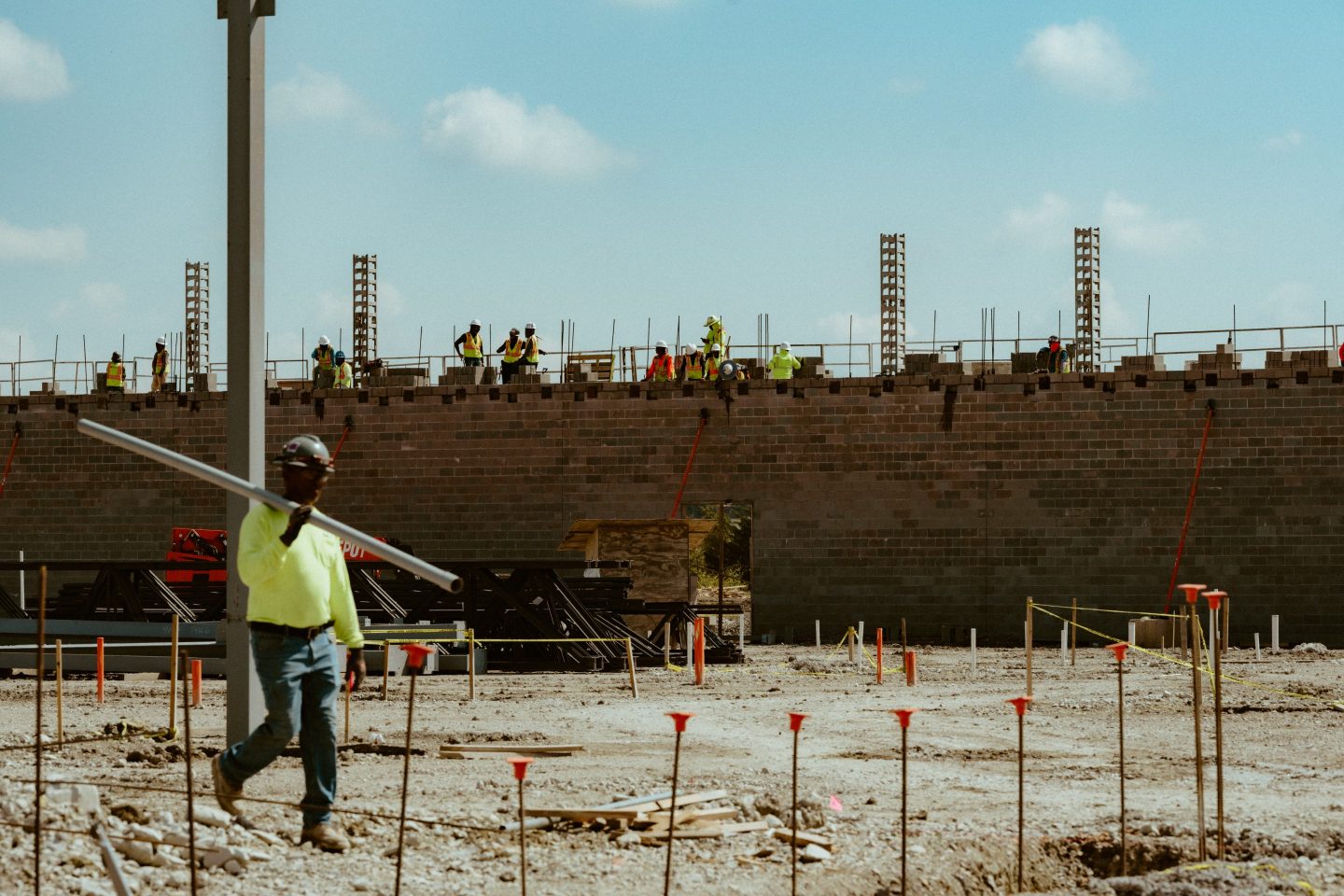
A Walmart store under construction in Celina, Texas, US, on Tuesday, Sept. 2, 2025.Jake Dockins/Bloomberg via Getty Images
Add Fortune on Google for similar content.

For generations, the American Dream had an address: New York, Los Angeles, Chicago. A high-rise, a corner office, a zip code that announced your arrival.

Recommended Video

The Census Bureau just confirmed that time is long gone.

New data released Thursday shows that the five fastest-growing cities in the United States—every single one—are in Texas. Four clusters in the suburbs of Dallas-Fort Worth. The fifth sits outside Houston. None has more than 65,000 residents. And collectively, they represent a snapshot of how—and where—American aspiration is moving.

Celina, Texas: America’s fastest-growing city, two years running

Celina, a city of 64,427 located about 35 miles north of downtown Dallas, grew by 24.6% between July 2024 and July 2025 — the fastest rate of any U.S. city with a population over 20,000. It held the same title in 2023. For two years running, the fastest-growing city in the wealthiest country on Earth is a place most Americans couldn’t find on a map. A disproportionate share of its arrivals are first-generation homeowners — families for whom Celina is not a compromise but a destination.

Right behind it: Fulshear (+21.0%), Princeton (+18.1%), Melissa (+14.5%), and Anna (+10.2%). These aren’t flukes. They’re a pattern. And to understand why they’re growing so fast, you have to understand what they have that New York, Los Angeles, and Boston don’t: the legal and political permission to build.

Permission to grow

Fulshear sits about 30 miles from downtown Houston. By any traditional measure of urban geography, it isn’t exactly a suburb of anything. But Texas doesn’t put a ceiling on growth. There are no state-level restrictions capping development, no permitting regimes that take years to navigate, and no zoning codes that effectively wall off new construction to protect the property values of existing homeowners. When demand arrives in Fulshear, houses get built. That simple fact—so mundane it sounds almost accidental—is the engine behind the Census data.

Texas does have one structuring tool—Municipal Utility Districts, which let developers finance roads, water, and sewers upfront and recoup costs through property taxes—but MUDs accelerate development rather than constrain it. There is, of course, a cost to this. These cities are building quickly on flood-prone land, financing infrastructure through debt mechanisms that future residents will inherit, and betting that car-dependent sprawl is a durable model for community life. Those are real bets. But for the families making them, they’re clearly preferable to the alternative.

In California, by contrast, new housing development in desirable areas has historically been blocked by a combination of environmental review, local opposition, and union labor costs that make construction prohibitively expensive—a dynamic that recent state legislation has loosened at the margins but not reversed. California’s average permit-to-completion timeline for a multifamily project runs at least 22 months longer than Texas’s. The result: a state with spectacular geography and weather that people are actively fleeing.

That gap in affordability is not an accident of geography. It’s a policy choice—made over decades, by local governments that prioritized restricting supply over enabling growth. People are simply free to build there, and Americans are voting with their feet.

The big city is losing

While Celina surged, New York City lost 12,196 residents—the largest numeric population decline of any city in the nation. The Census data shows that among cities of 250,000 or more, average population growth fell from 0.9% to just 0.3% year-over-year—a two-thirds collapse in a single year.

Where growth is happening around New York City actually supports the Celina story, as four incorporated places in the New York metro’s outer reaches were among the country’s 200 fastest-growing places by percentage change. Port Chester led the way, ranked number 80 with a 4.1% increase. These fast-growing suburbs are also all medium-sized, with populations between 25,000 and 40,000.

The Northeast was hardest hit by the shifting migration pattern. Its largest cities essentially flattened, with average growth dropping from 1.2% to 0.2%. A slowdown in net international migration and a persistent domestic migration toward warm-weather, lower-cost destinations are squeezing cities that once seemed magnetically, permanently attractive.

But this isn’t simply a story about people leaving expensive places. It’s a story about what they’re finding when they arrive somewhere new—and why middle-class household formation, the quiet engine of American social stability, is now most viable in places dozens of miles outside of Houston and Dallas.

Charlotte’s lesson: even the winners are losing to their own suburbs

The city that added the most residents in raw numbers last year wasn’t a Texas exurb—it was Charlotte, N.C., which gained 20,731 people, more than any city in the country. But even Charlotte’s remarkable performance tells the exurban story. Among cities with 20,000 or more residents, Charlotte ranked only seventh fastest-growing in its own metro area by percentage. The city outpacing it most dramatically? Fort Mill, S.C.—population 38,673, about 20 miles from downtown Charlotte, growing at 6.8%.

The housing market is following the people, but the Fed left a scar

The national housing stock grew by 1.4 million units (1.0%) to 148.3 million in 2025. That pace held nearly identical to the prior year, even as population growth slowed—a sign that construction is responding to demand in the places where demand is loudest.

Idaho led all states with 2.1% housing unit growth, followed by Arizona at 2.0% and South Carolina at 1.9%. D.C. and New Jersey each managed just 0.2%. The divergence between those numbers is essentially a map of where local governments are enabling growth and where they are strangling it.

All this being said, the headline housing construction numbers lie a structural problem that the Census data doesn’t capture: the existing homes market has effectively seized. The Federal Reserve’s decision to backstop the mortgage market with ultra-low rates during the pandemic locked tens of millions of homeowners into mortgages they have no financial incentive to surrender, what Fortune and many others have called the “lock-in effect.”

Home sales are near their lowest level since 2009—not because demand has evaporated, but because existing owners won’t sell. March 2026 existing home sales came in at 3.98 million units on a seasonally adjusted annualized basis, the slowest March since 2009, while full-year 2025 sales totaled just 4.06 million, the lowest annual figure since 1995. Homeowners won’t trade a 3% mortgage for a 7% one to buy the same house they’re already living in. The float has dried up.

That lock-in effect is, paradoxically, part of what is supercharging new-build exurban Texas. When existing inventory doesn’t move, buyers turn to new construction. And new construction, in Texas, is exactly what keeps getting built.

Austin crossed a million. But its suburbs are the real story.

Austin officially joined the ranks of U.S. cities with over 1 million residents in the past year, reaching 1,002,632. It’s a milestone worth marking. But the more meaningful signal in the data is what’s happening in the cities around Austin, around Dallas, around Houston—in the Celinas and Fulshears and Princetons, where land is buildable, housing is moderately priced, schools are funded, and commutes—while real—are manageable.

The Houston metro added more people than any other metro area in the country last year. Dallas-Fort Worth followed right behind. Neither figure is driven by the urban core. It’s being driven by the sprawling, fast-building, permit-friendly outer ring.

The new address of the American Dream

The data, taken together, tells an unmistakable story. The American Dream—homeownership, space to raise a family, economic mobility, a sense that hard work leads somewhere—has migrated. It has left the skylines and settled in the subdivisions. It has traded the elevator for the driveway.

The Northeast isn’t losing people simply because it’s cold, or because remote work made geography optional. The evidence in this data shows it’s losing people because housing costs have risen, and supply hasn’t kept up. Texas isn’t winning on weather or culture alone. It’s winning because, when someone wants to build a house, the answer is usually yes.

For this story, Fortune journalists used generative AI as a research tool. An editor verified the accuracy of the information before publishing.


The Fortune 500 Innovation Forum will convene Fortune 500 executives, U.S. policy officials, top founders, and thought leaders to help define what’s next for the American economy, Nov. 16-17 in Detroit. Apply here.
About the Author
Nick Lichtenberg
By Nick LichtenbergBusiness Editor
LinkedIn icon

Nick Lichtenberg is business editor and was formerly Fortune's executive editor of global news.

See full bioRight Arrow Button Icon
Add Fortune on Google for similar content.

Latest in North America

Finance
Lorem ipsum dolor sit amet, consectetur adipiscing elit, sed do eiusmod tempor incididunt ut labore et dolore magna aliqua. Ut enim ad minim veniam
By Fortune Editors
October 20, 2025
Finance
Lorem ipsum dolor sit amet, consectetur adipiscing elit, sed do eiusmod tempor incididunt ut labore et dolore magna aliqua. Ut enim ad minim veniam
By Fortune Editors
October 20, 2025
Finance
Lorem ipsum dolor sit amet, consectetur adipiscing elit, sed do eiusmod tempor incididunt ut labore et dolore magna aliqua. Ut enim ad minim veniam
By Fortune Editors
October 20, 2025
Finance
Lorem ipsum dolor sit amet, consectetur adipiscing elit, sed do eiusmod tempor incididunt ut labore et dolore magna aliqua. Ut enim ad minim veniam
By Fortune Editors
October 20, 2025
Finance
Lorem ipsum dolor sit amet, consectetur adipiscing elit, sed do eiusmod tempor incididunt ut labore et dolore magna aliqua. Ut enim ad minim veniam
By Fortune Editors
October 20, 2025
Finance
Lorem ipsum dolor sit amet, consectetur adipiscing elit, sed do eiusmod tempor incididunt ut labore et dolore magna aliqua. Ut enim ad minim veniam
By Fortune Editors
October 20, 2025

Most Popular

Finance
Lorem ipsum dolor sit amet, consectetur adipiscing elit, sed do eiusmod tempor incididunt ut labore et dolore magna aliqua. Ut enim ad minim veniam
By Fortune Editors
October 20, 2025
Finance
Lorem ipsum dolor sit amet, consectetur adipiscing elit, sed do eiusmod tempor incididunt ut labore et dolore magna aliqua. Ut enim ad minim veniam
By Fortune Editors
October 20, 2025
Finance
Lorem ipsum dolor sit amet, consectetur adipiscing elit, sed do eiusmod tempor incididunt ut labore et dolore magna aliqua. Ut enim ad minim veniam
By Fortune Editors
October 20, 2025
Finance
Lorem ipsum dolor sit amet, consectetur adipiscing elit, sed do eiusmod tempor incididunt ut labore et dolore magna aliqua. Ut enim ad minim veniam
By Fortune Editors
October 20, 2025
Finance
Lorem ipsum dolor sit amet, consectetur adipiscing elit, sed do eiusmod tempor incididunt ut labore et dolore magna aliqua. Ut enim ad minim veniam
By Fortune Editors
October 20, 2025
Finance
Lorem ipsum dolor sit amet, consectetur adipiscing elit, sed do eiusmod tempor incididunt ut labore et dolore magna aliqua. Ut enim ad minim veniam
By Fortune Editors
October 20, 2025
Fortune Secondary Logo
Rankings
  • 100 Best Companies
  • Fortune 500
  • Global 500
  • Fortune 500 Europe
  • Most Powerful Women
  • World's Most Admired Companies
  • See All Rankings
  • Lists Calendar
Sections
  • Finance
  • Fortune Crypto
  • Features
  • Leadership
  • Health
  • Commentary
  • Success
  • Retail
  • Mpw
  • Tech
  • Lifestyle
  • CEO Initiative
  • Asia
  • Politics
  • Conferences
  • Europe
  • Newsletters
  • Personal Finance
  • Environment
  • Magazine
  • Education
Customer Support
  • Frequently Asked Questions
  • Customer Service Portal
  • Privacy Policy
  • Terms Of Use
  • Single Issues For Purchase
  • International Print
Commercial Services
  • Advertising
  • Fortune Brand Studio
  • Fortune Analytics
  • Fortune Conferences
  • Business Development
  • Group Subscriptions
About Us
  • About Us
  • Press Center
  • Work At Fortune
  • Terms And Conditions
  • Site Map
  • About Us
  • Press Center
  • Work At Fortune
  • Terms And Conditions
  • Site Map
  • Facebook icon
  • Twitter icon
  • LinkedIn icon
  • Instagram icon
  • Pinterest icon

Latest in North America

Three women chop their way into the record books at Lumberjack World Championships
North AmericaWisconsin
Three women chop their way into the record books at Lumberjack World Championships
By The Associated Press and Ellen SchmidtJuly 20, 2026
2 hours ago
President Donald Trump walks down the steps from Air Force One.
PoliticsDonald Trump
Trump admin attempted to uncover phone records of NYT journalists and sources related to coverage of Qatari-gifted Air Force One
By The Associated Press, Eric Tucker and Jocelyn NoveckJuly 20, 2026
2 hours ago
Alaskan pilot Ken Jouppi sits in an aircraft hanger in front of a plane.
LawSupreme Court
A passenger brought a 6-pack of beer on an Alaskan pilot’s plane. He now has to defend his plane’s seizure in front of the Supreme Court
By The Associated Press and Michael KunzelmanJuly 20, 2026
2 hours ago
Blue Owl Capital owns about a third of the Freedom Fuel properties: A look inside the $3.47 gas chain
North AmericaDonald Trump
Blue Owl Capital owns about a third of the Freedom Fuel properties: A look inside the $3.47 gas chain
By Brian Slodysko, Michael Biesecker and Josh BoakJuly 20, 2026
3 hours ago
FIFA President Gianni Infantino puts up a hand to show a thumbs up gesture at a World Cup game.
EnvironmentWorld Cup
FIFA President Infantino spent over 100 hours in the air during the 2026 World Cup amid pledge to reduce carbon emissions
By The Associated Press and Rio YamatJuly 20, 2026
3 hours ago
Paramount water tower
LawHollywood
Judge halts Paramount-Warner’s $81 billion merger for two weeks after states warn it would ‘extinguish competition’
By The Associated Press and Wyatte Grantham-PhilipsJuly 20, 2026
3 hours ago

Most Popular

'Dr. Doom' Nouriel Roubini says we're headed for universal basic income or 'some form of socialism' as AI revolutionizes work—He calls that optimistic
AI
'Dr. Doom' Nouriel Roubini says we're headed for universal basic income or 'some form of socialism' as AI revolutionizes work—He calls that optimistic
By Jason MaJuly 18, 2026
2 days ago
‘I want to die broke’: Billionaire philanthropist Denny Sanford dies after giving away $4 billion
Success
‘I want to die broke’: Billionaire philanthropist Denny Sanford dies after giving away $4 billion
By Sydney LakeJuly 20, 2026
9 hours ago
Power companies are using eminent domain to seize land for data centers as 70% of Americans say not in my backyard
AI
Power companies are using eminent domain to seize land for data centers as 70% of Americans say not in my backyard
By Aaron Walayat and The ConversationJuly 19, 2026
2 days ago
Mark Cuban says he has the solution to growing income inequality, and it's to reward every employee—from CEO to janitor—with company stock
Success
Mark Cuban says he has the solution to growing income inequality, and it's to reward every employee—from CEO to janitor—with company stock
By Sasha RogelbergJuly 20, 2026
5 hours ago
Red Lobster’s 37-year-old CEO waited tables before joining the C-suite—he says it was a crash course in managing ‘difficult people and situations’
Success
Red Lobster’s 37-year-old CEO waited tables before joining the C-suite—he says it was a crash course in managing ‘difficult people and situations’
By Preston ForeJuly 19, 2026
2 days ago
Warren Buffett says his $147 billion investing career was an accident: ‘I may be one of the 10 luckiest in the world’
Future of Work
Warren Buffett says his $147 billion investing career was an accident: ‘I may be one of the 10 luckiest in the world’
By Sarah GlodekJuly 20, 2026
16 hours ago

© 2026 Fortune Media IP Limited. All Rights Reserved. Use of this site constitutes acceptance of our Terms of Use and Privacy Policy | CA Notice at Collection and Privacy Notice | Do Not Sell/Share My Personal Information
FORTUNE is a trademark of Fortune Media IP Limited, registered in the U.S. and other countries. FORTUNE may receive compensation for some links to products and services on this website. Offers may be subject to change without notice.