
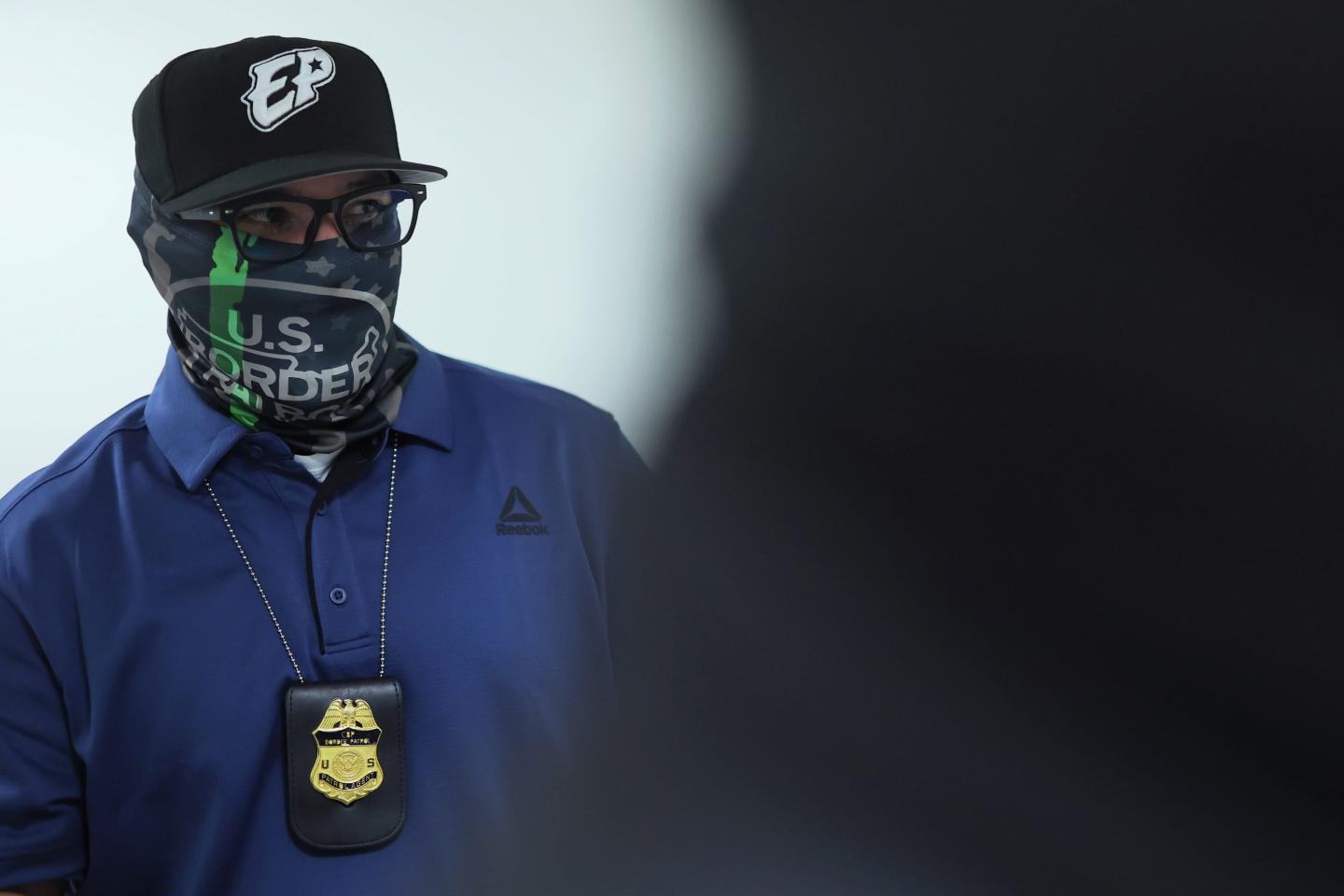
ICE agents in at least six states have been spotted wearing Meta’s Ray-Ban smart glasses during enforcement operations since the start of President Donald Trump’s second term.
Now, the Department of Homeland Security wants to go further by building its own smart glasses that would let agents identify people on the street in real time using facial recognition and other biometric data.
The DHS is requesting $7.5 million to “develop critical technologies, analytic tools, and data systems to strengthen DHS’ ability to encounter, transport, detain, and remove individuals who are in the U.S. unlawfully,” according to the department’s fiscal year 2027 budget justification for the Science and Technology Directorate.
Among those technologies is wearable tech. The funds will be used to “deliver innovative hardware, such as operational prototypes of smart glasses, to equip agents with real-time access to information and biometric identification capabilities in the field,” the budget justification shows.
Facial recognition already in use
ICE set a target delivery date of September 2027 for the tech, but it’s not the first time the agency has received public backlash for its surveillance technologies. Both ICE and CBP already use Mobile Fortify, a biometric app that came with a $23.9 million price tag to taxpayers, to conduct operations in the field. Agents photograph someone’s face or capture contactless fingerprints in the app, which, in turn, runs the data against both state and federal databases, including DHS’ IDENT system (which alone contains more than 270 million biometric records), the State Department’s visa and passport photos, the FBI’s National Crime Information Center, and state driver license records.
According to a January 2026 lawsuit brought by the State of Illinois and City of Chicago against DHS and former Secretary Kristi Noem for the agency’s surveillance actions in the city, Mobile Fortify had been used more than 100,000 times since the agency launched the app in June 2025.
The larger issue, the suit alleged, is the facial recognition technology can be used on anyone, not just whomever ICE considers a target: “DHS acknowledges that a ‘photo taken by an agent using the Mobile Fortify mobile application could be that of someone other than an alien, including U.S. citizens or lawful permanent residents.’”
The app was even classified as “high-risk” according to the DHS’ own 2025 AI Use Case Inventory, and was initially deployed without legally required Privacy Impact Assessments.
Mobile Fortify requires holding up a phone, which is visible and requires freeing up an agent’s hand. Smart glasses, on the other hand, would place that capability directly in an agent’s line of sight. A DHS official confirmed to 404 Media ICE is exploring glasses that would work alongside Mobile Fortify.
Agents in the field have already been using consumer hardware to similar ends. Agents have already been spotted wearing Meta glasses in at least six states—potentially violating DHS regulations that prohibit using personal recording devices to capture individuals engaged in First Amendment-protected activities without reasonable suspicion.
In Evanston, Ill., Border Patrol agents were observed filming protestors with Ray-Ban Meta glasses, with active recording indicator lights. In Maine, an ICE agent told community members their faces had been scanned: “We have a nice little database, and now you’re considered domestic terrorists.”
A DHS spokesperson told NewsNation “no federal funds have been committed for any form of smart glasses,” while acknowledging that the Science and Technology Directorate is “constantly assessing” the technology needs of ICE.
Congress caught off guard
Lawmakers told Courthouse News they were learning about the proposal for the first time. Rep. Carlos Gimenez (R-Fla.), on the House Homeland Security Committee said there’s “no expectation of privacy when you’re in the street,” while Rep. Ro Khanna (D-Calif.) called it a “scary thought.”
The request for funds for smart glasses comes as certain Congress members look to limit ICE’s use of Mobile Fortify to begin with. A bill introduced by Rep. Bennie G. Thompson (D-Miss.), the ranking member of the Committee on Homeland Security, called the app “an unproven biometric” tech that’s still in beta, and therefor, “raises further concerns about its accuracy.”
The request surfaced during a months-long DHS shutdown triggered by a standoff over ICE funding following the killings of two American citizens by federal agents in Minneapolis, and over Democrats’ calls for ICE agents to remove all facial coverings. Senate Republicans eventually bypassed Democrats entirely through budget reconciliation to fund ICE.
In February, Sen. Ed Markey (D-Mass.), Ron Wyden (D-Ore.), and Jeff Merkley (D-Ore.), along with Rep. Pramila Jayapal (D-Washington, D.C.), introduced the ICE Out of Our Faces Act which would ban ICE and CBP from using facial recognition entirely and require deletion of all biometric data already collected. It has not advanced out of committee.