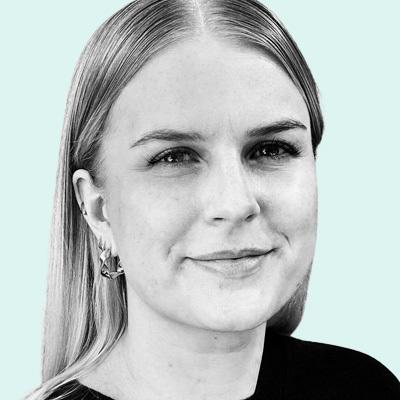

For many entrepreneurs, building a unicorn means betting their own finances long before any massive payday is within sight. Poppi cofounder Allison Ellsworth became a mega-millionaire after selling her prebiotic soda brand to PepsiCo for $1.95 billion—but just one decade ago, she and her husband were maxing out credit cards to get the business off the ground.
“I remember the first time we realized we had a business,” Ellsworth recently told The Wall Street Journal. “We were at a farmer’s market. We had just bought a house, I was three months pregnant with my first kid, and I said ‘We need to go all in.’”
“My husband told me I was absolutely crazy, but he trusted the vision,” the cofounder continued. “So we maxed out our credit cards, sold one of our cars to buy bottles, [and] opened our own manufacturing facility.”
The 39-year-old entrepreneur said she and her husband, cofounder Stephen Ellsworth, invested about $90,000 into the business in its first year. And not only did it require them to sacrifice their possessions and financial stability, but also their time and energy. Ellsworth said that her husband briefly worked as a waiter before he landed a gig working nights and weekends to cover their mortgage. And their side-hustle grind—alongside running the business at the farmer’s market—eventually paid off. Within 18 months, their better-for-you soda brand “Mother Beverage” had generated $500,000 in revenue.
The Poppi cofounder said that, like many other entrepreneurs, “you’re almost working two jobs” on the come-up. And she’s spent a decade scaling her brand into an industry disrupter; Ellsworth began concocting prebiotic drinks in 2015, founding her business just one year later. And the entrepreneurial duo’s appearance on Shark Tank in 2018 really set the company on a new trajectory. They made a $400,000 deal with investor Rohan Oza for a 25% stake in the budding business, and rebranded to Poppi.
In the eight years since, the brand has built a dedicated following by promoting itself as a healthier alternative to other sodas and leveraging TikTok marketing to reach millions of customers. And last May, PepsiCo officially completed its $1.95 billion acquisition of Poppi, flooding more than $100 million into the pockets of Ellsworth and her husband. She’s since splurged on stylists and lavish vacations—but when the money hit their bank accounts, the multimillionaire said it wasn’t a lifestyle shock.
“People think that you have this big exit, you have this huge amount of money that hits you, and that your life is just different,” Ellsworth continued. “At the end of this day, we were still in the same house, same car, same schools, same everything.”
The unicorn founders who skated by to make it big time
Even the most successful founders in the world had to break a few eggs to make an omelet.
Billionaire entrepreneur Jay Chaudhry put his livelihood on the line when first starting out as a serial founder. Intrigued by Silicon Valley’s dot-com boom starting in the mid-1990s, Chaudhry made the choice to quit his job as an executive at IQ Software and build a company of his own. His wife Jyoti also quit her job as a systems analyst, and the pair poured $500,000 of their life savings into building a cybersecurity software startup, SecureIT. Just a few years later, Chaudhry sold SecureIT to VeriSign in an all-stock deal worth nearly $70 million, and in 2007, he also founded a successful $24.3 billion cloud security company Zscaler.
Brian Murphy, the founder and CEO of ReliaQuest, also faced financial struggles on his path to building a unicorn information technology company. In late 2007, Murphy quit his accounting job to bring his vision to life—but the financial crisis and a string of turbulent years put his business at stake. Murphy even took out a second mortgage on his house, maxed out his credit cards, and cut his own salary to keep ReliaQuest alive. And now the $3.4 billion company is a leader in the B2B cybersecurity operations space.
Even the late Apple cofounder Steve Jobs gambled his own security for success. In his early twenties, Jobs was hooked on the idea that everyone should be able to own a home computer. But he didn’t have enough money to bring his vision to life—so Jobs sold off his Volkswagen bus while fellow cofounder Steve Wozniak got money for his programmable calculator, raising $1,300 to pay for the prototype’s parts. And the sacrifice paid off: a local computer dealer placed a $50,000 order for 100 units, raising enough money to create Apple II for the mass market. A year after its 1977 debut, it made nearly $3 million.
“I was worth about over $1 million when I was 23, and over $10 million when I was 24, and over $100 million when I was 25,” Jobs told PBS in 1996. “And it wasn’t that important, because I never did it for the money.”