

Somewhere in West Texas, Brian Schimpf hands me a warhead.
It’s small, this explosive-carrying tungsten lump, for something built to be so destructive. This warhead is a dense three pounds and fits completely in my hand. It’s designed to be attached to Anduril’s Bolt drone, the munitions-carrying version of which is currently being built on a $23.9 million contract for the U.S. Marine Corps to blow up far-off targets.
Schimpf—the cofounder and CEO of defense tech startup Anduril—looks at my warhead and its drone with an engineer’s eyes, weighing capacity for damage against aerodynamics. “Every bit of math matters,” says Schimpf. “You have a physics problem … With what you want to carry, can we do that with three pounds? Four?”
We’re at Anduril’s secretive Texas test site, and we watch the Bolt take flight. It shoots up vertically and careens off toward a collection of dusty hills, some of which Fortune’s photographer isn’t allowed to shoot; those hills could, to intelligence analysts somewhere in China or Russia, reveal where we are. The Bolt winds back and dives like a roller coaster, shooting downward at a vertiginous 85 degrees. I’m completely safe, but my heart rate speeds up in a reasonable physiological response to a deadly weapon’s presence.
Wherever we are, there’s not much here. There’s a sprawling cattle ranch nearby, and a dust devil moves in the distance. Anduril’s presence is clear enough: There’s a sequence of trailers, a hangar for visiting planes. But mostly, it’s space. Seemingly the most important thing about a weapons test site is vastness: a full universe of sandbox space where things can be blown apart, put back together, and started anew.
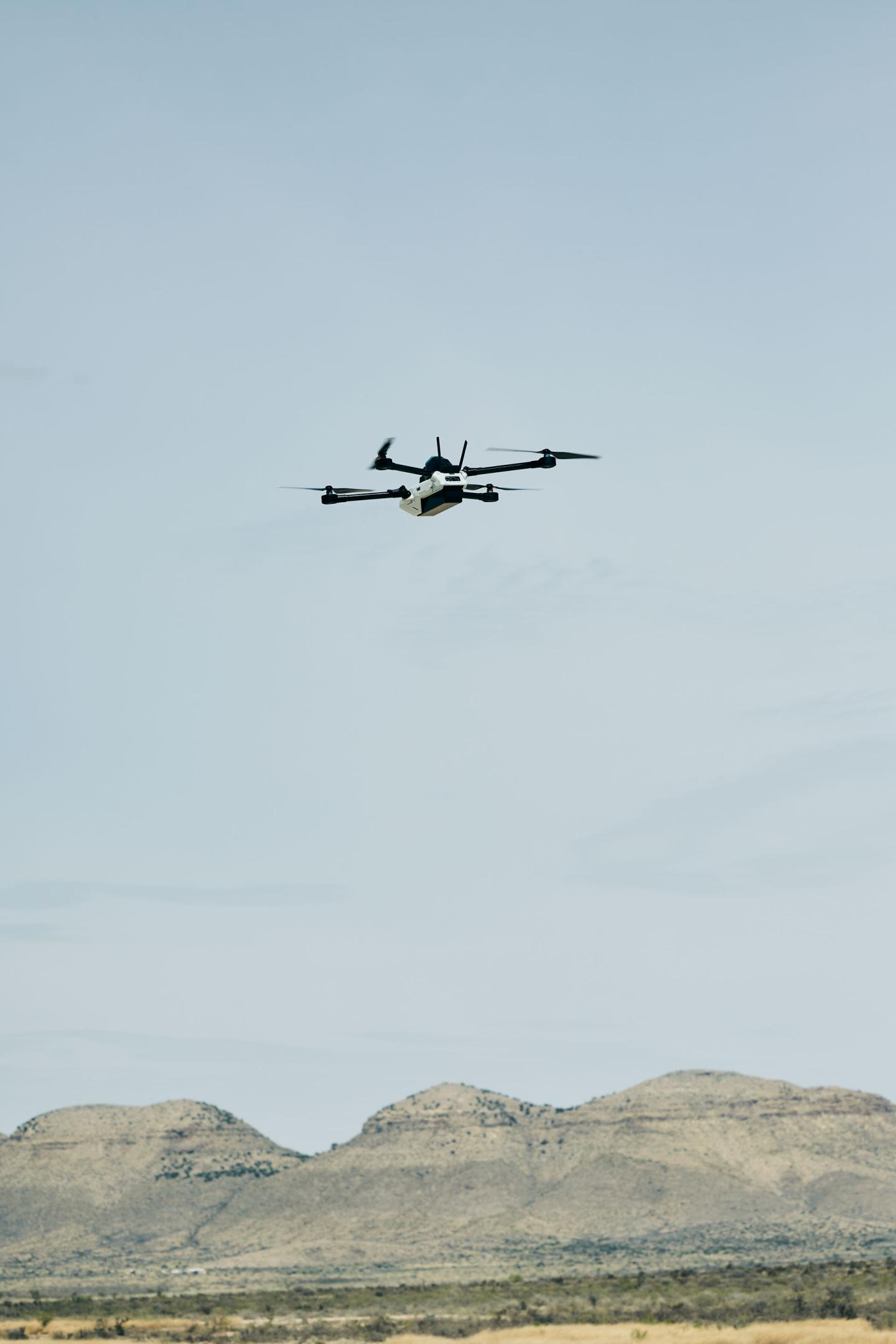
Schimpf, unassuming and with desert-dry humor, is at ease here. For nine years, this has been his life’s work: the math, the emptiness, the detonations. And under his leadership, Anduril has done something that 10 years ago would have seemed impossible: made inroads as a bona fide weapons provider to the Pentagon and governments around the world.
The company’s Lattice software platform is set to become the backbone of nearly every major counter-drone program across the U.S. military, and its Ghost Shark autonomous submarine is under long-term contract with the Royal Australian Navy. In 2024, Anduril was selected to help develop the Air Force’s Collaborative Combat Aircraft program—beating out established defense-contractor “primes” like Boeing, Lockheed Martin, and Northrop Grumman. In March, Anduril won its biggest contract yet: an expanded deal with the U.S. Army worth up to $20 billion over the next 10 years. And at the time of this writing, its air defense systems were being deployed amid the war in Iran, alongside systems made by establishment defense giants.
Read more from this special digital edition:
- The CEO who was told he’d never run American Express has made Amex cool again—and is beating JPMorgan, Visa, and the S&P 500
- A Michigan farm town voted down plans for a giant OpenAI-Oracle data center. Weeks later, construction began
- Salesforce CEO Marc Benioff turned his earnings call into a vodcast. Why other Fortune 500 CEOs might follow
There’s an urgency behind all this. Anduril’s mission from the beginning has been to revamp how the U.S. and its allies design, build, and field weapons. It wants to invent and manufacture fast enough (and cheaply enough) to matter in a world where warfare is changing rapidly and American dominance is no longer guaranteed—and where legacy contractors often seem too slow and inefficient to meet the moment. The Iran war has thrown this reality into sharp relief, as the U.S. burns through munitions it doesn’t have enough of, against an adversary that is far from equaling the threat that China or Russia would pose.
“Our munitions production rate and our stockpiles are at a dangerous level,” says Schimpf. “War is inherently industrial in the modern era, and we are not prepared for that.”
Even if you’re familiar with Anduril, Schimpf’s is most likely not the name you know. The startup’s cofounding team is an assemblage of colorful characters straight out of a Coen brothers movie. They include COO Matt Grimm—cowboy-hatted, direct, and strangely courtly—and Trae Stephens, the garrulous partner at Peter Thiel’s Founders Fund and the only person I’ve ever met who casually invokes Augustinian “just war” doctrine. But Anduril is most publicly associated with Palmer Luckey, the Hawaiian-shirt-clad creator of the Oculus headset, whose 2017 Trump-support-induced firing from Facebook precipitated the launch of Anduril.
Yet even Luckey says that Schimpf, Anduril’s CEO since its inception, is the one to watch. For the media, Luckey notes, “It’s a much easier story: ‘Palmer Luckey, the Trump guy who got fired and started Anduril! From video games to war!’” He goes on, “It’s this compelling narrative that gets more complicated when you’re like, ‘Actually, the CEO is Brian. And by the way, Brian’s actually a Democrat who fundraised for Joe Biden.’”

If the 42-year-old Schimpf is the “real” story, it’s because he’s Anduril’s operational center of gravity. Silicon Valley startups’ path to the Pentagon, arguably the world’s most impenetrable bureaucracy, was paved by Palantir and SpaceX. But Anduril is widely considered the breakout weapons-making startup.
When people expect Luckey, Schimpf can seem like an unlikely candidate to lead the charge. He’s a self-identified Democrat who believes strongly in deterrence, and vehemently feels that violence should not be glorified—his vision of the future of war involves the “destruction of infrastructure, not killing.” But he’s also a deep-dyed, supremely accomplished engineer at a militantly engineering-first company—and himself a Palantir alum. “We needed an engineer, because engineers want to work for brilliant engineers,” Stephens says. “That’s the whole game.”
“They build stuff that works, and they deliver at speed, because they are run by engineers,” agrees Steve Blank, Stanford adjunct professor and defense innovation expert. “They’re Boeing in the 1960s and ’70s, before it got taken over by finance people.”
Valued at $31 billion, expected to raise more money soon at an even higher valuation, and with growing signs that they have made progress with the Pentagon, Anduril is at a crossroads. For that matter, so is the entire U.S. military-industrial complex. You may not care about tech, or startups, but you probably care that the U.S. is, in many international arenas, finding itself literally outgunned. And Anduril could be the company best positioned to bring about, at scale, a sea change in how weapons are made in and for the U.S. They are racing to shore up supply chains, test, and get the right products in the right places. Though some products haven’t succeeded out of the gate, and have drawn sharp scrutiny, the trajectory is clear: Anduril is looking to claim a place among (or oust) Fortune 500 defense giants.
“The question isn’t whether we can build the next Lockheed Martin,” Schimpf adds. “It’s whether we can avoid becoming the thing we’re trying to replace.”
‘This is your company’
In 2017, Schimpf was in a similar stretch of desert, in California, helping Anduril make the transition from concept to reality. He spent months there building Anduril’s first product—autonomous, solar-powered surveillance devices called Sentry towers—writing code and building the system with a handful of engineers. He affectionately recalls the volume of takeout sandwiches the team consumed: “It was a 45-minute roundtrip. So much Jersey Mike’s.”
Anduril had launched in June of that year, and Sentry seemed like “the right problem, and it seemed achievable,” Schimpf recalls. “We were just living out of a trailer, working, cranking, smiling.” But it all happened on an ultra-compressed timeline, with the moment of truth—a late-September test run in front of the Department of Homeland Security—fast approaching.
By the morning of the critical demo, Stephens recalls, Schimpf’s behavior had become particularly intense and, well, engineer-y. “Brian does this when he’s thinking,” Stephens demonstrates: “He closes his eyes and strokes his beard. And [that morning] he was just pacing back and forth,” puzzling over a problem. “Grimm and I asked him what he needed from us. And he’s like: ‘I need silence for a little while.’”
Schimpf’s mother, father, and stepfather were all engineers; and as a kid, he’d check out library books about how telephones worked. Less than a year prior to Sentry, Schimpf had been director of engineering at Palantir, at the height of his career: He had spent a decade leading teams that built technology that, even now, he cannot necessarily discuss. “He had a great ability to take a correct insight—however malformed and violent the birthing of that insight was—and turn it into something that could be systematically executed,” Shyam Sankar, Palantir’s CTO, says of Schimpf.
Luckey and Schimpf had first talked years before at a Founders Fund event, and Schimpf, Stephens, and Grimm were longtime friends. All of the founders (save for Schimpf) insist it was clear early on that Schimpf was meant to be CEO. Grimm came to Schimpf, appealing with stark clarity: “Palmer’s signed on to defer to you. I’m signed on to defer to you. Trae is signed on to defer to you. This is your company.”
“There were no other candidates,” Luckey concurs. “It was always: ‘It’s fucking Brian.’” It wasn’t an immediate sell, exactly: Schimpf had joined Palantir right out of Cornell undergrad, and the startup’s success had secured his professional reputation for life. But he eventually said yes.
He also made Sentry work; the September 2017 demo went well, and the towers became Anduril’s first sale. Sentry systems are now used by U.S. Customs and Border Protection, to autonomously monitor and surveil the border with AI, computer vision, radars, and cameras. But just as important, they were the beginning of what became Lattice, the underlying platform that has since become core to Anduril’s business.
Lattice is a software and data layer that gives military teams a shared operational, actionable picture of the battlefield. It’s central to all of Anduril’s systems—and potentially to far more future business, because it can integrate data from countless other sensors and systems, including those made by other vendors.
When I ask Schimpf why he said yes to Anduril, he says the answer, in part, was building that kind of connectivity.
“I’ve been working on this problem for the better part of 20 years now,” he says. “The [Defense] Department always struggles with this: How do they create this environment that unlocks their data, enables them to build new apps and integrate all this in a very freeing way … for the core warfighting function? I’d started to have my head around what needs to be done and how it needs to be built.”
Anduril’s products are designed to serve that connected vision. The business model works best if the team stays engineering-first and keeps iterating fast. “Brian always says: ‘We’re gonna run this company two clicks more chaotic and disorganized than any sane person would think this company should be run at this scale, because it [sustains] innovation,’” says Gokul Subramanian, Anduril senior vice president of engineering, who followed Schimpf from Palantir.
Of course, the bigger Anduril gets—employee headcount has doubled annually over the past few years, with more than 8,000 currently in the fold—the more it risks becoming like the stodgy competition. Schimpf knows this. The competitors he’s eyeing, Lockheed Martin and RTX, for example, have market caps of $100 billion or more. But more important, they have decades of experience in Washington, D.C.—experience that Anduril is slowly building.
“If all goes some version of the way that we think it probably will, we could be a trillion‑dollar company,” says Schimpf.
Faster, cheaper, and imperfect
Luckey’s longtime support of Trump has created a perception that Anduril is a distinctly Republican enterprise—but Schimpf himself is a Democrat. “I’m a minority-opinion Democrat,” he clarifies. “I’m somewhat pro-institution, but think we need to hold institutions accountable. I think we should be kind to people, and there [should be] some degree of taking care of people that can’t care for themselves. And I am pro-growth.”
He also brings a direct seriousness to the responsibility that comes with creating lethal machinery. When I ask the father of two how he talks about his work with his kids, he says they know their dad builds robots that they love seeing in action. “Weapons are one of the trickier things to explain,” he goes on. “Counter-drones were easier. I explained to my 7-year-old, who was asking lots of questions: ‘This is a drone that shoots down bad guy drones.’”
With his kids, Schimpf avoids graphic talk of death. With adults he doesn’t shy away from the reality that what Anduril builds has been used to kill, and will again. “I don’t ever celebrate it,” says Schimpf. “With what we have deployed in Ukraine, you don’t say, ‘It blew up a Russian site, let’s all hold hands.’ We are not pro-violence.”
This kind of tightrope is characteristic of how Schimpf thinks, a candor that’s as careful as it is direct. In February, I watched Schimpf conduct an AMA in the cafeteria of Anduril’s Washington, D.C., office. One engineer raised his hand and asked: “What is Anduril’s risk profile in terms of customer concentration?” Schimpf didn’t hedge: “We have just outrageously concentrated business,” he told the employee audience. “So, how do we operate to mitigate that?” (The answer, in part, is that small deals matter, and hopefully over the years they become bigger deals.)
Anduril’s economics could prove to be tricky. It is indeed heavily reliant on just a handful of contracts right now, though it sells to a growing number of other countries like Australia, Japan, Taiwan, the U.K., and South Korea. On the surface, the company’s value proposition to any country’s military is that Anduril invests in, builds, and sells its own products—and can deliver in two years systems that would have taken the primes five (in part because each prime relies on a maze of subcontractors, regulations, and government infrastructure).
But the startup’s product bets are financially enormous and stacked on top of one another. The factories Anduril is building could take decades to pay off, and the test sites it runs cost millions before a single missile launches. Anduril expects to be profitable eventually, but it’s far from that today. The company confirmed to Fortune that its revenue projections for 2026 are $4.3 billion, up from $2.2 billion in 2025.
The business that could someday generate those profits currently breaks down like this: Lattice, the data and software product, is the spine, a platform that third parties (including militaries and other companies) can build on. Lattice now has long-term budgetary commitments from the U.S. Army and is moving from experimentation into rollout.
Counter-drone weapons and air defense systems are already an established, revenue-generating business—deployed with embedded field teams of Anduril personnel that surge to protect threatened U.S. military bases. These are the systems currently deployed in the Middle East. Schimpf’s growth plan includes selling drones like Altius, an offensive-munitions product, in volume to Taiwan and Ukraine, and eventually for its Barracuda missile to find traction as a long-range strike weapon. Ideally everything will reach the market quickly, if imperfectly, rather than Anduril waiting another decade and spending billions to reach 100% perfection.
“I always ask [customers]: ‘Do you want it where it’s at, or do you want to wait another year?’” Schimpf says. “Almost always the answer is: ‘I’ll take what you got right now.’”
Doing battle in Iran—and D.C.
Russia’s invasion of Ukraine was famously a turning point for the defense industry, shattering the decades-old illusion that major land wars were a relic of the past. Anduril subsequently went from one of the most controversial companies in tech to a company consistently delivering high-stakes munitions to the U.S. and its allies. Today, Anduril is a consensus bet among venture investors at a time when the defense-tech boom it helped launch is set to be tested—not least by the conflict in Iran.
Schimpf says that time will tell what Iran means for Anduril’s tech. If the conflict protracts, the Pentagon will start testing weapons it may not have otherwise, out of sheer necessity. And regardless, Schimpf says, Iran has laid bare what many already knew to be true: The U.S. is not technologically or industrially prepared to produce or deploy enough weapons to wage war with an equal or superior adversary.
“We’ve depleted something like 30% of the Tomahawk [missile] stock,” says Schimpf. “We shot a decade of production in about three days.”
One of the most public criticisms of Anduril is that Altius, the drone it sent in large numbers to Ukraine, has not worked well. The Altius drones (and others from Anduril, including Ghost) have reportedly crashed, missed targets, or struggled badly against Russian electronic warfare, leading Ukrainian forces to largely stop using them. (Anduril says Ukraine continues to use Altius.)
When asked, Schimpf admits frankly that Altius didn’t match Ukraine’s needs. Altius was designed for launching from aircraft, he explains, which is correct for a U.S. context, because U.S. forces are usually fighting far from their bases. For Ukraine, he says, cheap, land-based, and mass-producible turned out to be the better option. With hindsight, Schimpf says, “If the Ukraine war were to start a year from now, the first thing we’d be sending is [long-range missile] Barracuda.”
Zooming out, Schimpf says, Altius’s problems aren’t exceptional, but systemic to defense hardware. He points out noted failures elsewhere, including the rollicking saga of the decades-delayed F-35 fighter jet and the persistent technical and manufacturing issues around aircraft carriers that cost well over $10 billion each.
“This stuff is the hardest of the hard; it’s very different from the consumer world,” says Schimpf. “It takes some iteration, and even then, it may work for a while until it doesn’t.”
To Stanford’s Blank, a theoretical failure state for Anduril wouldn’t have much to do with technology breakdowns. “Congress is coin-operated,” he says. “If they fail it’s because they got out-lobbied and outplayed.”
Most of Anduril’s D.C. interfacing right now happens with some combination of Luckey and Schimpf (very generally, Schimpf takes the Democrats, Luckey takes the Republicans). Anduril is up against the small but deeply entrenched world of defense primes, some of whose lobbyists have been working the Hill longer than Schimpf’s been alive.
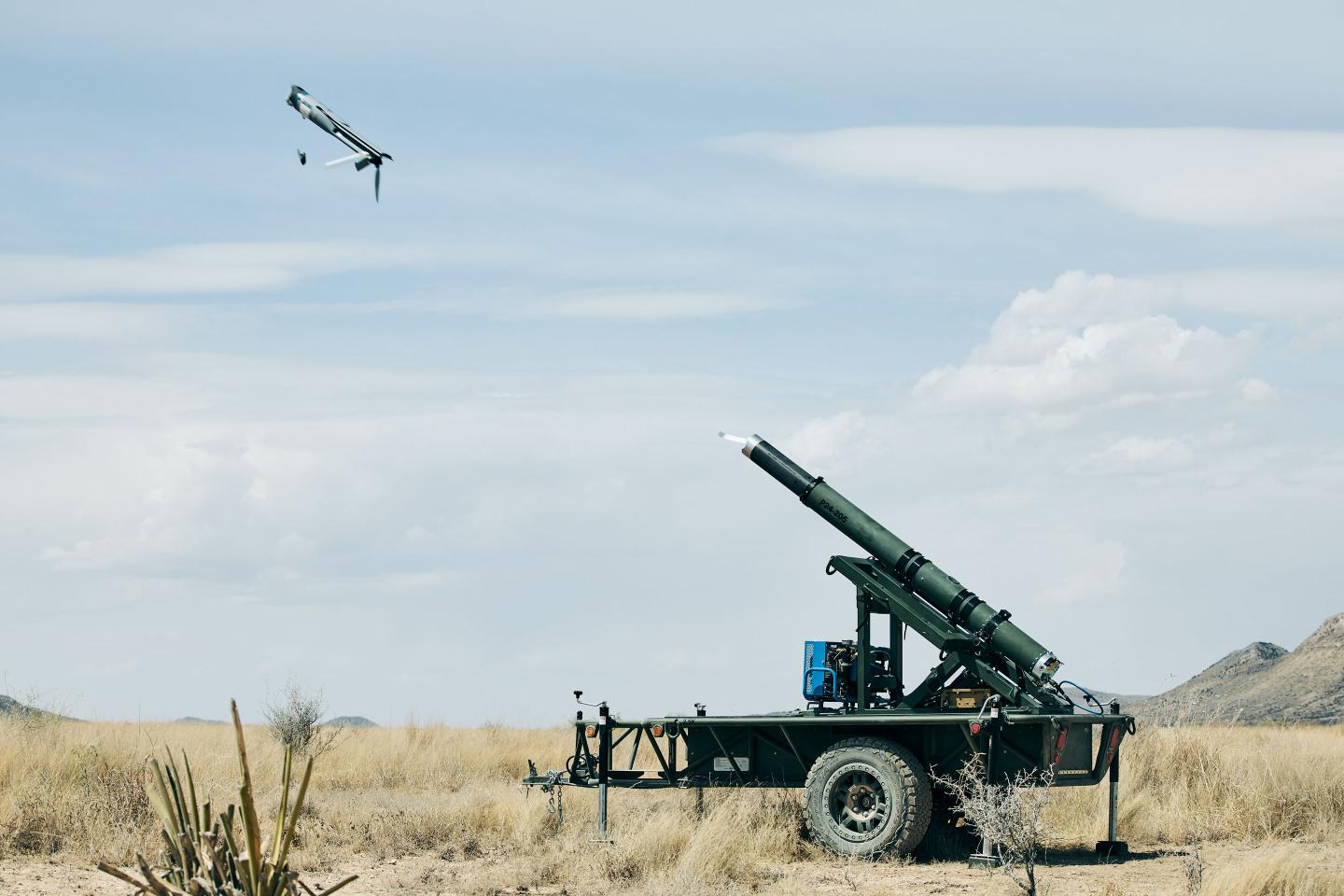
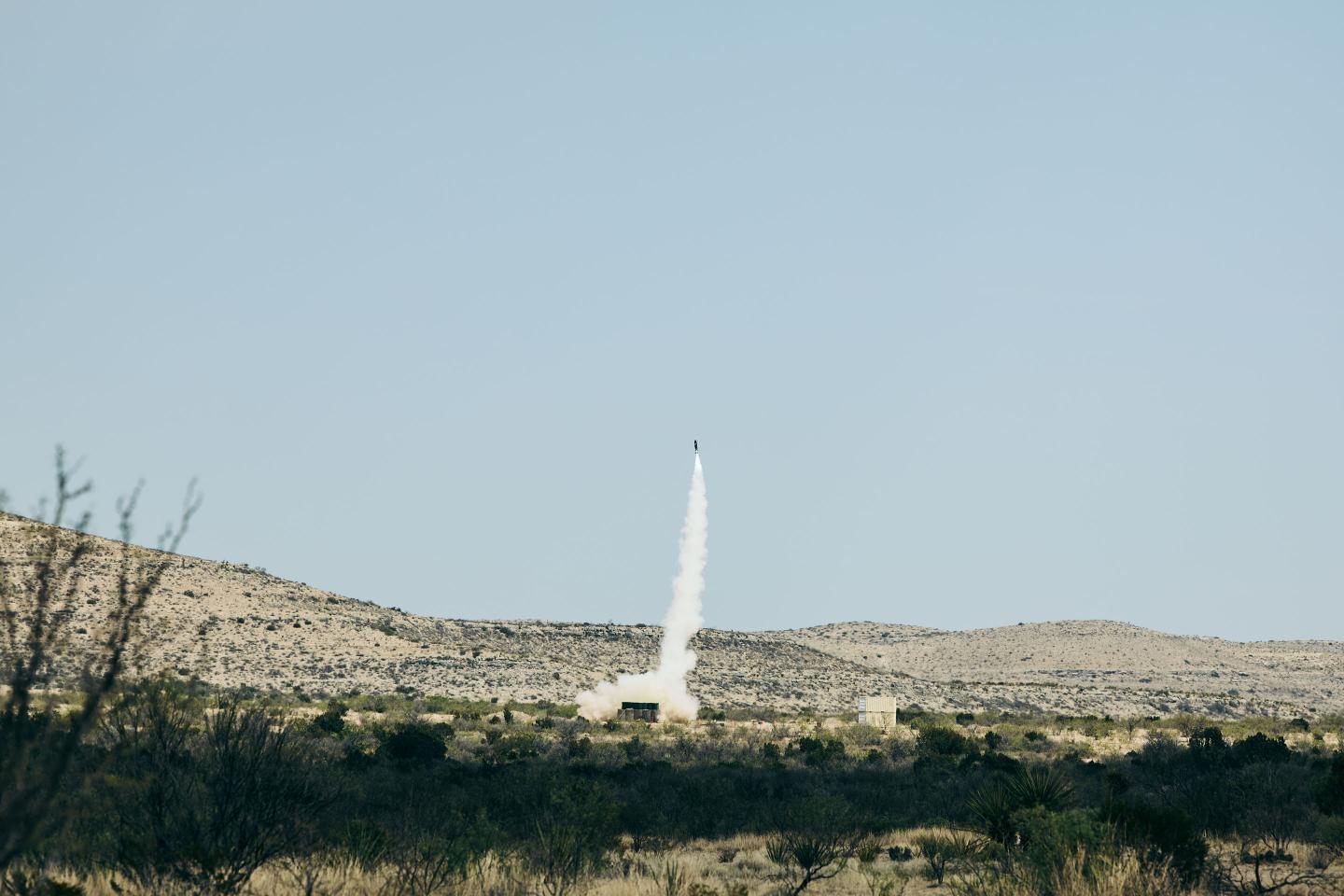
Anduril could get out-lobbied, but it is hard to imagine they will be decisively out-engineered. Back at the secretive Texas desert site, we watch an Altius test. We can’t see the drone, but we can see what looks, more or less, like a mammoth T-shirt cannon.
On the first try, the engineer in charge counts down into a walkie-talkie: “5-4-3-2-1, launch, launch, launch.” Nothing happens. The team does an organized shuffle to get things in order, and almost everyone watching with me backs away slightly. Except Schimpf, who quietly steps forward to take a closer look. On the next try: liftoff.
This article is part of the May 6 2026, Special Digital Issue of Fortune.