
Ukraine’s constant innovation in drone technology is giving its military an edge on the battlefield, dealing major blows to Russia’s army and economy.
While Russia invaded Ukraine four years ago with superior numbers, that advantage has since been neutralized by Western aid and the emergence of new drones, which now account for the vast majority of casualties.
Both sides have scrambled to deploy upgraded versions, but Ukraine appears to be innovating faster and has recently gained the upper hand.
“Recent evidence suggests that not only are Russian forces facing setbacks on the battlefield, but also that recent Ukrainian drone innovations have shifted the battlefield advantage in Ukraine’s favor,” the Institute for the Study of War said in a note last week.
Drone improvements have contributed to higher Russian casualty rates so far this year compared to 2025, which had already seen staggering losses estimated at 30,000 a month.
In addition, Ukraine’s new weapons have enabled more strikes on Russian air-defense systems as well as more interceptions of Russian drones, according to ISW. As a result, Russian advances have slowed down, allowing Ukraine to counterattack.
“Ukraine’s defensive successes, drone adaptations, and midrange strike campaign are creating compounding effects that are degrading Russian frontline forces,” ISW added.
The Kyiv Post reported that Ukraine has recently fielded an AI-enabled drone that’s immune to jamming, is harder to detect, and has longer range.
By contrast, Russian drones have lagged as the Kremlin focuses on mass production of a few models over innovation, while senior military commanders have also been resistant to change, ISW said.
The note pointed out that Ukraine’s domestic drone industry developed the innovations with help from Western allies. But former CIA director and retired Gen. David Petraeus recently predicted that Ukraine will possess “the most important military-industrial complex in the free world.”
“It is producing cutting-edge unmanned systems, not just in the air, but on the ground and at sea,” he said an interview with World at Stake.
Ukraine’s integration of hardware and software is also extraordinary, Petraeus noted, adding the pace of innovation is constant. Software updates come in less than a week, and hardware changes come every few weeks.
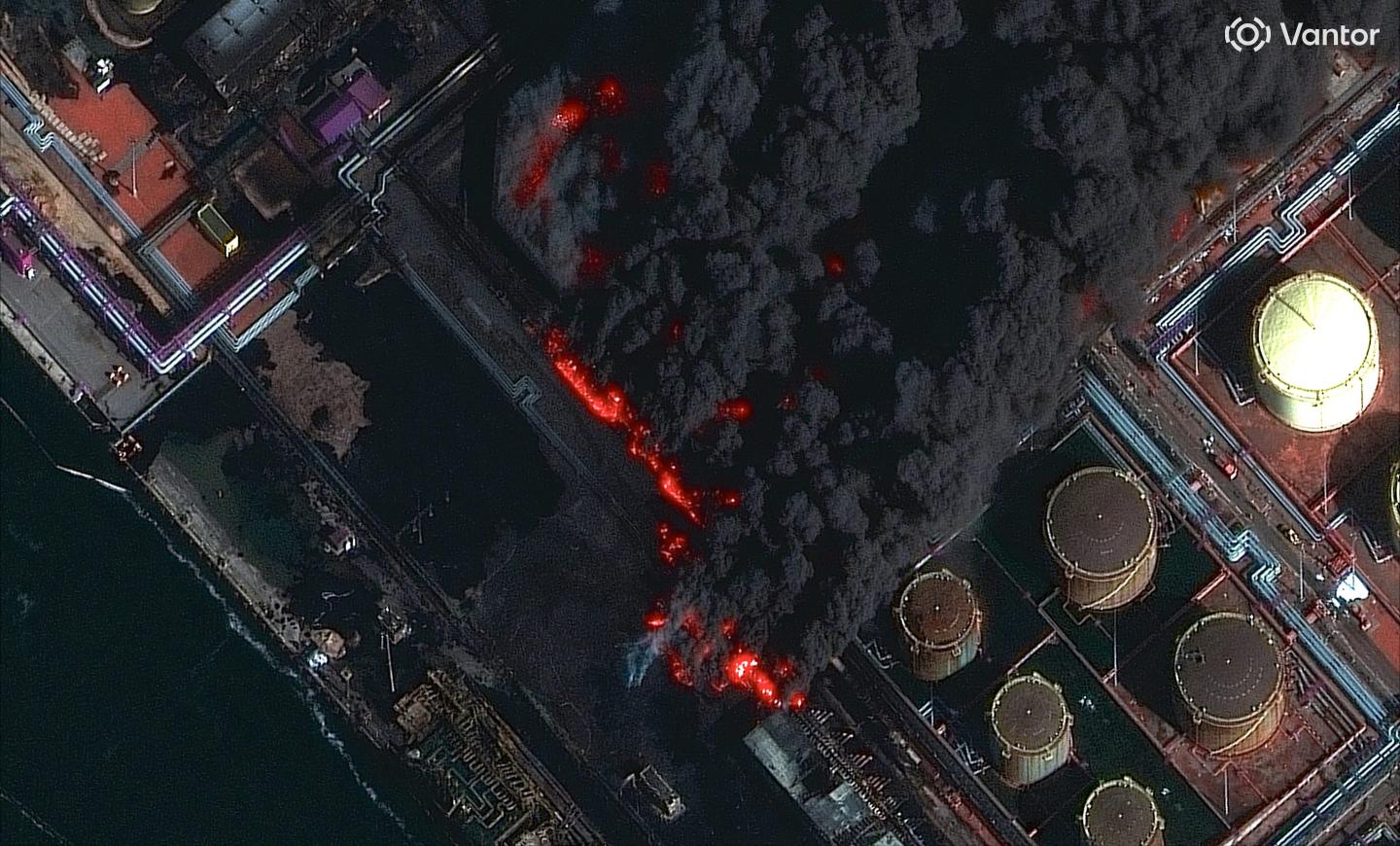
New drones have reached deep into Russian territory, and ISW said Ukraine is inflicting major damage on the Russian energy sector.
It highlighted a series of drone attacks on Novorossiysk on the Black Sea as well as on the Baltic Sea oil hubs of Primorsk and Ust-Luga, which previously handled about 45% of Russia’s seaborne crude exports.
ISW pointed to reports that the drone strikes on Primorsk burned $200 million of oil, while exports of the petrochemical naphtha from Ust-Luga fell by about 70% in the last week of March.
“Ukraine’s expanding long-range strike campaign against Russian oil infrastructure is exploiting overstretched Russian air defenses and significantly damaging Russian oil export capabilities,” ISW said.