
• Home
  • Latest
  • Fortune 500
  • Finance
  • Tech
  • Leadership
  • Lifestyle
  • Rankings
  • Multimedia
AsiaDeepSeek
Asia

DeepSeek unveils its newest model at rock-bottom prices and with ‘full support’ from Huawei chips

Nicholas Gordon
By
Nicholas Gordon
Nicholas Gordon
Asia Editor
Down Arrow Button Icon
Nicholas Gordon
By
Nicholas Gordon
Nicholas Gordon
Asia Editor
Down Arrow Button Icon
April 24, 2026, 10:54 AM ET
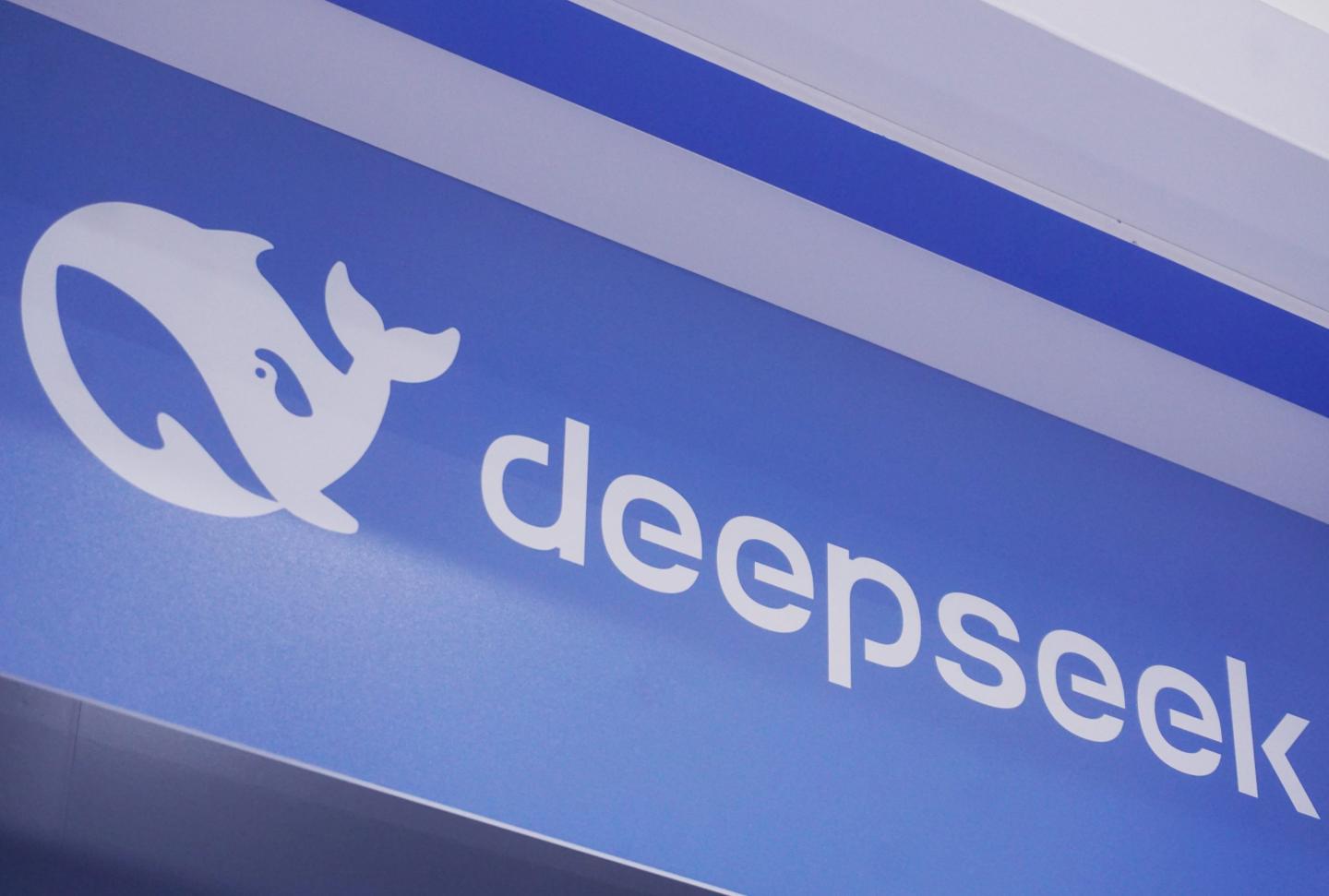
A view of DeepSeek logo at a mall on April 23, 2026 in Hangzhou, Zhejiang Province of China.
A view of DeepSeek logo at a mall on April 23, 2026 in Hangzhou, Zhejiang Province of China.Long Wei—VCG via Getty Images

Chinese AI company DeepSeek has unveiled its long-awaited V4 model.

Recommended Video

On Friday, the Hangzhou-based startup released its newest large language model in a preview capacity. The release comes over a year after it shook markets and reset the entire conversation around AI with its V3 and R1 models, which showed that frontier-level performance could be achieved through an open-source model trained on a relatively tiny budget.

V4 may not have as large of an effect on markets as its predecessor did. So far, the biggest impacts have been on the shares of other Chinese companies. Shares in Semiconductor Manufacturing International Corporation jumped 10% in Hong Kong trading. That Chinese chipmaker makes Huawei’s Ascend AI processors, which DeepSeek said it used to train its new model. (Huawei has been trying to catch up to the performance of Nvidia’s GPUs, which most companies use for training AI models.) Meanwhile, shares in Minimax and Knowledge Atlas, two of DeepSeek’s competitors, sank by more than 9%.

Yet the increasingly narrow performance gap between DeepSeek and leading U.S. models, as well as its rock-bottom prices, will raise questions about the competitive moat that surrounds leading U.S. labs like OpenAI and Anthropic—and the constraints that still hold back China’s AI development.

So, how good is DeepSeek’s new model?

DeepSeek released two versions on Friday: “DeepSeek-V4-Pro,” which it said had “performance rivaling the world’s top closed-source models,” and “DeepSeek-V4-Flash,” a smaller and cheaper variant. The Pro version has 1.6 trillion parameters, the tunable knobs within a neural network that serve as a measure of a model’s size, and a context length of 1 million tokens. (A token is the fundamental building block used by an LLM to understand and generate text; a million tokens is roughly equivalent to 750,000 words)

The startup claims its model beats all other open-source models in agentic coding and reasoning. DeepSeek also pointed to benchmarks that showed V4 performing favorably against Anthropic’s Claude Opus 4.6, OpenAI’s GPT-5.4, and Google’s Gemini 3.1-Pro. The startup’s tech report says that V4 “falls marginally short of GPT-5.4 and Gemin i3.1-Pro, suggesting a developmental trajectory that trails state-of-the-art frontier models by approximately 3 to 6 months.”

Just as important is how much DeepSeek is charging for access to its model. DeepSeek’s V4-Pro model will cost $3.48 for one million tokens of output; by comparison, OpenAI and Anthropic charge $30 and $25 respectively for the same amount of work. Even Kimi, from fellow Chinese AI startup Moonshot AI, costs $4 for a million tokens of output. DeepSeek’s V4-Flash costs even less, at just $0.28 for a million tokens. 

That pricing puts DeepSeek at odds with a trend across the wider AI sector. Both OpenAI and Anthropic have hiked prices and imposed rate limits to manage surging demand. Chinese developers have followed suit, also increasing prices and removing subscriptions that offered unlimited usage. 

DeepSeek’s prices could get even cheaper: It expects to lower V4-Pro prices later in the year as Huawei scales up production of its new Ascend 950 AI processors

Why DeepSeek mattered—and whether it still matters

DeepSeek first captured global attention in December 2024, when it released its V3 large language model. The startup claimed it trained V3 on just $5.6 million worth of processors, which AI researcher Andrej Karpathy called a “joke of a budget.” DeepSeek later released R1, a reasoning model that matched the equivalent offering from OpenAI.

That sparked a massive sell-off in U.S. tech stocks, as investors repriced how much money was needed to train and run AI models. At one point, tech stocks lost $1 trillion in value. 

While markets eventually recovered, DeepSeek’s decision to release its model on an open-source basis ended up being more significant. The startup’s release built on momentum started by Alibaba’s Qwen to inspire several other Chinese labs to release their own open-source models. Even OpenAI was pushed to release its own open-source model, gpt-oss.

DeepSeek’s open-source approach allowed developers to download its model for free, tweak it for their own purposes, and run it on local hardware. That helped win DeepSeek, and later labs that also went open-source, support from resource-strapped developers, particularly those outside of the U.S. and Europe. 

V3 and R1 also sparked a revival of investor interest in China’s beaten-down tech sector. In recent months, several AI startups have surged in public markets as investors try to build exposure to China’s AI ecosystem. In January, MiniMax and Knowledge Atlas listed in Hong Kong, as some of the first AI labs to tap public markets: The two startups are up 370% and 700% respectively from their offer price.

This also means that DeepSeek is releasing V4 into a new competitive landscape. Alibaba, Moonshot AI, MiniMax and Knowledge Atlas have all released high-performing open-source models this year. 

Both The Information and the Financial Times report that DeepSeek is trying to raise money from Tencent and Alibaba in a funding round that would value the lab at $20 billion. DeepSeek, which is owned by High-Flyer, a Chinese hedge fund, isn’t short of cash. The reason, according to the FT, is talent: DeepSeek needs to raise money to convince its AI researchers to stick around, and not get poached by other labs with larger valuations.

The AI frontier is also about to be pushed further out. This week, OpenAI released GPT 5.5, the latest version of its flagship LLM, as well as an updated version of its image generation model. Anthropic is also testing its latest Mythos model with a select group of companies; the Claude developer claims these restrictions are necessary to ensure the model can’t be misused upon a more public release.

‘Full support’

DeepSeek worked closely with Huawei to ensure its new model runs on the Chinese tech giant’s Ascend AI processors. On Friday, Huawei announced its Ascend processors would offer “full support” for DeepSeek’s models. 

Processing power is in short supply, as tech companies snap up GPUs, CPUs and memory chips in order to build more data centers and AI processors. Chinese developers have an additional problem: U.S. export controls bar them from buying the most advanced processors made by companies like Nvidia.

Ironically, these export controls may have helped Chinese AI startups, including DeepSeek, learn how to operate in a world of scarce processing power. Because Chinese developers have been forced to train and run models with limited resources, they had to come up with ways to make their models much more efficient. This power-efficiency has, in turn, allowed the Chinese developers to reduce prices substantially. U.S. pressure also forced China’s semiconductor sector to accelerate plans to manufacture chips domestically.

DeepSeek’s ability to train and run its model on Huawei chips could represent another step away from U.S. chipmakers like Nvidia and AMD. 

“The best AI researchers in the world, because they are limited in compute, also come up with extremely smart algorithms,” Nvidia CEO Jensen Huang said on the Dwarkesh Podcast last week, adding that “the day that DeepSeek comes out on Huawei first, that is a horrible outcome for [the U.S.]”

U.S. officials and developers have long claimed that DeepSeek’s success is based on Nvidia processors smuggled into China, or which the Chinese company has managed to access illegally in other countries in Asia, such as Malaysia through front companies, as well as illicit distillation of leading U.S. models. Distillation is the process of training a smaller, more efficient model on the outputs of a larger one.

On Thursday, Michael Kratsios, science advisor to U.S. President Donald Trump, alleged that Chinese AI developers were engaged in “industrial-scale campaigns” to copy U.S. technology. “There is nothing innovative about systematically extracting and copying the innovations of American industry,” Kratsios wrote in a memo, and promised to work closely with the private sector to protect them against these attacks. 

OpenAI and Anthropic have also accused Chinese AI developers, including DeepSeek, of conducting “illicit” distillation attacks. 

On Friday, China’s foreign ministry called Kratsios’s claims “groundless” and “a smear against the achievements of China’s AI industry.” 

Join us at the Fortune Workplace Innovation Summit May 19–20, 2026, in Atlanta. The next era of workplace innovation is here—and the old playbook is being rewritten. At this exclusive, high-energy event, the world’s most innovative leaders will convene to explore how AI, humanity, and strategy converge to redefine, again, the future of work. Register now.
About the Author
Nicholas Gordon
By Nicholas GordonAsia Editor
LinkedIn iconTwitter icon

Nicholas Gordon is an Asia editor based in Hong Kong, where he helps to drive Fortune’s coverage of Asian business and economics news.

See full bioRight Arrow Button Icon

Latest in Asia

Finance
Lorem ipsum dolor sit amet, consectetur adipiscing elit, sed do eiusmod tempor incididunt ut labore et dolore magna aliqua. Ut enim ad minim veniam
By Fortune Editors
October 20, 2025
Finance
Lorem ipsum dolor sit amet, consectetur adipiscing elit, sed do eiusmod tempor incididunt ut labore et dolore magna aliqua. Ut enim ad minim veniam
By Fortune Editors
October 20, 2025
Finance
Lorem ipsum dolor sit amet, consectetur adipiscing elit, sed do eiusmod tempor incididunt ut labore et dolore magna aliqua. Ut enim ad minim veniam
By Fortune Editors
October 20, 2025
Finance
Lorem ipsum dolor sit amet, consectetur adipiscing elit, sed do eiusmod tempor incididunt ut labore et dolore magna aliqua. Ut enim ad minim veniam
By Fortune Editors
October 20, 2025
Finance
Lorem ipsum dolor sit amet, consectetur adipiscing elit, sed do eiusmod tempor incididunt ut labore et dolore magna aliqua. Ut enim ad minim veniam
By Fortune Editors
October 20, 2025
Finance
Lorem ipsum dolor sit amet, consectetur adipiscing elit, sed do eiusmod tempor incididunt ut labore et dolore magna aliqua. Ut enim ad minim veniam
By Fortune Editors
October 20, 2025

Most Popular

Finance
Lorem ipsum dolor sit amet, consectetur adipiscing elit, sed do eiusmod tempor incididunt ut labore et dolore magna aliqua. Ut enim ad minim veniam
By Fortune Editors
October 20, 2025
Finance
Lorem ipsum dolor sit amet, consectetur adipiscing elit, sed do eiusmod tempor incididunt ut labore et dolore magna aliqua. Ut enim ad minim veniam
By Fortune Editors
October 20, 2025
Finance
Lorem ipsum dolor sit amet, consectetur adipiscing elit, sed do eiusmod tempor incididunt ut labore et dolore magna aliqua. Ut enim ad minim veniam
By Fortune Editors
October 20, 2025
Finance
Lorem ipsum dolor sit amet, consectetur adipiscing elit, sed do eiusmod tempor incididunt ut labore et dolore magna aliqua. Ut enim ad minim veniam
By Fortune Editors
October 20, 2025
Finance
Lorem ipsum dolor sit amet, consectetur adipiscing elit, sed do eiusmod tempor incididunt ut labore et dolore magna aliqua. Ut enim ad minim veniam
By Fortune Editors
October 20, 2025
Finance
Lorem ipsum dolor sit amet, consectetur adipiscing elit, sed do eiusmod tempor incididunt ut labore et dolore magna aliqua. Ut enim ad minim veniam
By Fortune Editors
October 20, 2025
Fortune Secondary Logo
Rankings
  • 100 Best Companies
  • Fortune 500
  • Global 500
  • Fortune 500 Europe
  • Most Powerful Women
  • World's Most Admired Companies
  • See All Rankings
  • Lists Calendar
Sections
  • Finance
  • Fortune Crypto
  • Features
  • Leadership
  • Health
  • Commentary
  • Success
  • Retail
  • Mpw
  • Tech
  • Lifestyle
  • CEO Initiative
  • Asia
  • Politics
  • Conferences
  • Europe
  • Newsletters
  • Personal Finance
  • Environment
  • Magazine
  • Education
Customer Support
  • Frequently Asked Questions
  • Customer Service Portal
  • Privacy Policy
  • Terms Of Use
  • Single Issues For Purchase
  • International Print
Commercial Services
  • Advertising
  • Fortune Brand Studio
  • Fortune Analytics
  • Fortune Conferences
  • Business Development
  • Group Subscriptions
About Us
  • About Us
  • Lists Calendar
  • Press Center
  • Work At Fortune
  • Terms And Conditions
  • Site Map
  • About Us
  • Lists Calendar
  • Press Center
  • Work At Fortune
  • Terms And Conditions
  • Site Map
  • Facebook icon
  • Twitter icon
  • LinkedIn icon
  • Instagram icon
  • Pinterest icon

Latest in Asia

DeepSeek unveils its newest model at rock-bottom prices and with ‘full support’ from Huawei chips
AsiaDeepSeek
DeepSeek unveils its newest model at rock-bottom prices and with ‘full support’ from Huawei chips
By Nicholas GordonApril 24, 2026
3 hours ago
How Chris Ong helped Seatrium emerge from a messy merger between two shipyards to become a profitable offshore oil and wind giant
AsiaAsia Agenda
How Chris Ong helped Seatrium emerge from a messy merger between two shipyards to become a profitable offshore oil and wind giant
By Nicholas Gordon and Angelica AngApril 23, 2026
21 hours ago
xi jinping
AsiaIran
Washington and Tehran both admit quietly that another player has a big part: Beijing
By Huizhong Wu, Kanis Leung and The Associated PressApril 23, 2026
1 day ago
The Iran war is pushing Southeast Asia to debate the once unthinkable: Whether ships will need to pay to transit the Strait of Malacca
Economygeopolitics
The Iran war is pushing Southeast Asia to debate the once unthinkable: Whether ships will need to pay to transit the Strait of Malacca
By Angelica AngApril 23, 2026
1 day ago
Vivian Balakrishnan, wearing a suit and in front of a blue backdrop, speaks and gestures with his hand.
AsiaIran
The Strait of Hormuz chaos is just a ‘dry run’ for if war breaks out between the U.S. and China, Singapore foreign minister says
By Sasha RogelbergApril 22, 2026
2 days ago
Photo of a BYD Sealion 5 DM-i plug-in hybrid
EnergyElectric vehicles
How the Iran energy crisis is supercharging Southeast Asia’s EV transition
By Angelica AngApril 21, 2026
3 days ago

Most Popular

Despite nearing their 60s, nearly four in 10 Americans heading towards the end of their careers don’t even have a retirement account
Success
Despite nearing their 60s, nearly four in 10 Americans heading towards the end of their careers don’t even have a retirement account
By Emma BurleighApril 23, 2026
1 day ago
When interest on national debt overtook military spending, it triggered a limit where the U.S. may ‘cease to be a great power,’ warns Hoover historian
Economy
When interest on national debt overtook military spending, it triggered a limit where the U.S. may ‘cease to be a great power,’ warns Hoover historian
By Eleanor PringleApril 23, 2026
1 day ago
‘Don’t leave’: Jensen Huang challenges billionaire class as he insists ‘highest taxes in the world’ are OK with him
Big Tech
‘Don’t leave’: Jensen Huang challenges billionaire class as he insists ‘highest taxes in the world’ are OK with him
By Jacqueline MunisApril 23, 2026
21 hours ago
A group of users leaked Anthropic's AI model Mythos by reportedly guessing where it was located
Cybersecurity
A group of users leaked Anthropic's AI model Mythos by reportedly guessing where it was located
By Marco Quiroz-GutierrezApril 23, 2026
1 day ago
Teen boys are choosing AI girlfriends over real ones for 'maximum control, zero rejection'—experts say it could make them unemployable
Success
Teen boys are choosing AI girlfriends over real ones for 'maximum control, zero rejection'—experts say it could make them unemployable
By Orianna Rosa RoyleApril 17, 2026
7 days ago
Cursor’s 25-year-old CEO is a former Google intern who just inked a $60 billion deal with SpaceX
AI
Cursor’s 25-year-old CEO is a former Google intern who just inked a $60 billion deal with SpaceX
By Marco Quiroz-GutierrezApril 22, 2026
2 days ago

© 2026 Fortune Media IP Limited. All Rights Reserved. Use of this site constitutes acceptance of our Terms of Use and Privacy Policy | CA Notice at Collection and Privacy Notice | Do Not Sell/Share My Personal Information
FORTUNE is a trademark of Fortune Media IP Limited, registered in the U.S. and other countries. FORTUNE may receive compensation for some links to products and services on this website. Offers may be subject to change without notice.