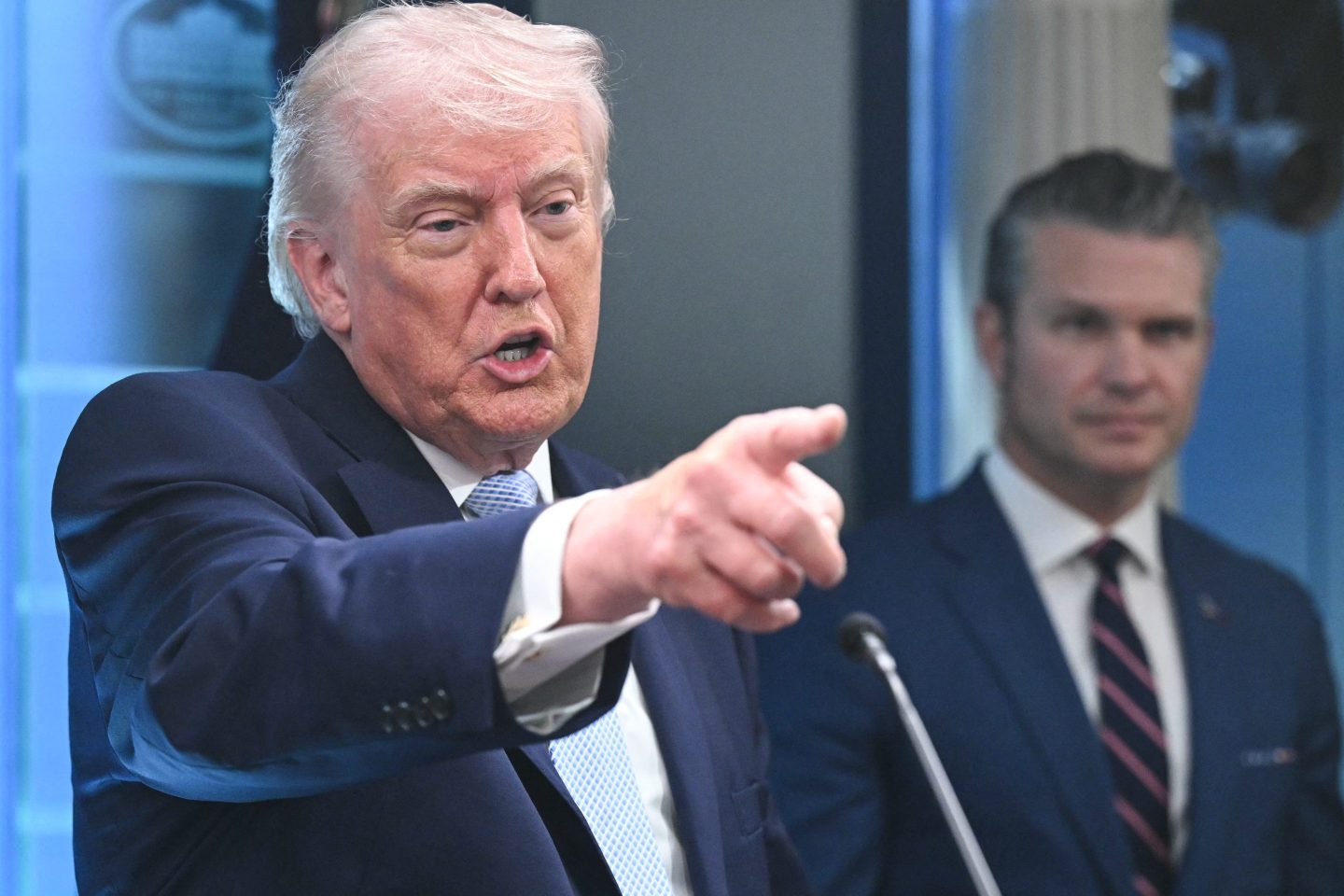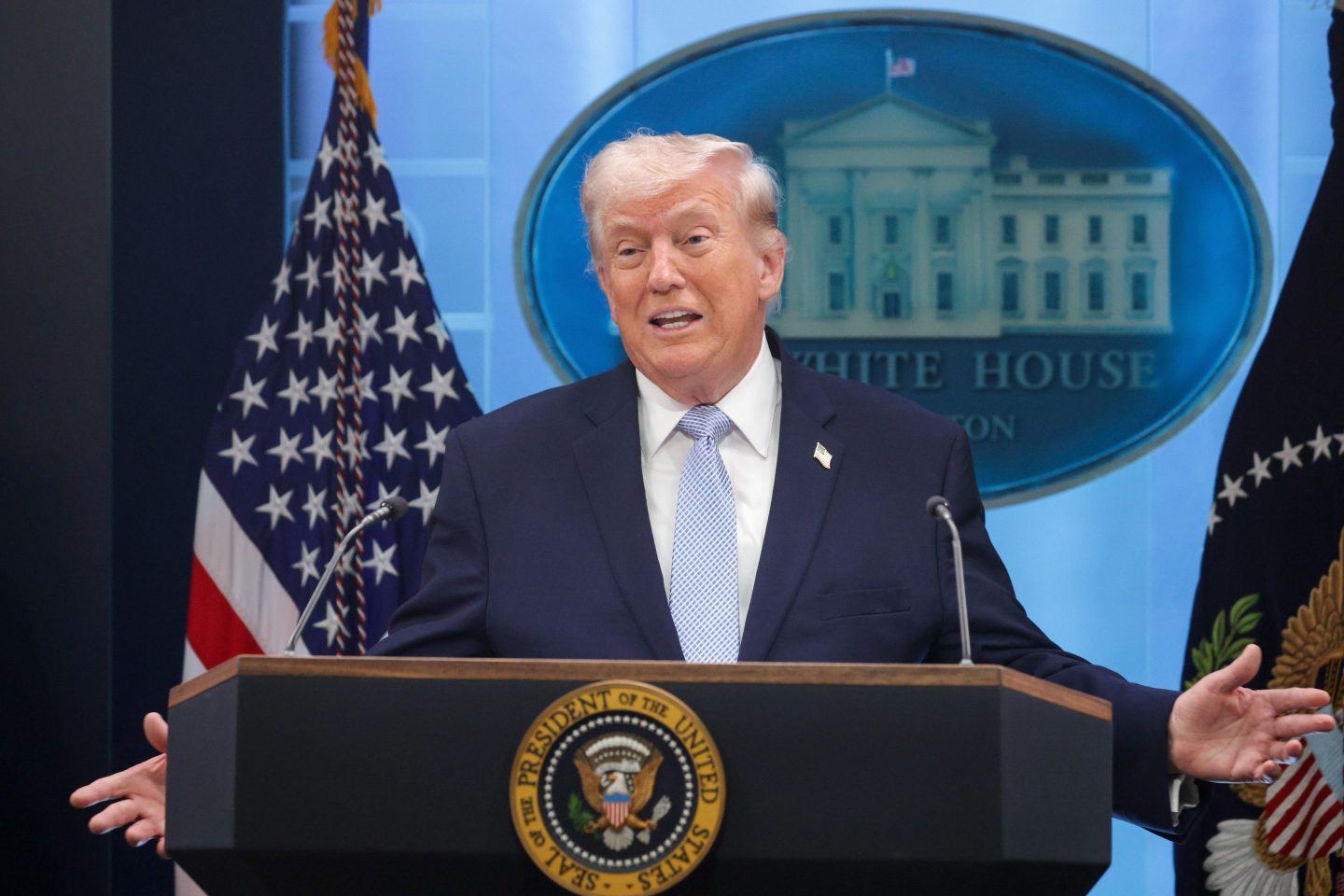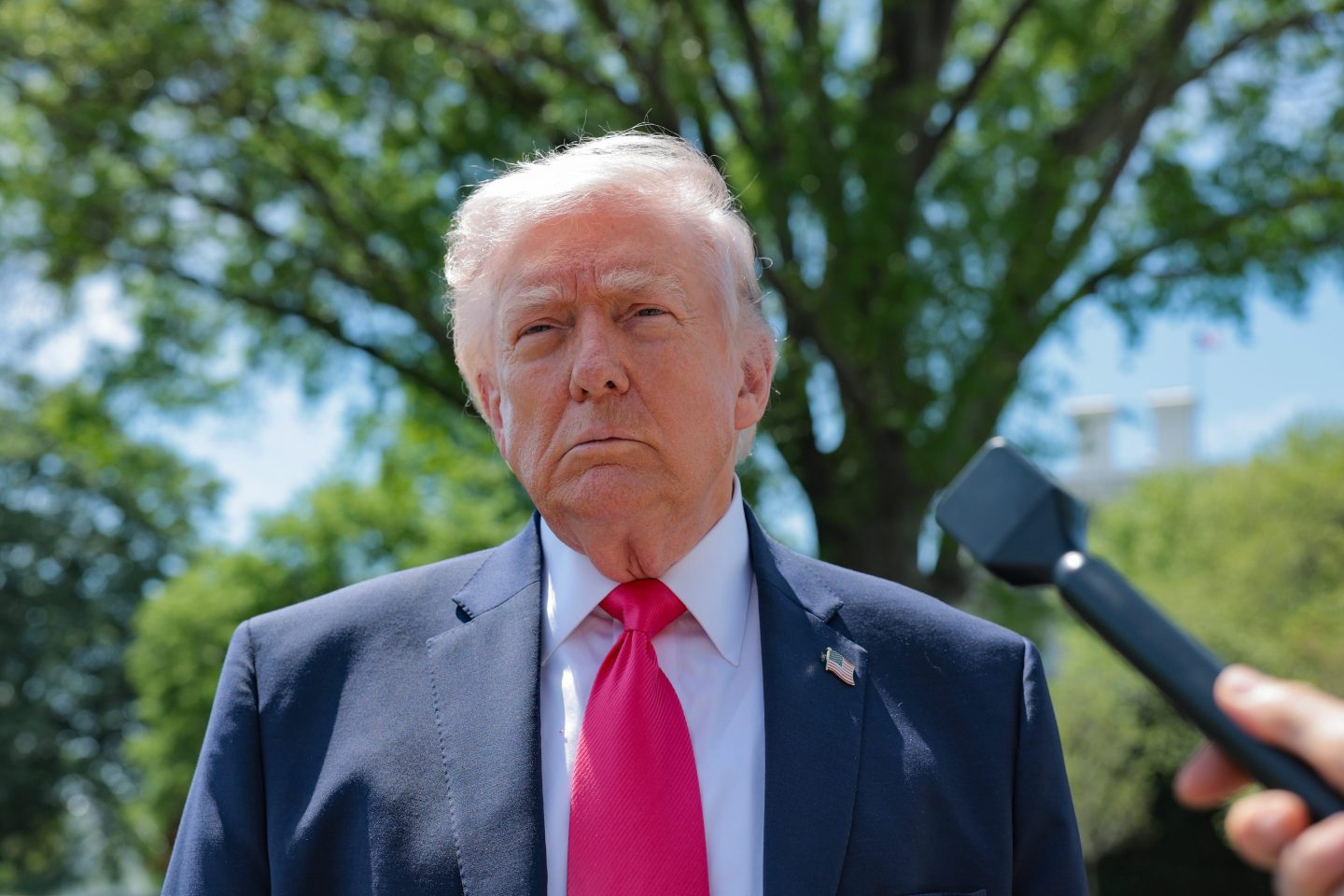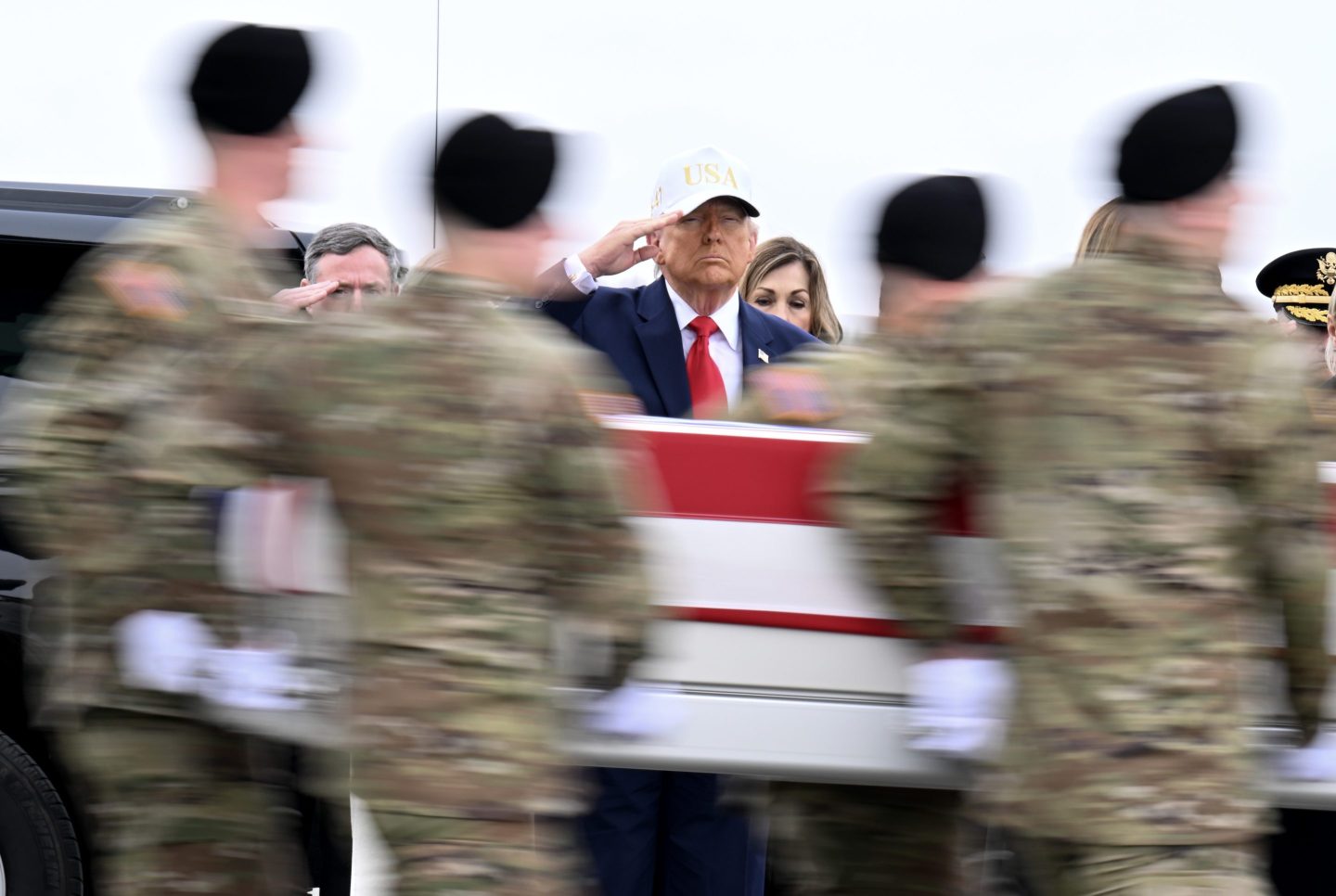
President Donald Trump has wanted to take down Iran since he was a 34-year-old soft-spoken realtor. His first known comment on foreign policy, ever, was in October 1980, when he declared that the clerical regime in Iran—which for a year had been holding 52 hostages—had made the U.S. look “just absolutely and totally ridiculous.”
“I think this country is responsible for that war by its own weaknesses. If we were respected, properly respected, as a country and as a people and as a nation, I don’t think we’d have a war between Iran and Iraq,” Trump told gossip columnist Rona Barrett in an interview on NBC. (In the same interview, Trump also famously declared that he wouldn’t want to be president, because politics “is a mean game.”)
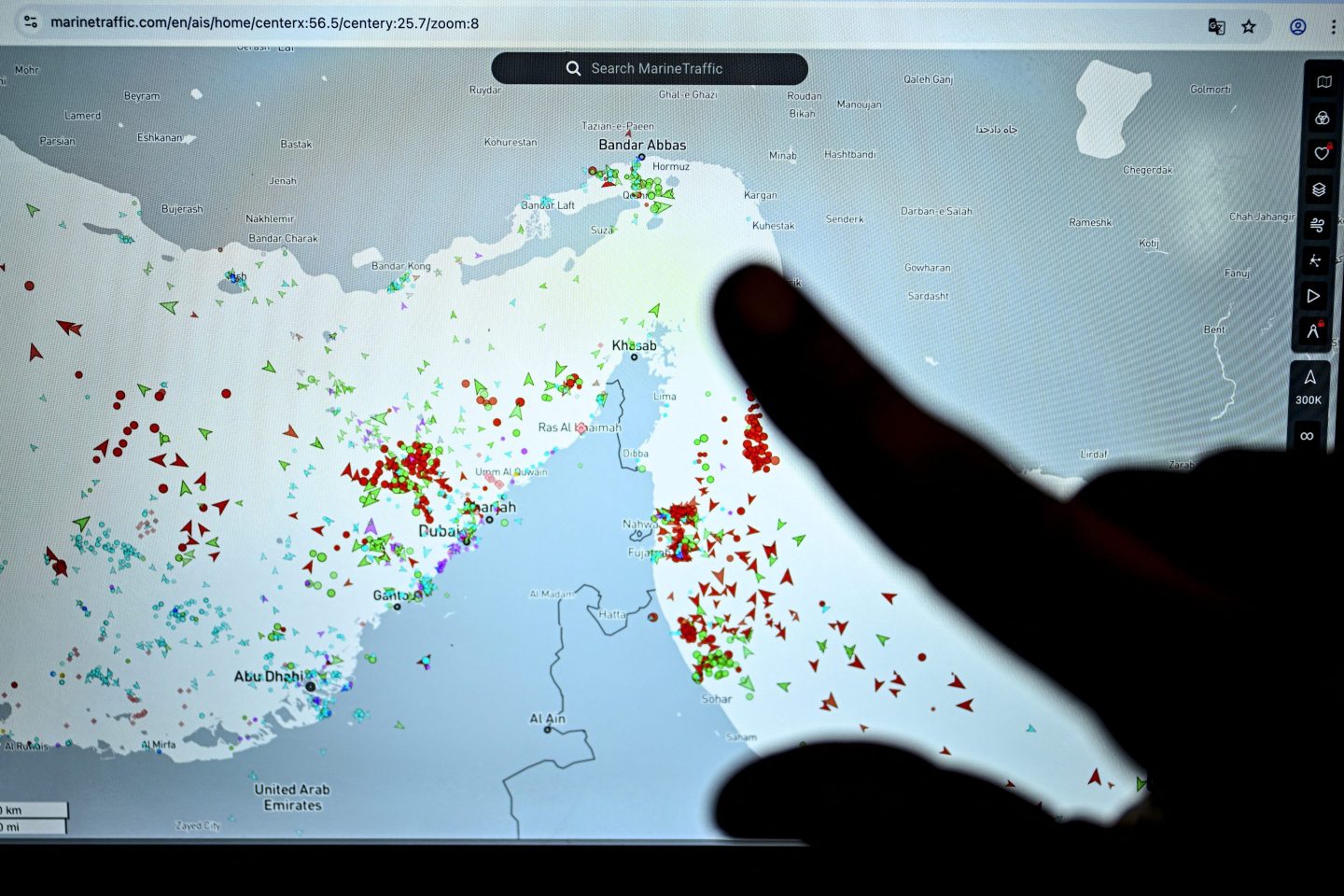
Forty years on and Trump has seemed to change his mind about the president bit, but not about Iran; he’s still trying to scratch that itch, to stick it to the hostile and theocratic regime which had once plotted his murder. In his first term he pulled out of the JCPOA and assassinated military commander Qasem Soleimani, to little reprisal. When the second term came, recent New York Times reporting suggests that Israeli Prime Minister Benjamin Netanyahu—who has long shared Trump’s desire to eradicate the Islamic Republic—made a “hard sell” for the war and convinced Trump that they would easily topple the regime. Iran’s top brass, Trump was told, would be kneecapped before they could even begin to threaten the Strait of Hormuz, the all-important oil choke point. The president bought in quickly and ordered the strikes. Members of his cabinet swallowed their apprehension, ceding to their boss’s confidence, the Times reported.
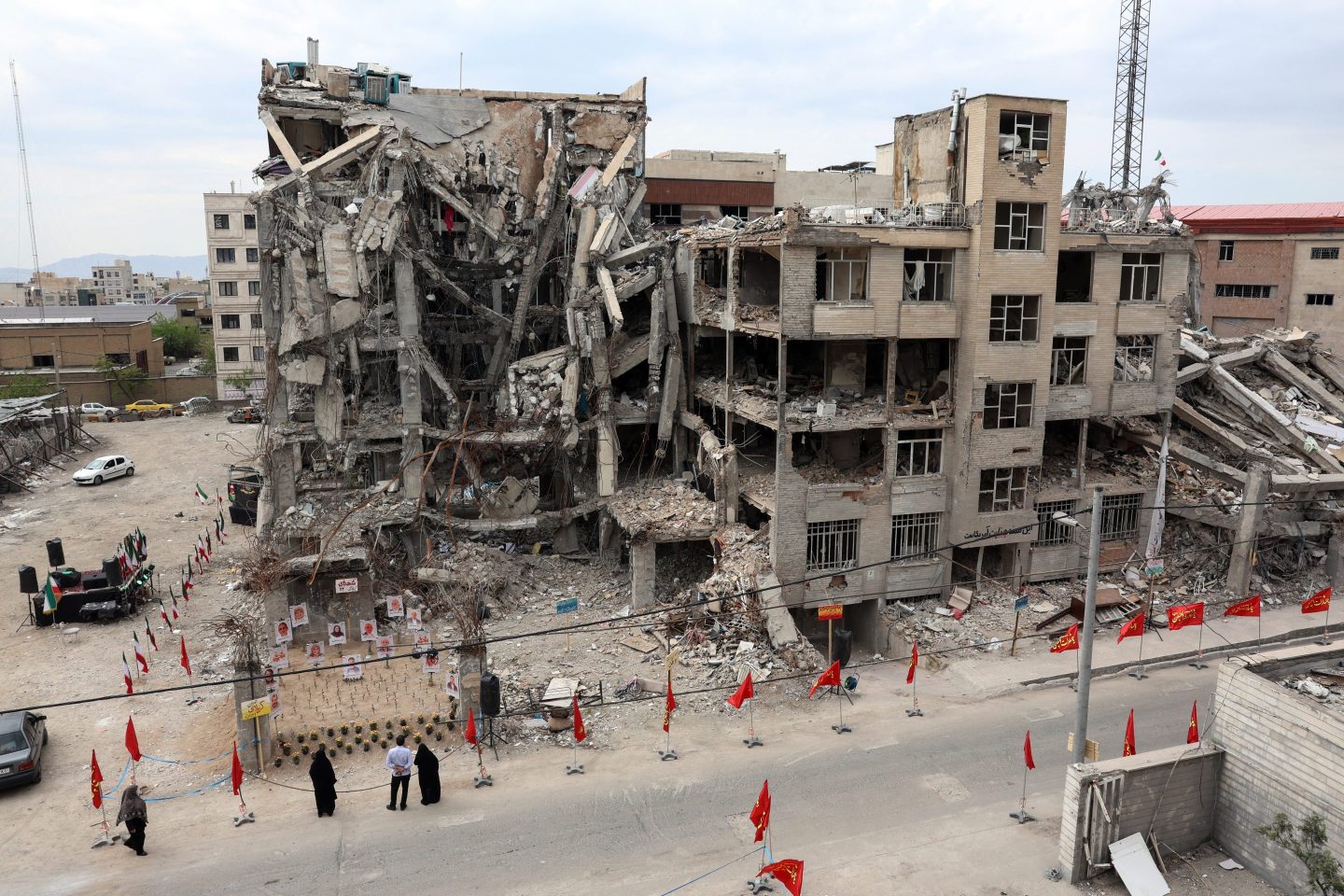
Trump went to war to scratch his itch: to show the U.S. was not weak. Six weeks in, as the war transitions into negotiations that Washington is not really in control of, it is starting to look like the war will prove the opposite.
The Suez moment
There is a name for when this happens, when an empire goes to war to prove it is still an empire. It’s called the “Suez moment,” and it is named for a crisis almost 70 years old with a very familiar plot: a nation desperate to assert itself; an Israeli coconspirator; a strategic waterway; an adversary everyone assumed would fold quickly; and a set of allies the administrations didn’t bother to call. In 1956, the adversaries were Britain and France; the waterway was the Suez Canal; and the enemy was Egyptian President Gamal Abdel Nasser, who had nationalized the canal that summer. British and French leaders were certain the war would be quick and would restore their stature in the region; like today, they did not expect Nasser to block the canal (with boats full of rocks), and were forced to deal with an imminent energy crisis that infuriated their allies—because, as in this war, those allies had not been consulted.
There are critical differences, to be sure. Neither Britain nor France were the world’s eminent economic power in 1956, as the U.S. is now. That meant the Eisenhower administration, acting as the adult in the room, could pressure them economically by refusing to backstop a rescue for the pound. Within months, Britain was forced into an IMF bailout; Prime Minister Anthony Eden was forced out; and the British great-power era went out with him.
Seventy years later, however, the U.S. is the power getting scolded, by allies who didn’t ask for the war and were harassed for not jumping in; for threatening that “a whole civilization will die tonight”; for claiming total victory even as none of the objectives of the war have been completed and thousands have died. And the adult in the room, at the end of the day, is China, which, the Times reports, ultimately worked to persuade Iran into accepting the ceasefire and ending the conflict.
That would make the war in Iran, as Aaron Jakes, a historian at the University of Chicago who studies the political economy of the modern Middle East, put it in an interview, “the Suez Crisis upside down.” There’s a “strong case to be made” that the foremost reason Britain went to war was to protect the pound’s role as a global reserve currency, which was backed by sterling-denominated oil sales out of the Middle East. But in a violent twist of fate, going into the war hastened the end of the currency’s reverse system anyway. The United States, Jakes argues, concurrently went to war to reassert its dominance in the Gulf and instead handed Iran a platform to start collecting tolls in yuan and cryptocurrency—anything, that is, except dollars. “The war has actually helped to accelerate the emergence of the very kind of problem that the British were trying to avoid when they decided to go to war,” Jakes said. “It has created a version of that problem that did not exist six weeks ago.”
Of course, it is not, on its own, the end of the dollar. No single waterway and no single toll regime can unwind the petrodollar system. But if the Iranians can get away with a toll in yuan or crypto, it could be the kind of thing that, in hindsight, historians point to when they mark the beginning of the end, Jakes said.
The microeconomic perspective
The anxiety has spread beyond historians. Burt Flickinger III, longtime retail analyst at Strategic Resource Group, predicted that this will be the “worst crisis in modern generations,” seeing the same end-of-empire pattern playing out in the numbers he watches for a living. “When luxury collapses, it’s a harbinger of complete catastrophe worldwide,” he said, pointing to Hermès, LVMH, and Kering—all down roughly 28% over the past year.
This is the first time in the past 70 years where American consumers are spending more money on all 12 major monthly expenditures at once—health care, local taxes, debt service, food, housing, transportation, utilities, insurance, entertainment, mobile, clothes, and education—Flickinger said. The higher costs of oil from this war alone, he said, are going to take money “out of every American’s pocketbook.” Looking out at a lease car repossession record rivaling that of the Great Recession, a surge in mortgage foreclosures, and a skyrocketing amount of farm bankruptcies, “there’s no place to go.” Farmers are simultaneously facing the lowest prices per bushel in 17 crop years while absorbing record costs for diesel, fertilizer, and labor, he noted.
David Royal, chief investment officer of Thrivent Financial, which manages more than $200 billion in assets, said he sees the same fracture, but from the top of the capital stack down. “It’s been a tough time for the middle-income consumer,” he said. “I worry about what happens to their confidence.” The war’s oil shock, he noted, is not falling evenly: The gas price spike hits hardest at the lower end of the income scale, while the benefits of recent tax changes—expanded SALT deductions, larger refunds—flow disproportionately to higher earners. Referring to the “K-shaped economy,” where those with higher incomes see better results on the upper end of the K, and those with lower and middle incomes do worse off on the lower, he said, “those two things just make [the] K wider.”
And yet Royal, whose firm’s 2,500 advisors serve roughly 2 million clients concentrated in the American Midwest, is not yet calling a recession. Consumer spending, he noted, is still growing at 4% to 5% on credit and debit card data: “Consumers are really grumpy, but they continue to spend.” The way he sees a downturn materializing is not through a financial shock alone, but through sentiment. “The way that this could spiral into a recession,” he said, “is if consumer confidence just completely craters.”
Flickinger has already made up his mind that confidence is down and headed lower, citing the University of Michigan’s long-running survey, which showed a March reading among the lowest of the past five years, just three points off the all-time low of June 2022, during Biden-era inflation. “The collapse of the Roman economic empire,” he called it, adding this was the first time in his long career that he’d seen this confluence of indicators all pointing in the wrong direction.
Credibility abroad
And even if negotiations ultimately break in America’s favor, the damage to the alliances that prop up America’s credibility can’t be so easily restored. Russia and China, the two powers Washington has spent the better part of a decade casting as its chief strategic rivals, have both emerged from the war stronger: China as the adult Iran was willing to listen to; Russia as the secret energy supplier the world is forced to admit it needs.
Meanwhile, our allies in the Gulf and in Europe endured waves of Trump’s battering for not jumping in, with threats even for Trump to pull NATO troops out of countries that refused. Jakes said it’s wrong to cast European allies as lazy villains: “One can just as easily see them as scrambling to hold together some possibility of a stable international order in the face of wanton U.S. and Israeli recklessness, as deliberately abandoning alliances.”
Royal, who manages assets for a largely Midwestern, middle-market clientele, observed that the war is already reordering how he thinks about portfolio geography. “You’re certainly seeing a fraying of old alliances and old patterns of behavior,” he said. His tentative conclusion, reached with a portfolio manager’s careful hedging: After the war, he would probably add to a domestic overweight. “Our economy,” he noted, “is far less dependent on exports than Europe in particular.”
This is the question on everyone’s mind, as diplomats around the world are being asked if American hegemony has been harmed by the conflict. Foreign Minister of Poland Radoslaw Sikorski spoke for many with his response: “We hope not, but we fear it might be.”