When Donald Trump turned his attention to the U.S. central bank, and attacked Jerome Powell at its helm, he didn’t think that would be the reason Powell may ultimately stay in position longer than expected.
Trump has nominated former Federal Reserve Governor Kevin Warsh to serve as the central bank’s next chairman. However, Warsh’s progression through the approval process faces a snag: A Department of Justice investigation into Powell, related to renovation works of Fed buildings in Washington D.C.
A federal judge last week quashed the subpoenas issued against the Fed chairman, though U.S. Attorney Jeanine Pirro, who brought the case, has vowed to appeal the decision.
Therein lies the problem: Powell has said he won’t leave the Federal Reserve Board until the matter is resolved, and Sen. Thom Tillis of the Senate Banking Committee says he will not advance any individual through the approvals process until the investigation is closed.
While Powell’s term as Fed chairman is due to finish this spring, his term on the board ends in 2028. In the slightly unusual event of Powell staying on, Trump would likely be displeased: He has blasted the chairman’s monetary policy, has called Powell stupid, and threatened to fire him (which he does not have the legal authority to do).
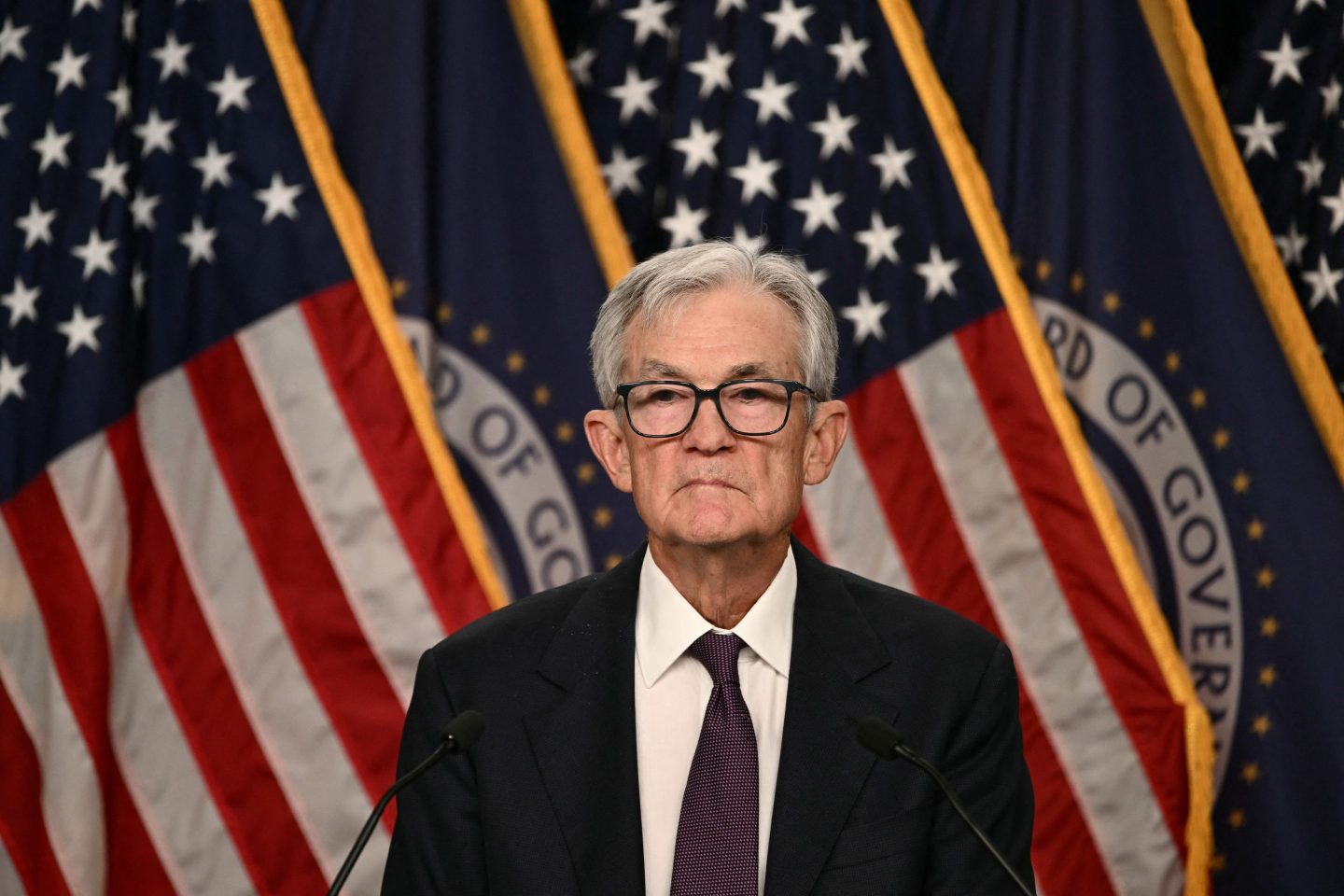
The chairman made his thinking clear at his press conference this week, when he announced the base interest rate would be held steady at 3.5 to 3.75%,
While the hold was no surprise to anybody given the chaos in the Middle East and the rising price of oil, Powell’s comments on his tenure at the Fed did catch the attention of Wall Street. He said: “I have no intention of leaving the board until the investigation is well and truly over, with transparency and finality.”
He added, “On the question of whether I will then continue to serve as a governor after my term ends and after the investigation is over, I have not made that decision yet, and I will make that decision based on what I think is best for the institution and for the people we serve.”
The chairman also acknowledged there’s a chance he may stay on at the head of the table for the Federal Open Market Committee beyond May, when he was due to stand down. He confirmed: “If my successor is not confirmed by the end of my term as chair, I would serve as chair [pro-tempore] until he is confirmed.”
“That is what the law calls for. That’s what we’ve done on several occasions, including involving me, and it’s what we’re going to do in this situation.”
The confirmation question
For Warsh to be confirmed as Fed chairman, he will need the green light from the Senate Banking Committee. The majority for this committee is—narrowly—held by Republicans, and so should fall in line with President Trump’s nomination.
Warsh has the hallmarks many politicians would expect in a nominee: He knows the inner workings of the central bank courtesy of a stint on the Board of Governors from 2006 until 2011, and he was a key player in the inner circle of then-Chairman Ben Bernanke as the nation navigated a financial crisis.
He knows Washington, having been brought in by President George W. Bush in 2002, when he served as special assistant to the president for economic policy and as executive secretary at the National Economic Council. He also has the private sector experience that Trump favors. (Scott Bessent, pre–Treasury secretary, was CEO of global hedge fund Key Square Capital Management). Between 1995 and 2002, Warsh worked for Morgan Stanley, his final role being vice president and executive director.
However, Sen. Tillis’s suggestion that he would not advance the nomination of any candidate—Warsh or otherwise—poses a threat to the advancement of the more dovish chairman Trump has been so keen to secure. Indeed, Pirro’s (another Trump nominee) suggestion that she will not let Powell’s case rest presents another hurdle.
What remains to be seen is the president’s priorities: Does having a bullish, dovish new Fed chairman outweigh his desire to reprimand Powell?