For many decades, students have been steered toward a singular path: go to college, or risk falling behind. It’s a message that took hold in the 1970s and 80s, when school districts removed shop classes—once designed to introduce students to trades like carpentry, welding, and electrical work.
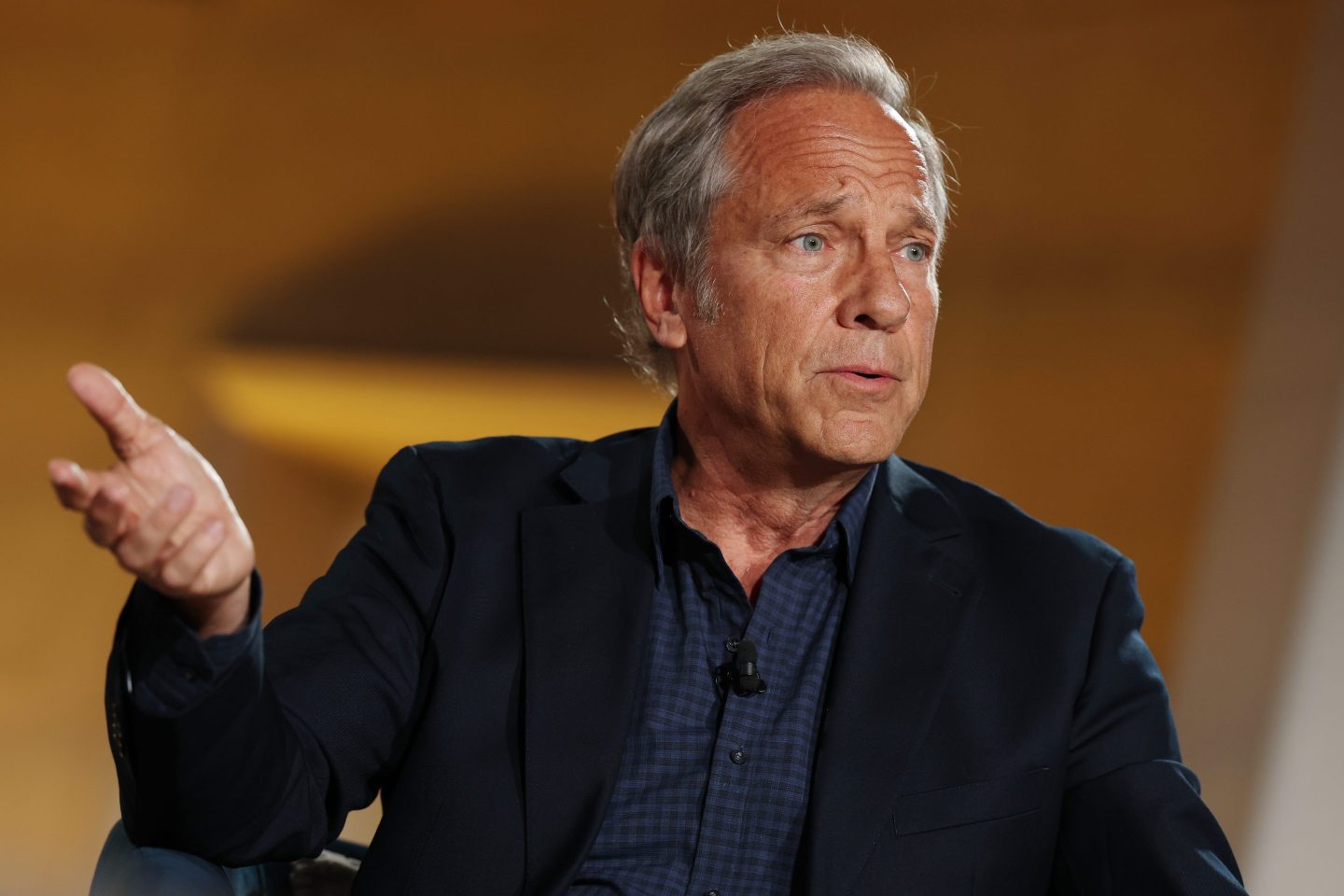
To the detriment of young people today, learning a trade was downgraded as the fallback option, a “vocational consolation prize,” according to Mike Rowe, best known for his stint hosting Dirty Jobs, a show that highlighted the dirtiest—and most essential—jobs in America.
That shift ultimately “scared parents to death,” Rowe said last week alongside BlackRock CEO Larry Fink at the company’s 2026 Infrastructure Summit. Even with the financial burden of following the college path exploding. And now Gen Z are paying the price.
“Nothing in the history of western civilization has gotten more expensive more quickly than a four-year degree,” Rowe said. “It’s not to say it’s not valuable, but I mean nothing—not real estate, not healthcare, not energy.”
At least in recent decades, the data backs him up. Between 1983 and 2025, the cost of college tuition has significantly outpaced every other household expense, according to analysis by J.P. Morgan Asset Management.
It’s collectively left young people facing a perfect storm: soaring student loan debt, degrees that don’t translate into stable careers, and an AI-obsessed job market that’s only growing more uncertain. Millions of Gen Z are ending up as NEET—not in employment, education, or training—and stuck in a limbo that college was supposed to prevent.
Simply put, “the kids are not alright,” Rowe said. “If I had an alarm bell, I would ring it.”
Data center electricians are making upwards of $280,000 a year, according to Mike Rowe
That mismatch has created a stark labor imbalance: too many young people chasing degrees, and not enough trained workers to fill critical, in-demand jobs.
Nowhere is that clearer than in parts of the economy tied to the AI boom, where skilled labor is commanding salaries that rival—or exceed—traditional white-collar roles.
During a recent visit to a data center in Plano, Texas, Rowe said he met three electricians—all under 30 years old—earning between $240,000 and $280,000 a year—with no college debt. Even more striking: all three had been poached three times in the previous 18 months.
Electricians, in particular, have emerged as some of the most in-demand—and AI-resistant—professions as companies race to build the infrastructure powering AI. An estimated 300,000 new electricians will be needed over the next decade, on top of replacing roughly 200,000 upcoming retirees.
But the shortage extends far beyond a single trade. Across industries, demand for skilled labor is surging. At Rowe’s foundation, which supports trade training, applications have jumped tenfold over the past year—a sign, he said, that interest may finally be catching up with opportunity.
“Not a week goes by that I don’t hear from the leader of some consequential industry who is freaking out in real time,” he said, pointing to the fact that professions like shipbuilders, welders, and plumbers are all in need hundreds of thousands of workers to meet growing labor demands.
But moving forward, Rowe said what’s emerging is a new reality where post-secondary education is no longer treated as one-size-fits-all—with skills becoming the clearer signal of opportunity.
“This is the trap and it’s so easy to fall into it,” he said. Blue collar versus white collar, shop class versus Brown or Dartmouth. Solar versus nuclear, wind versus fossil—bull crap. None of that, the color of collars is over.”
Mike Rowe isn’t alone—the CEOs of BlackRock, Nvidia, and Ford are worried about skilled trade shortages
Rowe may be best known as a reality TV host—but his feeling about the need for skilled trade workers is being increasingly reinforced by the nation’s top CEOs.
BlackRock’s Larry Fink said in the panel with Rowe that AI will only expand the demand for skilled trade, but the education system hasn’t properly set young people up for success.
“AI is going to create a lot of skilled jobs needs, and the biggest issue confronting our country today and other countries is the speed at which this change is occurring,” Fink said. Just last week, BlackRock announced an investment of $100 million in the training of skilled trade workers.
Nvidia CEO Jensen Huang has also warned that the skilled workers needed to build the physical backbone of AI—from chip factories to data centers—are already in short supply.
“The labor required to support this buildout is enormous. AI factories need electricians, plumbers, pipefitters, steelworkers, network technicians, installers and operators,” Huang wrote in a blog post released earlier this month.
“These are skilled, well-paid jobs, and they are in short supply. You do not need a PhD in computer science to participate in this transformation.”
Ford CEO Jim Farley has echoed concerns about a shortage of manually skilled workers.
“We are in trouble in our country. We are not talking about this enough,” Farley told the Office Hours: Business Edition podcast earlier this year. “We have over a million openings in critical jobs, emergency services, trucking, factory workers, plumbers, electricians, and tradesmen. It’s a very serious thing.”