• Home
  • Latest
  • Fortune 500
  • Finance
  • Tech
  • Leadership
  • Lifestyle
  • Rankings
  • Multimedia
EnergyIran

Skyrocketing energy prices and inflation woes mount as the ‘absurd’ reality in Iran sinks in

Jordan Blum
By
Jordan Blum
Jordan Blum
Editor, Energy
Down Arrow Button Icon
Jordan Blum
By
Jordan Blum
Jordan Blum
Editor, Energy
Down Arrow Button Icon
March 14, 2026, 3:06 AM ET
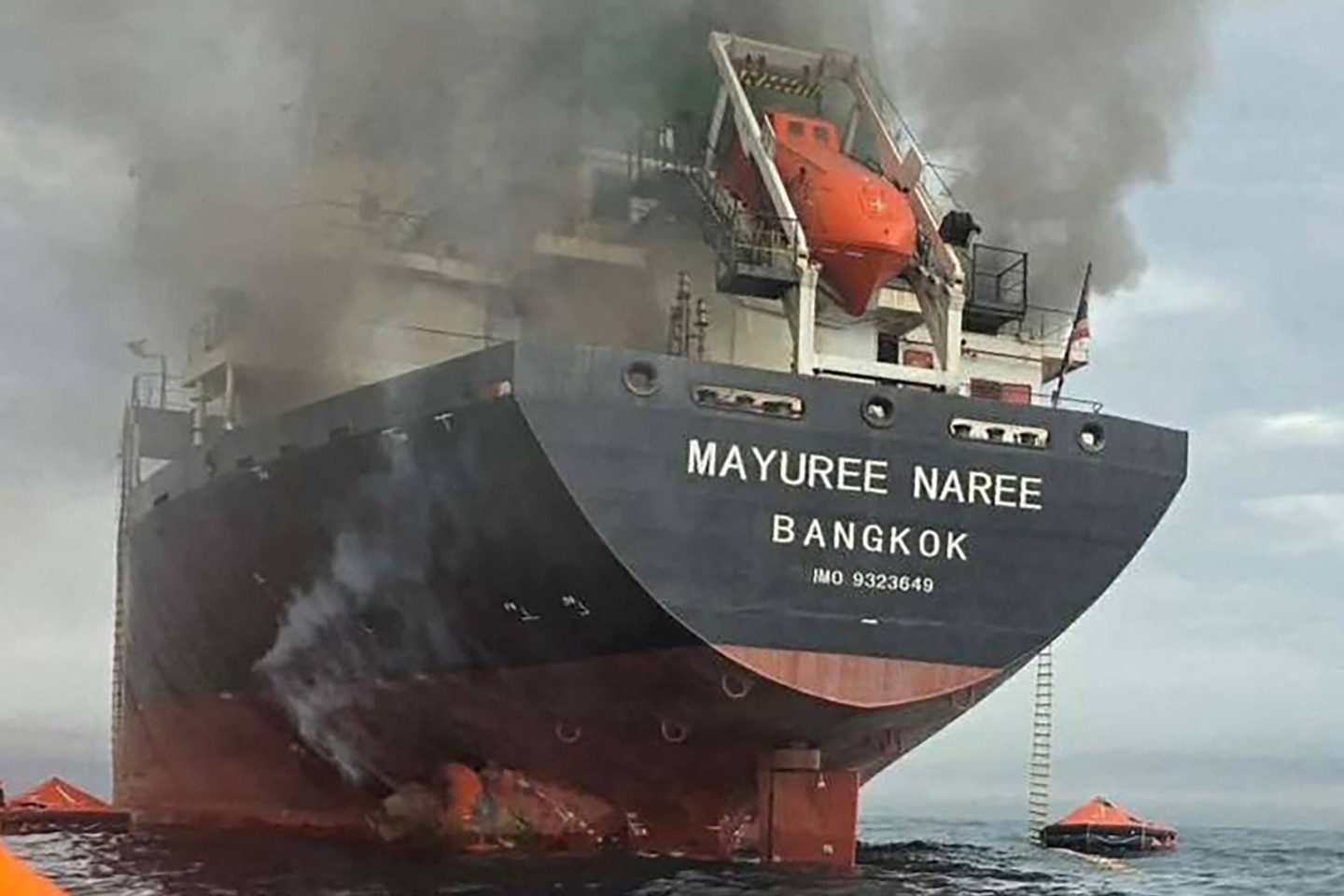
Handout photo taken on March 11, 2026 and released by the Royal Thai Navy shows smoke rising from the Thai bulk carrier 'Mayuree Naree' near the Strait of Hormuz after an attack. A Thai bulk carrier travelling in the crucial Strait of Hormuz was attacked March 11, with 20 crew members rescued so far, the Thai navy said.
Handout photo taken on March 11, 2026 and released by the Royal Thai Navy shows smoke rising from the Thai bulk carrier 'Mayuree Naree' near the Strait of Hormuz after an attack. A Thai bulk carrier travelling in the crucial Strait of Hormuz was attacked March 11, with 20 crew members rescued so far, the Thai navy said. (Photo by Handout / ROYAL THAI NAVY / AFP via Getty Images)AFP PHOTO / ROYAL THAI NAVY

The immediate shock of the U.S. and Israeli war with Iran is felt most acutely in fuel prices. As the fighting drags into a third week, however, the ripples are spreading across a broader swath of the economy, threatening to affect everything from groceries and work schedules to stock markets and interest rates. 

Recommended Video

Even stagflation—the dreaded S-word that plagued American consumers during the 1970s Middle East oil crisis—is in the air again, as business leaders, analysts, and policymakers reassess the scope and duration of a conflict that the U.S. government seems to have underestimated.

At the center of the widening crisis is the false belief that the Strait of Hormuz—the narrow choke point separating 20% of the world’s oil and liquefied natural gas from global markets—would be left untouched from the conflict, said Bob McNally, former White House energy adviser under George W. Bush and founder of the Rapidan Energy Group.

“Even the possibility that a hostile power could choke traffic in Hormuz—by far the world’s most vital energy and commodity artery—was considered to be absurd,” McNally told Fortune, largely because it hadn’t happened before. “When I would tell people our analysis shows that, in a military conflict with Iran, Hormuz would be shut for weeks, people looked at me like I was high on crack cocaine.”

With crude oil benchmarks hovering near $100 per barrel—up 70% since early January—prices may rise to all-time highs of $150 or greater by the end of March if the strait remains effectively closed with no clear end in sight, McNally said. If anything, he said, prices are still artificially lower than they should be: “The world can’t grow without 20% of its energy—not in the short term. People are just unwilling to come to grips with the idea that we’re not going to get 20% of our energy back really fast.”

Oil forecaster Dan Pickering, founder of the Pickering Energy Partners consulting firm, noted that the effects in the U.S. are relatively muted thus far thanks to domestic oil and gas supplies. While U.S. fuel prices are up nearly 35% from January lows and still rising, there are no shortages or long lines at gas stations. That is not the case in much of Asia, where dependence on Middle Eastern supplies has led to skyrocketing prices and a cascade of other effects. Shortages of fuel, cooking gas, and electricity, have led to work from home directives, school closures, and conservation requests in countries such as Vietnam, the Philippines, and Pakistan. Shortages of fertilizer shipments will trickle down into food and grocery costs.

“Compared to a week ago, the situation looks more challenging and longer lasting. An easy solution to the straits does not appear on the horizon,” Pickering said. “With that, there’s fear of inflation, fear that stocks might be overvalued, and you’re hearing ‘stagflation’ a lot. It’s rippling through sentiment, and it’s putting a higher floor on pricing whenever this conflict ends.”

A previously robust stock market is starting to show signs of disquiet: The Dow Jones Industrial Average, for instance, is down 6% in a month and expected to dip further at least as long as the war extends. The exception, of course, is energy producers capitalizing off the price surges, as Exxon Mobil, Chevron, and many other U.S. oil and refining stocks jumped to record highs.

Open for transit, aside from the shooting

Member countries of the International Energy Agency agreed to release a record-high, 400 million barrels of oil from strategic reserves, including 172 million barrels from the U.S., but doing so will take at least four months to pull from storage. “Oil can’t come out fast enough to offset the closure of the straits. You have some help that will come over the next three to six months, but this crisis is happening now,” Pickering said.

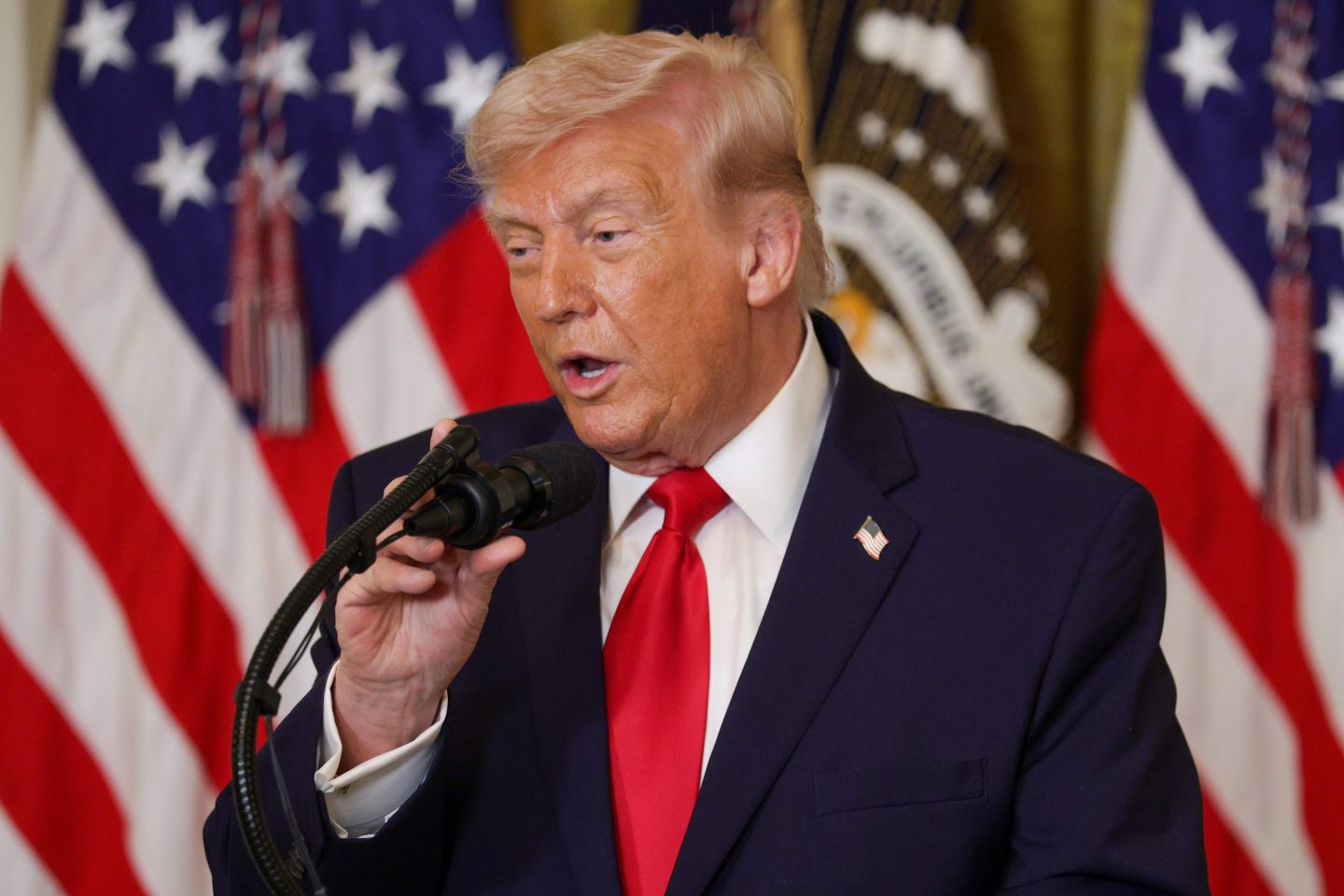
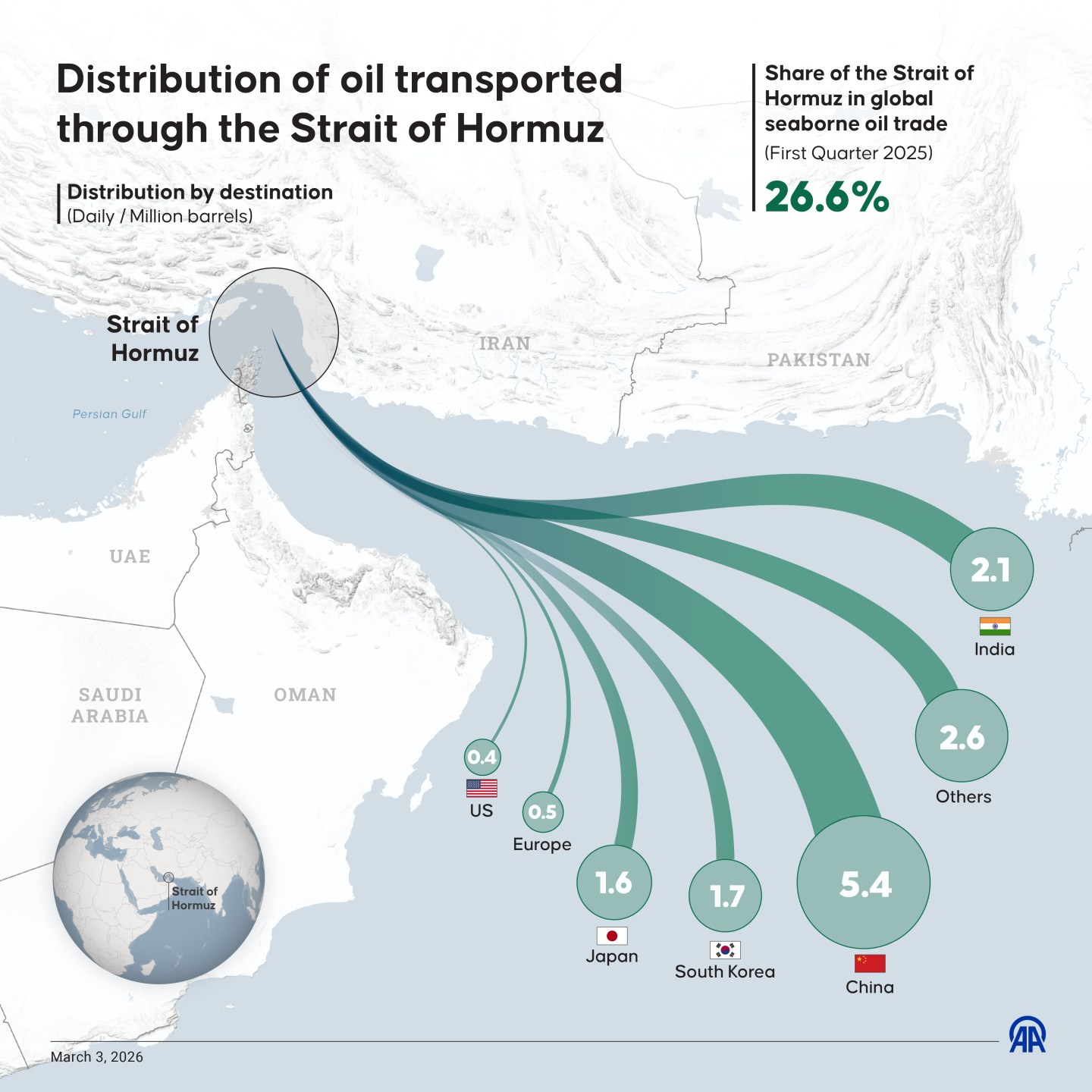
It’s been more than a week since President Donald Trump announced plans for government-backed, oil tanker insurance and potential naval escorts through the strait with little tangible progress. The U.S. is currently in the process of sending more warships and Marines to the Middle East.

The military is currently focused on weakening Iran’s defenses, and naval escorts for tankers may begin as soon as the end of March, U.S. Energy Secretary Chris Wright said March 12. Defense Secretary Pete Hegseth downplayed the problems more, saying on March 13 that he’s not concerned about the strait.

“The only thing prohibiting transit in the straits right now is Iran shooting at shipping. It is open for transit should Iran not do that,” Hegseth said with a straight face during a press conference.

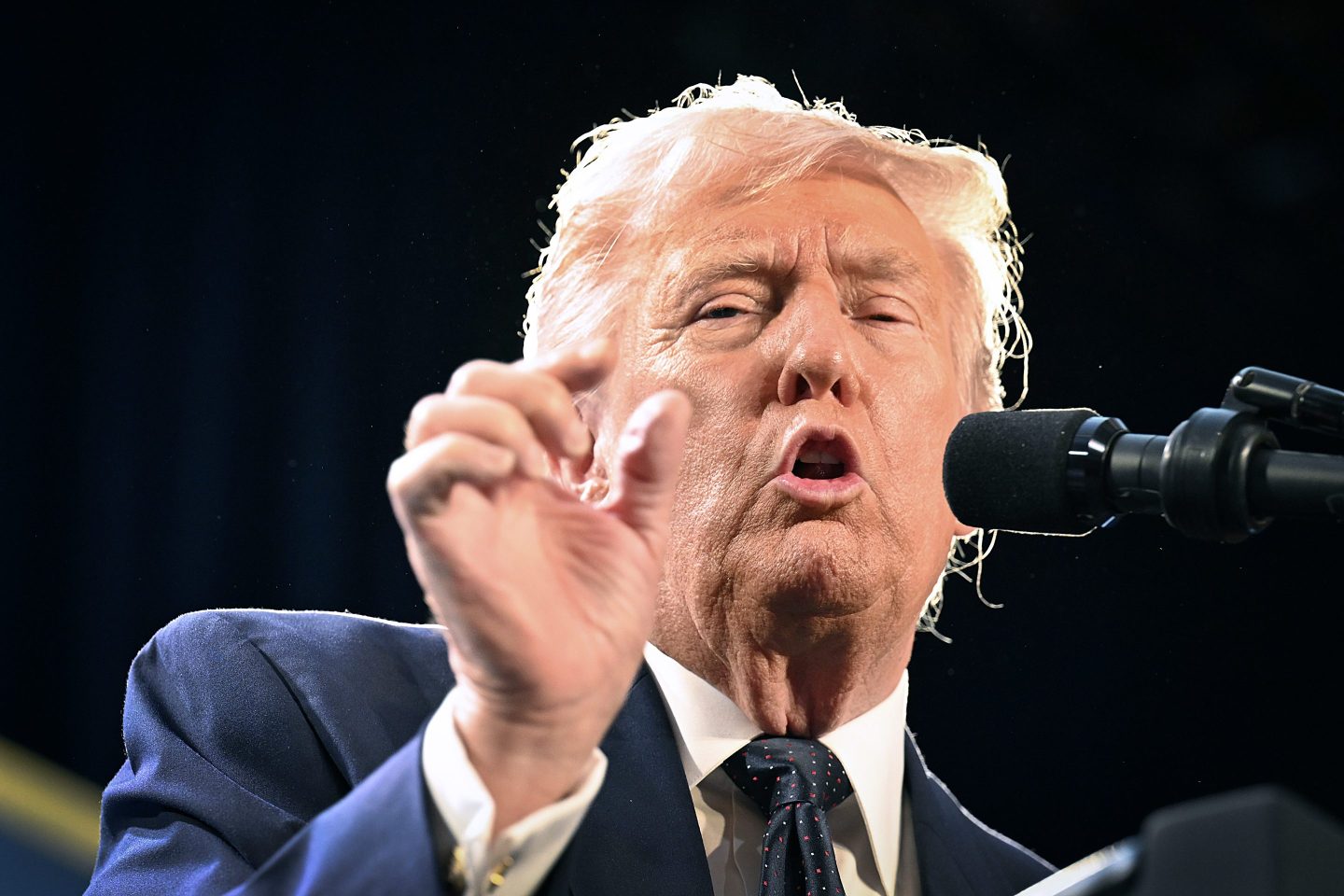
Later March 13, Trump was asked on Fox News when he would know the war is over. His response, “When I feel it in my bones.”
Getty Images

What comes next?

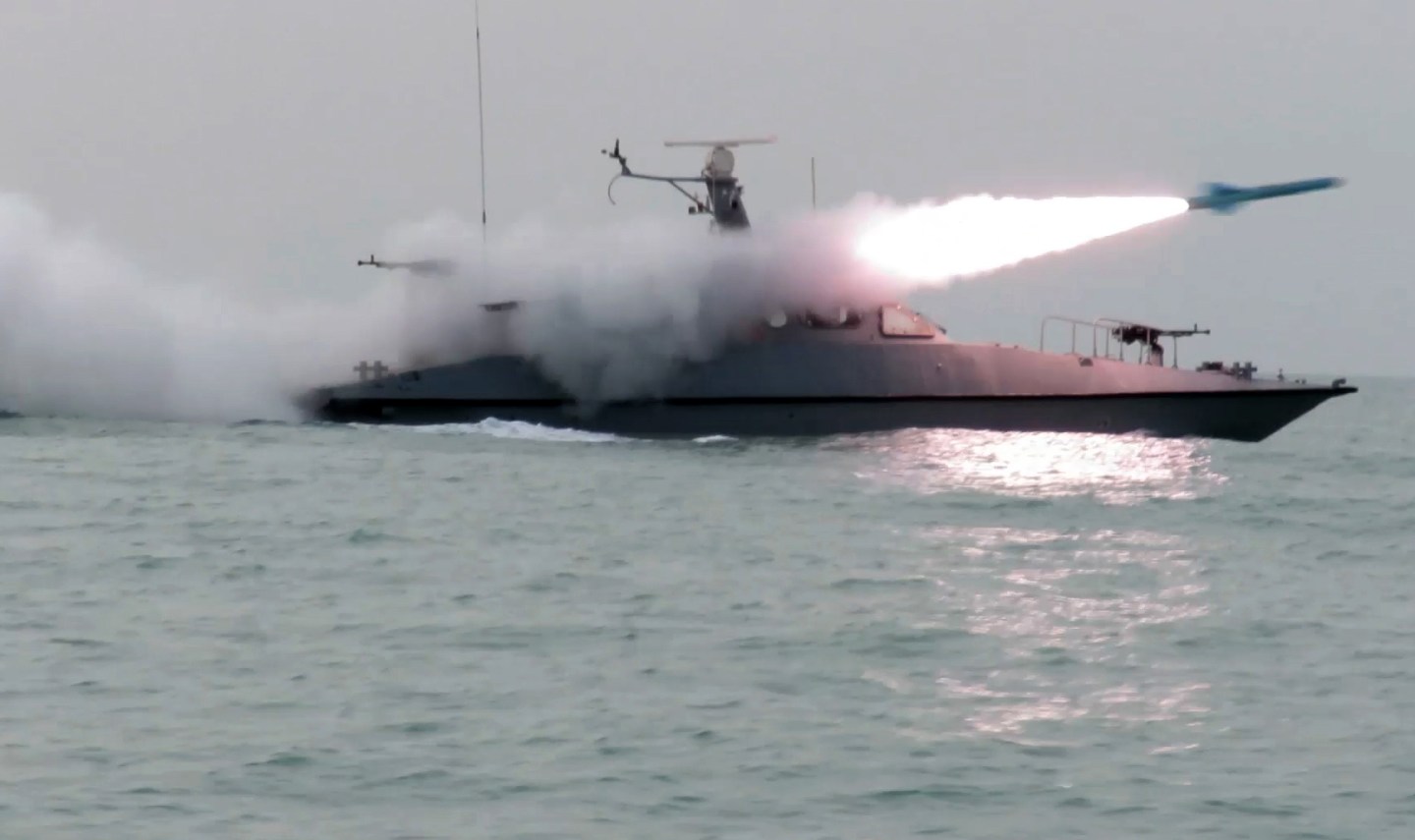
Iran responded to the war—including the death of its supreme leader and other top officials—by firing missiles at its energy-producing, neighboring Gulf states and then at tankers within the strait.

Although he has yet to be seen and is believed by the Trump administration to be injured, Iran’s new Supreme Leader Mojtaba Khamenei issued a statement pledging to keep the strait closed, using both mines and bombing attacks from ground forces. A handful of tankers from non-enemy nations, including India, were strategically allowed through.

“Iran is demonstrating that it controls the Strait of Hormuz, and not the United States,” McNally said. “It does that by both periodically attacking ships in the strait—re-instilling fear among tankers and insurers and keeping them from moving—and apparently allowing certain tankers to go through.”

White House spokeswoman Anna Kelly countered to Fortune that the U.S. has destroyed over 20 of Iran’s mine-laying vessels with more to come. “President Trump is fully prepared to provide U.S. Navy escorts through the Strait of Hormuz if he deems it necessary,” she reiterated.

Carolyn Kissane, associate dean of the New York University Center for Global Affairs, said the markets are no longer taking White House statements “at face value”—as was the case during the first week of the war—and are recognizing that Iran is “going for the jugular.”

“This is historic that Iran is targeting Gulf states and the Strait of Hormuz, which has always been the worst, worst, worst-case scenario,” Kissane said. “If there’s no conclusion in the next two-to-three weeks, we are looking at much higher prices, and a lot of insecurities across supply chains for the foreseeable future. There are going to be some very huge ripple effects.”

One of those ripple effects is the political implications in a midterm election year in the U.S., especially since this is clearly recognized as a “war of choice,” she said.

While just a few weeks ago, voter concerns about AI data centers and rising utility costs seemed to be replacing gas prices at the pump as the new political bellwether, now surging fuel prices are the focus again. Former President Joe Biden took a big political hit from high fuel costs when Russia invaded Ukraine in 2022, and that obviously wasn’t an American military decision.

That said, it’s because of those very reasons that this war might still conclude within a couple of weeks or so, said Pavel Molchanov, energy analyst at Raymond James. Trump has always focused acutely on keeping fuel prices low.

“When prices at the pump spike, presidential approval ratings go down. And now, the price of oil is the highest in four years,” Molchanov said. “The longer Americans feel pain at the pump, the more political pressure there will be on the White House to end the war.”

And while the level of Iran’s military response has surprised some observers, the country needs resolution as well. After all, Iran isn’t moving its oil through the strait either, Molchanov said.

“Iran needs to export its oil. They need the money.”
The Fortune 500 Innovation Forum will convene Fortune 500 executives, U.S. policy officials, top founders, and thought leaders to help define what’s next for the American economy, Nov. 16-17 in Detroit. Apply here.
About the Author
Jordan Blum
By Jordan BlumEditor, Energy

Jordan Blum is the Energy editor at Fortune, overseeing coverage of a growing global energy sector for oil and gas, transition businesses, renewables, and critical minerals.

See full bioRight Arrow Button Icon

Latest in Energy

Finance
Lorem ipsum dolor sit amet, consectetur adipiscing elit, sed do eiusmod tempor incididunt ut labore et dolore magna aliqua. Ut enim ad minim veniam
By Fortune Editors
October 20, 2025
Finance
Lorem ipsum dolor sit amet, consectetur adipiscing elit, sed do eiusmod tempor incididunt ut labore et dolore magna aliqua. Ut enim ad minim veniam
By Fortune Editors
October 20, 2025
Finance
Lorem ipsum dolor sit amet, consectetur adipiscing elit, sed do eiusmod tempor incididunt ut labore et dolore magna aliqua. Ut enim ad minim veniam
By Fortune Editors
October 20, 2025
Finance
Lorem ipsum dolor sit amet, consectetur adipiscing elit, sed do eiusmod tempor incididunt ut labore et dolore magna aliqua. Ut enim ad minim veniam
By Fortune Editors
October 20, 2025
Finance
Lorem ipsum dolor sit amet, consectetur adipiscing elit, sed do eiusmod tempor incididunt ut labore et dolore magna aliqua. Ut enim ad minim veniam
By Fortune Editors
October 20, 2025
Finance
Lorem ipsum dolor sit amet, consectetur adipiscing elit, sed do eiusmod tempor incididunt ut labore et dolore magna aliqua. Ut enim ad minim veniam
By Fortune Editors
October 20, 2025

Most Popular

Finance
Lorem ipsum dolor sit amet, consectetur adipiscing elit, sed do eiusmod tempor incididunt ut labore et dolore magna aliqua. Ut enim ad minim veniam
By Fortune Editors
October 20, 2025
Finance
Lorem ipsum dolor sit amet, consectetur adipiscing elit, sed do eiusmod tempor incididunt ut labore et dolore magna aliqua. Ut enim ad minim veniam
By Fortune Editors
October 20, 2025
Finance
Lorem ipsum dolor sit amet, consectetur adipiscing elit, sed do eiusmod tempor incididunt ut labore et dolore magna aliqua. Ut enim ad minim veniam
By Fortune Editors
October 20, 2025
Finance
Lorem ipsum dolor sit amet, consectetur adipiscing elit, sed do eiusmod tempor incididunt ut labore et dolore magna aliqua. Ut enim ad minim veniam
By Fortune Editors
October 20, 2025
Finance
Lorem ipsum dolor sit amet, consectetur adipiscing elit, sed do eiusmod tempor incididunt ut labore et dolore magna aliqua. Ut enim ad minim veniam
By Fortune Editors
October 20, 2025
Finance
Lorem ipsum dolor sit amet, consectetur adipiscing elit, sed do eiusmod tempor incididunt ut labore et dolore magna aliqua. Ut enim ad minim veniam
By Fortune Editors
October 20, 2025
Fortune Secondary Logo
Rankings
  • 100 Best Companies
  • Fortune 500
  • Global 500
  • Fortune 500 Europe
  • Most Powerful Women
  • Future 50
  • World’s Most Admired Companies
  • See All Rankings
Sections
  • Finance
  • Fortune Crypto
  • Features
  • Leadership
  • Health
  • Commentary
  • Success
  • Retail
  • Mpw
  • Tech
  • Lifestyle
  • CEO Initiative
  • Asia
  • Politics
  • Conferences
  • Europe
  • Newsletters
  • Personal Finance
  • Environment
  • Magazine
  • Education
Customer Support
  • Frequently Asked Questions
  • Customer Service Portal
  • Privacy Policy
  • Terms Of Use
  • Single Issues For Purchase
  • International Print
Commercial Services
  • Advertising
  • Fortune Brand Studio
  • Fortune Analytics
  • Fortune Conferences
  • Business Development
  • Group Subscriptions
About Us
  • About Us
  • Editorial Calendar
  • Press Center
  • Work At Fortune
  • Diversity And Inclusion
  • Terms And Conditions
  • Site Map
Fortune Secondary Logo
  • About Us
  • Editorial Calendar
  • Press Center
  • Work At Fortune
  • Diversity And Inclusion
  • Terms And Conditions
  • Site Map
  • Facebook icon
  • Twitter icon
  • LinkedIn icon
  • Instagram icon
  • Pinterest icon

Latest in Energy

Handout photo taken on March 11, 2026 and released by the Royal Thai Navy shows smoke rising from the Thai bulk carrier 'Mayuree Naree' near the Strait of Hormuz after an attack. A Thai bulk carrier travelling in the crucial Strait of Hormuz was attacked March 11, with 20 crew members rescued so far, the Thai navy said.
EnergyIran
Skyrocketing energy prices and inflation woes mount as the ‘absurd’ reality in Iran sinks in
By Jordan BlumMarch 14, 2026
4 hours ago
Middle EastIran
U.S. hits military targets on Iran’s Kharg Island as war escalates
By Skylar Woodhouse, Catherine Lucey and BloombergMarch 13, 2026
10 hours ago
EnergyOil
U.S. officials have discussed trading oil futures, Burgum says
By Jennifer A. Dlouhy, Tyler Kendall and BloombergMarch 13, 2026
11 hours ago
President Donald Trump
EnergyMiddle East
The war in Iran has caused the biggest oil supply disruption in history, energy watchdog says, and a swift end to the conflict might not change that
By Tristan BoveMarch 13, 2026
18 hours ago
EnergyIran
The Strait of Hormuz is an Iranian ‘kill box,’ preventing the U.S. Navy from securing it right now and letting tankers pass through freely
By Jason MaMarch 13, 2026
19 hours ago
Current price of oil as of March 13, 2026
Personal FinanceOil
Current price of oil as of March 13, 2026
By Joseph HostetlerMarch 13, 2026
22 hours ago

Most Popular

placeholder alt text
Personal Finance
The national debt isn't $39 trillion. One economist says it's actually $100 trillion
By Nick LichtenbergMarch 13, 2026
1 day ago
placeholder alt text
Success
When Jamie Dimon was fired from Citigroup, his daughters asked: 'Will we be homeless? Can I still go to college? Can I have your phone?'
By Eleanor PringleMarch 13, 2026
1 day ago
placeholder alt text
North America
The U.S. Mint dropped the olive branch from the dime. What does that mean for the country?
By Catherina GioinoMarch 12, 2026
1 day ago
placeholder alt text
Economy
'This cannot be sustainable': The U.S. borrowed $50 billion a week for the past five months, the CBO says
By Eleanor PringleMarch 10, 2026
4 days ago
placeholder alt text
AI
Morgan Stanley warns an AI breakthrough Is coming in 2026 — and most of the world isn't ready
By Nick LichtenbergMarch 13, 2026
1 day ago
placeholder alt text
Economy
Trump's immigration crackdown is backfiring by hurting the U.S.-born workers it was meant to help, data shows
By Sasha RogelbergMarch 10, 2026
4 days ago

© 2026 Fortune Media IP Limited. All Rights Reserved. Use of this site constitutes acceptance of our Terms of Use and Privacy Policy | CA Notice at Collection and Privacy Notice | Do Not Sell/Share My Personal Information
FORTUNE is a trademark of Fortune Media IP Limited, registered in the U.S. and other countries. FORTUNE may receive compensation for some links to products and services on this website. Offers may be subject to change without notice.