The American economy is choking on two inconvenient facts: the national debt is rapidly approaching an unprecedented $40 trillion, and the average home price is over $400,000. (The debt is actually $38.87 trillion at time of publication.) Many top economists, including Moody’s chief economist Mark Zandi, have pointed out the economy is essentially only growing because of consumer spending by the wealthy and massive data-center investment from big tech’s “hyperscalers.” Meanwhile, most Americans remain on the sidelines and have effectively been experiencing a recession. But what if the national debt was something that every American can feel?
A new report from the policy research center Yale Budget Lab estimates the national debt is, in fact, making everyday life more expensive for Americans. The report reveals that federal fiscal policy, specifically the debt added by legislation passed since 2015—from the 2017 Tax Cuts and Jobs Act to pandemic relief—has significantly increased the cost of major life purchases for American families. It estimates exactly how much debt added since 2015 has cost borrowers, compared to a scenario where those legislative spending and tax changes never took place.
Given the increase in household borrowing costs since 2015, the average new homebuyer could expect to pay an extra $76,014, with a 30-year mortgage. That’s an average cost of about $2,534 per year.
“The consistent pattern of deficit spending that has been the norm in the United States for many years has driven up costs for families,” the researchers wrote.
Life is growing increasingly unaffordable, especially for young Americans. The average age of the first-time homebuyer hit 40 in 2025, a stark contrast from even 10 years ago, when people were able to afford a 30-year mortgage in their early 30s. And it’s been harder for Gen Z to clinch a job as entry-level roles have started to disappear. The national debt is, at the very least, not helping the situation.
A new era of deficit spending
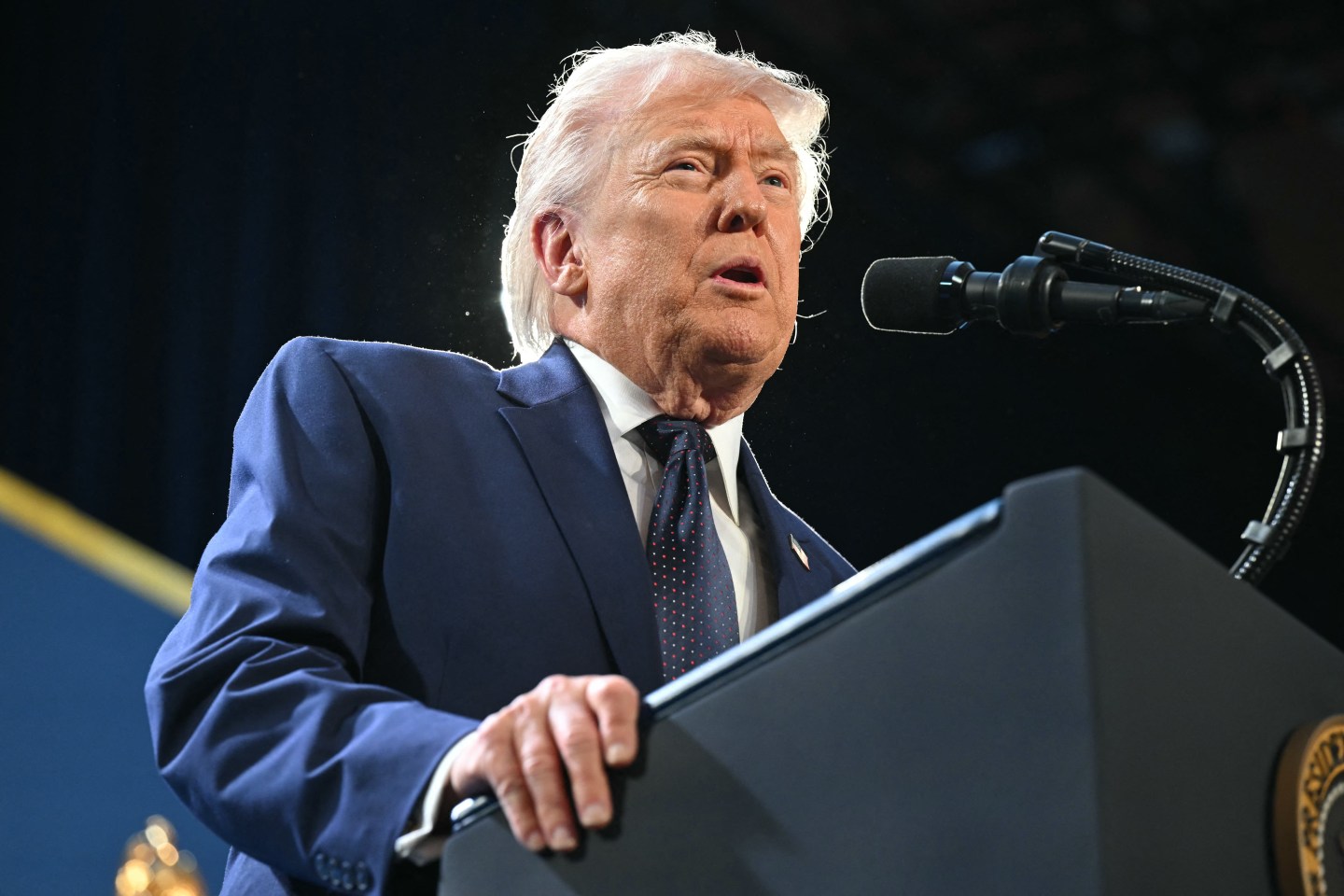
To be sure, there are reasons behind the deficit spending and they were arguably worthwhile, depending on your policy preferences. The Committee for a Responsible Federal Budget calls President Trump’s unfunded tax cuts a “sugar high” for the economy, but most economists agree they are a pro-growth policy of a Ronald Reagan-like, supply-side variety. Other deficit spending that started during Trump’s first term, with significant buy-in from Democratic House Speaker Nancy Pelosi, was a pandemic trial run of sorts for Modern Monetary Theory principles in real life, a quasi-universal basic income (with expanded unemployment and a series of stimulus checks) to stave off disaster.
President Donald Trump’s tax cuts contributed to some of the highest deficit spending in history. The 2017 Tax Cuts and Jobs Act, which was extended in 2025 as part of the One Big Beautiful Bill Act, has piled trillions on top of the national debt, adding an additional $3.4 trillion over the next eight years, according to estimates from the Congressional Budget Office.
The national debt has also piled up thanks in part to government spending during the COVID pandemic and the years that followed, ushering in a period of unusually high fiscal spending. As businesses shuttered and economic activity stalled, the federal government used large-scale spending on devices, like stimulus checks, which resembled universal basic income, to prevent a deeper global economic meltdown. Much of that spending proved successful, leading to the fastest recovery following a market crash in recent history—at least the last 40 years. Employment rebounded in record time, returning to pre-pandemic levels by June 2022.
These were arguably worthwhile, depending on your perspective, but the Yale Budget Lab is pointing out the age-old economic truism that remains relevant: there’s no such thing as a free lunch.
The hidden everyday costs of the national debt
The report assumes a one-to-one pass-through, where 30-year mortgage rates rise in direct unison with long-term Treasury yields. It also assumes an economic rule where every 1% increase in the national debt raises interest rates by 0.02%. Since 2015, new laws have pushed the projected debt up by 49%, leading to a nearly 1% interest rate hike on the median home price, which was about $426,000 in the third quarter of 2025, which the study references as its baseline estimate.
“You could look at it as effectively a significant tax on mortgages,” Benn Steil, director of international economics at Council on Foreign Relations, who has authored research on the unsustainable trajectory of the national debt, told Fortune.
The report also outlines what housing costs could look like for new homebuyers given other scenarios where the interest rate is more or less sensitive to federal debt. Even if interest rates are less sensitive to federal debt, American homeowners could still expect to pay $57,347 more than a scenario without the added debt since 2015, or about $1,912 annually. Yet if it’s more sensitive, that amount shoots up to $112,640, or about $3,755 per year.
But it’s not just mortgages. The report found that, for an auto loan of 5.75 years, the calculated cumulative lifetime cost is about $670, or about another month’s worth of the average car payment. That’s $120 more per year as compared to a scenario without the debt increase. The debt impacts small business owners, too, accruing an estimated $7,723 cumulative lifetime cost on a 10-year small business loan, or $770 more annually.
These numbers are rising because when the national debt rises, the federal government jacks up borrowing costs, ultimately raising costs for you, the consumer. “You are competing with the federal government for the bank’s loanable funds,” Steil said. “The more money the federal government needs to raise, the more you’re going to have to pay when you want to raise money to finance a mortgage.”
This nearly 1-percentage-point hike in Treasury rates is particularly impactful for the housing market. “People most usually think of affordability in terms of what they’re paying for gas at the gas station or what they pay for eggs at the supermarket,” Steil said.“But they don’t typically think of it in terms of why a mortgage is costing them 7% rather than 6%.
He continued, “That’s actually very, very important to most families’ financial position, understanding that your mortgage is considerably more expensive than it would have been if the government had been more fiscally prudent.”