Artificial intelligence has permeated nearly every part of daily American life. It’s being adopted across the professional sphere, and threatening to replace large swaths of workers. It’s appeared in classrooms, doctor’s offices, and in Hollywood. And AI-generated content has penetrated your Facebook, Instagram, and TikTok feeds.
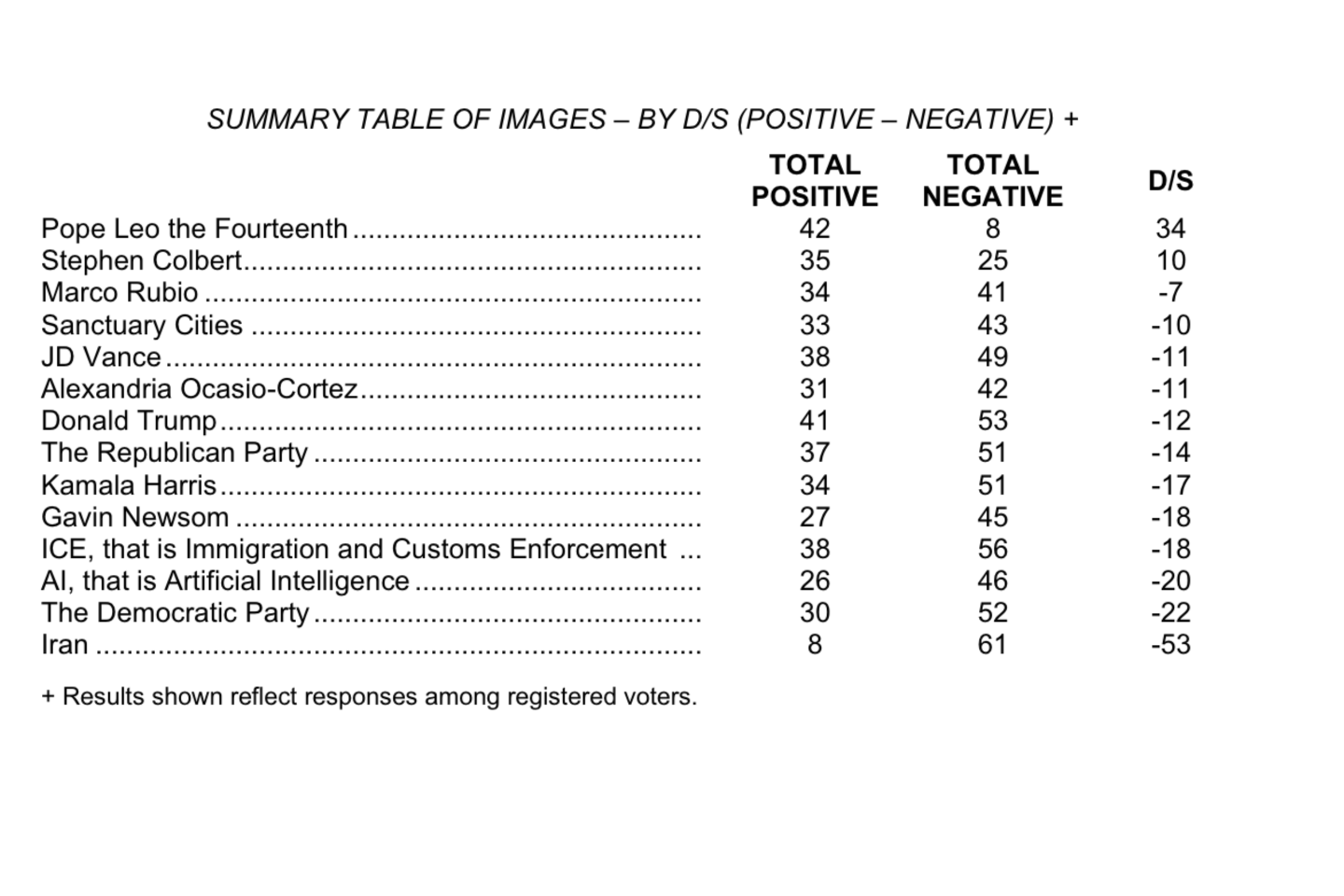
But even as AI weaves its way into the everyday, it’s failed to win over most Americans. That’s according to a new NBC News poll. The survey of 1,000 registered voters between Feb. 27 and March 3 found that just 26% had a positive view of AI, while 46% had a negative view. Those dismal numbers are third worst, trailing only the Democratic Party, which had a 22-point net negative rating, and Iran, with a 53-point net negative.
That low favorability comes as about 56% of Americans today say they use AI tools, according to a Brookings survey. And big tech companies are piling billions of dollars into the AI buildout, contributing up to $700 billion in capital expenditures, investments which rival the GDP of some developed countries.
While the technology has the potential to radically transform society, with some leaders viewing it as a cure-all that could boost productivity, bolster innovation, and even cure cancer, the very scale of that transformation has also made many Americans wary of its potential.
At the same time, the rush of data center construction to support increased AI use has been met with a “not in my backyard” backlash, and AI’s increased electricity demand has spiked Americans’ utility bills.
The Democrats’ abysmal numbers
Still, AI’s numbers are better than the Democratic Party’s. A 52% majority of those surveyed have a negative view of Democrats, with just 30% saying they have a favorable view. The party has faced a reckoning since its disappointing defeat in the 2024 presidential election, triggering internal conflict and constant finger-pointing. Political post-mortem after post-mortem has deepened a cold war between progressives and moderates, fueling ongoing debates over President Joe Biden’s handling of the Gaza war, inflation, and the cost of living.
The Republican Party has similarly bleak numbers, with 51% of respondents expressing an unfavorable view. But more respondents, 37%, said they had a positive view of the party, compared to just 30% saying the same for the Democratic Party. That puts Republicans at a 14-point net-negative view.
And even as 56% of Americans oppose the war in Iran according to a Marist poll, 61% have a negative view of the country. Just 8% say they have a positive view.
A powerful technology with bad PR
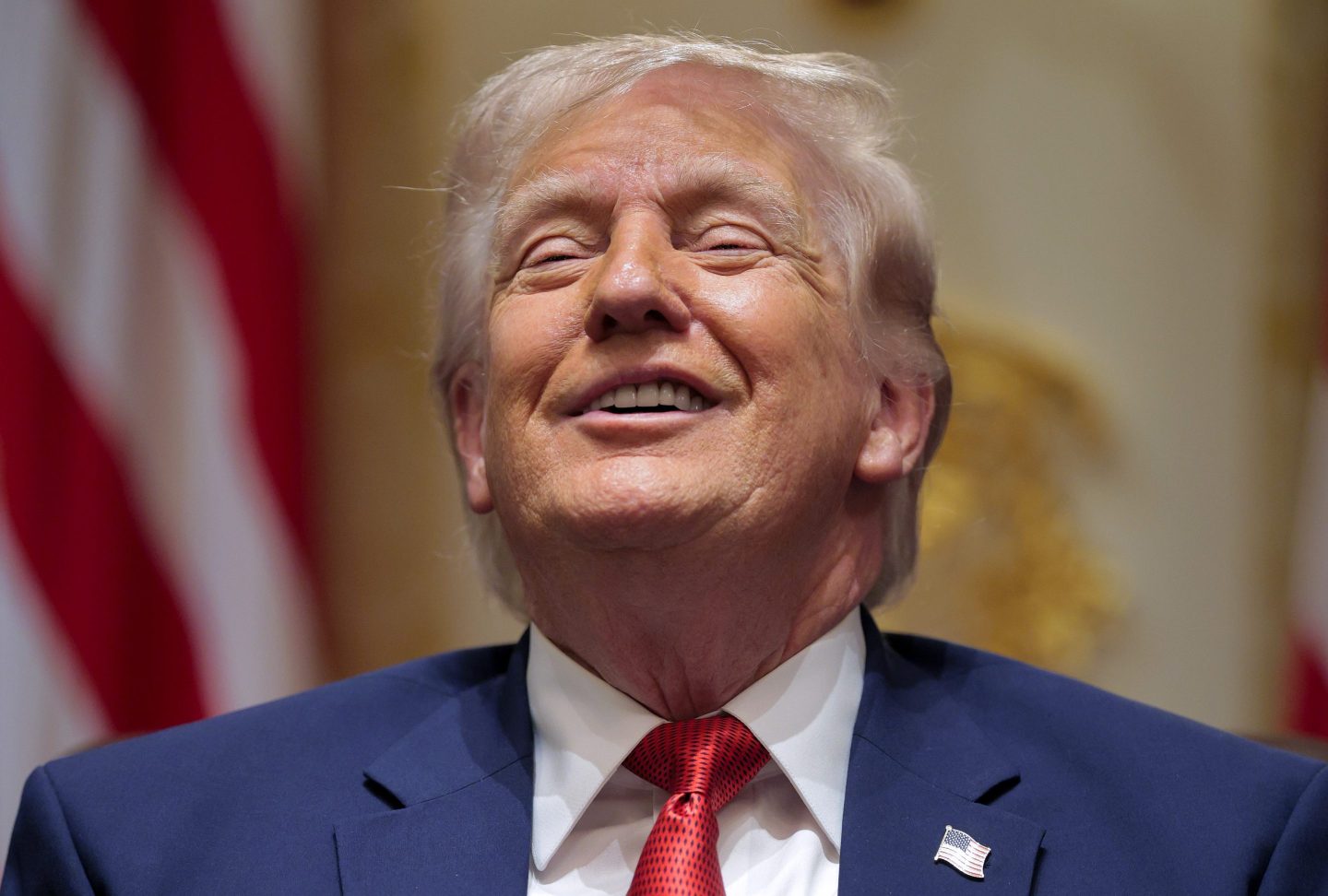
Still, Americans like AI less than even some of the most controversial organizations and political figures, including Immigration and Customs Enforcement and President Donald Trump. ICE, which is enforcing Trump’s wide-spanning deportation operation, has an 18-point net negative view among registered voters. Thirty-eight percent have a favorable view of the agency, while 56% have a negative view. Just 41% have a positive view of Trump, with 53% holding a negative view. That’s a 12-point net negative view.
The only two figures with favorability numbers above water are Pope Leo XIV, with a 34-point net positive favorability, and comedian Stephen Colbert, with a 10-point net favorability.
AI has faced pushback across industries. In 2023, Hollywood screenwriters and actors staged one of the longest strikes in history out of fears that AI would one day replace them. A year later, California nurses went on strike to protest “untested” AI as hospitals and health care professionals moved to adopt the technology.
A wave of predictions on the technology’s impact on the job market has given Americans fresh reason to criticize its development. A recent Anthropic economic report found AI is already theoretically capable of replacing a majority of tasks associated with business, finance, coding, and law. Such warnings have contributed to widespread angst amongst Americans. A February poll from research firm Verasight found 56% remain anxious about AI’s rise.
“Until companies and institutions building AI systems can address fundamental concerns about trustworthiness, privacy, and social responsibility,” the poll’s authors wrote, “Americans will remain trapped between enthusiasm and anxiety, using AI while quietly wondering if they should.”