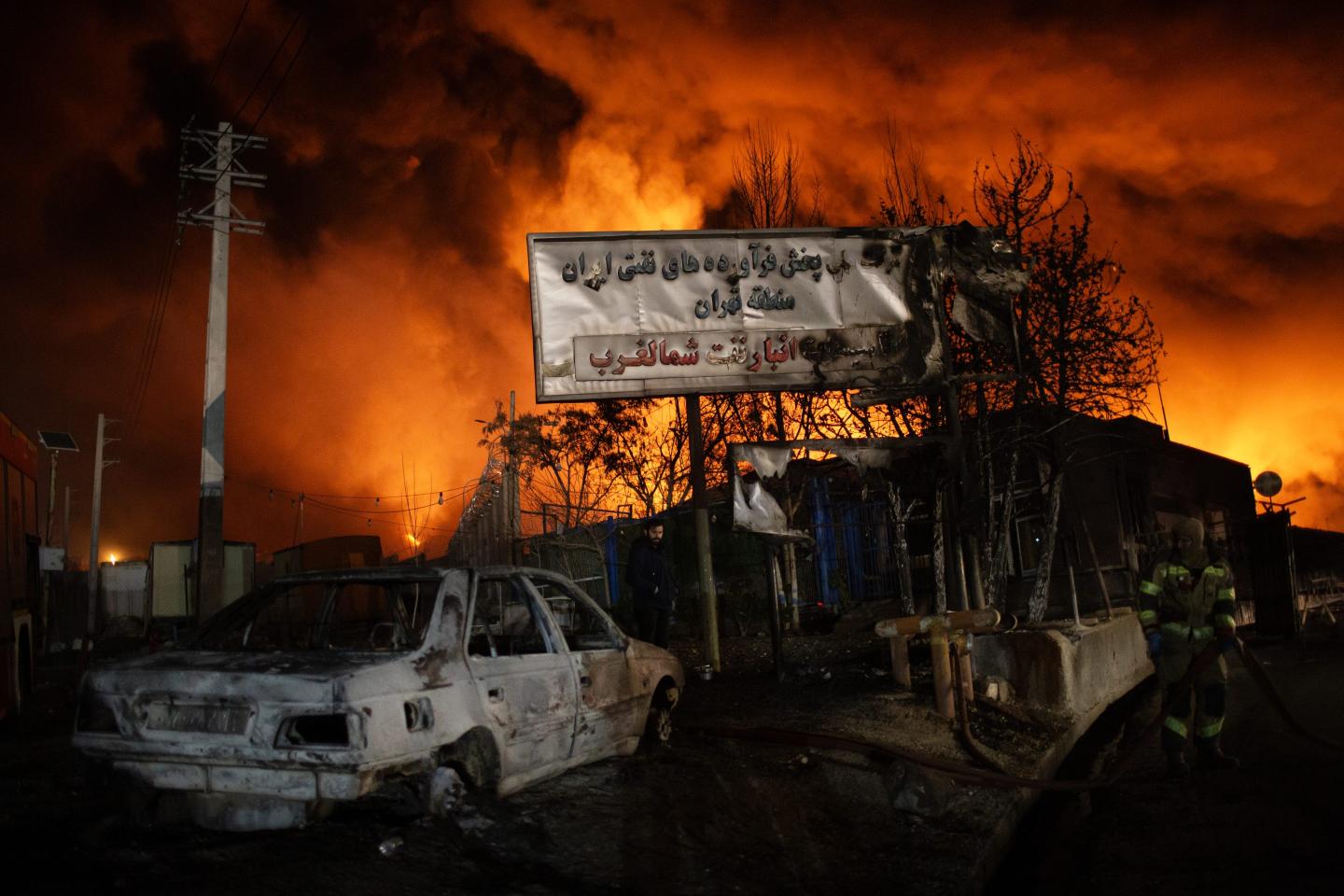
Tehran’s residents woke up to a skyline shrouded in black smoke and acid rain clouds after Israeli airstrikes set ablaze key fuel depots serving one of the Middle East’s largest cities.
Multiple videos posted on social media show massive fires dominating the horizon, in the west, south and north of the city. Iranian state media said a number of oil storage facilities had been attacked by enemy aircraft, causing large volumes of oil and fuel to burn well into the night. None of the footage could be verified by Bloomberg.
Israeli jets targeted three Iranian oil depots, the Iranian semi-official Fars news agency said on Saturday.
Israel’s Energy Minister Eli Cohen confirmed the attacks, claiming the facilities are used by Iran’s military. He also warned that oil refineries and power stations could be targeted in the coming days, in an interview with Israel’s 103fm radio.
The attacks on essential infrastructure mark an escalation in the war as the Islamic Republic continues strikes on Gulf Arab countries — including a desalination plant in Bahrain — and rejects calls from US President Donald Trump for an unconditional surrender. Iran said the US was the first to strike an Iranian desalination plant.
As the fighting rages on and continues to rattle global markets, Iran’s state media has said that the country’s next supreme leader — who succeeds Ayatollah Ali Khamenei after he was killed in Israeli strikes on Feb. 28 — has been chosen and will be announced soon.
Read More: Iran Picks New Leader as War Intensifies, Oil Supply Woes Deepen
“It’s very scary. Day and night, eating and sleeping — it’s all over the place,” one resident of western Tehran, requesting anonymity because of the security situation, said via WhatsApp messages amid an intermittent internet blackout.
A CNN reporter in Tehran reported it was “raining oil” on Sunday morning and later posted a video from the Shahran oil depot in northwestern Tehran showing thick plumes of smoke billowing from the site. The facility was also attacked during Israel’s military strikes on Iran last June.
“God knows what will happen to us. We still have water, electricity and food,” another resident in central Tehran said, also declining to give her name because of the security situation and sensitivities around speaking with foreign media.
Earlier on Sunday, Iran’s Red Crescent Society released a statement warning residents not to leave their homes because of high levels of toxic pollution caused by the strike on the fuel depots. They cited a risk of lung and skin disease from acid rain and told people not to leave even after the rain has stopped because its evaporation was also causing high levels of toxicity in the air.
Since the start of the war on Feb. 28, 1,205 civilians including 194 children have been killed in Iran, according to the Washington-based Human Rights Activist News Agency.