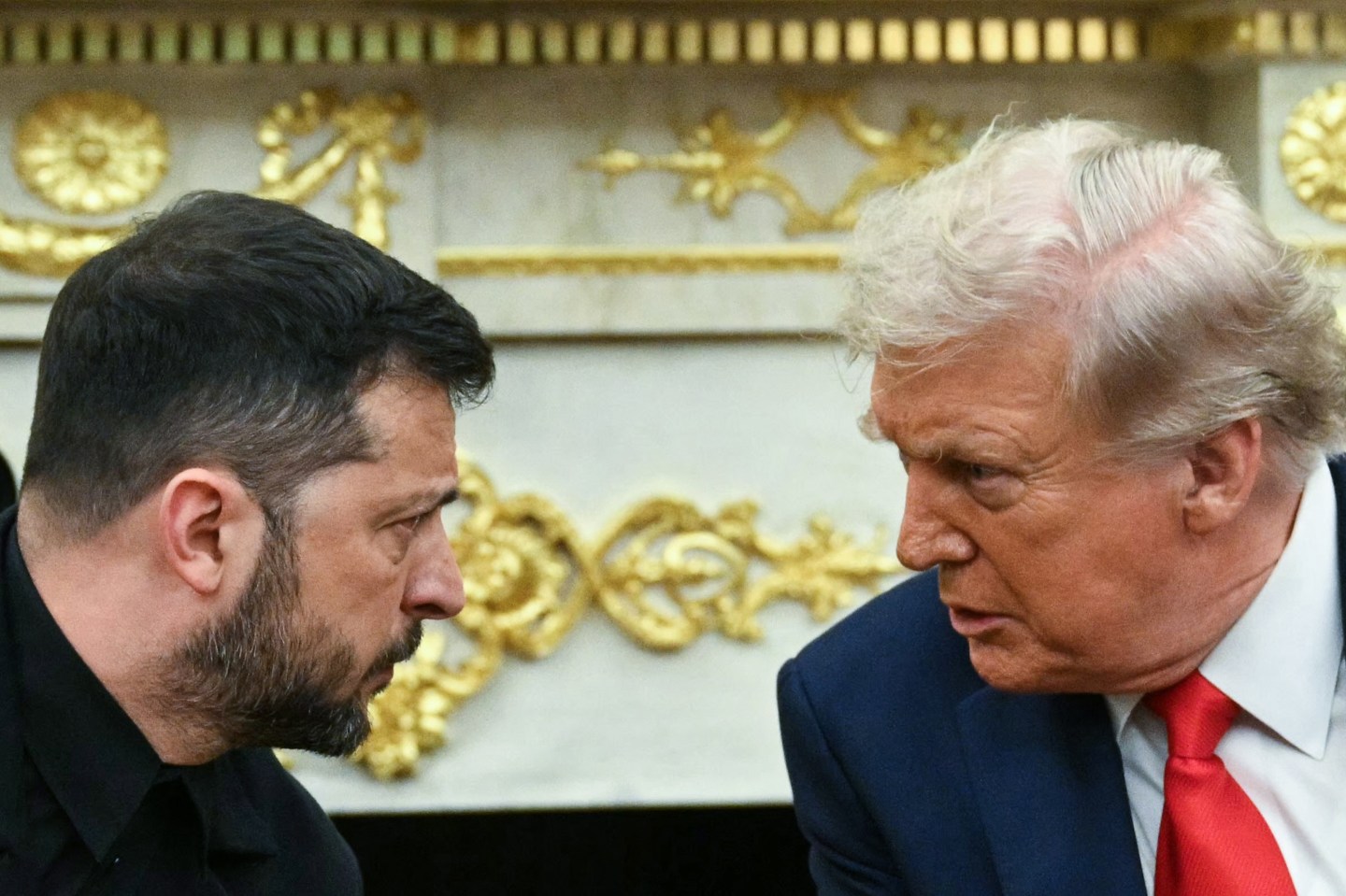
When Ukrainian President Volodymyr Zelensky visited the White House last August, the mood was markedly warmer than the pair’s explosive February encounter. But a passing comment from President Donald Trump — framed as a joke — set off alarms far beyond the Oval Office and has resurfaced in viral social media clips, drawing renewed scrutiny months later.
During a joint press briefing on August 18, 2025, Zelensky was defending Ukraine’s decision not to hold a presidential election since 2019, explaining that Ukrainian law — enshrined in its constitution — prohibits elections during a period of active armed conflict. He acknowledged that an election could theoretically take place, but only with a truce: land, sky, and sea.
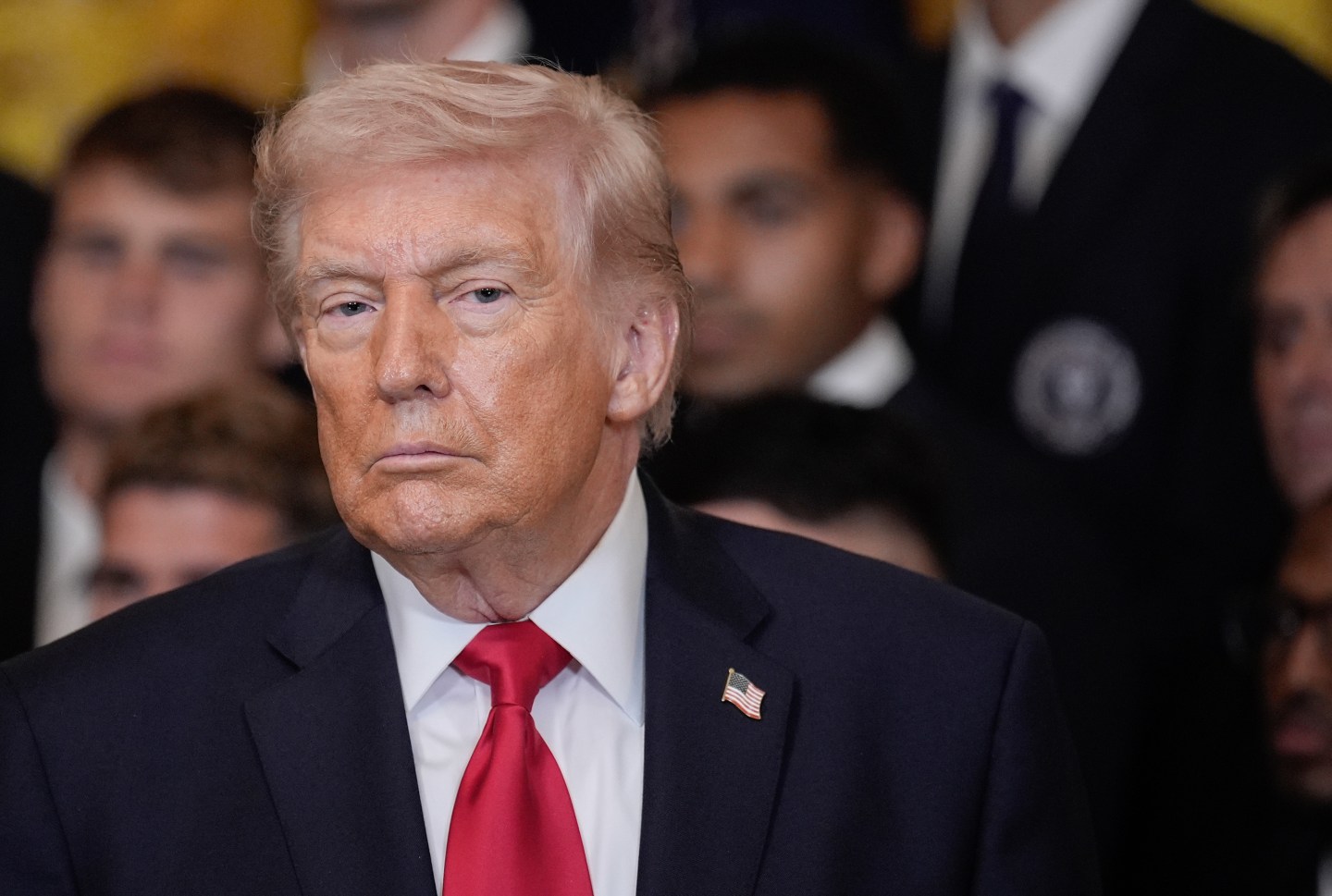
Trump, listening intently, interrupted. “So you’re saying during the war you can’t have elections?” he said. “So, let me just say, three-and-a-half years from now… if we happen to be in a war with somebody, no more elections. Oh, that’s good.”
The room reacted with laughter. Zelensky smiled. Trump moved on.
Critics did not.
As the U.S. finds itself drawn deeper into tensions surrounding the Iran war in 2026, social media users have resurfaced the clip with a different read — pointing to it as an early signal of how Trump privately viewed the conditions that Ukraine set for peace, and what that might mean now that the geopolitical calculus has shifted dramatically.
Why the 22nd Amendment matters here
Trump’s quip — whether joke or not — collided directly with one of the most consequential amendments in American constitutional history. Ratified in 1951 in the wake of Franklin D. Roosevelt’s unprecedented four-term presidency, the 22nd Amendment limits any individual to two terms in the White House. Trump, who served his first term from 2017 to 2021 and was reelected in November 2024, is constitutionally barred from seeking a third term in 2028. The amendment is unambiguous and has no wartime exception.
Unlike Ukraine’s constitution — which was specifically written to prohibit elections during active armed conflict — the U.S. Constitution contains no such clause. The country held presidential elections during the Civil War in 1864, both World Wars, and every major military conflict since. The federal government holds no legal authority to delay, suspend, or cancel a presidential election. That power belongs to the states.
This is precisely why Trump’s offhand comment, delivered with a grin, unsettled so many observers. Six months earlier, he had called Zelensky “a dictator without elections” — a taunt that ignored the very Ukrainian constitutional provision he now appeared to be admiring. Now, critics noted, he seemed to have absorbed the lesson and liked what he learned.
‘You know he’s contemplating war’
Online, the reaction was swift last year. One widely shared post observed seven months ago that Trump had to be contemplating a military strike to prolong his presidency: “You know he’s contemplating war now.”
The Reddit thread, drawing over 1,600 upvotes, dissected the legal reality in characteristically online humor: “If the USA didn’t have elections when there was a war on, George Washington would still be President lol.” Other commenters noted that states run elections, so Trump’s hands would be tied in that respect. Other users pointed out that Trump had already issued executive orders challenging mail-in voting and the use of electronic voting machines — moves that, taken together, painted a picture critics found difficult to dismiss as coincidental.
Trump’s supporters, as they often do, argue the remark was clearly tongue in cheek, the kind of provocative humor he has deployed throughout his political career. (Many of these are about Trump seeking an unprecedented third term.)
But that defense carries less weight in the shadow of the 22nd Amendment. The amendment was designed specifically to prevent any one person from accumulating unchecked executive power — a guardrail the founders themselves failed to install. Australia’s national broadcaster noted that international legal experts, while broadly sympathetic to Ukraine’s wartime election suspension, stressed that its circumstances — a foreign military occupation of sovereign territory — bear no parallel to the American system.
In the months since the August press conference, the clip has continued to circulate. Each time it resurfaces, the debate restarts: Was it a joke? Almost certainly. Was it harmless?
With Defense Secretary Pete Hegseth declaring the U.S. is “just getting started” in Iran and Trump stating there are “no time limits” on the conflict, viewers are rewatching the August clip and asking whether Trump’s dismissiveness toward Zelensky’s constitutional conditions foreshadowed a foreign policy posture now playing out on a far larger stage. The Senate narrowly blocked a war powers resolution that would have reined in Trump’s Iran campaign, leaving the president with near-unilateral authority over an expanding conflict — and giving the resurfaced Ukraine moment a new layer of geopolitical weight.
[This report has been updated to clarify that Congress blocked a war powers resolution.]