• Home
  • Latest
  • Fortune 500
  • Finance
  • Tech
  • Leadership
  • Lifestyle
  • Rankings
  • Multimedia
Middle EastMilitary

Pete Hegseth called it ‘quiet death’—the first time a U.S. sub fired a torpedo and hit an enemy ship since the 1940s

By
James Dwyer
James Dwyer
and
The Conversation
The Conversation
Down Arrow Button Icon
By
James Dwyer
James Dwyer
and
The Conversation
The Conversation
Down Arrow Button Icon
March 6, 2026, 5:00 AM ET
hegseth
Defense Secretary Pete Hegseth speaks during a press conference on US military action in Iran, at the Pentagon in Washington, DC, on March 2, 2026.Brendan SMIALOWSKI / AFP via Getty Images

A U.S. submarine sank the Iranian frigate IRIS Dena off the southern coast of Sri Lanka on Wednesday, killing 87 people.

Recommended Video

The submarine struck the ship with a torpedo, U.S. Defense Secretary Pete Hegseth said, resulting in “quiet death”.

The event marks the first time a U.S. submarine has launched a torpedo in combat or engaged and destroyed a ship since the second world war.

Why is this old weapon reappearing now? And for that matter, what are torpedoes? Can ships defend against them, or even see them coming?

What are torpedoes, and how do they work?

Torpedoes have changed little over the years in terms of their concept and their operation. Simply put, a torpedo is effectively a small, unmanned submersible – a kind of hybrid of a mini-submarine and a missile, designed to attack both submarines and surface ships.

However, they have been modernised to an extent. Torpedoes today are generally “dual purpose”, designed to attack and destroy both ships and submarines. Single-purpose torpedoes are less commonly seen, but given their specialised nature are often more lethal.

Torpedoes are initially connected to the launching submarine by a wire or fibre-optic cable transmitting targeting data. These wires are designed to be “cut” as the torpedo gets close to its target, with the torpedo then switching on its own active sonar to steer the rest of the way.

Exactly how far torpedoes can be fired is highly classified information, but it may be tens of kilometres. It depends partly on how the torpedo is propelled – either with an electric motor (more common) or a fuel-powered one.

Electric motors are generally preferable, given their ability to accelerate instantly and achieve higher speeds. However, the range is generally considered to be lower than fuel-propelled torpedoes.

Why torpedoes are still in use today

Torpedoes are quite old and in many ways quite simple compared with more modern weaponry. However, they remain the primary armament of attack submarines.

As the name suggests, attack subs are designed to hunt and destroy other submarines, surface combatants (warships) and, if necessary, commercial vessels.

Other types of submarines such as ballistic missile submarines (designed for retaliatory nuclear strikes) and guided missile submarines (designed to fire guided missiles) also generally carry torpedoes for self-defence.

Submarines are by their nature stealthy. They are designed to sneak in close to their target undetected, and launch surprise attacks while remaining submerged.

To fire an air missile, a submarine needs to come close to the surface and risk detection. So torpedoes, which can be fired underwater, remain the perfect offensive weapon for submarines.

Torpedoes can also be delivered by aircraft, usually to strike at submarines where airborne missiles can’t reach. Aircraft typically use missiles to strike surface ships, as an aircraft would need to make a risky close approach to get within torpedo range.

How do warships detect and protect themselves from torpedo attack?

Beneath the sea, visibility is low and the radio waves used for radar don’t travel far. The primary tool for detecting submerged objects is sonar.

Sonar systems use sound, which travels faster and further through water than air.

There are two kinds of sonar: passive and active. Passive sonar listens quietly for engine noise, or transient sounds such as a torpedo tube being opened.

Active sonar generates a loud “ping” or series of pings and then listens for echoes. The initial pulses of noise reflects off objects to effectively paint an image, in a process known as echolocation.

The use of active sonar is generally avoided unless absolutely necessary, as it gives away the sonar user’s location. It can also be detected further away than it can itself detect objects such as submarines.

Submarine warfare plays out as a game of cat and mouse. The submarine attempts to sneakily move in close to its target undetected using passive sonar, and attack up close where the target has less chance of evading.

In turn, warships are constantly attempting to listen with passive sonar to avoid sneak attacks. If suspicious of close submarine contact, they will turn to active sonar to more accurately locate and attack first.

Active defences

If they know a torpedo is coming their way, surface ships and submarines have a few options up their sleeves for defence.

The first option is often to immediately accelerate and undertake radical changes of direction. The idea here is to make the torpedo manoeuvre in such a way as to break its guidance wires, or throw off its sonar.

If the guidance wires are cut prematurely, the torpedo’s active sonar may not be able to accurately detect the target (and could even possibly target the submarine that launched it if it were to manoeuvre in such a way as to accidentally cross the torpedo’s path).

Failing this, both warships and submarines are equipped with decoy noise makers, either towed or standalone. These generate bubbles and noise to try and get the torpedo to attack them instead of the target vessel.

As a last resort, warships are generally “compartmentalised” so damaged sections can be sealed off, meaning the vessel can still float even if a large amount of damage occurs.

An old weapon but hard to beat

Given the stealthy nature of submarines, in reality it is unlikely that they will be detected. It is also unlikely a torpedo will be detected until the final stage when it switches to active sonar to reach its target.

As a result, ships and submarines are likely to be first aware they are under attack when the torpedo detonates.

While torpedoes are still an old technology, there is still little in the way of active defences against them. This is quite different to the situation in the air, for example, where missile interceptors can often detonate an incoming missile in flight.

For the foreseeable future, torpedoes will still be the main weapon for submarine and anti-submarine warfare.

James Dwyer, Lecturer, School of Social Sciences, University of Tasmania

This article is republished from The Conversation under a Creative Commons license. Read the original article.


The Conversation
Join us at the Fortune Workplace Innovation Summit May 19–20, 2026, in Atlanta. The next era of workplace innovation is here—and the old playbook is being rewritten. At this exclusive, high-energy event, the world’s most innovative leaders will convene to explore how AI, humanity, and strategy converge to redefine, again, the future of work. Register now.
About the Authors
By James Dwyer
See full bioRight Arrow Button Icon
By The Conversation
See full bioRight Arrow Button Icon

Latest in Middle East

Finance
Lorem ipsum dolor sit amet, consectetur adipiscing elit, sed do eiusmod tempor incididunt ut labore et dolore magna aliqua. Ut enim ad minim veniam
By Fortune Editors
October 20, 2025
Finance
Lorem ipsum dolor sit amet, consectetur adipiscing elit, sed do eiusmod tempor incididunt ut labore et dolore magna aliqua. Ut enim ad minim veniam
By Fortune Editors
October 20, 2025
Finance
Lorem ipsum dolor sit amet, consectetur adipiscing elit, sed do eiusmod tempor incididunt ut labore et dolore magna aliqua. Ut enim ad minim veniam
By Fortune Editors
October 20, 2025
Finance
Lorem ipsum dolor sit amet, consectetur adipiscing elit, sed do eiusmod tempor incididunt ut labore et dolore magna aliqua. Ut enim ad minim veniam
By Fortune Editors
October 20, 2025
Finance
Lorem ipsum dolor sit amet, consectetur adipiscing elit, sed do eiusmod tempor incididunt ut labore et dolore magna aliqua. Ut enim ad minim veniam
By Fortune Editors
October 20, 2025
Finance
Lorem ipsum dolor sit amet, consectetur adipiscing elit, sed do eiusmod tempor incididunt ut labore et dolore magna aliqua. Ut enim ad minim veniam
By Fortune Editors
October 20, 2025

Most Popular

Finance
Lorem ipsum dolor sit amet, consectetur adipiscing elit, sed do eiusmod tempor incididunt ut labore et dolore magna aliqua. Ut enim ad minim veniam
By Fortune Editors
October 20, 2025
Finance
Lorem ipsum dolor sit amet, consectetur adipiscing elit, sed do eiusmod tempor incididunt ut labore et dolore magna aliqua. Ut enim ad minim veniam
By Fortune Editors
October 20, 2025
Finance
Lorem ipsum dolor sit amet, consectetur adipiscing elit, sed do eiusmod tempor incididunt ut labore et dolore magna aliqua. Ut enim ad minim veniam
By Fortune Editors
October 20, 2025
Finance
Lorem ipsum dolor sit amet, consectetur adipiscing elit, sed do eiusmod tempor incididunt ut labore et dolore magna aliqua. Ut enim ad minim veniam
By Fortune Editors
October 20, 2025
Finance
Lorem ipsum dolor sit amet, consectetur adipiscing elit, sed do eiusmod tempor incididunt ut labore et dolore magna aliqua. Ut enim ad minim veniam
By Fortune Editors
October 20, 2025
Finance
Lorem ipsum dolor sit amet, consectetur adipiscing elit, sed do eiusmod tempor incididunt ut labore et dolore magna aliqua. Ut enim ad minim veniam
By Fortune Editors
October 20, 2025
Fortune Secondary Logo
Rankings
  • 100 Best Companies
  • Fortune 500
  • Global 500
  • Fortune 500 Europe
  • Most Powerful Women
  • Future 50
  • World’s Most Admired Companies
  • See All Rankings
Sections
  • Finance
  • Fortune Crypto
  • Features
  • Leadership
  • Health
  • Commentary
  • Success
  • Retail
  • Mpw
  • Tech
  • Lifestyle
  • CEO Initiative
  • Asia
  • Politics
  • Conferences
  • Europe
  • Newsletters
  • Personal Finance
  • Environment
  • Magazine
  • Education
Customer Support
  • Frequently Asked Questions
  • Customer Service Portal
  • Privacy Policy
  • Terms Of Use
  • Single Issues For Purchase
  • International Print
Commercial Services
  • Advertising
  • Fortune Brand Studio
  • Fortune Analytics
  • Fortune Conferences
  • Business Development
  • Group Subscriptions
About Us
  • About Us
  • Editorial Calendar
  • Press Center
  • Work At Fortune
  • Diversity And Inclusion
  • Terms And Conditions
  • Site Map
Fortune Secondary Logo
  • About Us
  • Editorial Calendar
  • Press Center
  • Work At Fortune
  • Diversity And Inclusion
  • Terms And Conditions
  • Site Map
  • Facebook icon
  • Twitter icon
  • LinkedIn icon
  • Instagram icon
  • Pinterest icon

Latest in Middle East

dopfner
EuropeMedia
Axel Springer strikes $766 million deal to buy the Telegraph with goal to become ‘leading center-right media outlet’
By The Associated PressMarch 6, 2026
43 minutes ago
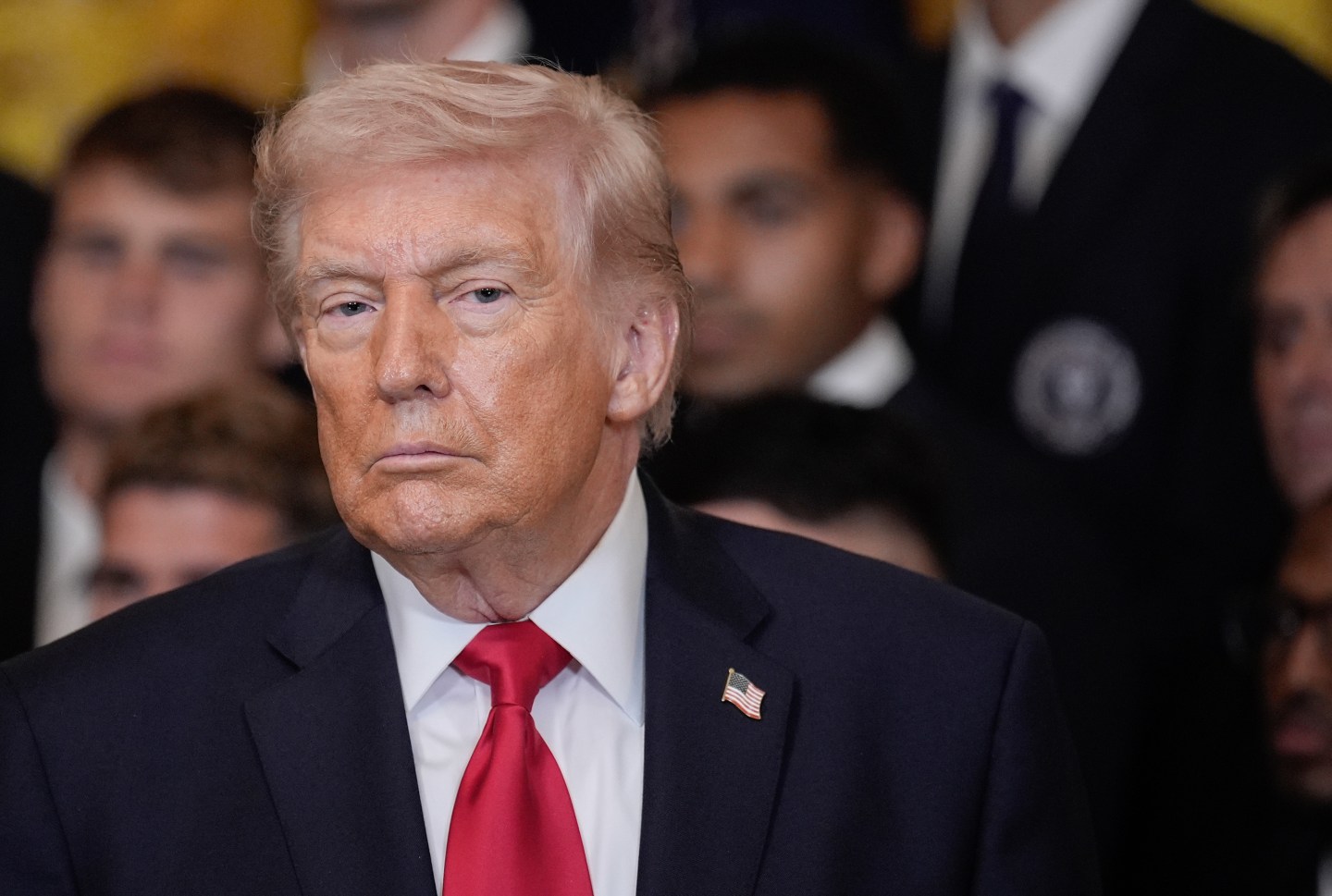
Photo: US President Donald Trump during an event with Inter Miami CF in the East Room of the White House in Washington, DC, US, on Thursday, March 5, 2026. Inter Miami CF is visiting the White House to celebrate their 2025 championship win.
PoliticsMarkets
Iran is turning out to be a more effective enemy than many thought, and U.S. allies are losing their patience with the war
By Jim EdwardsMarch 6, 2026
2 hours ago
EuropeLetter from London
The President is surprised by the lack of European support for military action against Iran—he shouldn’t be
By Kamal AhmedMarch 6, 2026
3 hours ago
hegseth
Middle EastMilitary
Pete Hegseth called it ‘quiet death’—the first time a U.S. sub fired a torpedo and hit an enemy ship since the 1940s
By James Dwyer and The ConversationMarch 6, 2026
4 hours ago
An older and younger man embrace at an airport.
Middle EastAviation
23,000 cancelled flights and debris raining on Dubai hotels: The Iran war is jeopardizing the $12 trillion global travel industry
By Sasha RogelbergMarch 6, 2026
6 hours ago
Paul Krugman speaking while seated on stage.
Middle EastU.S. economy
The Iran conflict will be the ‘straw that breaks the camel’s back’ of the U.S. economy if it goes on much longer, Nobel laureate Paul Krugman warns
By Tristan BoveMarch 6, 2026
6 hours ago

Most Popular

placeholder alt text
Success
Uber CEO says his ‘really demanding’ work culture includes expecting employees to answer his emails over the weekend: ‘Don’t come here if you want to coast’
By Emma BurleighMarch 4, 2026
2 days ago
placeholder alt text
Health
Palantir and other tech companies are stocking offices with nicotine products to increase worker productivity
By Catherina GioinoMarch 4, 2026
2 days ago
placeholder alt text
Economy
Trump's loss of $1.7 trillion in tariff revenue will send the national debt to $58 trillion by 2036, think tank projects
By Nick LichtenbergMarch 5, 2026
23 hours ago
placeholder alt text
AI
OpenAI investor Vinod Khosla predicts today’s 5-year-olds won’t ever need to get jobs thanks to AI
By Sasha RogelbergMarch 4, 2026
2 days ago
placeholder alt text
Newsletters
The Iran war is giving rise to a centuries-old economic theory—and laying waste to the WTO-based world order
By Diane BradyMarch 5, 2026
1 day ago
placeholder alt text
Politics
Meet Markwayne Mullin, the new multimillionaire head of DHS, who owns a cattle ranch in Oklahoma
By Jacqueline MunisMarch 5, 2026
15 hours ago

© 2026 Fortune Media IP Limited. All Rights Reserved. Use of this site constitutes acceptance of our Terms of Use and Privacy Policy | CA Notice at Collection and Privacy Notice | Do Not Sell/Share My Personal Information
FORTUNE is a trademark of Fortune Media IP Limited, registered in the U.S. and other countries. FORTUNE may receive compensation for some links to products and services on this website. Offers may be subject to change without notice.