
It’s a tough slog to pass legislation ahead of U.S. midterm elections, and even more so for stand-alone bills like the so-called Clarity Act—a bill that sets out rules for crypto assets and services to become part of the financial mainstream. Despite all this, longtime crypto policy expert Kristin Smith believes the bill has a very good chance of passing, and on the latest episode of Fortune’s Crypto Playbook—available on Apple, Spotify, and YouTube—she explained how things are likely to unfold.
Smith is widely known in crypto circles for having built the trade group Blockchain Association into a lobbying powerhouse that helped pass the Genius Act, a landmark piece of stablecoin legislation. In her current role as president of the Solana Policy Institute, she has been tracking the progress of the Clarity Act.
The bill, which appeared to be on a glide path to passage, got blown up abruptly in January when Coinbase CEO Brian Armstrong withdrew support, claiming it unfairly favored the banking industry. This led many in the crypto world to worry the industry had lost critical momentum, and the window to pass the bill this year would close.
Smith acknowledged recent headwinds, but said they were to be expected, especially given that the Clarity Act, she says, is far more complex than the stablecoin bill passed last year.
“I’m not surprised that this is taking a long time. I’ve worked in D.C. for 25 years, including a decade as a staffer on Capitol Hill. Passing comprehensive legislation through both the House and Senate is an incredibly difficult process,” she said.

Smith noted the task is harder still since the common tactic of attaching a specific bill to must-pass legislation, such as year-end defense spending, is unavailable to the lawmakers pushing the Clarity Act. That’s because the tactic requires the leading Republican and Democrat of the relevant committees to sign off on the maneuver, and in this case, the latter is Sen. Elizabeth Warren (D-Mass.), an implacable crypto foe.
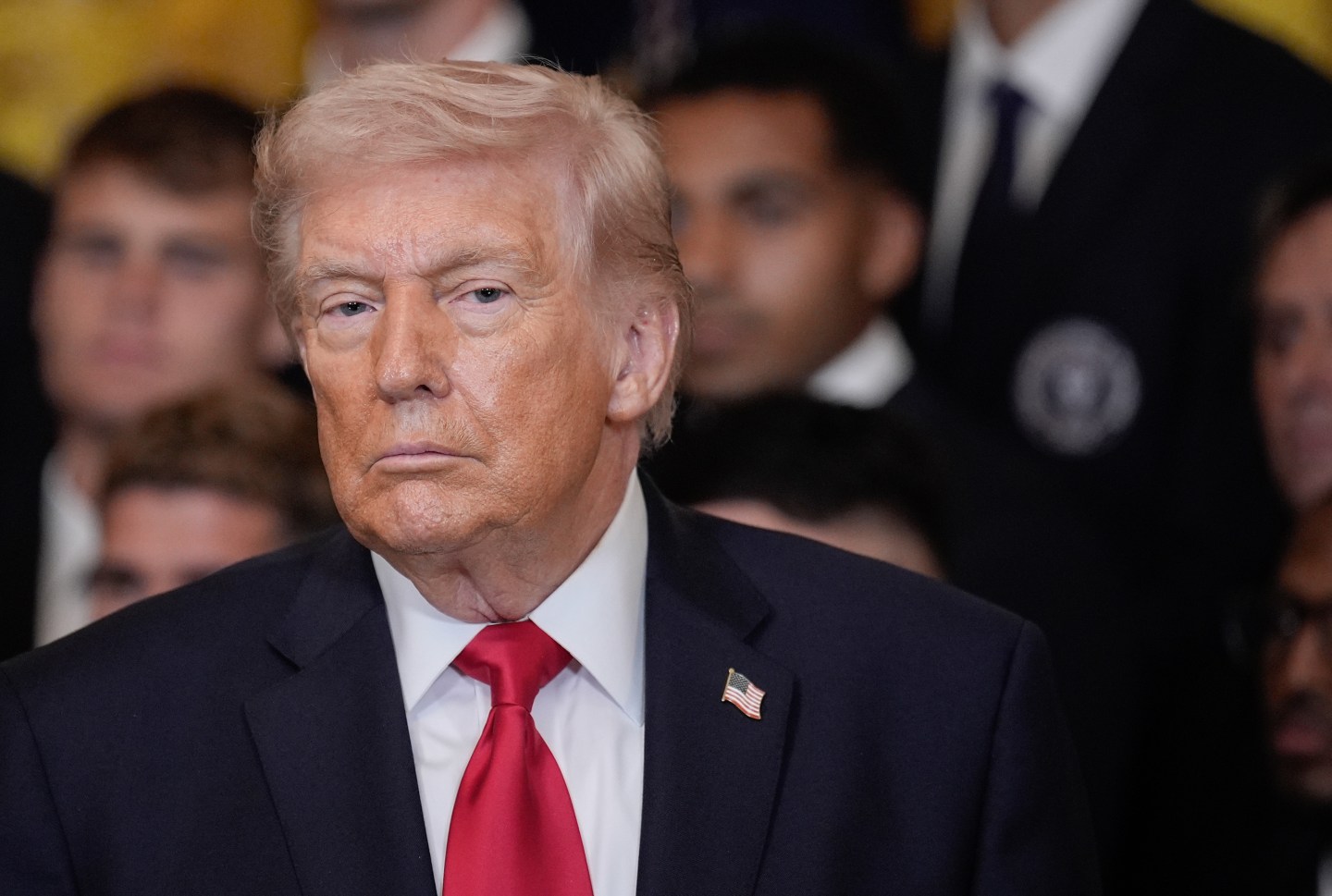
All of this would normally doom the Clarity Act’s chances for passage this year, but Smith says there are several factors that change that calculus, including support for the bill from key Democrats in the Senate like Chuck Schumer (D-N.Y.) and Ruben Gallego (D-Ariz.). Most critical, though, is that President Trump is deeply invested in the process.
“What is unique this time is the White House’s level of involvement. [Key aides] David Sacks and Patrick Witt are personally involved in solving outstanding issues,” said Smith. “We are also seeing TradFi firms and banks getting involved for the first time, either for competitive reasons or to address their own interests. It’s complex, but everyone is at the table.”
Smith’s prediction got a boost on Wednesday when, shortly after she made her remarks, President Trump took to Truth Social to pressure banks into making concessions to help bring the legislation to his desk. The announcement saw odds for crypto legislation passing this year jump on prediction markets.
For this to happen, though, the process will require a flurry of immediate activity. Smith said the legislation could pass in December, during the lame-duck session of Congress that will follow November’s midterm elections, but that the coming days are critical.
“Negotiations are active right now. There is heavy pressure on both the banks and the crypto companies to make concessions. We are currently in March; if the Senate Banking Committee can mark up a bill in March or April, it can move to the floor. July is the big deadline before the August recess. If they miss that, the next window would be in the fall, but these next six weeks are critical,” she said.
You can hear the full conversation with Smith on the current episode of the Crypto Playbook, where hosts Leo Schwartz and Jeff John Roberts also discuss Circle earnings, Iran-related prediction markets, and the New York Times’ ongoing hostility toward crypto. The episodes are available on Spotify, Apple, and YouTube.