
• Home
  • Latest
  • Fortune 500
  • Finance
  • Tech
  • Leadership
  • Lifestyle
  • Rankings
  • Multimedia

Trendingnow

1

Former U.S. Secret Service agent says bringing your authentic self to work stifles teamwork: 'You don’t get high performers, you get sloppiness'

2

Current price of oil as of June 22, 2026

3

Current price of silver as of Monday, June 22, 2026

1

Former U.S. Secret Service agent says bringing your authentic self to work stifles teamwork: 'You don’t get high performers, you get sloppiness'

2

Current price of oil as of June 22, 2026

3

Current price of silver as of Monday, June 22, 2026
EnergyShipping
Asia

Asia faces an energy shock from the Iran war and a closed Strait of Hormuz, as governments halt exports and draw down stockpiles

Angelica Ang
By
Angelica Ang
Angelica Ang
Writer
Down Arrow Button Icon
Angelica Ang
By
Angelica Ang
Angelica Ang
Writer
Down Arrow Button Icon
March 5, 2026, 8:22 AM ET
In response to the Gulf conflict, Asian governments are quickly moving to manage their fuel stockpiles. Thailand suspended its crude and petroleum exports on March 1; China ordered its largest oil refineries to halt diesel and petrol exports on March 5.
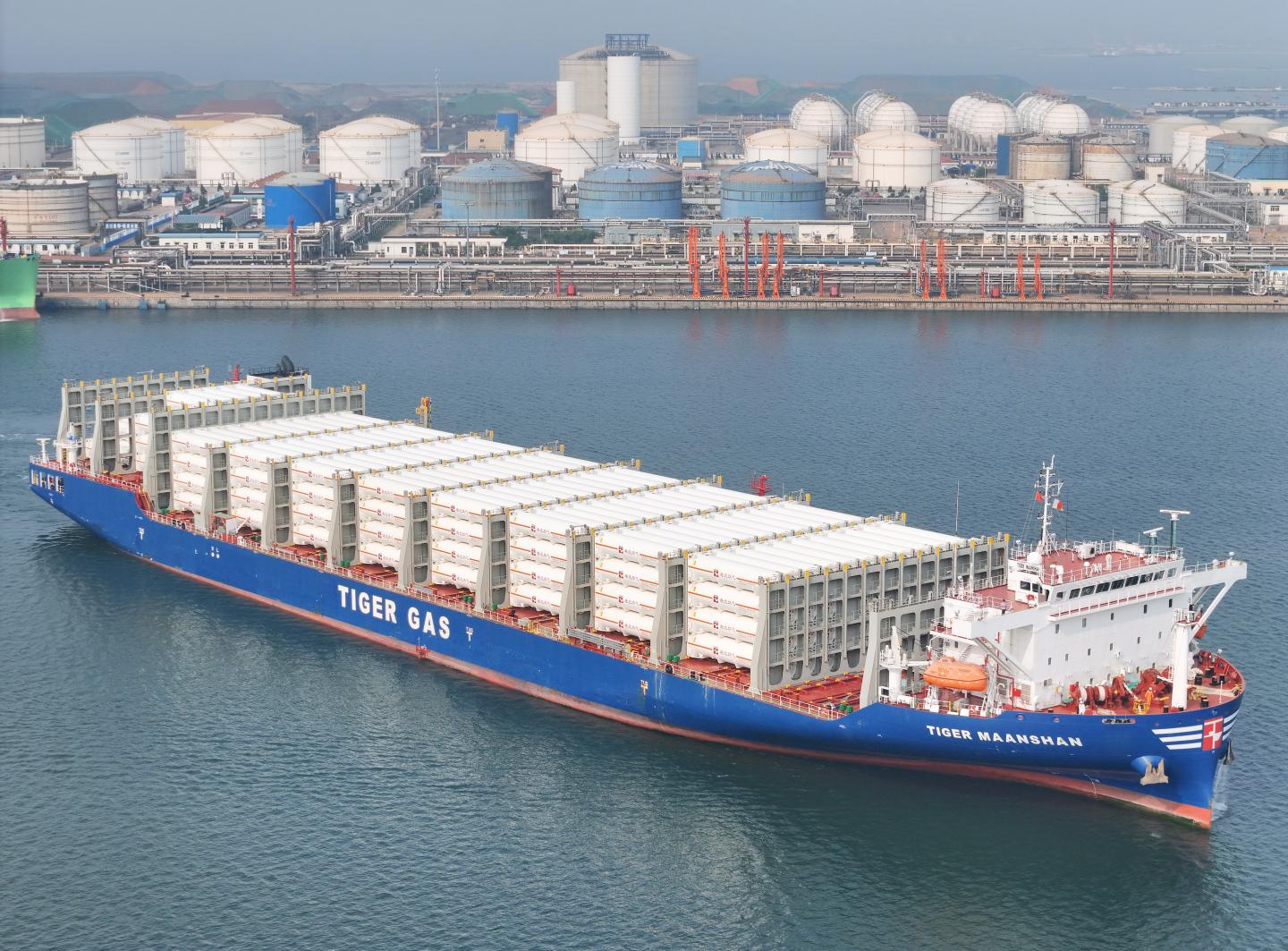
In response to the Gulf conflict, Asian governments are quickly moving to manage their fuel stockpiles. Thailand suspended its crude and petroleum exports on March 1; China ordered its largest oil refineries to halt diesel and petrol exports on March 5. COSTFOTO VIA GETTY IMAGES
Add Fortune on Google for similar content.

Asia’s biggest economies are bracing for fuel shortages and higher prices after Iran shut the Strait of Hormuz, a key artery for oil and gas shipments from the Middle East. 

Recommended Video

“Asian countries are particularly reliant on oil and gas from the Gulf region,” Sung Jinseok, a researcher at the National University of Singapore’s Energy Studies Institute, told Fortune. The region is the world’s fastest‑growing importer of oil, while production remains low due to depleting fields and limited new discoveries.

Around 19 million barrels of oil, or 20% of the global oil trade, passes through the Strait of Hormuz each day. On average, exports from the Gulf constitute 80% to 90% of oil brought into Japan, and 30% to 40% of oil imported into China.

Asian governments are quickly moving to manage their fuel stockpiles. Thailand suspended its crude and petroleum exports on March 1; China ordered its largest oil refineries to halt diesel and petrol exports on March 5. Asian energy firms are curbing exports as well: Mangalore Refinery and Petrochemicals also curbed fuel exports yesterday.

Japan and South Korea, both major customers of Middle Eastern gas and oil, have also stressed that they have enough fuel stockpiled to handle demand, at least in the short term.

According to Sung, although countries like China have diversified their energy supply to include imports from Russia and Central Asia, and have significant domestic oil and gas production, “the level of dependency on exports from the Gulf remains high”.

The Strait of Hormuz, which sits at the entrance to the Persian Gulf, is also a key artery for liquified natural gas (LNG), with one fifth of global LNG volumes passing through its waters, according to a 2025 report by the U.S. Energy Information Administration (EIA). Of the LNG moved out of the Gulf, 83% was exported to Asian markets, with China, India and South Korea among the top destinations.

In Southeast Asia, Singapore and Thailand are the two largest importers of Middle Eastern gas. In 2025, Qatar supplied 45% of Singapore’s LNG, and 28% of Thailand’s.

Price surge

On Monday, a senior commander from Iran’s Revolutionary Guard announced the closure of the Straits of Hormuz, adding that the country will fire on any ship that tries to pass. The move followed U.S. and Israel strikes on Iran that killed its leader, Ayatollah Ali Khamenei.

At least eight container ships have been struck since the war began, with one vessel being damaged badly enough to force the crew to abandon ship.

“Most owners and shippers are playing it safe,” Capt. Raja Subramaniam, CEO of Fleet Management Limited, tells Fortune. “They are delaying sailings, shifting schedules, or routing vessels through safer waters. Some are calling at ports farther from the conflict zone to reduce exposure.” While the Strait of Hormuz presents the highest-risk to shippers, he adds that other areas, such as the Red Sea and the Gulf of Aden on the western side of the Arabian Peninsula, also have “elevated risk”. Even safer waters, like the Suez Canal, may see less traffic as shippers pick longer routes that evade high-risk areas entirely. 

Maritime insurers have also cancelled policies for ships traveling the Gulf, pushing many shipping lines to suspend traffic through the region. On March 4, global shipping giant Maersk said it would suspend cargo bookings in and out of Middle Eastern ports including those in the UAE, Iraq, Qatar and Bahrain, and some parts of Saudi Arabia and Oman, with the exception of ships carrying “foodstuff, medicine and other essential goods”.

“It’s a real risk sending ships through,” Tim Huxley, a director of Mandarin Shipping, a Hong Kong-based shipping investment company, told Fortune. “In total, there’s now over 3,000 ships stuck inside the Gulf, and that’s about 6% of the global oil tanker fleet.”

In response, global oil and LNG prices have surged. On March 5, Brent crude was trading at $83.80 per barrel, up almost 3% from the previous day. U.S. West Texas Intermediate crude rose 3.4% to $77.15 per barrel. And after Qatar shuttered production at the world’s largest LNG facility, Asia’s LNG prices soared to its highest level since 2023, Bloomberg reported. 

Singapore jet fuel prices surged by around 70% on Wednesday, hitting a record high of $70 a barrel.

The price of chartering a tanker has also skyrocketed. “A large tanker now costs around $436,000 per day,” Huxley says. “It’s very rarely been over $100,000 for the last few years, so this is a really significant increase.” 

Diversions, too, can be pricey. Shipping rates at the Saudi Arabian port of Yanbu, which sits on the country’s western coast, have already doubled, according to Reuters.

“Costs are rising, especially war-risk premiums and fuel from longer voyages. A diversion around the Cape of Good Hope can add more than a million dollars to a single trip,” Subramanian, of Fleet Management, explains. “Cargoes with tight delivery windows—especially energy shipments—feel the impact first.”

What alternatives are there?

For now, Asian economies can rely on their reserves, says Sung, who notes that Japan and South Korea have substantial oil stockpiles that can last over 200 days. China, too, has stockpiles amounting to three to four months of oil imports, while India’s supply can sustain the country for about two months. 

But if the Strait of Hormuz remains closed, energy shortages are likely to hike prices across Asian energy importers. 

Asian countries have tried to diversify their sources of energy, turning to fossil fuel providers outside of the Middle East, including the U.S. They’ve also tried to increase their own domestic energy production, including in renewable energy, as well as making tentative moves towards setting up intra-regional trade in electricity.

Huxley suggests a different solution in the short term, arguing that navies need to work together with shipping companies to provide protection. He points to Operation Earnest Will, the 1987-1988 campaign by the U.S., the U.K. and other allied nations to protect tankers in the Gulf during the Iran-Iraq War, as an example. “Weapons are more sophisticated now, but the escort system is still a possibility,” Huxley concludes.

The U.S. has currently pledged to tap the U.S. International Development Finance Corporation to provide insurance for any ship traveling in the Persian Gulf, and will offer protection from the U.S. Navy—though specific details on how this would work have yet to emerge. 

Subscribe to Fortune Gulf Brief. Every Tuesday, this new newsletter delivers clear-eyed, authoritative intelligence on the deals, decisions, policies, and power shifts shaping one of the world’s most consequential regions, written for the people who need to act on it. Sign up here.
About the Author
Angelica Ang
By Angelica AngWriter

Angelica Ang is a Singapore-based journalist who covers the Asia-Pacific region.

See full bioRight Arrow Button Icon
Add Fortune on Google for similar content.

Latest in Energy

Finance
Lorem ipsum dolor sit amet, consectetur adipiscing elit, sed do eiusmod tempor incididunt ut labore et dolore magna aliqua. Ut enim ad minim veniam
By Fortune Editors
October 20, 2025
Finance
Lorem ipsum dolor sit amet, consectetur adipiscing elit, sed do eiusmod tempor incididunt ut labore et dolore magna aliqua. Ut enim ad minim veniam
By Fortune Editors
October 20, 2025
Finance
Lorem ipsum dolor sit amet, consectetur adipiscing elit, sed do eiusmod tempor incididunt ut labore et dolore magna aliqua. Ut enim ad minim veniam
By Fortune Editors
October 20, 2025
Finance
Lorem ipsum dolor sit amet, consectetur adipiscing elit, sed do eiusmod tempor incididunt ut labore et dolore magna aliqua. Ut enim ad minim veniam
By Fortune Editors
October 20, 2025
Finance
Lorem ipsum dolor sit amet, consectetur adipiscing elit, sed do eiusmod tempor incididunt ut labore et dolore magna aliqua. Ut enim ad minim veniam
By Fortune Editors
October 20, 2025
Finance
Lorem ipsum dolor sit amet, consectetur adipiscing elit, sed do eiusmod tempor incididunt ut labore et dolore magna aliqua. Ut enim ad minim veniam
By Fortune Editors
October 20, 2025

Most Popular

Finance
Lorem ipsum dolor sit amet, consectetur adipiscing elit, sed do eiusmod tempor incididunt ut labore et dolore magna aliqua. Ut enim ad minim veniam
By Fortune Editors
October 20, 2025
Finance
Lorem ipsum dolor sit amet, consectetur adipiscing elit, sed do eiusmod tempor incididunt ut labore et dolore magna aliqua. Ut enim ad minim veniam
By Fortune Editors
October 20, 2025
Finance
Lorem ipsum dolor sit amet, consectetur adipiscing elit, sed do eiusmod tempor incididunt ut labore et dolore magna aliqua. Ut enim ad minim veniam
By Fortune Editors
October 20, 2025
Finance
Lorem ipsum dolor sit amet, consectetur adipiscing elit, sed do eiusmod tempor incididunt ut labore et dolore magna aliqua. Ut enim ad minim veniam
By Fortune Editors
October 20, 2025
Finance
Lorem ipsum dolor sit amet, consectetur adipiscing elit, sed do eiusmod tempor incididunt ut labore et dolore magna aliqua. Ut enim ad minim veniam
By Fortune Editors
October 20, 2025
Finance
Lorem ipsum dolor sit amet, consectetur adipiscing elit, sed do eiusmod tempor incididunt ut labore et dolore magna aliqua. Ut enim ad minim veniam
By Fortune Editors
October 20, 2025
Fortune Secondary Logo
Rankings
  • 100 Best Companies
  • Fortune 500
  • Global 500
  • Fortune 500 Europe
  • Most Powerful Women
  • World's Most Admired Companies
  • See All Rankings
  • Lists Calendar
Sections
  • Finance
  • Fortune Crypto
  • Features
  • Leadership
  • Health
  • Commentary
  • Success
  • Retail
  • Mpw
  • Tech
  • Lifestyle
  • CEO Initiative
  • Asia
  • Politics
  • Conferences
  • Europe
  • Newsletters
  • Personal Finance
  • Environment
  • Magazine
  • Education
Customer Support
  • Frequently Asked Questions
  • Customer Service Portal
  • Privacy Policy
  • Terms Of Use
  • Single Issues For Purchase
  • International Print
Commercial Services
  • Advertising
  • Fortune Brand Studio
  • Fortune Analytics
  • Fortune Conferences
  • Business Development
  • Group Subscriptions
About Us
  • About Us
  • Press Center
  • Work At Fortune
  • Terms And Conditions
  • Site Map
  • About Us
  • Press Center
  • Work At Fortune
  • Terms And Conditions
  • Site Map
  • Facebook icon
  • Twitter icon
  • LinkedIn icon
  • Instagram icon
  • Pinterest icon

Latest in Energy

Current price of oil as of June 23, 2026
Personal FinanceOil
Current price of oil as of June 23, 2026
By Joseph HostetlerJune 23, 2026
50 minutes ago
vimal
Energyenergy prices
Honeywell CEO: America can lead the energy era defined by AI and hyper-demand — if policy moves fast enough
By Vimal KapurJune 23, 2026
1 hour ago
Saudi PIF’s governor wants the kingdom to become a global investment center
NewslettersFortune Gulf Brief
Saudi PIF’s governor wants the kingdom to become a global investment center
By Melissa HancockJune 23, 2026
3 hours ago
Saudi Aramco’s chairman calls for “energy realism” 
Middle EastInvestment
Saudi Aramco’s chairman calls for “energy realism” 
By Melissa HancockJune 23, 2026
4 hours ago
Sanda Ojiambo is CEO and Executive Director of the United Nations Global Compact.
CommentaryUnited Nations
United Nations: business can’t build economic resilience from the sidelines
By Sanda OjiamboJune 23, 2026
4 hours ago
Protesters at an anti-data center rally in Orangeburg, New York.
AIData centers
Tech companies dealing with data center protests locally are fighting a losing battle: Only 8% of opponents actually live near one
By Tristan BoveJune 22, 2026
20 hours ago

Most Popular

Former U.S. Secret Service agent says bringing your authentic self to work stifles teamwork: 'You don’t get high performers, you get sloppiness'
Success
Former U.S. Secret Service agent says bringing your authentic self to work stifles teamwork: 'You don’t get high performers, you get sloppiness'
By Sydney LakeJune 21, 2026
2 days ago
Current price of oil as of June 22, 2026
Personal Finance
Current price of oil as of June 22, 2026
By Joseph HostetlerJune 22, 2026
1 day ago
Current price of silver as of Monday, June 22, 2026
Personal Finance
Current price of silver as of Monday, June 22, 2026
By Joseph HostetlerJune 22, 2026
1 day ago
The Fed is fed up with inflation and will bring down the hammer with a series of rate hikes this year, reversing earlier cuts, BofA says
Economy
The Fed is fed up with inflation and will bring down the hammer with a series of rate hikes this year, reversing earlier cuts, BofA says
By Jason MaJune 22, 2026
21 hours ago
NBC’s Tom Llamas climbed from 15-year-old intern to the top anchor chair—and still isn’t satisfied: ‘If you're not growing, you're dying'
Success
NBC’s Tom Llamas climbed from 15-year-old intern to the top anchor chair—and still isn’t satisfied: ‘If you're not growing, you're dying'
By Preston ForeJune 21, 2026
2 days ago
By 7 a.m., Bank of America’s CEO has already read 5 newspapers, his email inbox, and hit the gym—he says if you’re late to meetings, you’re ‘selfish’
Success
By 7 a.m., Bank of America’s CEO has already read 5 newspapers, his email inbox, and hit the gym—he says if you’re late to meetings, you’re ‘selfish’
By Preston ForeJune 22, 2026
23 hours ago

© 2026 Fortune Media IP Limited. All Rights Reserved. Use of this site constitutes acceptance of our Terms of Use and Privacy Policy | CA Notice at Collection and Privacy Notice | Do Not Sell/Share My Personal Information
FORTUNE is a trademark of Fortune Media IP Limited, registered in the U.S. and other countries. FORTUNE may receive compensation for some links to products and services on this website. Offers may be subject to change without notice.