Parents wish the best for their kids, and saving for their future is just one way to set them up for success. But BlackRock CEO Larry Fink warns that for most adults, let alone parents, they’ll be lucky if they have half as much as what their kids may amass if President Donald Trump’s new 401k accounts come to fruition.
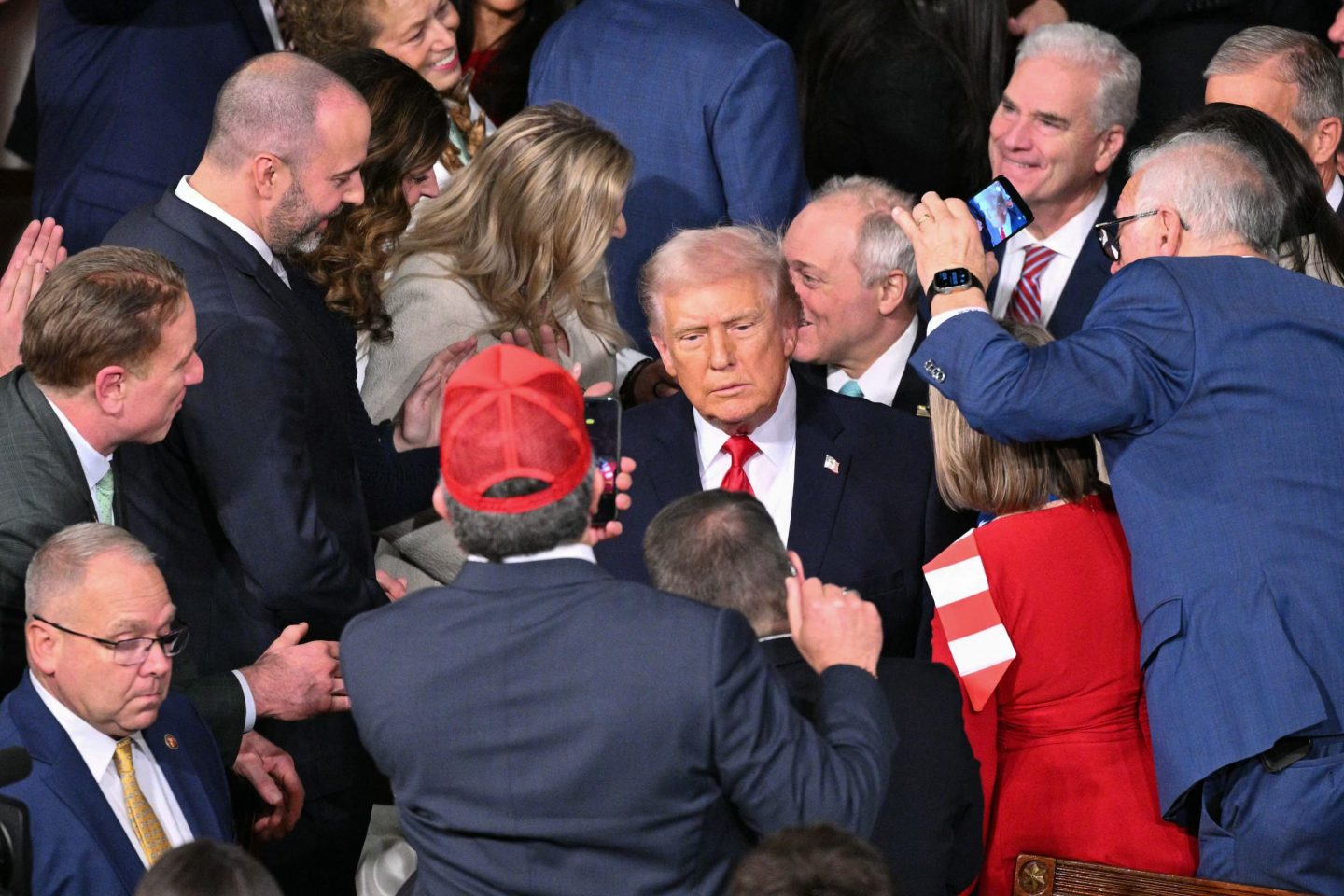
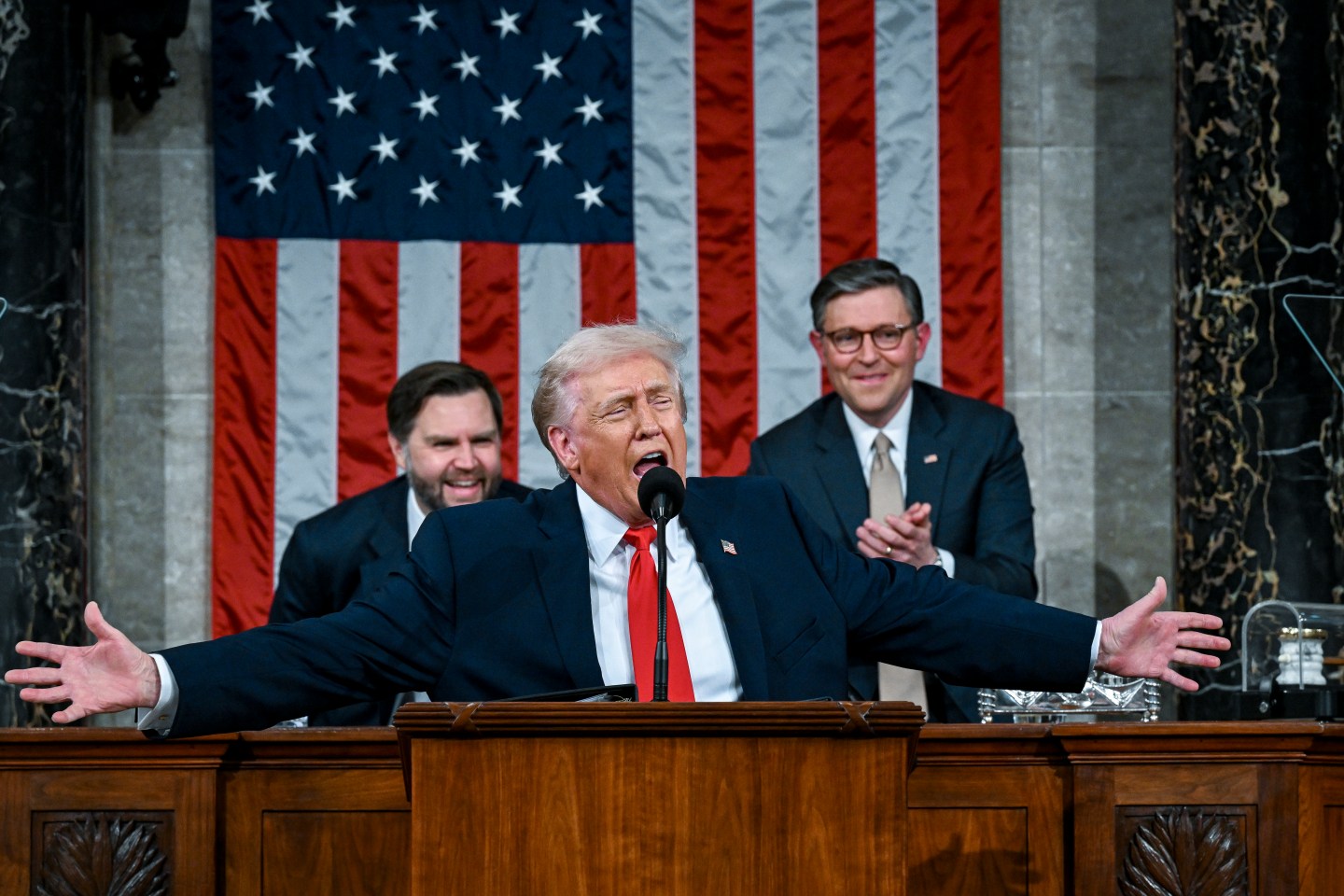
During Trump’s record-breaking, nearly two-hour-long State of the Union address, the president touted all sorts of economic statistics and pointed to areas of economic prosperity, all while increased government spending is causing the country to hemorrhage deeper into the largest national debt in history.
For a president whose signature bill calls for cutting government spending to increase tax breaks, the Trump administration is now offering a $1,000 in seed funding to any U.S. citizen born between Jan. 1, 2025 and Dec. 31, 2028 who opens a government-backed 401k account, dubbed “Trump Accounts.”
The accounts, expected to go live on July 5 of this year, will allow parents and guardians to set up and contribute up to $5,000 a year for each eligible child. To qualify, children must be under the age of 18, be U.S. citizens, and have a Social Security number.
Although the accounts can be used for anything from starting a business to making a down payment on a house or even saved for retirement, experts warn against treating these accounts like how typical 401Ks or Thrift Savings Plan (TSP) accounts work.
“One of the biggest takeaways I want people to understand is that it is essentially a tax deferral mechanism,” EY Private National Tax Leader Dianne C. Mehany told Fortune. “The Trump Accounts for children is not the same thing as [401ks or TSPs] as it is currently written. You are definitely saving for your children. You are definitely receiving a match from the U.S. government, which is great if you’re in a certain income bracket and your child is born under a certain year.”
Mehany, who has seen an uptick of interest into these accounts from clients, say the tax structure of these accounts is still being hammered out, and interested individuals should be aware of the potential tax implications. Parents and employers can elect to contribute up to $2,500 in pre-tax funds to a dependent’s account, operating much like how a typical 401k operates. As the government website reads now, the funds then appear to grow tax-free in the account until the child turns 18, almost operating more like a Roth IRA—children are penalized for accessing the account prior to age 18. Any withdrawals above the amount contributed are then subject to tax, much like a traditional IRA.
This also differs from a typical 529 college savings plan, legally known as “qualified tuition plans,” that allow beneficiaries to earn tax-free growth. Although contributions are not federal tax-deductible, withdrawals are tax-free if used for qualified education expenses.
“That’s the thing we’ve really tried to highlight for our clients, especially when they ask about 529 plans, which really are truly tax free growth, if they are used for the purpose designed,” Mehany said.
Still, Mehany said, the accounts are an excellent opportunity to get children thinking about their financial futures at an early age.
“I think of the way I was raised. My parents worked really, really hard, and neither of them went to college and weren’t raised with people who invested. And they started a savings account for me when I was 10,” Mehany recounted. “And to watch it, $250, earn a little bit of interest. I realized early on, okay maybe if I set aside tiny amounts, it still will help me. This allows families that maybe don’t have that option to still teach their kids. I think it’s fantastic.”
In his State of the Union address, Trump also noted a $6.25 billion charitable gift from Michael and Susan Dell, which would allow the first 25 million American children age 10 and under 10 living in ZIP codes with a median income below $150,000 to receive an additional $250.
Mehany also touched on the benefit employers can offer in the pre-tax contribution directly to their dependents’ Trump Accounts.
“Employers this day and age are looking for additional benefits that they can offer their employees that really show how they’re caring for them, beyond just salary,” Mehany said, referencing a growing trend of employers offering benefits packages in excess of the standard salary and health insurance. “This is just one more added facet to that. So I’m thinking that a lot of employers will be interested in adding this to their cafeteria plans.”
Still, Mehany warned, it would be helpful for parents to speak with their tax advisor for guidance because of the ever-changing guidelines regarding the Trump Accounts, and to really sit down and see what may work best for their family. “Understanding those goals now instead of just opening every account that is available to you is really important, because they have such varied tax implications,” she said. “So I’m telling you [if you] have a lot of options available, talk to your tax advisor, because they really are very different.”
Adults are nowhere near prepared for retirement
The Trump Accounts are a step in the right direction a society that overwhelmingly is under- or outright unprepared for retirement.
In his 2025 annual shareholders letter, BlackRock CEO Larry Fink said “almost no one is close” to saving for retirement. The asset management firm surveyed 1,000 registered voters and found the average person believed they would need $2.1 million to retire comfortably—a number many of those same respondents said would be difficult to attain.
“That’s a lot. More than I was expecting,” Fink wrote, adding “almost no one is close,” considering 62% of those surveyed had less than $150,000 saved for retirement.
That number would be much easier to reach, theoretically, if they had a Trump Account. Numbers on the Trump Account website suggest a child who is born this year and whose family maxes out the $5,000 contribution each year will amass $271,000 by the time they turn 18, and up to $13 million by the time they turn 55.