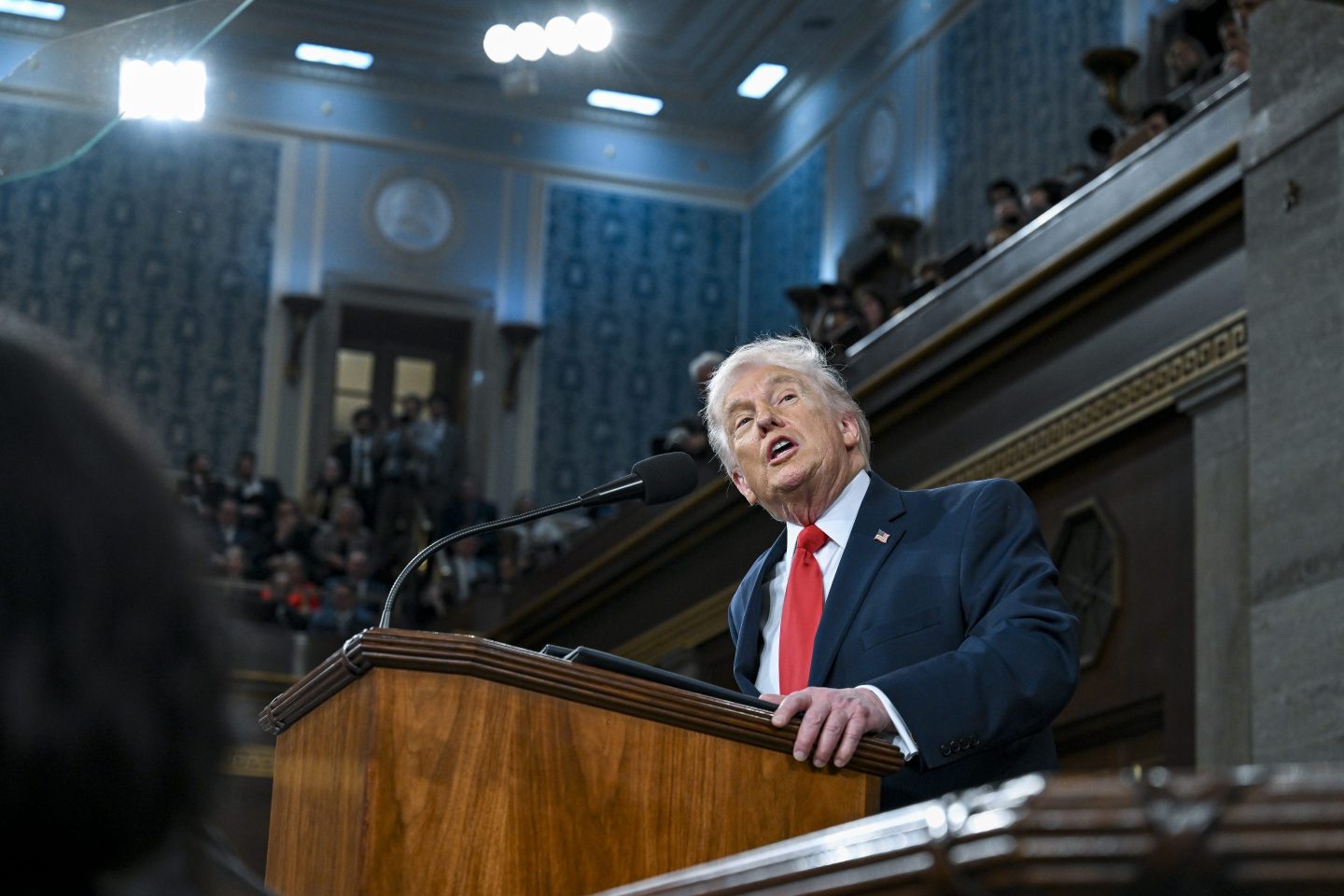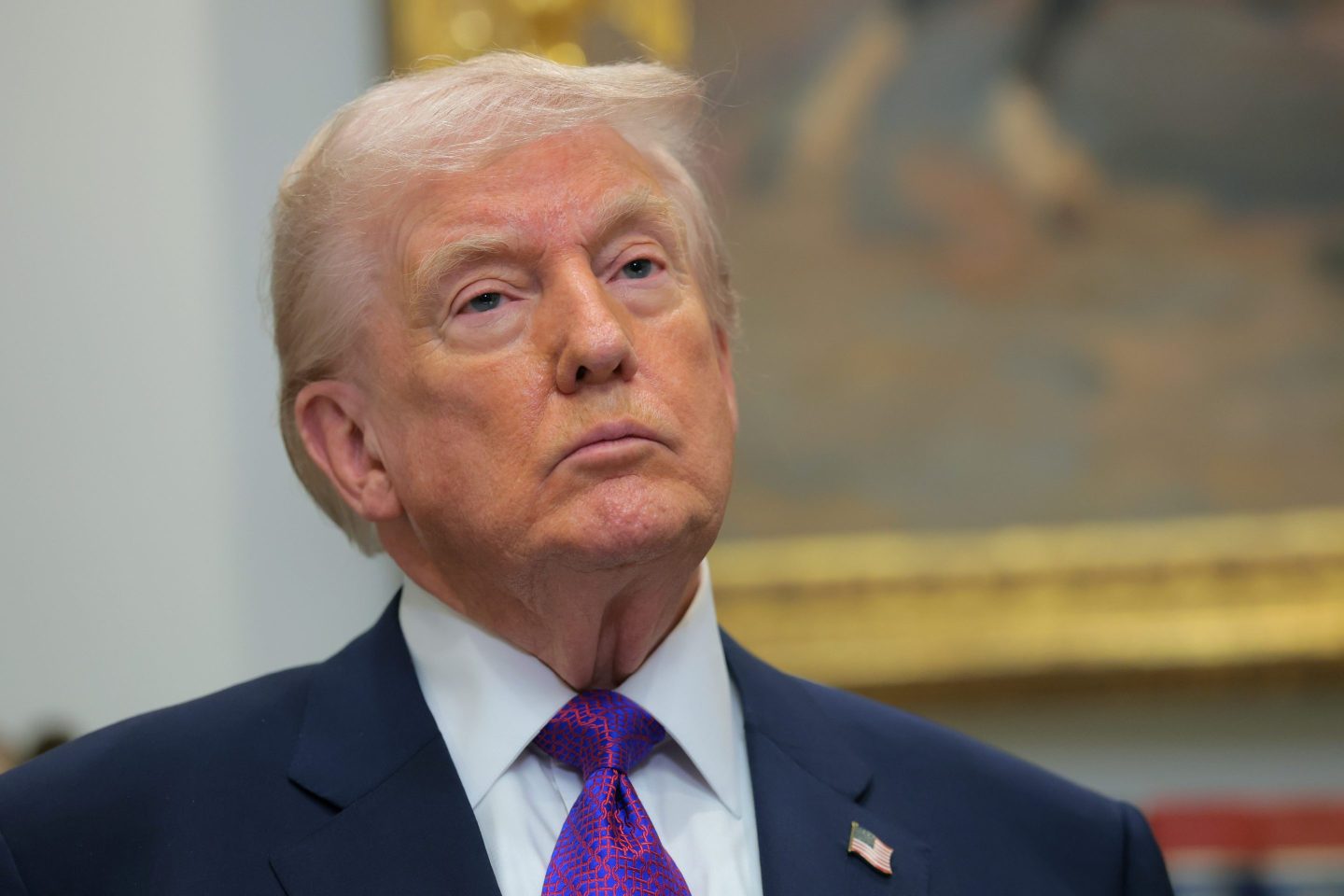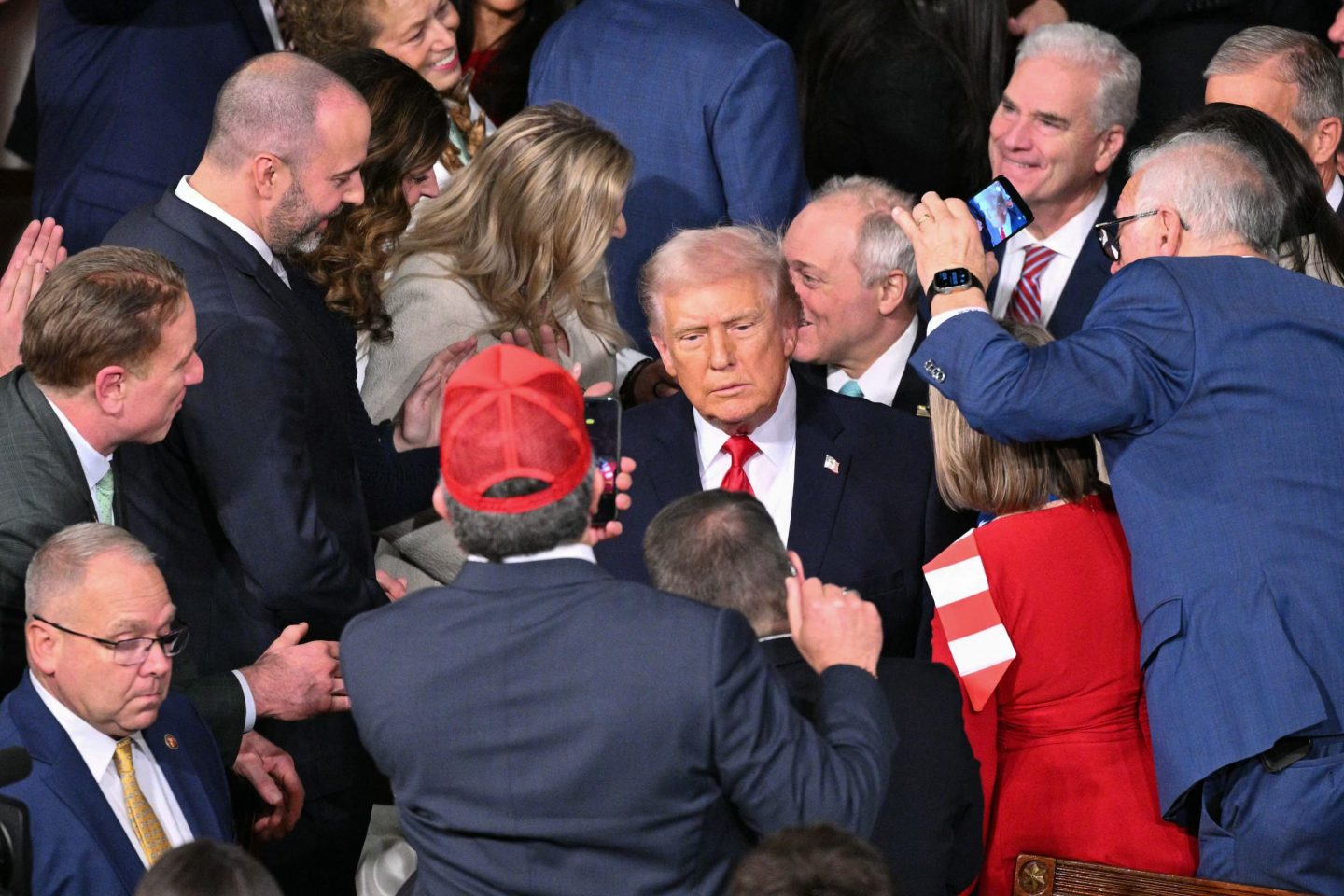
In his State of the Union address to Congress on Tuesday, President Donald Trump announced a new economic proposal that would significantly expand financial planning and saving for American workers who don’t currently have a retirement plan or work for an employer with a match program.
“My administration will give these forgotten American workers, great people, people that built our country, access to the same type of retirement plan offered to every federal worker,” Trump said during his address on Tuesday. “We will match your contribution with up to $1,000 each year.”
Trump delivered his second SOTU address on Tuesday just days after he lashed out at a Supreme Court ruling that invalidated the cornerstone of his economic agenda: the tariff regime. Members of the court (although not all justices were in attendance) sat directly in front of Trump during his address, as is customary, and listened emotionlessly as he criticized the court ruling. He also called on lawmakers to better police themselves and formally prohibit trading on material nonpublic information, which is subject to enforcement by financial and criminal regulators.
The insider trading situation
The pending Stop Insider Trading Act would sharply restrict trading in individual stocks by members of Congress, their spouses, and children, specify exemptions, and increase penalties for late or noncompliant reporting of equities holdings and transactions.
“As we ensure that all Americans can profit from a rising stock market, let’s also ensure that members of Congress cannot corruptly profit from using insider information,” Trump said. He pivoted to the issue after causing a ripple in the crowd by asking out loud whether Nancy Pelosi, the former Speaker of the House, was in attendance.
Pelosi faced years of scrutiny regarding her husband, Paul Pelosi’s significant stock trading, but she has not been charged with any crime and has denied wrongdoing. Similar questions, even concerns, about stock trading by members of Congress (and members of their families) have extended to members of both political parties, and even to Federal Reserve governors, with the Fed inspector general finding no wrongdoing in several governors’ investment decisions and Chair Jerome Powell himself coming under investigation and also being cleared. In 2022 Powell said the central bank would tighten its rules.
Trump’s SOTU call came after House Republicans introduced legislation that would see violations of the act penalized with thousands in fines or a percentage of the trade. Certain cases could also be referred to the Department of Justice under the proposal.
Polls cited by reform advocates show that roughly 70% to 90% of Americans, across parties, support banning members of Congress from trading individual stocks, one of the few ethics measures to command overwhelming bipartisan backing in recent years. Watchdog groups argue that every hearing where a lawmaker questions an executive whose company they partially own, and every vote cast while holding shares in affected industries, deepens public cynicism about a system they see as tilted toward insiders.
Democrats in Congress are pressing regulators to investigate whether Trump’s own tariff flip‑flops helped well‑connected insiders profit from market swings, and whether executive branch officials tipped off investors before policy shifts. A ProPublica review of trading data found that government officials and congressional aides executed well‑timed stock sales ahead of tariff moves that rattled markets, trades that ethics experts say may be legal under current rules but nonetheless undermine public trust.
Layered on top of that are Trump’s own clemency decisions. Since returning to the White House in 2025, he has issued a wave of pardons and commutations for allies convicted of financial crimes, including figures tied to fraud, tax evasion, and deceptive political fundraising schemes. And in his first term, he pardoned a longtime Republican congressman who was convicted of insider trading: Chris Collins of upstate New York.
Are Americans saving enough?
As for retirement savings, Trump pointed out a painful gap among retirees; he claimed roughly half of all working Americans don’t have access to a retirement plan, nor do they have access to employer matching contribution programs. Under traditional 401(k) plans, employees contribute a portion of their earnings, tax-free, to individual accounts. (Contributions are taxed at a later date, usually when the individual is in a lower tax bracket.) Employers match the contributions up to a certain percentage to encourage savings on the part of employees.
BlackRock’s billionaire CEO, Larry Fink, warned investors last year that most hadn’t saved nearly enough to sustain them through retirement. The average amount necessary was roughly $2.1 million, according to Fink. “Almost no one is close,” he said.
The 401(k) plan has largely replaced pension plans as a major prong to cover living expenses during retirement. Trump has always been acutely focused on this issue, often invoking 401(k) plan savings in tandem with his references to the stock market when it outperforms. He linked the expansion in retirement savings tied to the stock market to the need for more policing of Congress’s use of the stock market in his remarks.
“As we ensure that all Americans can profit from a rising stock market, let’s also ensure that members of Congress cannot corruptly profit from using insider information,” he said.