• Home
  • Latest
  • Fortune 500
  • Finance
  • Tech
  • Leadership
  • Lifestyle
  • Rankings
  • Multimedia
CommentaryLeadership

The AI leadership reckoning is here

By
May Habib
May Habib
Down Arrow Button Icon
By
May Habib
May Habib
Down Arrow Button Icon
February 24, 2026, 9:30 AM ET
may
May Habib, CEO and co-founder of WRITER.courtesy of WRITER

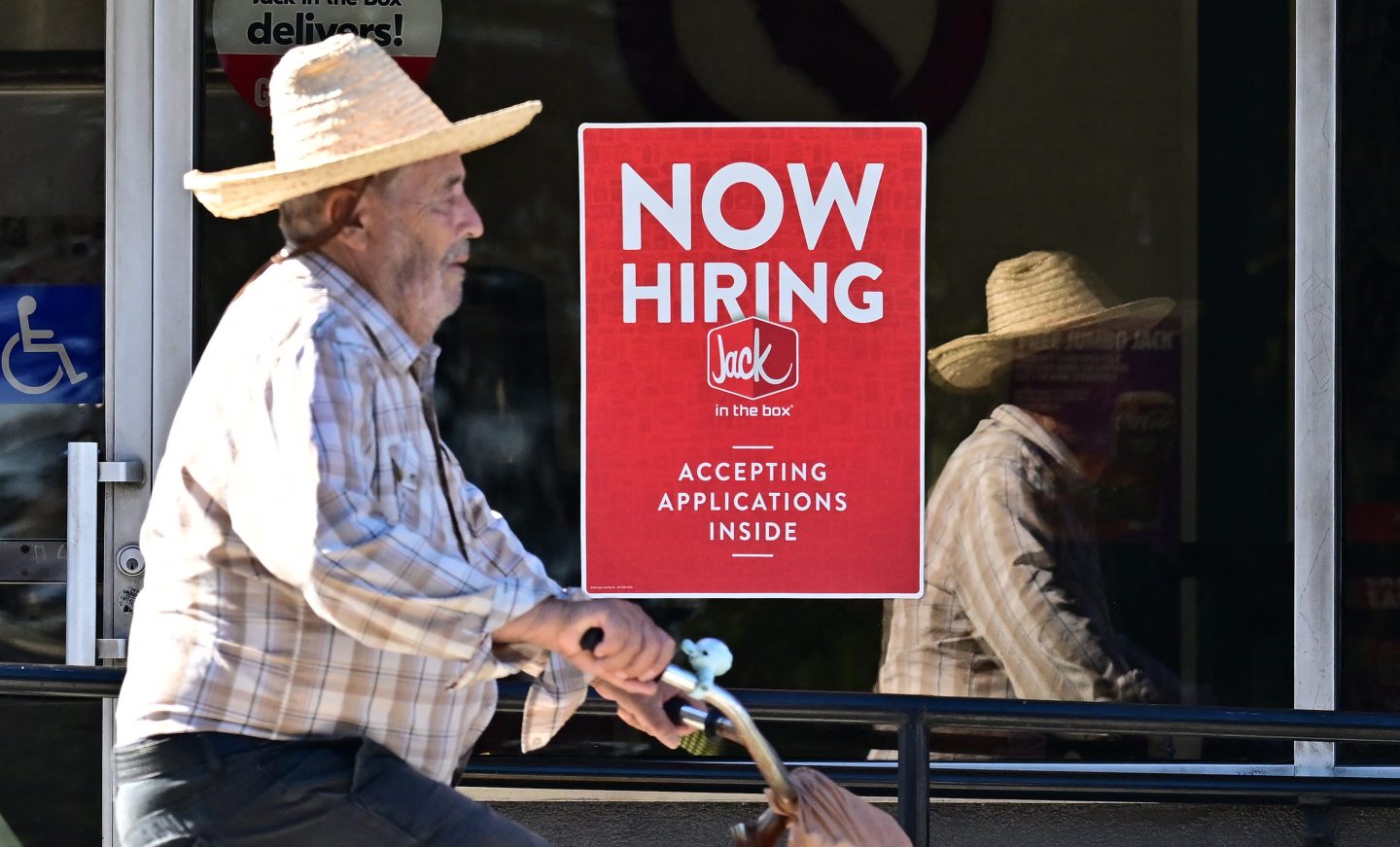
C-suite turnover hit record highs in 2025. 

Recommended Video

It wasn’t because of a bad quarter or a dip in the market. It’s because after three years of shoveling millions into AI, most organizations haven’t actually changed. They’ve just become faster versions of their old, clunky selves. And for the leaders at the top, it’s a brutal sink-or-swim moment.

I’ve spent the last few years in the trenches with enterprise leaders – in dozens of boardrooms and on Zooms at all hours of the night – as they wrestle with this reality. And the part no one wants to hear while staring at a stagnant ROI dashboard is that this isn’t a tech failure. It’s a failure of leadership to adapt. 

Leadership playbooks were built for a different era. Enterprises have spent decades promoting people who manage complexity. The bigger the org chart and the more layers you oversee, the higher you climb. But in the agentic era, that model is fundamentally backwards. Complexity is exactly what suffocates scale.

What we’re witnessing is a generational transfer of power. And the leaders we see actually scaling AI have realized this is a leadership transformation first. They aren’t reaching for the familiar, comfortable playbook that got them the corner office. They’re tearing it apart and radically rebuilding from the inside out. Here are the three shifts that define them.

1. They Design for Radical Simplicity

The first shift is a relentless attack on the organizational drag. 

The leaders driving agentic AI forward have shifted into ‘rebuild mode’. That’s a very different exercise. It’s a zero-based design, and it starts with asking: 

  • What actually matters here? Don’t look at a step on your flowchart and ask, “How can AI make this step faster?” Clear the whiteboard entirely. Take your most critical processes – product launches, customer onboarding, closing the books – and redesign them around the outcome, not the org chart. If you find yourself asking, “How did this survive for 20 years?” – that step goes.
  • Is this ‘approval theater’? Look at every approval, review, and sign-off and ask whether it adds real judgment – or just moves information along. If it’s the latter, it’s bureaucratic scar tissue. That step doesn’t belong in a meeting or a manager’s inbox anymore. Cut it.
  • Is this pure coordination? Scan for status meetings, Slack threads, and “just-in-case” checks whose only purpose is keeping people aligned. Replace it with an agent that tracks progress, flags issues, and routes decisions automatically. Cancel the recurring meeting.

Only leadership can look at a workflow and say, “this is where we add our genius, that part has to go.” That doesn’t fall on your product or ops team. This is now the most important part of your job.

2. They Redefine How People Grow

The second shift is about people. 

Too many leaders are focused on job loss. But if an agent can replace what someone – or an entire team – does today, what does that say about the job we designed for them?

We’ve defined value far too narrowly. Roles are built around execution: how many tasks you complete, how busy you look. Career growth follows the same logic: manage more people, climb the ladder, earn a bigger title. But AI breaks that entire value system. 

Forward-thinking leaders aren’t asking less of their people, they’re raising the bar. They’re asking what humans are uniquely capable of – the work that makes someone irreplaceable – and rethinking roles from the ground up: 

  • Strip and rebuild. Take one role on your team and remove every task an agent can do – data entry, report generation, status updates, first-draft creation. Then rewrite the role around setting direction, making judgment calls, and being accountable for the result. 
  • Expand scope. Narrow job specs are a relic of the past. Redesign roles to encourage sideways growth and skill stacking, creating true “generalists”. Take your “content strategist” and make them a “growth architect” who orchestrates content, distribution, analytics, and optimization. Sideways growth, skill stacking. 
  • Redesign growth. Career ladders are dead. The next era of your career won’t be driven by experience, credentials, or hustle, it’ll be driven by AI leverage. Promote people based on how effectively they multiply their impact. Let people follow problems across functions, not titles up a ladder. 

The most creative, strategic, and human work of our careers is ahead of us.

3. They Expand the Boundaries of Ambition

The final shift is about ambition. 

Strategy used to be a constant negotiation between the possible and the practical. Ambition was tethered to “resource reality,” restricted by budget, headcount, and hours in a day. 

That constraint vanished. Forward-thinking leaders aren’t using AI to squeeze out a 10% productivity lift – faster decks, leaner teams, more output from the same workflows. They’re using it to go after new territory. 

The leaders we work with are already operating on a different plane. In strategy meetings, they’ve flipped the question from “What can we afford to do?” to “What can we build now that execution is free?”

Start with the excuses you pulled two years ago. Maybe it’s “We can’t scale customer success without hiring 50 more people,“ or “We can’t enter SMB — the economics don’t work.”

Then, ask again:

  • What if you could serve everyone like your top 1%?: Instead of asking how to better segment customers, ask how to deliver 1:1 expertise to everyone, not just your high-value accounts. AI makes personalized experiences economically viable at scale.
  • Which timelines can we shatter? Research, development, experimentation – work that ran on multi-year cycles – can now ship in weeks. Take one strategic initiative currently on your three-year roadmap. Force it into a 90-day window.
  • Which markets are we still treating as “too hard”? Skip the years-long localization plans and use an agent to handle language, support, and compliance. Leaders can now enter new markets simultaneously, not sequentially. What if we could run 1,000 simultaneous pricing experiments instead of one A/B test?

This isn’t a brainstorming exercise. It’s a shift in competitive strategy. When one company can move from idea to market in weeks – and another is still planning around human-scale execution – they’re no longer competing on the same field.

The New Leadership Mandate

This isn’t a technology problem. The tools, the capabilities, the success stories, they’re all here. What’s missing is leadership.

I see leaders every day who are leaning in and doing the hard work of rebuilding. They’re rewriting how work gets done, opening new paths for their people, and building businesses that were architecturally impossible just a few years ago.

Jobs will change and workflows will be dismantled – not as an act of destruction, but as an act of progress. It’s on leaders to forge the next generation, and there’s an entire generation willing to step into that role. 

The opinions expressed in Fortune.com commentary pieces are solely the views of their authors and do not necessarily reflect the opinions and beliefs of Fortune.

Join us at the Fortune Workplace Innovation Summit May 19–20, 2026, in Atlanta. The next era of workplace innovation is here—and the old playbook is being rewritten. At this exclusive, high-energy event, the world’s most innovative leaders will convene to explore how AI, humanity, and strategy converge to redefine, again, the future of work. Register now.
About the Author
By May Habib
See full bioRight Arrow Button Icon

Latest in Commentary

Finance
Lorem ipsum dolor sit amet, consectetur adipiscing elit, sed do eiusmod tempor incididunt ut labore et dolore magna aliqua. Ut enim ad minim veniam
By Fortune Editors
October 20, 2025
Finance
Lorem ipsum dolor sit amet, consectetur adipiscing elit, sed do eiusmod tempor incididunt ut labore et dolore magna aliqua. Ut enim ad minim veniam
By Fortune Editors
October 20, 2025
Finance
Lorem ipsum dolor sit amet, consectetur adipiscing elit, sed do eiusmod tempor incididunt ut labore et dolore magna aliqua. Ut enim ad minim veniam
By Fortune Editors
October 20, 2025
Finance
Lorem ipsum dolor sit amet, consectetur adipiscing elit, sed do eiusmod tempor incididunt ut labore et dolore magna aliqua. Ut enim ad minim veniam
By Fortune Editors
October 20, 2025
Finance
Lorem ipsum dolor sit amet, consectetur adipiscing elit, sed do eiusmod tempor incididunt ut labore et dolore magna aliqua. Ut enim ad minim veniam
By Fortune Editors
October 20, 2025
Finance
Lorem ipsum dolor sit amet, consectetur adipiscing elit, sed do eiusmod tempor incididunt ut labore et dolore magna aliqua. Ut enim ad minim veniam
By Fortune Editors
October 20, 2025

Most Popular

Finance
Lorem ipsum dolor sit amet, consectetur adipiscing elit, sed do eiusmod tempor incididunt ut labore et dolore magna aliqua. Ut enim ad minim veniam
By Fortune Editors
October 20, 2025
Finance
Lorem ipsum dolor sit amet, consectetur adipiscing elit, sed do eiusmod tempor incididunt ut labore et dolore magna aliqua. Ut enim ad minim veniam
By Fortune Editors
October 20, 2025
Finance
Lorem ipsum dolor sit amet, consectetur adipiscing elit, sed do eiusmod tempor incididunt ut labore et dolore magna aliqua. Ut enim ad minim veniam
By Fortune Editors
October 20, 2025
Finance
Lorem ipsum dolor sit amet, consectetur adipiscing elit, sed do eiusmod tempor incididunt ut labore et dolore magna aliqua. Ut enim ad minim veniam
By Fortune Editors
October 20, 2025
Finance
Lorem ipsum dolor sit amet, consectetur adipiscing elit, sed do eiusmod tempor incididunt ut labore et dolore magna aliqua. Ut enim ad minim veniam
By Fortune Editors
October 20, 2025
Finance
Lorem ipsum dolor sit amet, consectetur adipiscing elit, sed do eiusmod tempor incididunt ut labore et dolore magna aliqua. Ut enim ad minim veniam
By Fortune Editors
October 20, 2025
Fortune Secondary Logo
Rankings
  • 100 Best Companies
  • Fortune 500
  • Global 500
  • Fortune 500 Europe
  • Most Powerful Women
  • Future 50
  • World’s Most Admired Companies
  • See All Rankings
Sections
  • Finance
  • Fortune Crypto
  • Features
  • Leadership
  • Health
  • Commentary
  • Success
  • Retail
  • Mpw
  • Tech
  • Lifestyle
  • CEO Initiative
  • Asia
  • Politics
  • Conferences
  • Europe
  • Newsletters
  • Personal Finance
  • Environment
  • Magazine
  • Education
Customer Support
  • Frequently Asked Questions
  • Customer Service Portal
  • Privacy Policy
  • Terms Of Use
  • Single Issues For Purchase
  • International Print
Commercial Services
  • Advertising
  • Fortune Brand Studio
  • Fortune Analytics
  • Fortune Conferences
  • Business Development
About Us
  • About Us
  • Editorial Calendar
  • Press Center
  • Work At Fortune
  • Diversity And Inclusion
  • Terms And Conditions
  • Site Map
Fortune Secondary Logo
  • About Us
  • Editorial Calendar
  • Press Center
  • Work At Fortune
  • Diversity And Inclusion
  • Terms And Conditions
  • Site Map
  • Facebook icon
  • Twitter icon
  • LinkedIn icon
  • Instagram icon
  • Pinterest icon
May Habib is the CEO and co-founder of WRITER, the leading agentic AI platform for the enterprise. Under May’s visionary leadership, WRITER has become a global enterprise AI powerhouse, transforming work at hundreds of pre-eminent organizations, including Accenture, Prudential, Vanguard, Mars, and Uber, and earning recognition as a World Economic Forum Unicorn, Forbes AI 50 company, and CNBC Disruptor. A Harvard graduate with high honors in Economics, May is an expert in natural language processing and AI-driven language generation. She is a World Economic Forum Young Global Leader, a Fellow of the Aspen Global Leadership Network, an Inc. Female Founder Award recipient, and one of Worth’s Groundbreaking Women for 2025.

Latest in Commentary

may
CommentaryLeadership
The AI leadership reckoning is here
By May HabibFebruary 24, 2026
2 hours ago
trump
CommentaryTariffs and trade
Trump’s tariffs: a lesson in economic and legal ignorance
By Steve H. HankeFebruary 23, 2026
20 hours ago
blair
Commentarymentoring
I shared the same guru as William Hurt and Elizabeth Gilbert. Here are 3 things I learned — and now tell CEOs — about toxic leadership
By Blair GlaserFebruary 23, 2026
1 day ago
solomon
CommentaryDEI
Goldman’s board kills DEI — and that’s not a terrible thing
By Betsy AtkinsFebruary 22, 2026
2 days ago
jesse
CommentaryDEI
A decade ago, I had a front row seat as Jesse Jackson held big tech firms accountable for being overwhelmingly white and male
By Brennan Nevada JohnsonFebruary 22, 2026
2 days ago
werfel
CommentaryTaxes
Former IRS Commissioner: Here’s how we used AI to create immediate value when taxpayers scrutinized every dollar
By Danny WerfelFebruary 22, 2026
2 days ago

Most Popular

placeholder alt text
Economy
Scott Bessent has ’got a feeling’ that $175 billion raised under the IEEPA is lost to the American people for good
By Eleanor PringleFebruary 23, 2026
1 day ago
placeholder alt text
Economy
In less than a year, Trump erased 12 years of solvency for the trust fund that pays for Medicare Part A
By Nick LichtenbergFebruary 23, 2026
20 hours ago
placeholder alt text
Economy
A two-child household must earn $400,000 a year for childcare to be affordable, study says. 'It’s easy to see why birth rates are falling'
By Jason MaFebruary 22, 2026
2 days ago
placeholder alt text
Innovation
The U.S. spent $30 billion to ditch textbooks for laptops and tablets: The result is the first generation less cognitively capable than their parents
By Sasha RogelbergFebruary 21, 2026
3 days ago
placeholder alt text
Economy
Stocks sell off as traders wake up to the realization that Trump has 'highly punitive' options for new trade tariffs
By Jim EdwardsFebruary 23, 2026
1 day ago
placeholder alt text
Success
While Nvidia CEO Jensen Huang enjoys an over $150 billion net worth, his fellow cofounder Curtis Priem sold out in 2006—and missed out on $600 billion
By Preston ForeFebruary 23, 2026
24 hours ago

© 2026 Fortune Media IP Limited. All Rights Reserved. Use of this site constitutes acceptance of our Terms of Use and Privacy Policy | CA Notice at Collection and Privacy Notice | Do Not Sell/Share My Personal Information
FORTUNE is a trademark of Fortune Media IP Limited, registered in the U.S. and other countries. FORTUNE may receive compensation for some links to products and services on this website. Offers may be subject to change without notice.