• Home
  • Latest
  • Fortune 500
  • Finance
  • Tech
  • Leadership
  • Lifestyle
  • Rankings
  • Multimedia
Commentary

Trump is set to throw another tariff tantrum at the state of the union. Economists know better

Steve H. Hanke
By
Steve H. Hanke
Steve H. Hanke
Down Arrow Button Icon
Steve H. Hanke
By
Steve H. Hanke
Steve H. Hanke
Down Arrow Button Icon
February 24, 2026, 2:30 PM ET
Steve Hanke is a professor of applied economics at The Johns Hopkins University. His most recent book, co-authored with Matt Sekerke, is Making Money Work: How to Rewrite the Rules of Our Financial System, Wiley 2025.
trump
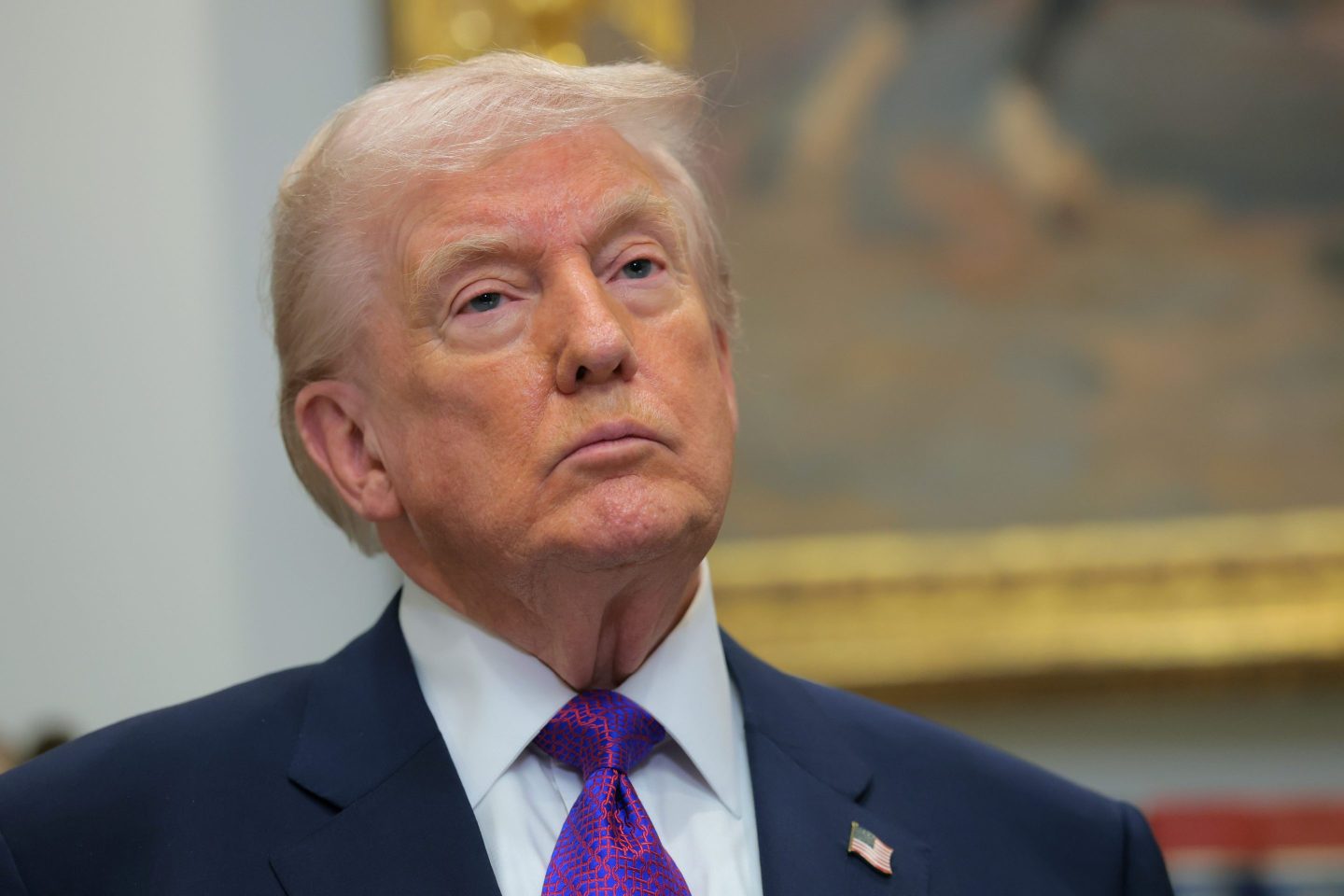
What will "tariff man" say at the State of the Union?Jabin Botsford/The Washington Post via Getty Images

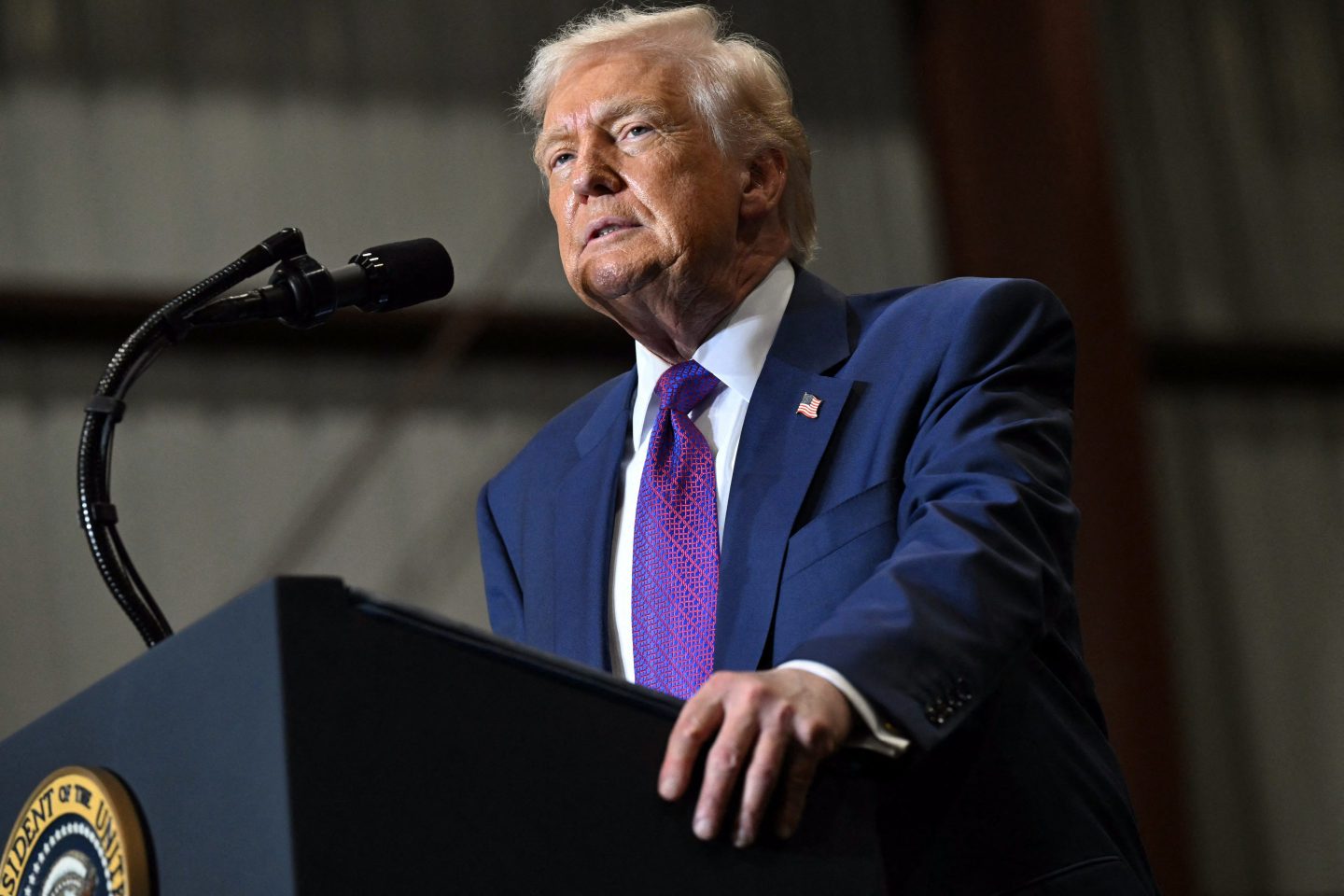
Who is President Trump? He is the self-proclaimed “Tariff Man.” For virtually all economists, regardless of their political stripes, this attribution marks a man as an enemy and puts a target on his back.

Recommended Video

At his State of the Union address in February 2026, it would be no surprise if Trump continued his dayslong diatribe about his signature trade policy being so unceremoniously ruled unconstitutional by a 6-3 Supreme Court majority. On Friday, he raged at the fresh news of his defeat by calling the high court’s justices “disloyal” and immediately erected 10% tariffs on the world, revising those upward to 15% over the weekend, via social media. As this week has progressed, he has vowed “to do absolutely ‘terrible’ things to foreign countries.”

Trump claimed “the court has also approved all other Tariffs, of which there are many, and they can all be used in a much more powerful and obnoxious way, with legal certainty, than the Tariffs as initially used,” even though Section 122 of the 1974 Trade Act, under which he imposed new tariffs, has in fact never been used in this fashion.

The thing is, many businessmen and women still don’t carry such negative sentiments for the word “tariff.” Like President Trump, many of them are mercantilist camp followers. They believe that an external trade deficit is a malady caused by foreigners who manipulate exchange rates, impose tariffs and non-tariff barriers, steal intellectual property, and engage in unfair trade practices. The president and his followers feel that the U.S. is victimized by foreigners, as reflected in the country’s negative external trade balance.

This wrongheaded mercantilist view of international trade and external accounts has its roots in how individual businesses operate. A healthy business generates positive free cash flows, with revenues that exceed outlays. If a business cannot generate positive free cash flows on a sustained basis and cannot take on more debt or issue more equity to finance itself, then it will be forced to declare bankruptcy.

Business leaders employ this general free-cash-flow template when they think about the economy and its external balance. For them, a negative external balance for the nation is equivalent to a negative cash flow for a business. In both cases, more cash is going out than is coming in.

But, this line of thinking represents a classic fallacy of composition. This is the belief that what is true of a part (a business) is true for the whole (the economy). Alas, economics is littered with fallacies. These cause businessmen and women to confuse their own arguments about international trade and external balances almost beyond reason.

As it turns out, the negative external balance in the U.S. is not a “problem”, nor is it caused by foreigners engaging in nefarious activities. The U.S.’s negative external balance, which the country has registered every year since 1976, is made in the USA.

When Americans spend more than they produce, the gap is filled by foreigners who export goods to the USA, with a resulting trade deficit. As long as Americans can finance the deficit with ease, which has been the case since 1976, the deficits are a “good,” not a “bad.” This is why most economists, ever since Adam Smith’s Wealth of Nations was published in 1776, reject mercantilism and all the baggage that goes with it, including tariffs.

Not being swayed by economic arguments and facts, the Tariff Man has pulled another rabbit out of his hat. He argues that the threat of tariffs gives him leverage to force other countries to do what he wants them to do. With the tariff gun at their heads, the Tariff Man asserts that he can force them to sign on the dotted line, even if it is under duress. 

The use of tariffs as threats and leverage is nowhere to be found in Dale Carnegie’s 1936 classic How to Win Friends and Influence People. Indeed, the tariff threat has only produced enemies and once again raised the specter of Eugene Burdick and William Lederer’s influential 1958 novel, The Ugly American.

The opinions expressed in Fortune.com commentary pieces are solely the views of their authors and do not necessarily reflect the opinions and beliefs of Fortune.


Join us at the Fortune Workplace Innovation Summit May 19–20, 2026, in Atlanta. The next era of workplace innovation is here—and the old playbook is being rewritten. At this exclusive, high-energy event, the world’s most innovative leaders will convene to explore how AI, humanity, and strategy converge to redefine, again, the future of work. Register now.
About the Author
Steve H. Hanke
By Steve H. Hanke
Twitter icon
See full bioRight Arrow Button Icon

Latest in Commentary

Finance
Lorem ipsum dolor sit amet, consectetur adipiscing elit, sed do eiusmod tempor incididunt ut labore et dolore magna aliqua. Ut enim ad minim veniam
By Fortune Editors
October 20, 2025
Finance
Lorem ipsum dolor sit amet, consectetur adipiscing elit, sed do eiusmod tempor incididunt ut labore et dolore magna aliqua. Ut enim ad minim veniam
By Fortune Editors
October 20, 2025
Finance
Lorem ipsum dolor sit amet, consectetur adipiscing elit, sed do eiusmod tempor incididunt ut labore et dolore magna aliqua. Ut enim ad minim veniam
By Fortune Editors
October 20, 2025
Finance
Lorem ipsum dolor sit amet, consectetur adipiscing elit, sed do eiusmod tempor incididunt ut labore et dolore magna aliqua. Ut enim ad minim veniam
By Fortune Editors
October 20, 2025
Finance
Lorem ipsum dolor sit amet, consectetur adipiscing elit, sed do eiusmod tempor incididunt ut labore et dolore magna aliqua. Ut enim ad minim veniam
By Fortune Editors
October 20, 2025
Finance
Lorem ipsum dolor sit amet, consectetur adipiscing elit, sed do eiusmod tempor incididunt ut labore et dolore magna aliqua. Ut enim ad minim veniam
By Fortune Editors
October 20, 2025

Most Popular

Finance
Lorem ipsum dolor sit amet, consectetur adipiscing elit, sed do eiusmod tempor incididunt ut labore et dolore magna aliqua. Ut enim ad minim veniam
By Fortune Editors
October 20, 2025
Finance
Lorem ipsum dolor sit amet, consectetur adipiscing elit, sed do eiusmod tempor incididunt ut labore et dolore magna aliqua. Ut enim ad minim veniam
By Fortune Editors
October 20, 2025
Finance
Lorem ipsum dolor sit amet, consectetur adipiscing elit, sed do eiusmod tempor incididunt ut labore et dolore magna aliqua. Ut enim ad minim veniam
By Fortune Editors
October 20, 2025
Finance
Lorem ipsum dolor sit amet, consectetur adipiscing elit, sed do eiusmod tempor incididunt ut labore et dolore magna aliqua. Ut enim ad minim veniam
By Fortune Editors
October 20, 2025
Finance
Lorem ipsum dolor sit amet, consectetur adipiscing elit, sed do eiusmod tempor incididunt ut labore et dolore magna aliqua. Ut enim ad minim veniam
By Fortune Editors
October 20, 2025
Finance
Lorem ipsum dolor sit amet, consectetur adipiscing elit, sed do eiusmod tempor incididunt ut labore et dolore magna aliqua. Ut enim ad minim veniam
By Fortune Editors
October 20, 2025
Fortune Secondary Logo
Rankings
  • 100 Best Companies
  • Fortune 500
  • Global 500
  • Fortune 500 Europe
  • Most Powerful Women
  • Future 50
  • World’s Most Admired Companies
  • See All Rankings
Sections
  • Finance
  • Fortune Crypto
  • Features
  • Leadership
  • Health
  • Commentary
  • Success
  • Retail
  • Mpw
  • Tech
  • Lifestyle
  • CEO Initiative
  • Asia
  • Politics
  • Conferences
  • Europe
  • Newsletters
  • Personal Finance
  • Environment
  • Magazine
  • Education
Customer Support
  • Frequently Asked Questions
  • Customer Service Portal
  • Privacy Policy
  • Terms Of Use
  • Single Issues For Purchase
  • International Print
Commercial Services
  • Advertising
  • Fortune Brand Studio
  • Fortune Analytics
  • Fortune Conferences
  • Business Development
About Us
  • About Us
  • Editorial Calendar
  • Press Center
  • Work At Fortune
  • Diversity And Inclusion
  • Terms And Conditions
  • Site Map
Fortune Secondary Logo
  • About Us
  • Editorial Calendar
  • Press Center
  • Work At Fortune
  • Diversity And Inclusion
  • Terms And Conditions
  • Site Map
  • Facebook icon
  • Twitter icon
  • LinkedIn icon
  • Instagram icon
  • Pinterest icon

Latest in Commentary

CommentaryCulture
Gen Z’s enthusiasm for all things touchable is resurrecting the analog economy—and costing parents
By Luba KassovaFebruary 24, 2026
2 hours ago
trump
Commentary
Trump is set to throw another tariff tantrum at the state of the union. Economists know better
By Steve H. HankeFebruary 24, 2026
2 hours ago
may
CommentaryLeadership
The AI leadership reckoning is here
By May HabibFebruary 24, 2026
7 hours ago
trump
Commentary
Trump’s tariffs: a lesson in economic and legal ignorance
By Steve H. HankeFebruary 23, 2026
1 day ago
blair
Commentarymentoring
I shared the same guru as William Hurt and Elizabeth Gilbert. Here are 3 things I learned — and now tell CEOs — about toxic leadership
By Blair GlaserFebruary 23, 2026
1 day ago
solomon
CommentaryDEI
Goldman’s board kills DEI — and that’s not a terrible thing
By Betsy AtkinsFebruary 22, 2026
2 days ago

Most Popular

placeholder alt text
Economy
Scott Bessent has ’got a feeling’ that $175 billion raised under the IEEPA is lost to the American people for good
By Eleanor PringleFebruary 23, 2026
1 day ago
placeholder alt text
Economy
In less than a year, Trump erased 12 years of solvency for the trust fund that pays for Medicare Part A
By Nick LichtenbergFebruary 23, 2026
1 day ago
placeholder alt text
Economy
A two-child household must earn $400,000 a year for childcare to be affordable, study says. 'It’s easy to see why birth rates are falling'
By Jason MaFebruary 22, 2026
2 days ago
placeholder alt text
Innovation
The U.S. spent $30 billion to ditch textbooks for laptops and tablets: The result is the first generation less cognitively capable than their parents
By Sasha RogelbergFebruary 21, 2026
3 days ago
placeholder alt text
Success
While Nvidia CEO Jensen Huang enjoys an over $150 billion net worth, his fellow cofounder Curtis Priem sold out in 2006—and missed out on $600 billion
By Preston ForeFebruary 23, 2026
1 day ago
placeholder alt text
Cybersecurity
Discord cuts ties with Peter Thiel–backed verification software after its code was found tied to U.S. surveillance efforts
By Catherina GioinoFebruary 24, 2026
13 hours ago

© 2026 Fortune Media IP Limited. All Rights Reserved. Use of this site constitutes acceptance of our Terms of Use and Privacy Policy | CA Notice at Collection and Privacy Notice | Do Not Sell/Share My Personal Information
FORTUNE is a trademark of Fortune Media IP Limited, registered in the U.S. and other countries. FORTUNE may receive compensation for some links to products and services on this website. Offers may be subject to change without notice.