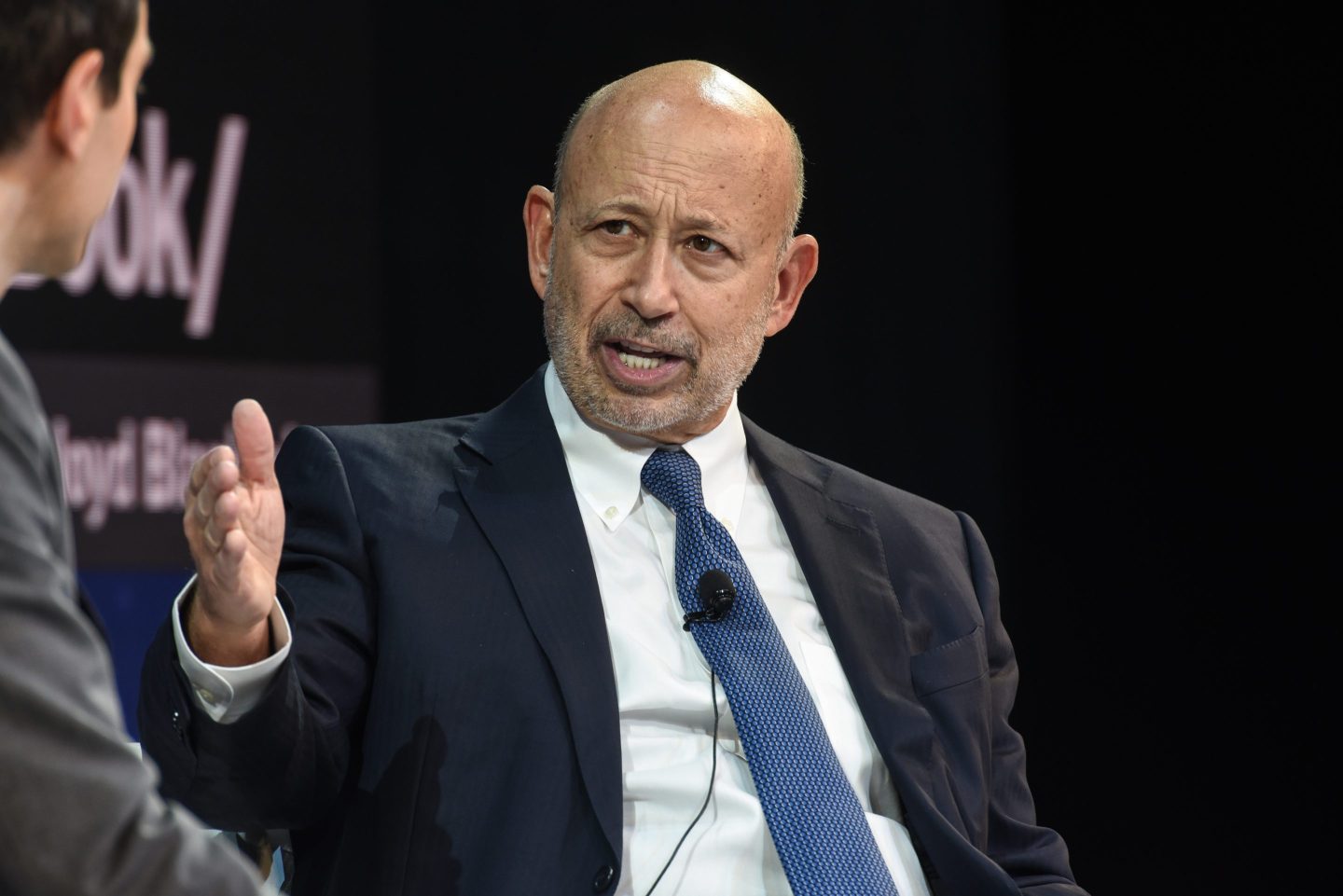
Business leaders are butting heads over whether the college degree is dead, arguing over its usefulness and overall value. Palantir cofounder Peter Thiel is meanwhile luring young entrepreneurs with $200,000 grants to ditch the “corrupt institution” of higher education and “build new things.” But Lloyd Blankfein, former CEO of Goldman Sachs, is hitting back with his own two cents for budding workers.
“I strongly disagree with the technology investor Peter Thiel,” Blankfein wrote in an excerpt from his upcoming memoir, Streetwise, shared with Vanity Fair. “To succeed in a career, you have to know the technical minutiae of your field, of course. But you also need to be a complete person—the kind of person other people want to engage with.”
One of the best ways that aspiring professionals can grow as individuals and set themselves up for career success is by going to college, Blankfein advised.
The longtime executive is an alum of both Harvard University and Harvard Law School, and in remembering his undergraduate years recalled he “survived” the experience more than he enjoyed it. Blankfein conceded the Ivy League school might not be a perfect fit for everyone, but it undeniably opened doors for his future career and was “the best place to have gone.”
The ex–Goldman Sachs leader says the school nurtured his confidence, writing skills, love of history, and engagement with current events. And he might have missed out on that growth if he’d skipped the experience altogether; Blankfein recognizes the value in a liberal arts education.
“Your undergraduate years are your best opportunity to make yourself uncomfortable in a way that can help make you more curious and interesting,” Blankfein added.
The anti-college Thiel and Meritocracy Fellowship
Blankfein’s vocal appreciation for the college experience comes at a time when some tech leaders are challenging the efficacy of higher ed.
Just last spring, Palantir launched its Meritocracy Fellowship: a four-month, paid internship for recent high school graduates not enrolled in college. During their stint at the company, Gen Zers learn about U.S. history and foundations of the West, and work alongside Palantir’s full-time employees in solving technical problems and improving products.
The gig was advertised as a way to “get the Palantir degree” and “skip the debt. Skip the indoctrination.” Cofounder and CEO Alex Karp added that the internship was created to combat the “shortcomings of university admissions.”
“Opaque admissions standards at many American universities have displaced meritocracy and excellence,” the Palantir job posting said. “As a result, qualified students are being denied an education based on subjective and shallow criteria. Absent meritocracy, campuses have become breeding grounds for extremism and chaos.”
And Palantir cofounder Thiel has been disrupting the college-to-job pipeline for much longer. Since 2011, the Thiel Fellowship has been handing out sizable grants to young people who are willing to drop out of college and launch their businesses.
The program has minted around a dozen unicorns so far, with notable fellowship alumni including Figma cofounder Dylan Field and Scale AI creator Lucy Guo.
The CEOs who agree that college degrees are still important
The former Goldman Sachs CEO isn’t the only business leader espousing the value of college degrees. Cofounder of AI giant Anthropic Daniela Amodei believes the liberal arts won’t fade into the background in an increasingly tech-driven world—they’ll actually be pushed to the forefront of innovation.
“I actually think studying the humanities is going to be more important than ever,” Amodei said in a recent interview with ABC News. “The ability to have critical thinking skills and learn how to interact with other people will be more important in the future, rather than less.”
Even leaders who achieved massive success outside of corporate life advise aspiring professionals to stay in school.
Multimillionaire music icon Usher did not attend college himself, but he still recognizes the value of attending university. However, he cautions that one slip of paper won’t carry them far—budding workers need to work hard and put their skills to good use once they set foot off campus.
“A diploma still matters, yes of course it matters, but it’s not the paper that gives the power, it’s you, you create the value behind that degree,” Usher told graduates of Emory University last year. “It is your ambition, it is your integrity, it is your hustle, it is your heart; that’s how you lead, that’s how you serve, that’s how you choose to show up when no one else is watching.”