Steve Miller joined office furniture manufacturer Steelcase in 1999 as a software developer, coinciding with the tail end of the dot-com boom times that birthed future tech giants like Amazon and eBay, as well as plenty of flops like Pets.com and Webvan.
But regardless of the ultimate resiliency of those businesses, the dot-com wave led to a proliferation of technology tools across nearly all sectors. Employers embraced open plan office layouts, ripping out private rooms in favor of spaces that promoted greater collaboration. Desks were redesigned to factor in increased usage of laptops and dual-monitor workstations. And now, as AI usage steadily increases among U.S. employees, Miller anticipates that office design will change yet again.
“This AI super cycle is changing the way people are working,” says Miller, chief technology officer at Steelcase, which was acquired by rival HNI in a $2.2 billion transaction that closed in December. The merger is a bet that the larger, combined company can benefit from stricter return-to-office policies.
Miller says the company has forged partnerships with tech giant Microsoft and Logitech, a Swiss maker of peripheral computer products like keyboards, headphones, and mice, to better understand how AI is changing work and what workspaces employees will need to support their new responsibilities. Steelcase says that furniture, acoustics, camera positioning, and lightning will all need to be reconsidered
A few focus areas that Steelcase has settled on include acoustically private spaces that will make it easier for employees to use AI to record their calls, team-focused spaces that will allow humans and AI systems on a screen to collaborate on work projects, and rejuvenation spaces meant to give workers a break.
On the latter, Steelcase cites Quantum Workplace data that shows frequent AI users report higher levels of burnout (45%) compared to those that use the technology infrequently (38%). This week, Harvard Business Review shared a preview of some in-progress research on the topic, finding that as AI tools broaden the scope of work and allow employees to work at a faster pace, these productivity gains frequently come with fatigue and weaker decision-making.
When vetting potential AI solutions that can be utilized within Steelcase’s own four walls, Miller says a cross-functional, “community practice” group of around 600 employees provides oversight into which AI use cases should be explored and implemented. Input is shared from workers all across the company, including finance, engineering, sales, and operations. A data governance council was also set up to monitor and enforce Steelcase’s guardrails.
Steelcase has deployed some productivity tools across the organization, including Microsoft Copilot, though Miller says he prioritizes larger impact use cases. AI usage metrics aren’t enough to convince him that the technology is worth investing in. “Adoption isn’t transformation,” says Miller. “You can have a lot of activity that isn’t actually doing anything.”
One bigger bet that Steelcase launched more than a year ago is Casey AI Assistant. Developed with Microsoft, the tool trains AI models on Steelcase’s research, furniture spec guides, and product data to speed up the process of creating custom configurations. Designers are given a lot of freedom to create furniture and office space products for each unique client. Infusing AI, Miller says, is “making it possible for designers to navigate that incredible amount of choice and find solutions that match the customer that we’re trying to work for.”
Steelcase’s data shows Casey AI Assistant had a 72% repeat user rate. Casey has 4,700 users who have conducted 58,000 total conversations, averaging about 250 conversations per day.
Miller isn’t yet ready to publicly share any major details about Steelcase’s agentic AI efforts. “We put a lot of energy at the moment into creating our program for vetting and launching agentic AI solutions so that they respect data security and data governance,” he says. “That’s what we’ve been working pretty closely with Microsoft on getting that properly established.”
What’s held back adoption of agentic thus far are Miller’s concerns that agents could override the controls that IT would build into the system. He also wants to be sure that multi-agent systems, which string together multiple AI agents to share information and make decisions together, are also sharing the right data and producing safe and reliable outputs.
“That’s what we want to make sure that we’re getting right,” says Miller.
John Kell
Send thoughts or suggestions to CIO Intelligence here.
NEWS PACKETS
Big Tech’s big spending plans for 2026. Alphabet, Amazon, Meta Platforms, and Microsoft told investors during their latest earnings presentations that capital expenditures are projected to reach about $650 billion this year, according to a Bloomberg report that said the pace of spending will either near or surpass their budgets for the past three years combined. CNBC noted that these heavy investments to support their AI aspirations will dent free cash flow, possibly pushing the companies to more frequently tap equity and debt markets. On that front, Bloomberg reported this week that Alphabet raised $20 billion in its largest ever US dollar bond sale. But unlike OpenAI, Anthropic, and the other unprofitable AI startups, the publicly traded tech giants amassed massive cash piles in the years before the AI boom, giving them more financial flexibility. Gartner, meanwhile, recently issued a more optimistic projection that global IT spending will hit $6.15 trillion in 2026.
Workday co-founder to again serve as CEO. The software company announced Monday that co-founder Aneel Bhusri, who served as either co-CEO or CEO from 2009 through 2024, will return to the role, replacing CEO Carl Eschenbach. Eschenbach had served as Workday’s co-CEO in 2022 and held the top job alone for just two years. But investors have been bearish on Workday’s stock, which is down more than 40% over the past year, as the company and its software peers confront fears that AI will disrupt the sector’s business model. Many of these companies have launched their own AI tools but if AI startups outmaneuver them, they could miss out on the boom. “AI is a bigger transformation than SaaS — and it will define the next generation of market leaders,” said Bhusri in a statement.
OpenAI announces a new Frontier in enterprise push. Last week, the ChatGPT maker announced an enterprise platform called Frontier to build, deploy, and manage AI agents that can run other software, including Salesforce and Workday. Fortune reports that Frontier can connect databases, business systems of record for things like customer relationship management software and HR, and other internal applications, and then allow those AI agents to run processes over these systems. Both OpenAI and Anthropic have been focused on developing new functions that make it easier for enterprise customers to build agents, which has sparked a selloff in stocks of large SaaS companies like SAP and Workday. Uber, Intuit, State Farm, and Oracle are among the early customers who were the first to adopt Frontier.
AI startups have an especially busy fundraising week. Demand for AI startups remained especially strong over the past week, with AI video startup Runway AI raising $315 million, AI voice generation company ElevenLabs more than tripling its valuation in a $500 million round led by Sequoia Capital, and AI lab Fundamental emerging from stealth as a unicorn last week with $255 million in funding at a $1.4 billion post-money valuation. There’s also a Forbes report that legal AI startup Harvey is in talks to raise $200 million at an $11 billion valuation, while Bloomberg says Anthropic is nearing a $20 billion funding round that could close by next week. For proof of how frothy demand has gotten, one can look at Anthropic: the AI firm was initially seeking $10 billion but is now on track to raise double that amount, in part due to excess investor interest.
ADOPTION CURVE
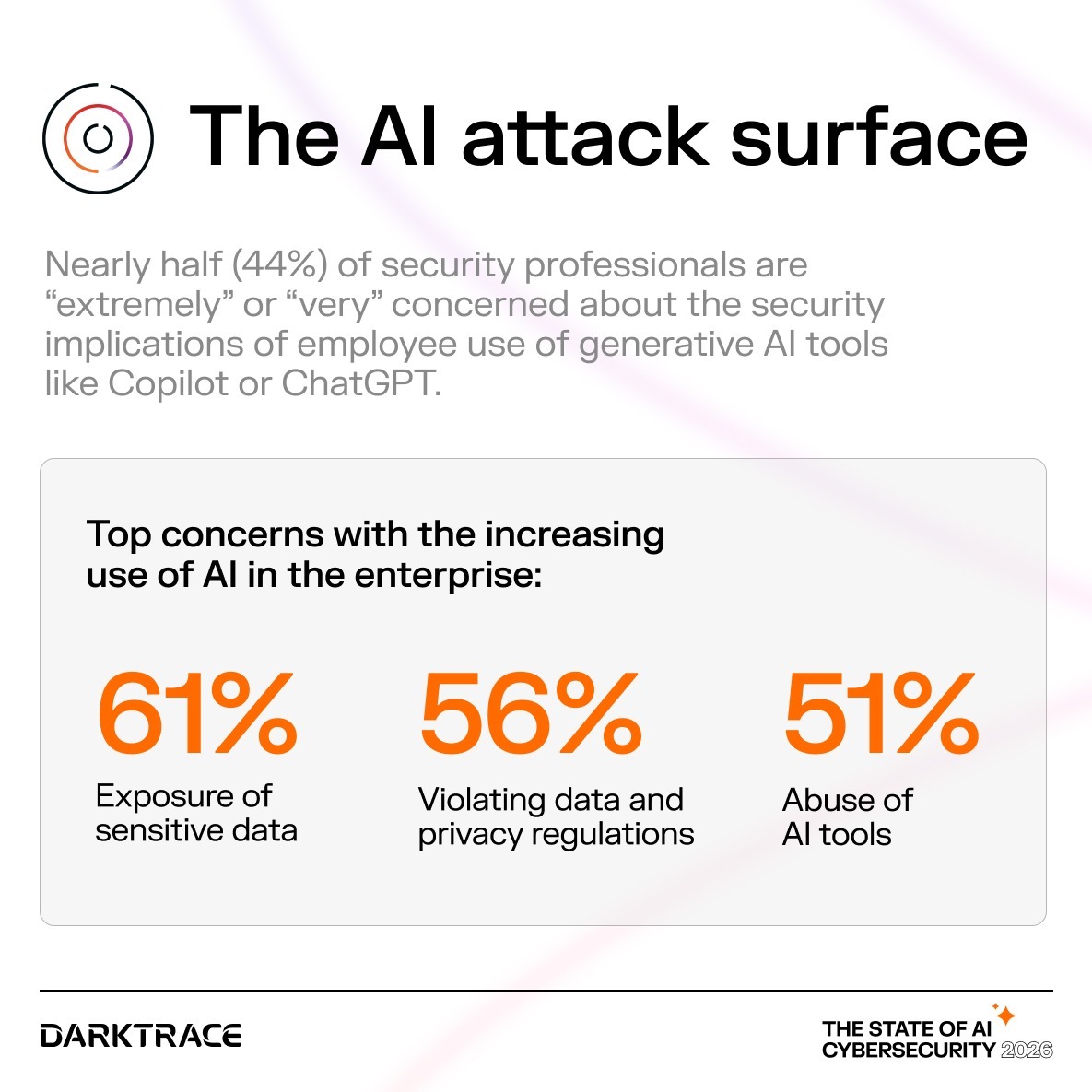
As AI adoption accelerates, security keeps lagging behind. As organizations continue to place bets on AI agents, a vast majority (76%) are justifiably worried about the security implications of these tools, with nearly half of security experts (47%) saying they are either “very” or “extremely” concerned that the agents could operate with direct access to sensitive data or critical business processes. That’s healthy skepticism, according to the report’s backer, cybersecurity firm Darktrace. But only 37% of the 1,500 professionals surveyed say they have a formal policy for securely deploying AI.
“That's a terrifying statistic to me,” says Nicole Carignan, Darktrace’s senior vice president of security and AI strategy and field chief information security officer, in an interview with Fortune. “That’s just a policy, that’s not even necessarily a vehicle of enforcement of that policy.”
Some best practices that Carignan advises related to risk management policies include third-party audits, a risk review board that regularly meets with business functions, and executive oversight. But merely having a policy in place isn’t enough. There also need continuous monitoring, anomaly detection, and threat detection and response plans. “I do feel that IT and security need to be in lock step,” says Carignan. “You see that convergence over time.”
Courtesy of Darktrace
JOBS RADAR
Hiring:
- Stanford University is seeking a CIO, based in Stanford, California. Posted salary range: $211.3K-$241K/year.
- UCLA Health is seeking a CIO, based in Los Angeles, California. Posted salary range: $304K-$684.2K/year.
- USPTO is seeking a CIO, based in Alexandria, Virginia. Posted salary range: $210.5K-$228K/year.
- United Way is seeking a chief information and technology officer, based in Alexandria, Virginia. Posted salary: $290K/year.
Hired:
- USAA appointed Dan Griffiths to serve as CIO for the financial services company that exclusively focuses on the military, veterans, and their families. He most recently served as group CIO for Santander US and Santander Bank globally. He also previously served as a group CTO at TD Bank and held technology leadership positions at other financial firms including Barclays Capital and JPMorgan Chase.
- BWX Technologies promoted Kurt Bender to the role of chief digital officer, overseeing the nuclear reactor manufacturer’s digital strategy. Bender most recently served as a VP at BWXT. Prior to joining the company in 2023, he has more than 22 years of experience across aerospace, defense, and technologies companies, including at L3Harris Technologies and BAE Systems.
- CEC Entertainment promoted Nathan Hunstable to serve as VP, IT and CIO, effective February 2. Most recently, Hunstable served as CISO and VP of IT infrastructure for the Chuck E. Cheese restaurant operator. Prior to joining CEC Entertainment in 2024, he served as CTO at Cinergy Entertainment, which operates movie theaters, bowling alleys, and other entertainment centers.
- Varsity Brands named Satish Mehta to the newly created role of chief technology and product officer. Prior to joining the apparel company, Mehta most recently served as CTO at pet supplies online retailer Chewy. He also held senior technology leadership roles at UnitedHealth Group, Staples, and Yahoo.
- Formula E has named Dan Cherowbrier to the role of CTP, after previously serving as a technology consultant for the motorsports league since 2019. In his new role, he will support the delivery of the new GEN4 car that will debut in the 2026-2027 season, as well as integration with tech partners including Google Cloud and Infosys.
- Onebrief announced the appointment of Cory Ondrejka as CIO. Ondrejka joins the software company, which focuses on technology designed for military staff, to expand AI capabilities and integrate advanced wargaming, modeling, and simulation tools through the company’s acquisition of Battle Road Digital. Previously, he held technology leadership roles and led engineering teams at Google and Meta.
- Freddy’s Frozen Custard & Steakburgers appointed Todd Paladini to serve as CIO, a newly created role for the restaurant chain. Previously, Paladini held IT leadership roles for hospitality and restaurant companies including Cafe Rio Mexican Grill and Cinemark. At Freddy’s, he will lead the enterprise IT strategy and technology investments that will improve the guest and franchisee experience.