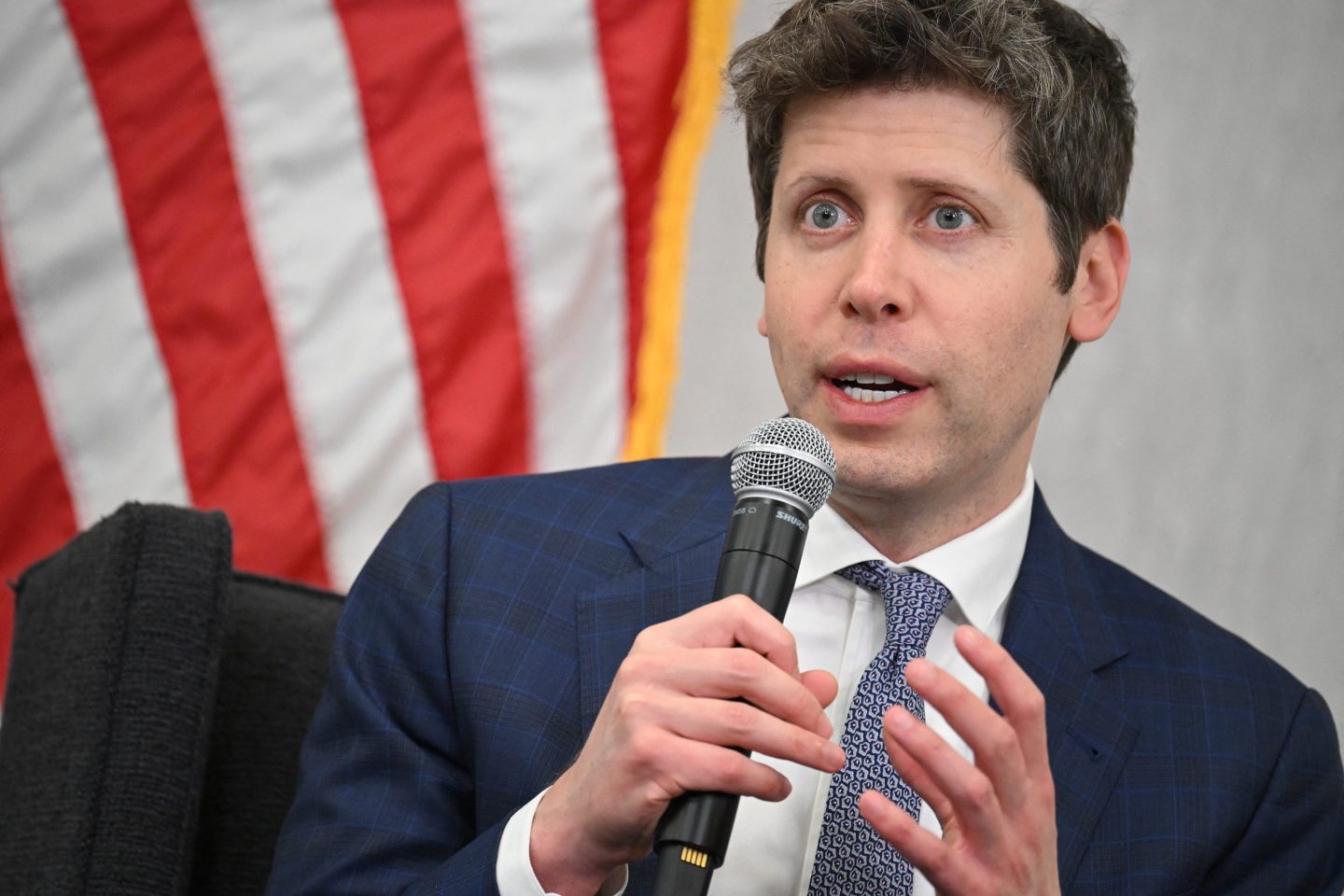
Sam Altman’s admission about feeling sad as he watched the incredible advancements of artificial intelligence tools including those of his own company has struck a nerve across the tech world. A new kind of workplace anxiety has crystallized: feeling obsolete not in spite of your skills, but because your tools have become too good. And as stories of panic attacks, disorientation, and quiet grief over disappearing skills pile up, it is increasingly clear Altman is far from alone.
In a recent post on X, OpenAI CEO Altman described building an app with Codex, the company’s new AI coding agent, as “very fun” at first. The mood shifted when he began asking the system for new feature ideas and realized “at least a couple of them were better than I was thinking of.”
“I felt a little useless, and it was sad,” he added, a moment of vulnerability that quickly ricocheted around the developer community.
Codex, released as a stand-alone Mac app aimed at “vibe coding,” lets developers offload everything from writing new features to fixing bugs and proposing pull requests to an AI agent tightly integrated with their codebase. For a founder whose identity is intertwined with building software and championing AI progress, the realization his own product could outperform his ideas landed with unusual force.
“I am sure we will figure out much better and more interesting ways to spend our time,” Altman added in a follow‑up, “but I am feeling nostalgic for the present.”
Backlash and reluctant empathy online
If Altman expected empathy, much of X offered something closer to rage. His confession became a lightning rod for frustrations from workers who say AI is already eroding their livelihoods. One user, an anonymous headhunter in the tech sector claiming over a decade of experience, asked him: “What do you think your average white-collar worker will feel when AI takes their job?”
Others accused him of shedding tears “into a giant pile of money” while they adjusted to careers reshaped around talking to chatbots instead of doing the work they trained for. A food writer described watching her career “disappear” as AI systems churn out “hollow copies” of her work, trained on data taken “without anyone’s consent.” The replies also became a staging ground for broader anger about OpenAI’s rapid product shifts, including the planned deprecation of older models like GPT‑4o, with users pleading for more stability and transparency.
At the same time, some peers recognized their own discomfort in Altman’s post. Aditya Agarwal, former CTO of Dropbox, wrote that a weekend spent coding with Anthropic’s Claude left him “filled with wonder and also a profound sadness.” He concluded that “we will never ever write code by hand again. It doesn’t make any sense to do so.”
Agarwal described coding as “something I was very good at,” but that it is now “free and abundant,” leaving him “happy, but disoriented … sad and confused.”
From panic attacks to ‘AI anxiety’
The emotions Altman and Agarwal describe echo a broader phenomenon of AI anxiety emerging as even Silicon Valley veterans see their hard‑won skills and identity being outpaced by software that arrived faster than anyone was prepared for.
The Conversation recounted the tale of Chris Brockett, a veteran Microsoft researcher who talked to Cade Metz for his 2022 book, Genius Makers: The Mavericks Who Brought AI to Google, Facebook, and the World. Brockett said he was rushed to the hospital after encountering an early AI system that could do much of what he had spent decades mastering. Believing he was having a heart attack, he said: “My 52-year-old body had one of those moments when I saw a future where I wasn’t involved.”
The same piece draws on MIT physicist Max Tegmark’s worry that AI might “eclipse those abilities that provide my current sense of self-worth and value on the job market,” and on reports from professionals who now see AI completing, “quickly—and relatively cheaply,” the tasks they once relied on for income and status.
A Silicon Valley product manager put it bluntly in an interview with Vanity Fair in 2023: “We’re seeing more AI-related products and advancements in a single day than we saw in a single year a decade ago.”
Designing a future where humans still matter
Despite the mounting unease, some economists argue AI’s trajectory is not destiny. Labor economist David Autor has suggested that, if used deliberately, AI could expand “decision‑making tasks currently arrogated to elite experts” to a broader swath of workers, improving job quality and moderating inequality. In his view, the future of work with AI is “a design problem,” not a prediction exercise: Societies can still choose how tools like Codex and Claude are deployed, and who benefits.
Wharton management professor Peter Cappelli, whom Fortune has interviewed for his somewhat contrarian, evidence-based research on the perils of remote work and the nuts and bolts of AI automation, said in January a great deal of work is still involved with implementing these tools across the enterprise. He specifically warned about listening too sincerely to statements like Altman’s or Agarwal’s, as they are not only claiming sadness at such great progress but hyping their products for the market.
“If you’re listening to the people who make the technology, they’re telling you what’s possible,” he said. “They’re not thinking about what is practical.”
Still, regardless of how easy these tools will be to adopt across the enterprise, Altman’s tweet captured a paradox now confronting many knowledge workers: The very tools that make them faster, more capable, and sometimes more creative can also puncture the belief that their unique expertise is indispensable. For now, at least, even the people building those tools are grappling with what it means to feel both impressed by their power—and a little useless in their shadow.
For this story, Fortune journalists used generative AI as a research tool. An editor verified the accuracy of the information before publishing.