• Home
  • Latest
  • Fortune 500
  • Finance
  • Tech
  • Leadership
  • Lifestyle
  • Rankings
  • Multimedia
CommentaryLeadership

The AI adoption story is haunted by fear as today’s efficiency programs look like tomorrow’s job cuts. Leaders need to win workers’ trust

By
Carolyn Dewar
Carolyn Dewar
Down Arrow Button Icon
By
Carolyn Dewar
Carolyn Dewar
Down Arrow Button Icon
February 1, 2026, 8:30 AM ET
dewar
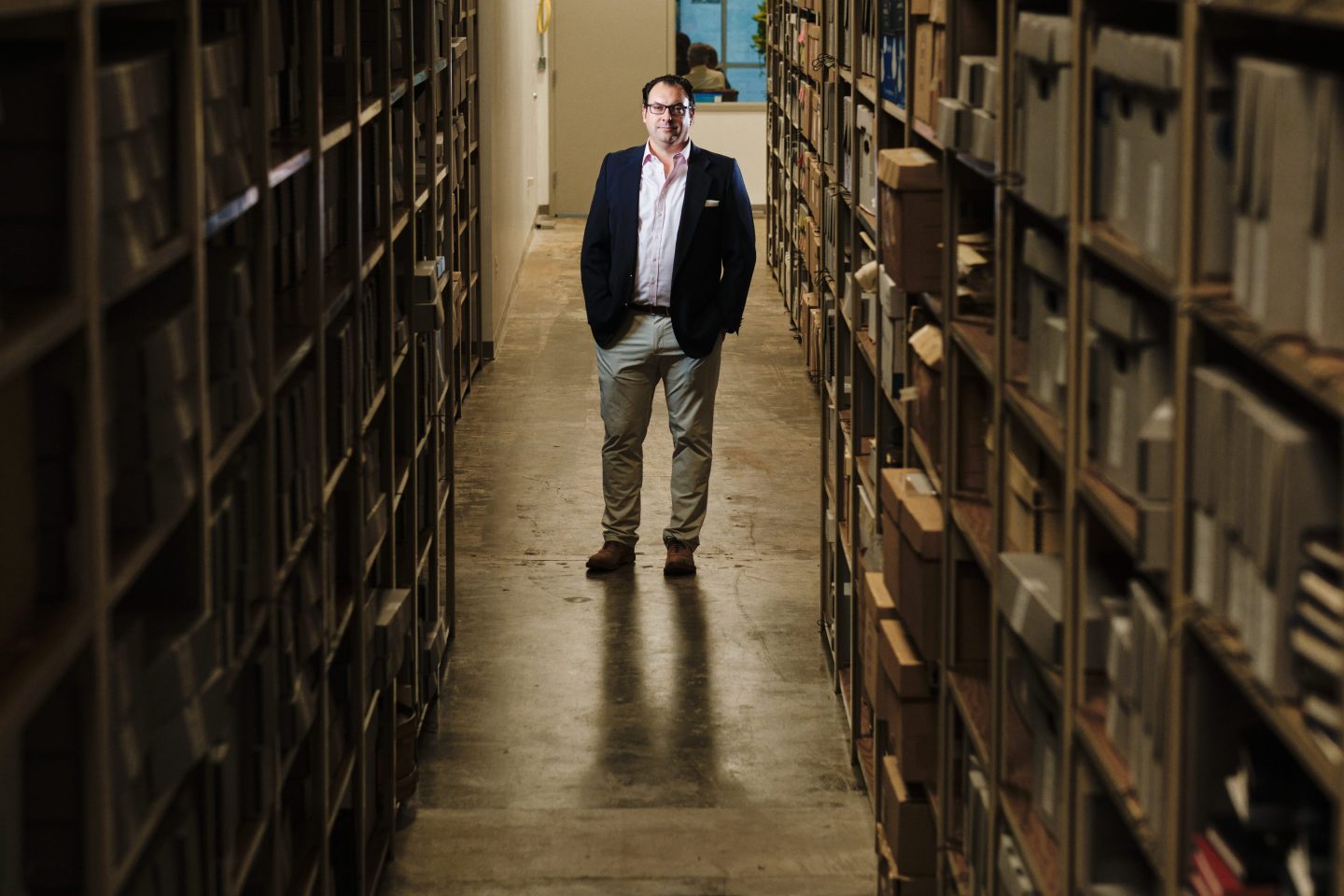
Carolyn Dewar is a senior partner in McKinsey & Company’s Bay Area office. She leads the global CEO Practice.courtesy of McKinsey

From board decks to earnings calls to leadership offsites and coffee-machine conversations, the topic of AI is ubiquitous. The opportunity is enormous: to reimagine work, unlock creativity, and expand what organizations and people can do. So is the pressure. 

Recommended Video

In response, many organizations are rolling out tools and launching pilots. Some of this activity is necessary. Much of it, however, misses the deeper point. Too many leaders are asking: how will AI change us? The better question is: what kind of leadership will we build to guide AI? 

That distinction matters because technology alone does not shape outcomes.  Leadership decisions do—meaning the systems, norms, and capabilities that organizations choose to build and apply to their work. 

Here are three ways to strengthen what people can bring to the table in the age of AI.

Don’t allow fear to shrink ambition

AI’s promise lies in bold experimentation. Even in the most sophisticated organizations, however, fear is quietly constraining it. So there is tension. Leaders ask their people to make intrepid experiments with AI, while launching efficiency programs that employees interpret as precursors to job cuts. When people feel exposed, they play small. Breakthrough ideas give way to micro use cases and firms refine today’s’ model instead of creating tomorrow’s.

What to do: Leaders can reduce fear by creating a protected space for AI experimentation, shielded from short-term efficiency pressure. Research has found that such psychological safety is critical to performance. Teams that feel secure identify problems earlier, challenge assumptions more freely, and learn faster. If leaders want bold thinking, they must lower the perceived cost of offering it. Otherwise, AI may improve efficiency while the reimagining moment slips by.

History proves the point. When Siemens and Toyota were reinventing their production systems, they explicitly protected jobs. What the companies gave up in short-term savings, they gained in long-term innovation. People were emboldened to take risks because they believed productivity benefits would be shared, not weaponized.

Creating opportunities for people to learn is another way to help to reduce fear and liberate people to think beyond the readily possible. That was the thinking behind CEO Satya Nadella’s effort to instill a “learn it all” mindset at Microsoft; this made it okay to not already know it all and contributed to breakthroughs in product and strategy. Another approach is to offer regular time for generative work, such as Google’s “20% time” practice, in which engineers were encouraged to explore personal projects that could help the company. AdSense and Google News, among other products, began this way. 

Use AI as an input, not a default

From the wheel to yesterday’s AI agent, every invention has either augmented or replaced human actions. The danger is when people rely on the tool so much that they stop thinking. 

As access to AI models and computational power spread, analytical advantages erode. That makes the distinctive human ability to interpret context, weigh trade-offs, understand stakeholder impacts, and question outputs even more valuable. Stanford’s Human-Centered Artificial Intelligence institute has found that teams combining AI recommendations with expert oversight consistently outperform fully automated systems. Or, as my son’s first-grade teacher put it: being smart is knowing a tomato is a fruit. Being wise is knowing not to put a tomato in a fruit salad. 

What to do: Design decision-making to ensure that AI informs judgment rather than replaces it.  For major decisions, leaders should require teams to document the human reasoning behind AI-informed decisions, making the logic explicit so that it can be tested. Over time, this builds discernment and institutional memory, and ensures that people take responsibility for their calls, rather than blaming the models. Teams can also foster structured dissent as a counterweight to AI-driven overconfidence by asking questions like, “What would have to be true for this to hold?”

Keep humans at the center of value judgments

Ethical leadership in the AI era is about deciding, explicitly and repeatedly, where optimization must stop and human responsibility must begin. Among the questions to be considered: What decisions should algorithms be allowed to make? Who is accountable when an AI-based decision causes harm? 

What to do: It’s important for leaders to articulate what lines will never be crossed. Embed governance into workflows, ensuring people make the most important decisions; train managers to weigh what is possible against what is responsible. 

Judgment, ethics and values cannot be outsourced to AI. These capabilities must be built, then tended, so that they become second nature—starting from the top but imbedded throughout the organization.  In business, trade-offs are inevitable; in the age of AI, they need to be intentional.

The leaders who get this moment right will not deploy AI tools just because they can; they will do so in a way that tap into psychological safety, human judgment, and ethical clarity.  Efficiency without empathy is not progress. Innovation without judgment is not leadership.

AI won’t decide the future. Leaders will—and history will be unforgiving about the difference.

The opinions expressed in Fortune.com commentary pieces are solely the views of their authors and do not necessarily reflect the opinions and beliefs of Fortune.

Join us at the Fortune Workplace Innovation Summit May 19–20, 2026, in Atlanta. The next era of workplace innovation is here—and the old playbook is being rewritten. At this exclusive, high-energy event, the world’s most innovative leaders will convene to explore how AI, humanity, and strategy converge to redefine, again, the future of work. Register now.
About the Author
By Carolyn Dewar
See full bioRight Arrow Button Icon

Latest in Commentary

Finance
Lorem ipsum dolor sit amet, consectetur adipiscing elit, sed do eiusmod tempor incididunt ut labore et dolore magna aliqua. Ut enim ad minim veniam
By Fortune Editors
October 20, 2025
Finance
Lorem ipsum dolor sit amet, consectetur adipiscing elit, sed do eiusmod tempor incididunt ut labore et dolore magna aliqua. Ut enim ad minim veniam
By Fortune Editors
October 20, 2025
Finance
Lorem ipsum dolor sit amet, consectetur adipiscing elit, sed do eiusmod tempor incididunt ut labore et dolore magna aliqua. Ut enim ad minim veniam
By Fortune Editors
October 20, 2025
Finance
Lorem ipsum dolor sit amet, consectetur adipiscing elit, sed do eiusmod tempor incididunt ut labore et dolore magna aliqua. Ut enim ad minim veniam
By Fortune Editors
October 20, 2025
Finance
Lorem ipsum dolor sit amet, consectetur adipiscing elit, sed do eiusmod tempor incididunt ut labore et dolore magna aliqua. Ut enim ad minim veniam
By Fortune Editors
October 20, 2025
Finance
Lorem ipsum dolor sit amet, consectetur adipiscing elit, sed do eiusmod tempor incididunt ut labore et dolore magna aliqua. Ut enim ad minim veniam
By Fortune Editors
October 20, 2025

Most Popular

Finance
Lorem ipsum dolor sit amet, consectetur adipiscing elit, sed do eiusmod tempor incididunt ut labore et dolore magna aliqua. Ut enim ad minim veniam
By Fortune Editors
October 20, 2025
Finance
Lorem ipsum dolor sit amet, consectetur adipiscing elit, sed do eiusmod tempor incididunt ut labore et dolore magna aliqua. Ut enim ad minim veniam
By Fortune Editors
October 20, 2025
Finance
Lorem ipsum dolor sit amet, consectetur adipiscing elit, sed do eiusmod tempor incididunt ut labore et dolore magna aliqua. Ut enim ad minim veniam
By Fortune Editors
October 20, 2025
Finance
Lorem ipsum dolor sit amet, consectetur adipiscing elit, sed do eiusmod tempor incididunt ut labore et dolore magna aliqua. Ut enim ad minim veniam
By Fortune Editors
October 20, 2025
Finance
Lorem ipsum dolor sit amet, consectetur adipiscing elit, sed do eiusmod tempor incididunt ut labore et dolore magna aliqua. Ut enim ad minim veniam
By Fortune Editors
October 20, 2025
Finance
Lorem ipsum dolor sit amet, consectetur adipiscing elit, sed do eiusmod tempor incididunt ut labore et dolore magna aliqua. Ut enim ad minim veniam
By Fortune Editors
October 20, 2025
Rankings
  • 100 Best Companies
  • Fortune 500
  • Global 500
  • Fortune 500 Europe
  • Most Powerful Women
  • Future 50
  • World’s Most Admired Companies
  • See All Rankings
Sections
  • Finance
  • Leadership
  • Success
  • Tech
  • Asia
  • Europe
  • Environment
  • Fortune Crypto
  • Health
  • Retail
  • Lifestyle
  • Politics
  • Newsletters
  • Magazine
  • Features
  • Commentary
  • Mpw
  • CEO Initiative
  • Conferences
  • Personal Finance
  • Education
Customer Support
  • Frequently Asked Questions
  • Customer Service Portal
  • Privacy Policy
  • Terms Of Use
  • Single Issues For Purchase
  • International Print
Commercial Services
  • Advertising
  • Fortune Brand Studio
  • Fortune Analytics
  • Fortune Conferences
  • Business Development
About Us
  • About Us
  • Editorial Calendar
  • Press Center
  • Work At Fortune
  • Diversity And Inclusion
  • Terms And Conditions
  • Site Map
  • Facebook icon
  • Twitter icon
  • LinkedIn icon
  • Instagram icon
  • Pinterest icon
Carolyn Dewar is a senior partner in McKinsey & Company’s Bay Area office. She leads the global CEO Practice and is the co-author of A CEO for All Seasons: Mastering the Cycles of Leadership (2025) and CEO Excellence: The Six Mindsets That Distinguish the Best Leaders from the Rest (2022).

Most Popular

placeholder alt text
Economy
'I just don't have a good feeling about this': Top economist Claudia Sahm says the economy quietly shifted and everyone's now looking at the wrong alarm
By Eleanor PringleJanuary 31, 2026
1 day ago
placeholder alt text
Future of Work
Ford CEO has 5,000 open mechanic jobs with up to 6-figure salaries from the shortage of manually skilled workers: 'We are in trouble in our country'
By Marco Quiroz-GutierrezJanuary 31, 2026
23 hours ago
placeholder alt text
Success
Ryan Serhant starts work at 4:30 a.m.—he says most people don’t achieve their dreams because ‘what they really want is just to be lazy’
By Preston ForeJanuary 31, 2026
1 day ago
placeholder alt text
Success
Alexis Ohanian walked out of the LSAT 20 minutes in, went to a Waffle House, and decided he was 'gonna invent a career.' He founded Reddit
By Preston ForeJanuary 31, 2026
23 hours ago
placeholder alt text
Economy
Meet the first CEO of the IRS: A Jamie Dimon protege facing a $5 trillion test this tax season
By Shawn TullyJanuary 31, 2026
1 day ago
placeholder alt text
Startups & Venture
Silicon Valley legend Kleiner Perkins was written off. Then an unlikely VC showed up
By Allie GarfinkleJanuary 31, 2026
19 hours ago

© 2026 Fortune Media IP Limited. All Rights Reserved. Use of this site constitutes acceptance of our Terms of Use and Privacy Policy | CA Notice at Collection and Privacy Notice | Do Not Sell/Share My Personal Information
FORTUNE is a trademark of Fortune Media IP Limited, registered in the U.S. and other countries. FORTUNE may receive compensation for some links to products and services on this website. Offers may be subject to change without notice.


Latest in Commentary

dewar
CommentaryLeadership
The AI adoption story is haunted by fear as today’s efficiency programs look like tomorrow’s job cuts. Leaders need to win workers’ trust
By Carolyn DewarFebruary 1, 2026
1 hour ago
CommentaryLeadership
How Trump helped Harvard: 5 ‘Crimson’ leadership lessons on standing up to bullies 
By Jeffrey Sonnenfeld, Steven Tian and Stephen HenriquesFebruary 1, 2026
4 hours ago
Economygeopolitics
BRICS could become a new pillar of global governance—if its rapid growth doesn’t erode its newfound clout
By Brian WongJanuary 31, 2026
16 hours ago
taxi
Commentaryregulation
America’s AI regulatory patchwork is crushing startups and helping China
By James Richardson and Eric TanenblattJanuary 30, 2026
2 days ago
EuropeLetter from London
Struggling to remain relevant during the AI watercooler chat? Talk about your latest ‘new collar’ hire
By Kamal AhmedJanuary 29, 2026
3 days ago
trump
Commentaryregulation
Trump is driving capital out of capitalism
By Andrew BeharJanuary 29, 2026
3 days ago