• Home
  • Latest
  • Fortune 500
  • Finance
  • Tech
  • Leadership
  • Lifestyle
  • Rankings
  • Multimedia
EconomyLabor

‘I just don’t have a good feeling about this’: Top economist Claudia Sahm says the economy quietly shifted and everyone’s now looking at the wrong alarm

Eleanor Pringle
By
Eleanor Pringle
Eleanor Pringle
Senior Reporter, Economics and Markets
Down Arrow Button Icon
Eleanor Pringle
By
Eleanor Pringle
Eleanor Pringle
Senior Reporter, Economics and Markets
Down Arrow Button Icon
January 31, 2026, 3:14 AM ET
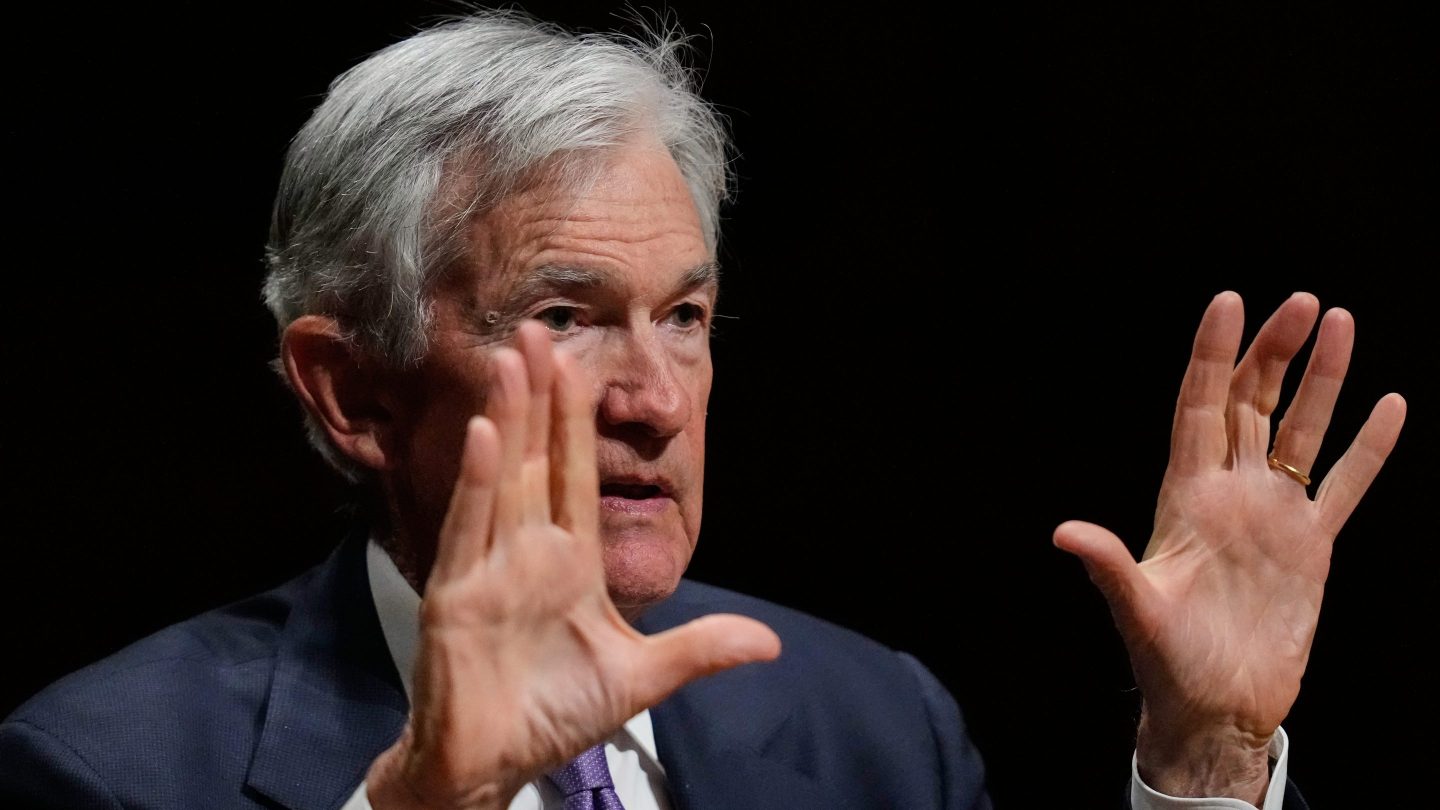
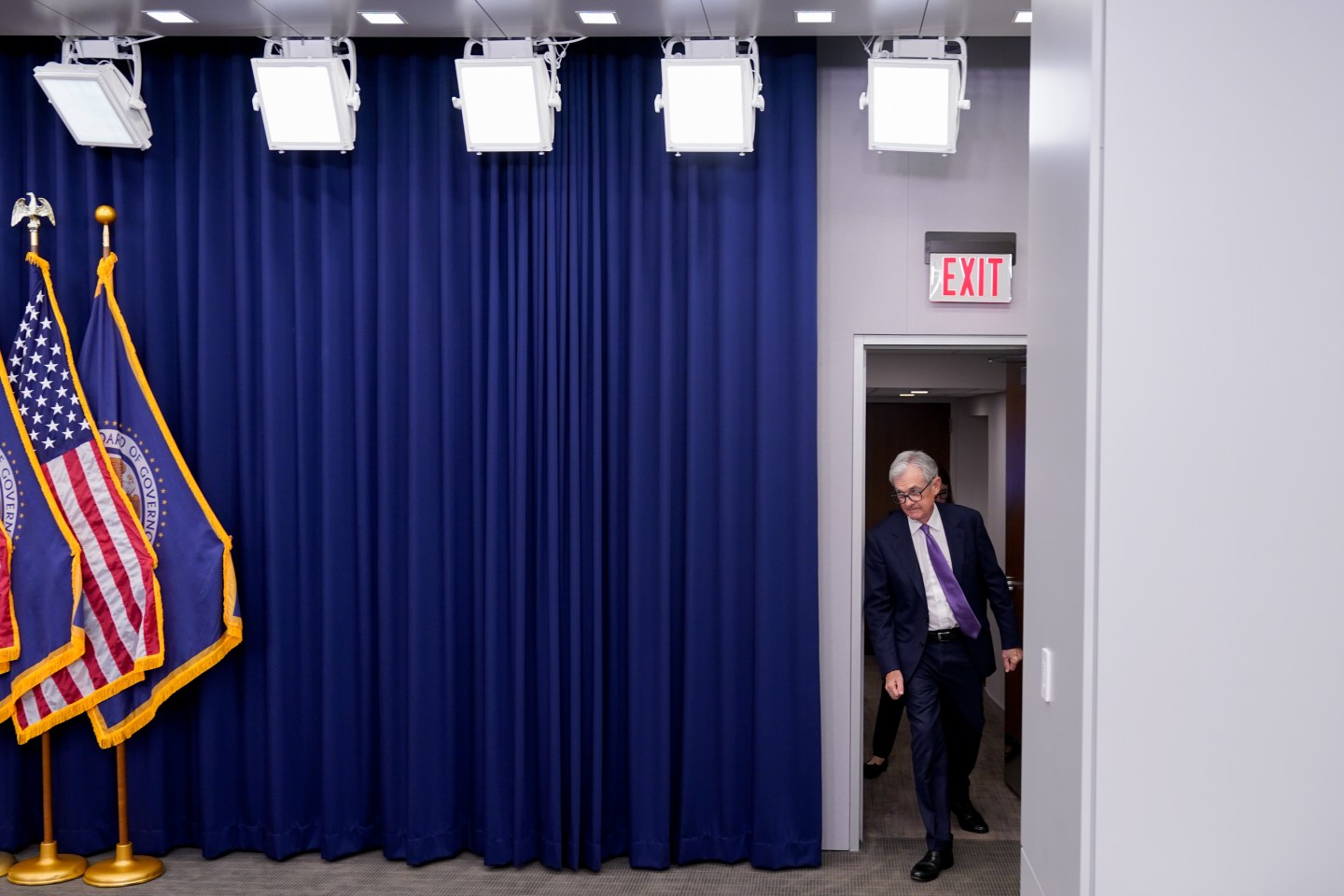
Photo of Jerome Powell
Jerome Powell (above) leaving the Fed is a key concern for Claudia Sahm.Al Drago/Bloomberg - Getty Images

Analysts’ favorite gauge of the U.S. economy’s health comes from data. And at the moment, the numbers look okay…ish. Hiring is down, but unemployment hasn’t spiked. Inflation isn’t ballooning (as feared) because of tariffs, and consumer spending is holding up remarkably well.

So why does reality feel so gloomy?

Economist Claudia Sahm is an expert (if not the expert) on the conditions that presage a recession and how policymakers should react as a result. She is the creator of “the Sahm Rule,” an employment indicator monitored by institutions ranging from central banks to global financial giants. The Sahm Rule says that a recession is likely when the three-month moving average of the national unemployment rate rises by 0.5 percentage points or more, relative to the minimum of the three-month averages from the previous year.

Sahm’s equation has proved invaluable. As J.P. Morgan observed, it “was 100% accurate prior to the pandemic, dating back to 1959.”

Therein lies the problem: During the pandemic, Sahm believes, the tectonic plates of the economy began shifting and haven’t settled since.

Recommended Video

The labor market has behaved strangely since the pandemic. President Trump’s anti-immigration drive has reduced the number of available workers. Employers have been reluctant to hire for new roles. Unemployment has ticked up but isn’t out of control by historical standards. Hiring remains tight, in a “low-hire, low-fire” environment.

Secondly, America’s institutions—the courts, the central bank, its federal agencies—have been politically swayed by the Trump administration. Economists are no longer sure they act independently to provide the checks and balances that historically made the U.S. economy a transparent, and therefore trustworthy, place to do business.

The former Fed section chief who once served as Obama’s senior economist doesn’t think a blowout event will crash the American economy. Rather, her fear is that aggregating events will reshape these two fundamental factors, and that the usual responses from policymakers are unlikely to be fit for purpose.

If a path can be charted, Sahm fears we’re moving the wrong way down it.

Tectonic plate one: labor

Many economists have been eyeing the “knife-edge” in the labor market. They are watching the “breakeven number” (the job creation figure needed to stop unemployment from climbing) grind lower and lower, offset by significant immigration, which has reduced labor supply.

Sahm isn’t so concerned by the month-to-month shifts. Businesses are finding a steadier footing amid tariffs, according to the Fed’s first Beige Book of the year, meaning employers’ low-fire, low-hire approach is no longer driven by fear. Sahm’s concern is longer term: What it means for people looking for work but who can’t find a job, and whether they’ll be ignored by policymakers who are only alert for the technical numbers that signal a downturn.

“I get concerned when I hear, ‘Well, we don’t have layoffs, so we don’t have a recession,’” Sahm told Fortune in an exclusive interview. “But you do have a very low hiring rate. It might not be an aggregate event; it might not be a broad-based contraction like we see in a recession. But it certainly has real implications for workers coming into the labor market.

“Something’s happening here,” Sahm adds. “It’s clearly bad for people looking for work, but we can’t just have this, ‘Oh, if we avoid a recession, all is good.’ It could be that we’re dealing with much more structural shifts, and those aren’t just hard to forecast, they’re hard to assess in the moment because those structural shifts can be very slow.”

AI replacing roles is, of course, a factor. Fed Chairman Jerome Powell is monitoring the situation “very carefully.” JPMorgan Chase’s CEO Jamie Dimon said LLM-driven layoffs could lead to civil unrest. Yet the hand-wringing over the impact of AI doesn’t explain the depressed hiring rates we’re seeing right now, Sahm said.

An optimist might suggest that a lower hiring rate is a shakeout from incredibly tight conditions during the pandemic. Between 2022 and early 2024, the Beveridge curve—usually a downward slope illustrating the relationship between job openings and the unemployment rate—was more of a straight line: In theory, for every job opening there was a person in need of a role. Fewer openings at the moment may merely show that employers have found the talent they need, and don’t want to add individuals who—in a tight market—can demand the pay and conditions they want, a phenomenon observed by ADP’s chief economist Nela Richardson, PhD.

The data also isn’t illustrating an economy in need of fiscal stimulus to generate activity—though that’s what it’s getting this year anyway in the form of the One Big Beautiful Bill Act. Analysts are also banking on interest rate cuts from a more dovish Fed chairman, but again Sahm feels this won’t kick-start sluggish hiring: Sahm described the behavior as how a government might “traditionally” stimulate a weakening economy, “kind of [a] front-end recession response.”

“But against the backdrop, as best we know from the data, business activity looks pretty okay, consumer activity looks okay. I’m concerned that stimulating more demand isn’t what’s holding back hiring—there’s something else.”

Sahm’s own creation isn’t demanding action: Currently, the recession indicator is sitting at a mild 0.35. She warned policymakers against relying too heavily on the tool in the current cycle, saying their attention should be focused—“maybe even more so”—on the labor market because “it doesn’t hold the typical pattern, which means our typical tools to fight [it] like a recession may not be the right ones.” 

Tectonic plate two: institutions

For all the ingenuity and commitment it took to build America into the globe’s preeminent economic force, the country would not retain the title if it weren’t for the strength of its institutions. President Trump witnessed the market blip when he threatened the independence of the Federal Reserve with remarks about firing Powell, and Wall Street has been reinforcing the importance of an autonomous central bank ever since.

But Trump hasn’t stopped pressuring the Fed, with Powell now being investigated by a grand jury over expensive renovations to central-bank buildings.

“I think we can look and say up to this point with pretty high confidence, that it’s been economics driving the interest rates,” Sahm said. “What I have a hard time with is [that] the escalation has continued, and the Fed itself is going to go through a transformation this year with a change in leadership. If Powell had two or three more years on his tenure as chair, I would feel more confident than I do with the fact that he has four months left.”

Like the labor market, Sahm’s concern is that institutions like the Fed—where she spent more than a decade of her career—will be allowed by policymakers to drift.

“We’re not on a good path, and while I applaud Jay Powell for standing up and having a statement and pushing back, over the long haul that’s not a sufficient check on pressure,” she added. “I don’t know where this goes, and [where] the economy may. We may see inflation come down more rapidly; we may end up in an environment where lowering interest rates makes sense and we diffuse the issues by that.

“But I just don’t have a good feeling about this.”

Join us at the Fortune Workplace Innovation Summit May 19–20, 2026, in Atlanta. The next era of workplace innovation is here—and the old playbook is being rewritten. At this exclusive, high-energy event, the world’s most innovative leaders will convene to explore how AI, humanity, and strategy converge to redefine, again, the future of work. Register now.
About the Author
Eleanor Pringle
By Eleanor PringleSenior Reporter, Economics and Markets
LinkedIn icon

Eleanor Pringle is an award-winning senior reporter at Fortune covering news, the economy, and personal finance. Eleanor previously worked as a business correspondent and news editor in regional news in the U.K. She completed her journalism training with the Press Association after earning a degree from the University of East Anglia.

See full bioRight Arrow Button Icon

Latest in Economy

Finance
Lorem ipsum dolor sit amet, consectetur adipiscing elit, sed do eiusmod tempor incididunt ut labore et dolore magna aliqua. Ut enim ad minim veniam
By Fortune Editors
October 20, 2025
Finance
Lorem ipsum dolor sit amet, consectetur adipiscing elit, sed do eiusmod tempor incididunt ut labore et dolore magna aliqua. Ut enim ad minim veniam
By Fortune Editors
October 20, 2025
Finance
Lorem ipsum dolor sit amet, consectetur adipiscing elit, sed do eiusmod tempor incididunt ut labore et dolore magna aliqua. Ut enim ad minim veniam
By Fortune Editors
October 20, 2025
Finance
Lorem ipsum dolor sit amet, consectetur adipiscing elit, sed do eiusmod tempor incididunt ut labore et dolore magna aliqua. Ut enim ad minim veniam
By Fortune Editors
October 20, 2025
Finance
Lorem ipsum dolor sit amet, consectetur adipiscing elit, sed do eiusmod tempor incididunt ut labore et dolore magna aliqua. Ut enim ad minim veniam
By Fortune Editors
October 20, 2025
Finance
Lorem ipsum dolor sit amet, consectetur adipiscing elit, sed do eiusmod tempor incididunt ut labore et dolore magna aliqua. Ut enim ad minim veniam
By Fortune Editors
October 20, 2025

Most Popular

Finance
Lorem ipsum dolor sit amet, consectetur adipiscing elit, sed do eiusmod tempor incididunt ut labore et dolore magna aliqua. Ut enim ad minim veniam
By Fortune Editors
October 20, 2025
Finance
Lorem ipsum dolor sit amet, consectetur adipiscing elit, sed do eiusmod tempor incididunt ut labore et dolore magna aliqua. Ut enim ad minim veniam
By Fortune Editors
October 20, 2025
Finance
Lorem ipsum dolor sit amet, consectetur adipiscing elit, sed do eiusmod tempor incididunt ut labore et dolore magna aliqua. Ut enim ad minim veniam
By Fortune Editors
October 20, 2025
Finance
Lorem ipsum dolor sit amet, consectetur adipiscing elit, sed do eiusmod tempor incididunt ut labore et dolore magna aliqua. Ut enim ad minim veniam
By Fortune Editors
October 20, 2025
Finance
Lorem ipsum dolor sit amet, consectetur adipiscing elit, sed do eiusmod tempor incididunt ut labore et dolore magna aliqua. Ut enim ad minim veniam
By Fortune Editors
October 20, 2025
Finance
Lorem ipsum dolor sit amet, consectetur adipiscing elit, sed do eiusmod tempor incididunt ut labore et dolore magna aliqua. Ut enim ad minim veniam
By Fortune Editors
October 20, 2025
Fortune Secondary Logo
Rankings
  • 100 Best Companies
  • Fortune 500
  • Global 500
  • Fortune 500 Europe
  • Most Powerful Women
  • Future 50
  • World’s Most Admired Companies
  • See All Rankings
Sections
  • Finance
  • Fortune Crypto
  • Features
  • Leadership
  • Health
  • Commentary
  • Success
  • Retail
  • Mpw
  • Tech
  • Lifestyle
  • CEO Initiative
  • Asia
  • Politics
  • Conferences
  • Europe
  • Newsletters
  • Personal Finance
  • Environment
  • Magazine
  • Education
Customer Support
  • Frequently Asked Questions
  • Customer Service Portal
  • Privacy Policy
  • Terms Of Use
  • Single Issues For Purchase
  • International Print
Commercial Services
  • Advertising
  • Fortune Brand Studio
  • Fortune Analytics
  • Fortune Conferences
  • Business Development
About Us
  • About Us
  • Editorial Calendar
  • Press Center
  • Work At Fortune
  • Diversity And Inclusion
  • Terms And Conditions
  • Site Map
Fortune Secondary Logo
  • About Us
  • Editorial Calendar
  • Press Center
  • Work At Fortune
  • Diversity And Inclusion
  • Terms And Conditions
  • Site Map
  • Facebook icon
  • Twitter icon
  • LinkedIn icon
  • Instagram icon
  • Pinterest icon

Latest in Economy

EconomyTariffs and trade
Detroit automakers ask White House to be spared from new tariffs
By Gabrielle Coppola and BloombergFebruary 20, 2026
2 hours ago
LawTariffs and trade
Trump imposes 10% global tariff in bid to salvage trade plans
By Courtney Subramanian, Kate Sullivan and BloombergFebruary 20, 2026
2 hours ago
Middle EastIran
Trump warns he’s considering limited strikes on Iran and says Tehran ‘better negotiate a fair deal’
By Farnoush Amiri, Seung Min Kim and The Associated PressFebruary 20, 2026
3 hours ago
ceos
CommentaryTariffs and trade
We heard CEOs rip into Trump’s tariffs behind the scenes and the Supreme Court just vindicated them
By Jeffrey Sonnenfeld, Steven Tian and Stephen HenriquesFebruary 20, 2026
4 hours ago
trump
LawTariffs and trade
Trump on ruling that he violated Constitution: Justices were ‘disloyal to our Constitution’
By Josh Boak, Steve Peoples and The Associated PressFebruary 20, 2026
7 hours ago
kavanaugh
LawTariffs and trade
Brett Kavanaugh warns of ‘mess’ to come whenever Trump returns billions of dollars in illegal tariff revenue
By Lindsay Whitehurst and The Associated PressFebruary 20, 2026
7 hours ago

Most Popular

placeholder alt text
Success
'I had to take 60 meetings': Jeff Bezos says 'the hardest thing I've ever done' was raising the first million dollars of seed capital for Amazon
By Dave Smith and Fortune EditorsFebruary 19, 2026
1 day ago
placeholder alt text
Economy
Fed confirms it obeyed U.S. Treasury request for an unusual ‘rate check,’ weakening the dollar against foreign currencies
By Jim EdwardsFebruary 19, 2026
2 days ago
placeholder alt text
AI
Deutsche Bank asked AI how it was planning to destroy jobs. And the robot answered
By Nick LichtenbergFebruary 18, 2026
2 days ago
placeholder alt text
AI
‘I’m deeply uncomfortable’: Anthropic CEO warns that a cadre of AI leaders, including himself, should not be in charge of the technology’s future
By Sasha RogelbergFebruary 19, 2026
1 day ago
placeholder alt text
AI
Sam Altman says the quiet part out loud, confirming some companies are ‘AI washing’ by blaming unrelated layoffs on the technology
By Sasha RogelbergFebruary 19, 2026
1 day ago
placeholder alt text
Asia
Bill Gates' foundation says sudden withdrawal was 'to ensure the focus remains on the AI Summit’s key priorities'
By The Associated PressFebruary 19, 2026
2 days ago

© 2026 Fortune Media IP Limited. All Rights Reserved. Use of this site constitutes acceptance of our Terms of Use and Privacy Policy | CA Notice at Collection and Privacy Notice | Do Not Sell/Share My Personal Information
FORTUNE is a trademark of Fortune Media IP Limited, registered in the U.S. and other countries. FORTUNE may receive compensation for some links to products and services on this website. Offers may be subject to change without notice.