

• Home
  • Latest
  • Fortune 500
  • Finance
  • Tech
  • Leadership
  • Lifestyle
  • Rankings
  • Multimedia
Economyeconomic inequality

Get used to the K-shaped economy. It’s likely here until 2035, thanks to AI’s outsize benefit for the wealthy

Eleanor Pringle
By
Eleanor Pringle
Eleanor Pringle
Senior Reporter, Economics and Markets
Down Arrow Button Icon
Eleanor Pringle
By
Eleanor Pringle
Eleanor Pringle
Senior Reporter, Economics and Markets
Down Arrow Button Icon
January 29, 2026, 6:49 AM ET
Innes McFee, CEO of Oxford Economics.
Innes McFee, CEO of Oxford EconomicsCourtesy of Oxford Economics

Good news! The massive investment into AI has made American households on average significantly wealthier, and will continue to do so for years (if not the next decade). Bad news? The gains will only reinforce the K-shaped economy in the medium term; any improvement in the fortunes of medium to low earners is some way off.

AI has delivered more than a 7% uplift in household wealth for U.S. consumers, Oxford Economics CEO Innes McFee told the company’s Global Economic Outlook conference in London this week. However, this “powerful boost” has mostly landed in the pockets of high-income Americans.

The “wealth effect” created by the blockbuster spending in AI (households feeling wealthier because the value of their assets is increasing, and thus increasing their spending) will reinforce the K-shaped economy, likely until 2035, McFee later told Fortune in an exclusive interview. The K-shaped economy is a phenomenon in which the fortunes of the wealthy track steadily higher, while those on the lower end of the income spectrum gradually sink.

Recommended Video

In 2025 the idea of this diverging economy was supported by research from the likes of Moody’s chief economist Mark Zandi, who observed that the economy is being almost exclusively driven by the sentiments of the “well-to-do.”

And while AI does have the potential to one day help close the inequality gap, living standards will continue to fork before then.

Asked if the AI boom will reinforce the K-shaped economy for decades to come, McFee answered: “Absolutely. Eventually, AI may well end up being a driving force to bring those two groups a bit closer together, but in order to see that, you need to see the productivity gains at a low level. The productivity gains at a low level, low-skilled jobs have to come through because that means … real wages increase, and that’s ultimately what drives living standards.”

He added that unification may not happen in the next five or even 10 years: “Eventually, it might bring things together, but in the meantime, through the wealth effect, through investment and all those sorts of things, it’s unlikely that AI helps at all with the K-shaped economy.”  

Echoes of the K-shaped economy can be traced back over decades: The Fed began monitoring the distribution of household wealth in Q3 2010, and reported that total wealth equaled $60.76 trillion. Of that, the top 0.1% owned $6.53 trillion, and the top 99% to 99.9% owned $10.75 trillion. By contrast, the bottom 50% shared only $330 billion.

Fast-forward to Q3 2025: The wealth of the bottom 50% has grown by 1,189% to $4.25 trillion—though still significantly behind the wealth held by the top 0.1% even some 15 years prior. The top 0.1% saw their wealth grow 281% to $24.89 trillion, nearly six times the wealth held by the bottom 50% combined.

‘Hollowing out’ the middle-skill jobs

Modeling suggests that AI adoption across businesses is likely to be something of an S-curve, beginning slowly and then rapidly increasing before gradually leveling off. Per Oxford Economics’ modeling, there will never be full integration of AI in businesses, as it can’t be used to replace physical trade jobs.

As a report from the Penn Wharton Budget Model observed last year, AI adoption will plateau in the early 2030s, the result of declining opportunities to employ additional AI tools productively.

The protection from AI for trade jobs (and indeed, the potential boon data centers represent for the likes of plumbers and electricians) does mean a “hollowing out” of certain roles will occur in the coming years, McFee said.

“We saw that a little bit after the financial crisis for different reasons,” McFee tells Fortune. “You’ll see lots of employment growth at the lower end of the distribution and right at the top, but in the middle, maybe even a contraction in job growth. That’s largely because those middle-skilled jobs are the ones where you can largely substitute tasks away with something like AI. You need critical analysis, you need the ability to question things—that tends to come at the top end of distribution. The middle tends to be filled with people who are just learning those skills.”

Join us at the Fortune Workplace Innovation Summit May 19–20, 2026, in Atlanta. The next era of workplace innovation is here—and the old playbook is being rewritten. At this exclusive, high-energy event, the world’s most innovative leaders will convene to explore how AI, humanity, and strategy converge to redefine, again, the future of work. Register now.
About the Author
Eleanor Pringle
By Eleanor PringleSenior Reporter, Economics and Markets
LinkedIn icon

Eleanor Pringle is an award-winning senior reporter at Fortune covering news, the economy, and personal finance. Eleanor previously worked as a business correspondent and news editor in regional news in the U.K. She completed her journalism training with the Press Association after earning a degree from the University of East Anglia.

See full bioRight Arrow Button Icon

Latest in Economy

Finance
Lorem ipsum dolor sit amet, consectetur adipiscing elit, sed do eiusmod tempor incididunt ut labore et dolore magna aliqua. Ut enim ad minim veniam
By Fortune Editors
October 20, 2025
Finance
Lorem ipsum dolor sit amet, consectetur adipiscing elit, sed do eiusmod tempor incididunt ut labore et dolore magna aliqua. Ut enim ad minim veniam
By Fortune Editors
October 20, 2025
Finance
Lorem ipsum dolor sit amet, consectetur adipiscing elit, sed do eiusmod tempor incididunt ut labore et dolore magna aliqua. Ut enim ad minim veniam
By Fortune Editors
October 20, 2025
Finance
Lorem ipsum dolor sit amet, consectetur adipiscing elit, sed do eiusmod tempor incididunt ut labore et dolore magna aliqua. Ut enim ad minim veniam
By Fortune Editors
October 20, 2025
Finance
Lorem ipsum dolor sit amet, consectetur adipiscing elit, sed do eiusmod tempor incididunt ut labore et dolore magna aliqua. Ut enim ad minim veniam
By Fortune Editors
October 20, 2025
Finance
Lorem ipsum dolor sit amet, consectetur adipiscing elit, sed do eiusmod tempor incididunt ut labore et dolore magna aliqua. Ut enim ad minim veniam
By Fortune Editors
October 20, 2025

Most Popular

Finance
Lorem ipsum dolor sit amet, consectetur adipiscing elit, sed do eiusmod tempor incididunt ut labore et dolore magna aliqua. Ut enim ad minim veniam
By Fortune Editors
October 20, 2025
Finance
Lorem ipsum dolor sit amet, consectetur adipiscing elit, sed do eiusmod tempor incididunt ut labore et dolore magna aliqua. Ut enim ad minim veniam
By Fortune Editors
October 20, 2025
Finance
Lorem ipsum dolor sit amet, consectetur adipiscing elit, sed do eiusmod tempor incididunt ut labore et dolore magna aliqua. Ut enim ad minim veniam
By Fortune Editors
October 20, 2025
Finance
Lorem ipsum dolor sit amet, consectetur adipiscing elit, sed do eiusmod tempor incididunt ut labore et dolore magna aliqua. Ut enim ad minim veniam
By Fortune Editors
October 20, 2025
Finance
Lorem ipsum dolor sit amet, consectetur adipiscing elit, sed do eiusmod tempor incididunt ut labore et dolore magna aliqua. Ut enim ad minim veniam
By Fortune Editors
October 20, 2025
Finance
Lorem ipsum dolor sit amet, consectetur adipiscing elit, sed do eiusmod tempor incididunt ut labore et dolore magna aliqua. Ut enim ad minim veniam
By Fortune Editors
October 20, 2025
Fortune Secondary Logo
Rankings
  • 100 Best Companies
  • Fortune 500
  • Global 500
  • Fortune 500 Europe
  • Most Powerful Women
  • Future 50
  • World’s Most Admired Companies
  • See All Rankings
Sections
  • Finance
  • Fortune Crypto
  • Features
  • Leadership
  • Health
  • Commentary
  • Success
  • Retail
  • Mpw
  • Tech
  • Lifestyle
  • CEO Initiative
  • Asia
  • Politics
  • Conferences
  • Europe
  • Newsletters
  • Personal Finance
  • Environment
  • Magazine
  • Education
Customer Support
  • Frequently Asked Questions
  • Customer Service Portal
  • Privacy Policy
  • Terms Of Use
  • Single Issues For Purchase
  • International Print
Commercial Services
  • Advertising
  • Fortune Brand Studio
  • Fortune Analytics
  • Fortune Conferences
  • Business Development
About Us
  • About Us
  • Editorial Calendar
  • Press Center
  • Work At Fortune
  • Diversity And Inclusion
  • Terms And Conditions
  • Site Map
Fortune Secondary Logo
  • About Us
  • Editorial Calendar
  • Press Center
  • Work At Fortune
  • Diversity And Inclusion
  • Terms And Conditions
  • Site Map
  • Facebook icon
  • Twitter icon
  • LinkedIn icon
  • Instagram icon
  • Pinterest icon

Latest in Economy

AIMarkets
The week the AI scare turned real and America realized maybe it isn’t ready for what’s coming
By Nick LichtenbergFebruary 28, 2026
34 minutes ago
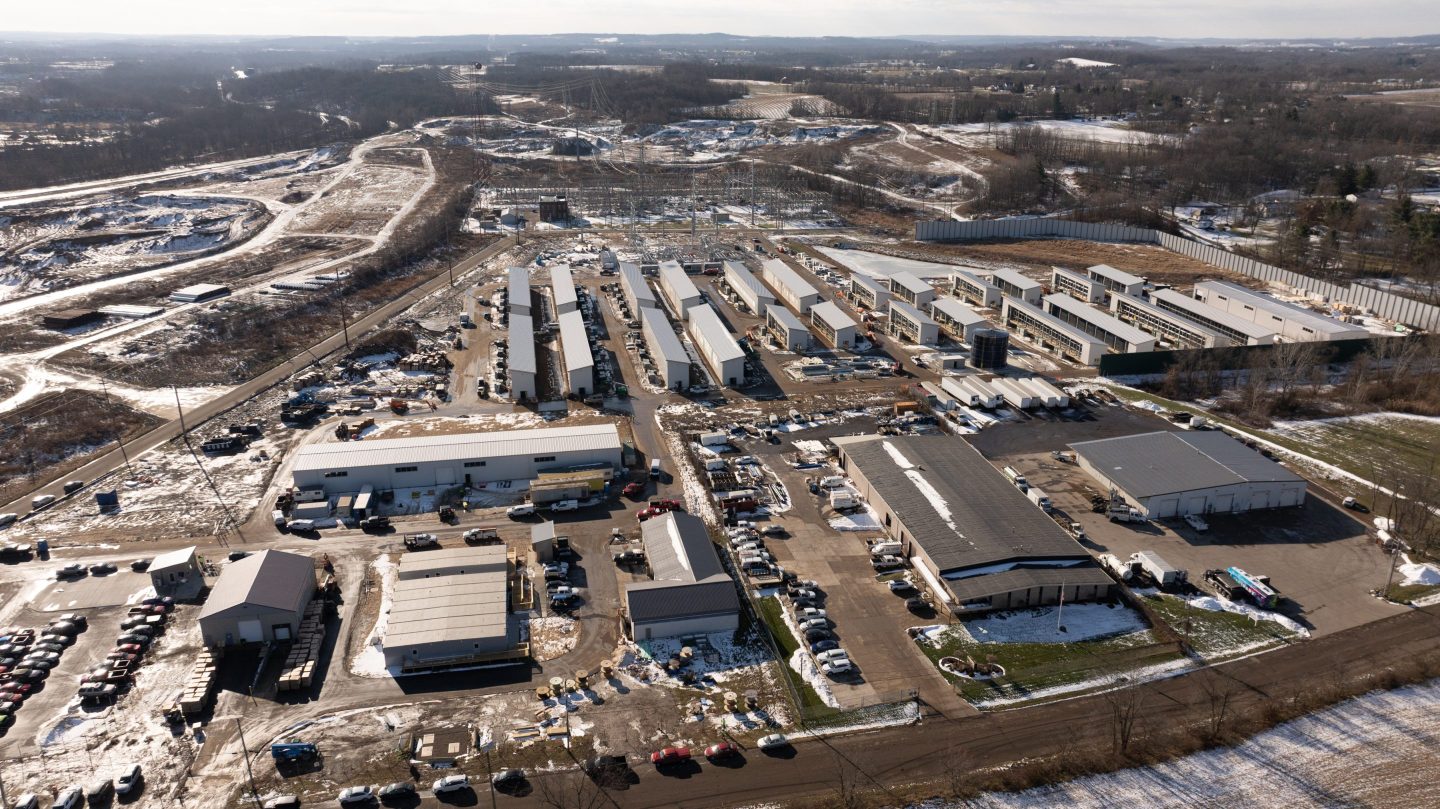
Aerial view of a data center under construction in Ohio.
EconomyEconomics
Before AI gains materialize, governments will have to deal with a ‘policy tradeoff,’ Moody’s says: How to handle the massive spending and debt risk
By Tristan BoveFebruary 27, 2026
15 hours ago
Low angle view of male carpenters working on rooftop of construction frame
EconomyU.S. economy
More people are moving out of the U.S. than moving in for the first time since the Great Depression—a bad omen for the $38.8 trillion national debt
By Tristan BoveFebruary 27, 2026
17 hours ago
LawTariffs
The Trump administration is looking for ways to keep revenue from tariffs that were ruled illegal, after telling courts that refunds would be easy
By Jason MaFebruary 27, 2026
18 hours ago
SuccessProductivity
Japanese companies are paying older workers to sit by a window and do nothing—while Western CEOs demand super-AI productivity just to keep your job
By Orianna Rosa RoyleFebruary 27, 2026
20 hours ago
putin
CommentaryRussia
Exclusive analysis: we looked at the 400 western firms still in Russia. Their paltry size strips Putin’s bluff bare naked
By Jeffrey Sonnenfeld, Stephen Henriques, Jake Waldinger and Giuseppe ScottoFebruary 27, 2026
21 hours ago

Most Popular

placeholder alt text
Innovation
An MIT roboticist who cofounded bankrupt robot vacuum maker iRobot says Elon Musk’s vision of humanoid robot assistants is ‘pure fantasy thinking’
By Marco Quiroz-GutierrezFebruary 25, 2026
3 days ago
placeholder alt text
Success
Japanese companies are paying older workers to sit by a window and do nothing—while Western CEOs demand super-AI productivity just to keep your job
By Orianna Rosa RoyleFebruary 27, 2026
20 hours ago
placeholder alt text
Commentary
'The Pitt': a masterclass display of DEI in action 
By Robert RabenFebruary 26, 2026
2 days ago
placeholder alt text
Economy
It’s more than George Clooney moving to France: America is becoming the ‘uncool’ country that people want to move away from
By Nick LichtenbergFebruary 27, 2026
1 day ago
placeholder alt text
Success
Walmart exec says U.S. workforces needs to take inspiration from China where ‘5 year-olds are learning DeepSeek’
By Preston ForeFebruary 27, 2026
1 day ago
placeholder alt text
Law
China's government intervenes to show Michigan scientists were carrying worms, not biological materials
By Ed White and The Associated PressFebruary 26, 2026
2 days ago

© 2026 Fortune Media IP Limited. All Rights Reserved. Use of this site constitutes acceptance of our Terms of Use and Privacy Policy | CA Notice at Collection and Privacy Notice | Do Not Sell/Share My Personal Information
FORTUNE is a trademark of Fortune Media IP Limited, registered in the U.S. and other countries. FORTUNE may receive compensation for some links to products and services on this website. Offers may be subject to change without notice.