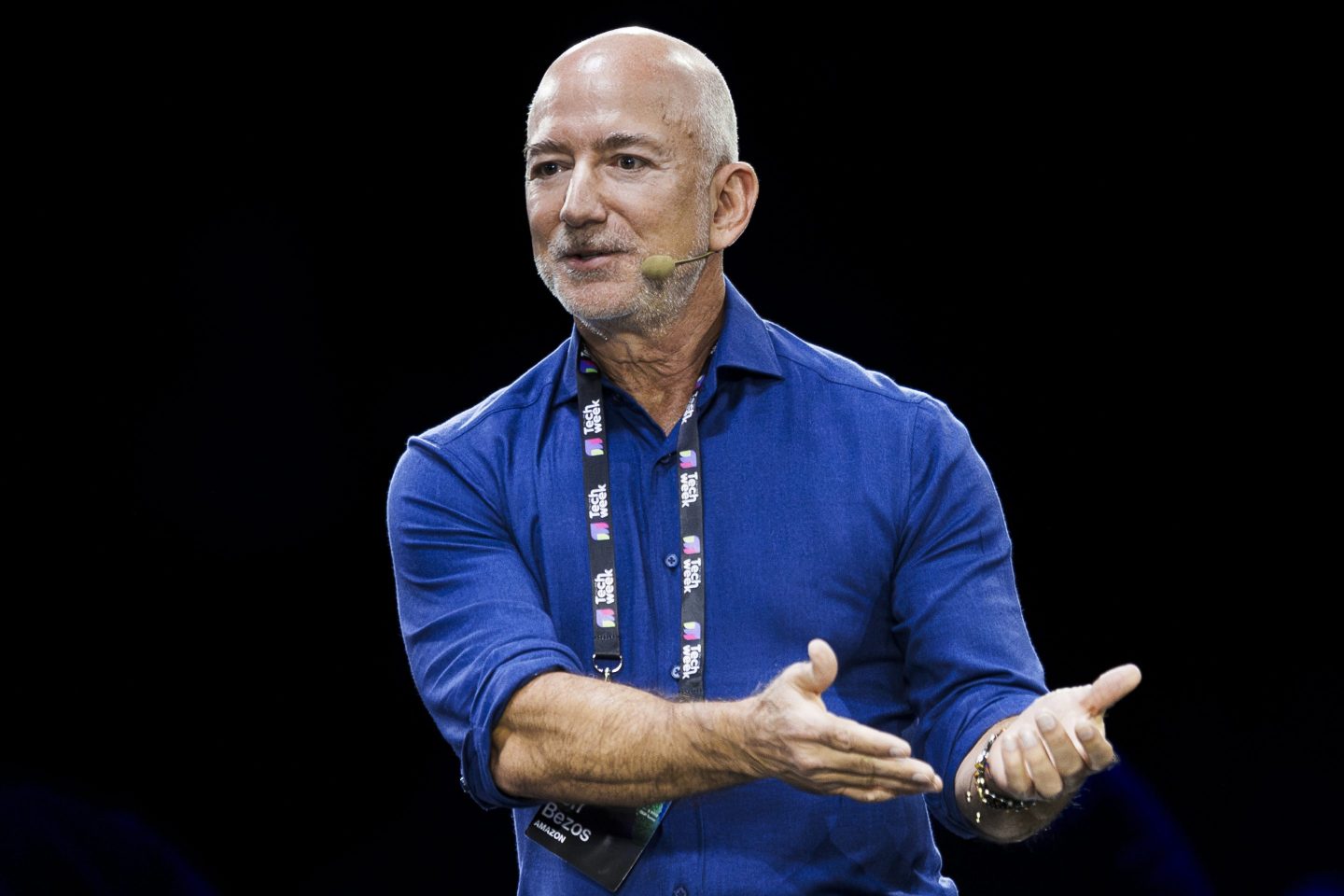
Jeff Bezos is the world’s third-richest man with a current net worth of $266 billion. But the Amazon founder said his actual salary was much lower than that.
During the early years of the now $2.61 trillion online retailer, Bezos said he asked the board “not to give me any comp,” beyond a modest base salary of just $80,000.
“I already owned a significant amount of the company, and I just didn’t feel good about taking more,” Bezos said during a 2024 interview at the New York Times DealBook Summit. “I just felt, ‘How could I possibly need more incentive?’ I just would have felt icky about it.”
That means (technically speaking) Bezos was making roughly the same salary as an average Amazon worker in the U.S., according to ZipRecruiter data. But Bezos, of course, is worth much more than Amazon warehouse workers and delivery drivers who earn just $20 to $22 per hour because of the arsenal of shares he still owns.
Despite a major share selloff ahead of his 2025 wedding to Lauren Sánchez Bezos, Jeff Bezos still holds about 900 million shares of Amazon, keeping his overall net worth well above $200 billion. Bezos also owns aerospace company Blue Origin and the Washington Post, and carries a portfolio of significant investments in companies like Uber, Airbnb, and Workday, which also inflate his net worth.
Bezos reigned as Amazon CEO until 2021, but still holds just less than 10% of the No. 2 Fortune 500 company. He maintained that $80,000 annually throughout his tenure, with no bonuses added.
“I’m actually very proud of that decision,” Bezos added. His decision is also a textbook example of the owner-operator model: A founder’s wealth comes from increasing the value of the equity they already hold, not squeezing more out of annual pay packages.
“Founders own big chunks of the company. They don’t really need—they’re more like owner-operators—the way they increase their wealth is not by getting comp,” Bezos explained. “They just want to make the equity.”
Keeping his salary low also had another benefit: saving on taxes. By keeping his wealth tied up mostly in unsold Amazon shares, he could keep his effective tax rate lower. Plus, he moved from Seattle to Miami, another way to save on income taxes.
Tech CEO salaries
Across Big Tech, CEO pay has ballooned into eight‑ and nine‑figure territory, making Bezos’s capped salary an exception—although Meta founder and CEO Mark Zuckerberg has for years taken a token $1 salary but remains the world’s fifth-richest person with a $238 billion net worth.
Take Microsoft CEO Satya Nadella as an example: His total compensation hit a record in 2025 at $96.5 million and earned a 22% pay raise to mirror the $3.6 trillion tech company’s skyrocketing shares. Alphabet CEO Sundar Pichai in 2023 made $226 million (more than 800 times the median total compensation of his employees), although that number dropped significantly to about $10 million in the following two years because of the way the company makes large stock awards. But the biggest earner of them all is Elon Musk, whose $1 trillion pay package was approved late last year.
For critics of outsize executive pay, the structure of Bezos’s compensation may offer only limited comfort: His net worth still towers over that of Amazon’s global workforce, and fluctuations in the company’s share price can add or erase billions from his net worth in a single trading day.
But as he tells it, keeping his salary low—and refusing additional incentives—was about aligning with a founder’s ethos and avoiding optics that, to him, would have felt out of step with the ownership stake that made him this rich in the first place.