
• Home
  • Latest
  • Fortune 500
  • Finance
  • Tech
  • Leadership
  • Lifestyle
  • Rankings
  • Multimedia
AIWorld Economic Forum

AI luminaries at Davos clash over how close human level intelligence really is

Jeremy Kahn
By
Jeremy Kahn
Jeremy Kahn
Editor, AI
Down Arrow Button Icon
Jeremy Kahn
By
Jeremy Kahn
Jeremy Kahn
Editor, AI
Down Arrow Button Icon
January 23, 2026, 5:09 AM ET
Google DeepMind CEO Demis Hassabis speaking at the World Economic Forum in Davos, Switzerland, in January 2026.
Demis Hassabis, the CEO of Google DeepMind, speaking at this year's World Economic Forum in Davos, Switzerland. Krisztian Bocsi—Bloomberg via Getty Images

Some of the world’s best-known names in artificial intelligence descended on the small ski resort town of Davos, Switzerland, this week for the World Economic Forum (WEF).

Recommended Video

AI dominated many of the discussions among corporations, government leaders, academics, and non-governmental groups. Yet a clear contrast emerged over how close current models are to replicating human intelligence and what the likely near-term economic impacts of the technology will be.

The large language models (LLMs) that have captivated the world are not a path to human-level intelligence, two AI experts asserted in separate remarks at Davos.

Demis Hassabis, the Nobel Prize-winning CEO of Google DeepMind, and the executive who leads the development of Google’s Gemini models, said today’s AI systems, as impressive as they are, are “nowhere near” human-level artificial general intelligence, or AGI.

Yann LeCun—an AI pioneer who won a Turing Award, computer science’s most prestigious prize, for his work on neural networks—went further, saying that the LLMs that underpin all of the leading AI models will never be able to achieve human-like intelligence and that a completely different approach is needed.

Their views differ starkly from the position asserted by top executives of Google’s leading AI rivals, OpenAI and Anthropic, who assert that their AI models are about to rival human intelligence.

Dario Amodei, the CEO of Anthropic, told an audience in Davos that AI models would replace the work of all software developers within a year and would reach “Nobel-level” scientific research in multiple fields within two years. He said 50% of white-collar jobs would disappear within five years.

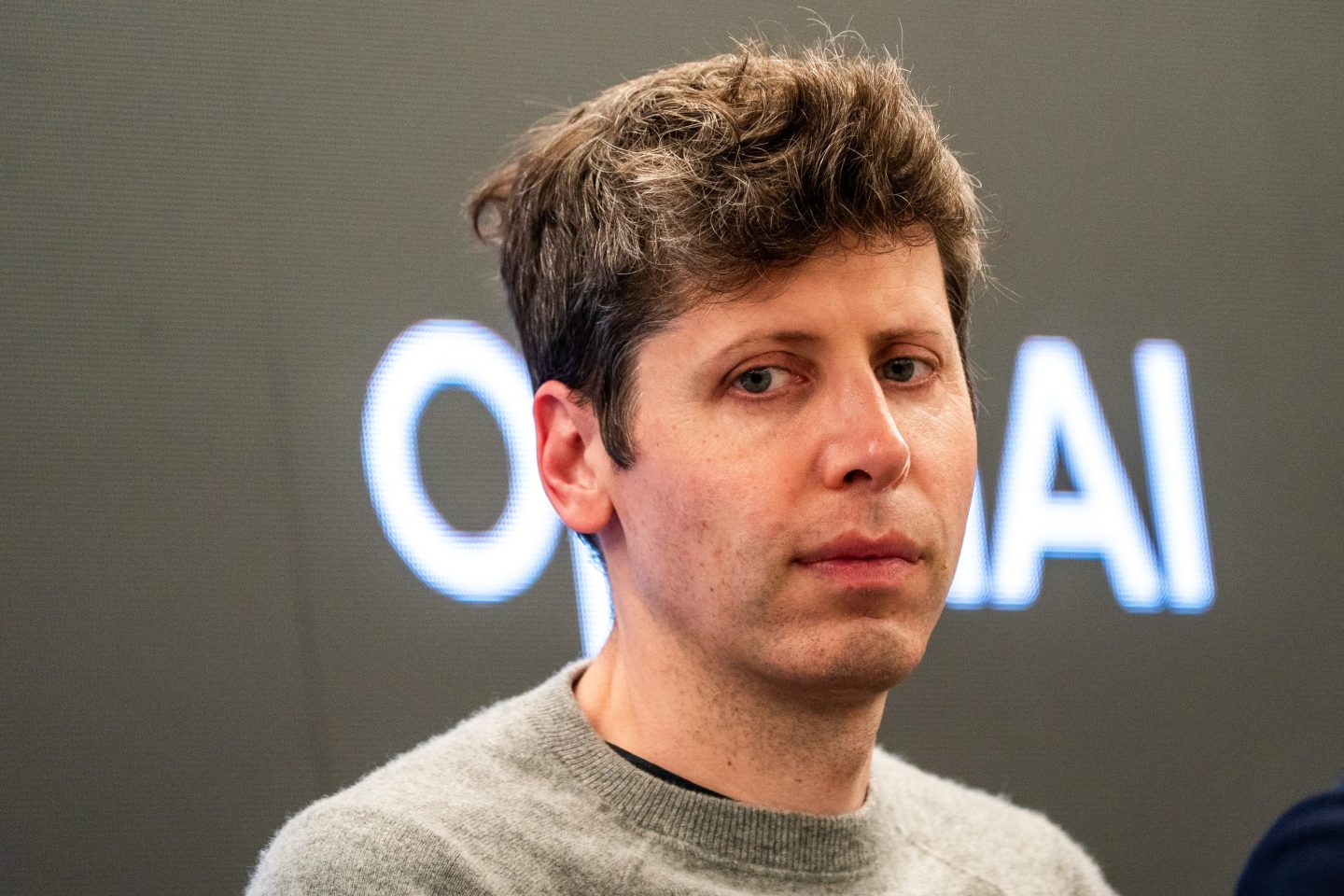
OpenAI CEO Sam Altman (who was not at Davos this year) has said we are already beginning to slip past human-level AGI toward “superintelligence”, or AI that would be smarter than all humans combined.

Can LLMs lead to general intelligence?

In a joint WEF appearance with Amodei, Hassabis said that there was a 50% chance AGI might be achieved within the decade, though not through models built exactly like today’s AI systems.

In a later, Google-sponsored talk, he elaborated that “maybe we need one or two more breakthroughs before we’ll get to AGI.” He identified several key gaps, including the ability to learn from just a few examples, the ability to learn continuously, better long-term memory, and improved reasoning and planning capabilities.

“My definition of [AGI] is a system that can exhibit all the cognitive capabilities humans can—and I mean all,” he said, including the “highest levels of human creativity that we always celebrate, the scientists and artists we admire.” While advanced AI systems have begun to solve difficult math equations and tackle previously unproved conjectures, AI will need to develop its own breakthrough conjectures—a “much harder” task—to be considered on par with human intelligence.

LeCun, speaking at the AI House in Davos, was even more pointed in his criticism of the industry’s singular focus on LLMs. “The reason…LLMs have been so successful is because language is easy,” he argued.

He contrasted this with the challenges posed by the physical world. “We have systems that can pass the bar exam, they can write code…but they don’t really deal with the real world. Which is the reason we don’t have domestic robots [and] we don’t have level five self-driving cars,” he said.

LeCun, who left Meta in November to found Advanced Machine Intelligence Labs (AMI), argued that the AI industry has become dangerously monolithic. “The AI industry is completely LLM-pilled,” he said.

He said that Meta’s decision to focus exclusively on LLMs and to invest tens of billions of dollars to build colossal data centers contributed to his decision to leave the tech giant. LeCun added that his view that LLMs and generative AI were not the path to human-level AI, let alone the “superintelligence” desired by CEO Mark Zuckerberg, made him unpopular at the company.

“In Silicon Valley, everybody is working on the same thing. They’re all digging the same trench,” he said.

The fundamental limitation, according to LeCun, is that current systems cannot build a “world model” that can predict what is most likely to happen next and connect cause and effect. “I cannot imagine that we can build agentic systems without those systems having an ability to predict in advance what the consequences of their actions are going to be,” he said. “The way we act in the world is that we know we can predict the consequences of our actions, and that’s what allows us to plan.”

LeCun’s new venture hopes to develop these world models through video data. But while some video AI models try to predict pixels frame-by-frame, LeCun’s work is designed to work at a higher level of abstraction to better corresponds to objects and concepts.

“This is going to be the next AI revolution,” he said. “We’re never going to get to human-level intelligence by training LLMs or by training on text only. We need the real world.”

What business thinks

Hassabis put the timeline for genuine human-level AGI at “five to 10 years.” Yet the trillions of dollars flowing into AI show the business world isn’t waiting to find out.

The debate over AGI may be somewhat academic for many business leaders. The more pressing question, says Cognizant CEO Ravi Kumar, is whether companies can capture the enormous value that AI already offers.

According to Cognizant research released ahead of Davos, current AI technology could unlock approximately $4.5 trillion in U.S. labor productivity—if businesses can implement it effectively.

But Kumar told Fortune that most businesses had not yet done the hard work of restructuring their businesses or reskilling their workforces to take advantage of AI’s potential.

“That $4.5 trillion will generate real value in enterprises if you start to think about reinvention [of existing businesses],” he said. He said it also required what he called “the integration” of human labor and digital labor conducted by AI.

“Skilling is no longer a side thing,” he argued. “It has to be a part of the infrastructure story for you to pivot people to the future, create higher wages and upward social mobility and make this an endeavor which creates shared prosperity.”

Join us at the Fortune Workplace Innovation Summit May 19–20, 2026, in Atlanta. The next era of workplace innovation is here—and the old playbook is being rewritten. At this exclusive, high-energy event, the world’s most innovative leaders will convene to explore how AI, humanity, and strategy converge to redefine, again, the future of work. Register now.
About the Author
Jeremy Kahn
By Jeremy KahnEditor, AI
LinkedIn iconTwitter icon

Jeremy Kahn is the AI editor at Fortune, spearheading the publication's coverage of artificial intelligence. He also co-authors Eye on AI, Fortune’s flagship AI newsletter.

See full bioRight Arrow Button Icon

Latest in AI

Finance
Lorem ipsum dolor sit amet, consectetur adipiscing elit, sed do eiusmod tempor incididunt ut labore et dolore magna aliqua. Ut enim ad minim veniam
By Fortune Editors
October 20, 2025
Finance
Lorem ipsum dolor sit amet, consectetur adipiscing elit, sed do eiusmod tempor incididunt ut labore et dolore magna aliqua. Ut enim ad minim veniam
By Fortune Editors
October 20, 2025
Finance
Lorem ipsum dolor sit amet, consectetur adipiscing elit, sed do eiusmod tempor incididunt ut labore et dolore magna aliqua. Ut enim ad minim veniam
By Fortune Editors
October 20, 2025
Finance
Lorem ipsum dolor sit amet, consectetur adipiscing elit, sed do eiusmod tempor incididunt ut labore et dolore magna aliqua. Ut enim ad minim veniam
By Fortune Editors
October 20, 2025
Finance
Lorem ipsum dolor sit amet, consectetur adipiscing elit, sed do eiusmod tempor incididunt ut labore et dolore magna aliqua. Ut enim ad minim veniam
By Fortune Editors
October 20, 2025
Finance
Lorem ipsum dolor sit amet, consectetur adipiscing elit, sed do eiusmod tempor incididunt ut labore et dolore magna aliqua. Ut enim ad minim veniam
By Fortune Editors
October 20, 2025

Most Popular

Finance
Lorem ipsum dolor sit amet, consectetur adipiscing elit, sed do eiusmod tempor incididunt ut labore et dolore magna aliqua. Ut enim ad minim veniam
By Fortune Editors
October 20, 2025
Finance
Lorem ipsum dolor sit amet, consectetur adipiscing elit, sed do eiusmod tempor incididunt ut labore et dolore magna aliqua. Ut enim ad minim veniam
By Fortune Editors
October 20, 2025
Finance
Lorem ipsum dolor sit amet, consectetur adipiscing elit, sed do eiusmod tempor incididunt ut labore et dolore magna aliqua. Ut enim ad minim veniam
By Fortune Editors
October 20, 2025
Finance
Lorem ipsum dolor sit amet, consectetur adipiscing elit, sed do eiusmod tempor incididunt ut labore et dolore magna aliqua. Ut enim ad minim veniam
By Fortune Editors
October 20, 2025
Finance
Lorem ipsum dolor sit amet, consectetur adipiscing elit, sed do eiusmod tempor incididunt ut labore et dolore magna aliqua. Ut enim ad minim veniam
By Fortune Editors
October 20, 2025
Finance
Lorem ipsum dolor sit amet, consectetur adipiscing elit, sed do eiusmod tempor incididunt ut labore et dolore magna aliqua. Ut enim ad minim veniam
By Fortune Editors
October 20, 2025
Rankings
  • 100 Best Companies
  • Fortune 500
  • Global 500
  • Fortune 500 Europe
  • Most Powerful Women
  • Future 50
  • World’s Most Admired Companies
  • See All Rankings
Sections
  • Finance
  • Leadership
  • Success
  • Tech
  • Asia
  • Europe
  • Environment
  • Fortune Crypto
  • Health
  • Retail
  • Lifestyle
  • Politics
  • Newsletters
  • Magazine
  • Features
  • Commentary
  • Mpw
  • CEO Initiative
  • Conferences
  • Personal Finance
  • Education
Customer Support
  • Frequently Asked Questions
  • Customer Service Portal
  • Privacy Policy
  • Terms Of Use
  • Single Issues For Purchase
  • International Print
Commercial Services
  • Advertising
  • Fortune Brand Studio
  • Fortune Analytics
  • Fortune Conferences
  • Business Development
About Us
  • About Us
  • Editorial Calendar
  • Press Center
  • Work At Fortune
  • Diversity And Inclusion
  • Terms And Conditions
  • Site Map
  • Facebook icon
  • Twitter icon
  • LinkedIn icon
  • Instagram icon
  • Pinterest icon

Latest in AI

sternfels
CommentaryConsulting
AI makes human intelligence more important, not less 
By Bob Sternfels and Lucy PerezJanuary 22, 2026
18 hours ago
Building with a Deloitte company sign
Future of WorkConsulting
Deloitte to scrap traditional job titles as AI ushers in a ‘modernization’ of the Big Four
By Jake AngeloJanuary 22, 2026
18 hours ago
NewslettersEye on AI
OpenAI’s former head of sales is entering VC. She still calls herself an ‘AGI sherpa’
By Sharon GoldmanJanuary 22, 2026
19 hours ago
David Sacks gestures during a speech outside the White House
AITech
America could ‘lose the AI race’ because of too much ‘pessimism,’ White House AI czar David Sacks says
By Tristan BoveJanuary 22, 2026
19 hours ago
Elon Musk, in front of a blue "World Economic Forum" background, puts his hand to his mouth.
EnergyDavos
Elon Musk warns the U.S. could soon be producing more chips than we can turn on. And China doesn’t have the same issue
By Sasha RogelbergJanuary 22, 2026
19 hours ago
Jamie Dimon
Successthe future of work
JPMorgan CEO Jamie Dimon says he welcomes government ban on mass-firing people for AI: ‘We’re going to cure a lot of cancers’
By Preston ForeJanuary 22, 2026
20 hours ago

Most Popular

placeholder alt text
Economy
'Some form of crisis is almost inevitable': The $38 trillion national debt will soon be growing faster than the U.S. economy itself, watchdog warns
By Nick LichtenbergJanuary 22, 2026
19 hours ago
placeholder alt text
Success
Nvidia CEO Jensen Huang says ‘a lot’ of six-figure jobs in plumbing and construction are about to be unlocked because someone needs to build all these new AI centers
By Preston ForeJanuary 21, 2026
2 days ago
placeholder alt text
Politics
Jamie Dimon tells Davos: ‘You didn’t do a particularly good job making the world a better place’
By Eleanor PringleJanuary 21, 2026
2 days ago
placeholder alt text
Energy
Elon Musk warns the U.S. could soon be producing more chips than we can turn on. And China doesn’t have the same issue
By Sasha RogelbergJanuary 22, 2026
19 hours ago
placeholder alt text
Economy
Jamie Dimon says he’d have no issue paying higher taxes if it actually went to people who need it. Right now it just goes to the Washington ‘swamp’
By Eleanor PringleJanuary 21, 2026
2 days ago
placeholder alt text
Success
McDonald’s CEO shares tough love career advice he’d give Gen Z and young millennial workers: ‘No one cares about your career’
By Orianna Rosa RoyleJanuary 22, 2026
21 hours ago

© 2026 Fortune Media IP Limited. All Rights Reserved. Use of this site constitutes acceptance of our Terms of Use and Privacy Policy | CA Notice at Collection and Privacy Notice | Do Not Sell/Share My Personal Information
FORTUNE is a trademark of Fortune Media IP Limited, registered in the U.S. and other countries. FORTUNE may receive compensation for some links to products and services on this website. Offers may be subject to change without notice.