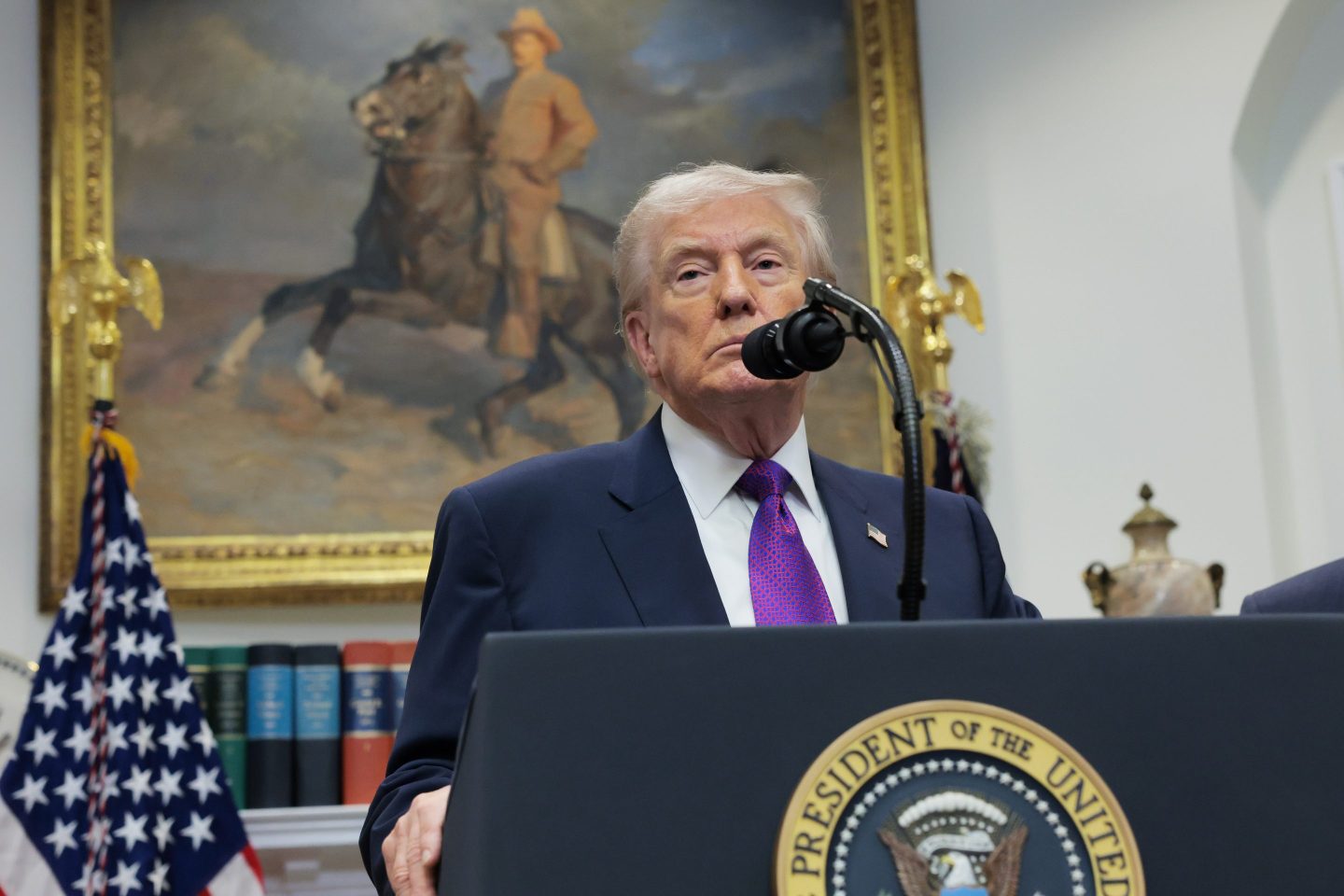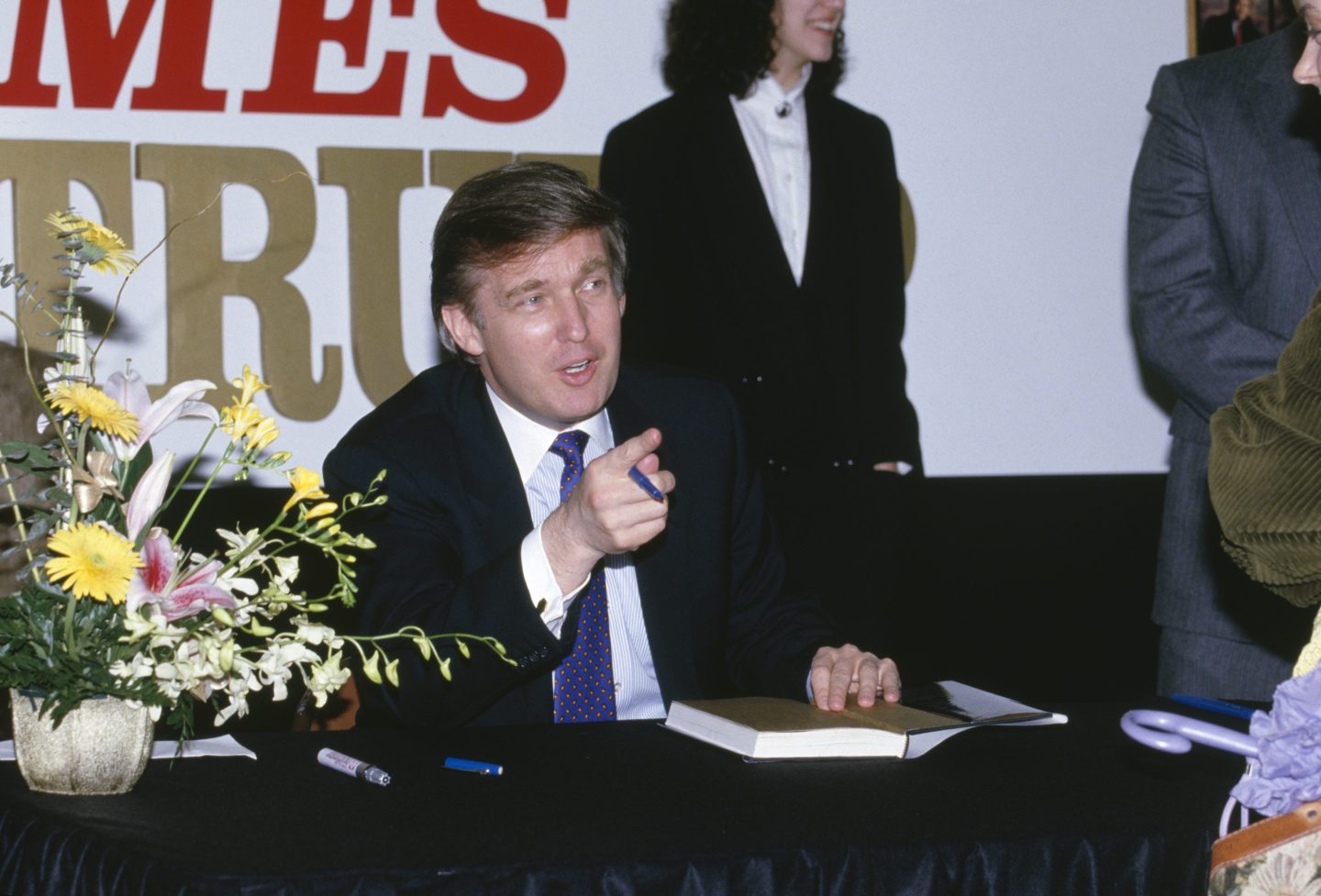
For critics baffled by President Donald Trump’s Greenland gambit, there is an overlooked advantage in covering this president. Unlike most political figures, Trump has already published a user’s manual for how he negotiates: the classic Art of the Deal, from 1987, cowritten by journalist Tony Schwartz (who, when Trump ran for office in 2016, called the book “the greatest regret of his life, no question”). The book details Trump’s experiences negotiating his way to the top of New York’s vicious real estate market, and the tactics he learned along the way. As president, particularly in his second term, Trump has clearly sought to imbue his approach to international relations with his dealmaking persona.
It took just one week for Trump to create—and then resolve—the Greenland crisis. Over the course of a week in January, he followed the strategy laid out in his book almost line by line.
Trump’s signature negotiation tactics can be distilled into 5 key rules. They are …
- Rule 1: Aim high
- Rule 2: The BATNA
- Rule 3: Use leverage
- Rule 4: Let others find the middle
- Rule 5: Play to fantasies
Rule 1: Aim high
He began by laying down the grounds of the threat. On Wednesday, Jan. 14, Trump wrote on Truth Social that “the United States needs Greenland for the purpose of National Security,” adding: “Anything less than that is unacceptable.”
“My style of dealmaking is quite simple and straightforward,” Trump writes in the book. “I aim very high, and then I just keep pushing and pushing and pushing to get what I’m after.”
Over the next few days, markets began to wobble as European nations sent troops to reinforce Greenland. On Saturday, after protesters across Europe chanted, “Hands off Greenland” in mass demonstrations, Trump put the pressure on high, announcing that eight NATO allies would face 10% tariffs next month, rising to 25% by June, until a “Deal is reached for the Complete and Total purchase of Greenland.” The timing mattered. With markets closed Monday for Martin Luther King Day, and Davos looming the following week, investors and governments alike had a long weekend to absorb the threat and begin panicking.
When markets reopened on Tuesday, they sold off sharply. Roughly $1.3 trillion in value was wiped out, with the Nasdaq falling 2.4%, its worst day in months, breaking equities’ resiliency that has hardened over months of geopolitical scares. This is typically the moment when analysts conclude that Trump, a businessman who hates seeing red on the screen, gets cold feet and “chickens out,” leading to the “TACO trade.”
But the crash itself may have been part of the strategy.
Rule 2: The BATNA
“Sometimes it pays to be a little wild,” Trump writes in The Art of the Deal, after recounting how he once threatened a scammy banker with a murder charge. After nearly a week in which analysts and policymakers, for the first time since NATO’s founding, were seriously weighing the possibility that the United States might destroy the alliance by aggressively pursuing Greenland, Trump had created leverage. Asked Tuesday how far he was willing to go, he remained coy, telling a reporter tersely: “You’ll find out.”
In business school, they call this manipulating the BATNA: the best alternative to a negotiated agreement. By making the alternative to a deal look costly and destabilizing, Trump artificially inflates the downside risk, positioning America—and himself—as the least bad option.
It is, by design, a browbeating strategy. French President Emmanuel Macron condemned Trump’s use of tariffs as “leverage against territorial sovereignty,” adding pointedly: “We prefer respect to bullies.”
Rule 3: Use leverage
The best way to deal, Trump wrote in his book, was to “deal from strength, and leverage is the biggest strength you can have.” Leverage, he said, “having something the other guy wants. Or better yet, needs. Or best of all, simply can’t do without.” No European nation can imagine living without the protections of NATO and the goodwill of the U.S.
Wednesday brought the reversal—for Trump and for markets. During a nicely timed speech at the World Economic Forum meeting, right before the opening bell, Trump went out of his way to make clear that he would not use force to acquire Greenland, hammering the message so that investors craning their necks and bracing for another volatile session could hear it.
“Now everyone’s saying, ‘Oh, good,’” Trump said. “That’s probably the biggest statement I made, because people thought I would use force. I don’t have to use force. I don’t want to use force. I won’t use force.”
Rule 4: Let others find the middle
Hours later, Trump met with NATO Secretary General Mark Rutte, often described by diplomats as the “Trump whisperer,” and announced a “framework of a future deal” on Arctic security. Markets surged, posting one of their best days in months.
This logic, of letting the other party do the work of finding the middle, is repeated across multiple chapters of the book. Trump creates fear of a worse outcome (hostile takeover), and the other side (usually stodgy hotel managers) proposes buybacks, joint ventures, special access, and the like. Trump accepts their proposal and then frames it as a total win. Trump told Maria Bartiromo on Fox Business that the U.S. will receive “total access” to Greenland with “no end.”
In reality, the deal might not be a big departure from the status quo. The U.S. already enjoys sweeping military privileges in Greenland under a little-remembered 1951 defense agreement with Denmark. That treaty allows the U.S. to operate bases, station troops, and build, at its own discretion, military facilities in Greenland, which have already been used to create early warning systems tied to NATO. (Because the shortest routes between Russia and North America run over the Arctic, Greenland’s location makes it a key position for early missile detection.)
Rule 5: ‘I play to people’s fantasies’
But the “final key” to Trump’s negotiation strategy, he writes, is bravado.
“I play to people’s fantasies,” he says.
It has long been a fantasy of the U.S. to dominate Greenland, particularly in the proxy competitions of a multipolar world, as melting Arctic ice opens new shipping routes and intensifies interest from both Russia and China. Last year, a Chinese container ship was the first to travel from the U.K. to China via the Arctic, making the journey in a record 20 days. Russia, meanwhile, maintains a network of military bases and Cold War–era equipment across the region.
With stakes that high, even if the substance of the deal barely shifts the underlying balance of power, Trump can still claim to have done something on Greenland.
“That’s why a little hyperbole never hurts,” he wrote. “People want to believe that something is the biggest, the greatest, and the most spectacular.”