The word “weird” didn’t always mean strange. In Old English, descended from a mix of Germanic and Norse concepts, it meant something closer to “destiny” or “becoming” or even “fate.” Once upon a time, human beings in that culture thought that the way someone’s life would turn out was unseverable from the fundamental weirdness of being alive.
William Shakespeare’s MacBeth is known for its three witches, who popularized the “double, double, toil and trouble” line, often misquoted from its appearance in a Disney cartoon as “bubble, bubble.” But what’s often forgotten is that Shakespeare named these characters the “Weird Sisters,” connecting them to another mythological group of three old crones: the Norns from Scandinavian mythology, who together weaved a web of destiny called (what else?) the “wyrd,” containing every human’s life story. (J.K. Rowling later named a popular band in her Harry Potter universe “The Weird Sisters,” but that was an all-male lineup.)
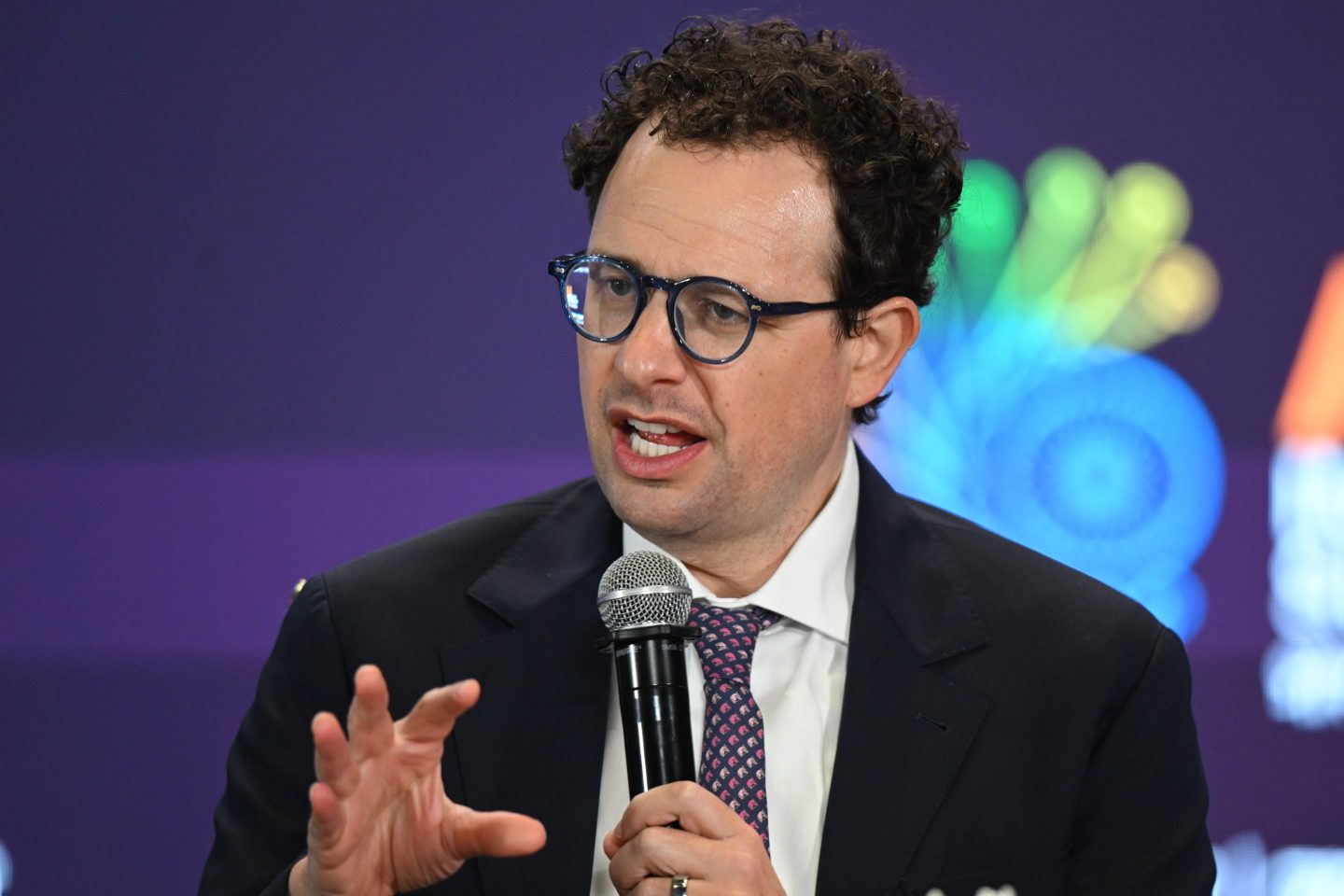
The weirdest thing of all in economics, says Brandeis University Economics Professor Benjamin Shiller, is that weirdness is closely tied to fate in the age of artificial intelligence (AI). The weirder you are, he tells Fortune, the better off you’ll be.
In his new book “AI Economics: How Technology Transforms Jobs, Markets, Life, and Our Future,” Shiller, argues that the more bizarre your job, the less likely that AI will take it. A specialist in the economics of technological change—and the son of a famous economist in his own right, Yale’s Robert Shiller, the co-creator of a national home price index still in use today, Shiller tells Fortune that the future of employment is weird.
“AI models can learn stuff really well but only with a massive amount of training data as humans are much more efficient learners,” Shiller says. “If you have a niche field where there’s not a lot of data out there to train an AI model, then AI probably won’t displace your job.”
Goldman Sachs predicts that 300 million jobs in the U.S. and Europe could be susceptible to some level of change because of AI, predicting that humans could go the way of the workhorse in the modern economy. However, Shiller’s “weirdness premium” suggests a cheat code to gaming AI’s takeover: find a job that’s so complex, not even trillions of tokens of data can replace it.
AI doesn’t learn as efficiently as humans … yet
Shiller describes what Tesla CEO Elon Musk recently suggested regarding the sheer volume of information required to replace a human skill. The businessman posted in a reply on X (formerly Twitter) “Roughly 10 billion miles of training data is needed to achieve safe unsupervised self-driving.”
“If a typical American drives about 13,500 miles per year, that’s about 750,000 years of a person driving that they need for training data,” Shiller said. In contrast, it takes the average human just a few hundred driving miles and six months of practice to secure their driver’s license.
Of course, self-driving cars already exist, and can easily get people from point A to point B free of harm. Yet if it takes that much data for an AI to learn a task as simple as driving, then it could take a massive amount of data to automate niche professions, such as that of an aviation accident analyst or an industrial ride engineer. In other words, in fields where data is scarce, humans retain a comparative advantage.
Humans are better equipped at handling kangaroos
Shiller illustrates AI’s limitations with “the kangaroo example,” a cautionary tale of when Waymo tested its self-driving cars in Australia. The vehicles failed to navigate a bizarre and foreign obstacle: jumping marsupials. “They just basically kept on crashing into kangaroos because kangaroos weren’t in their training data and their movements were different [from] other animals’ movements.”
AI fails to predict the unknown, and that failure is what differentiates humans from even the most advanced machines. “For a human, we’re able to adapt and deal with these edge cases without being specifically trained to handle them,” Shiller said. We’re naturally apt at handling niche scenarios, from the unpredictability of the road to the chaos of a hospital or an investment bank.
Shiller says that modern workers—and young people contemplating a degree—should avoid being caught in a profession that everyone else is doing. “Just taking the standard classes and becoming well-versed in what you’re directly taught in these large majors is a risky strategy,” Shiller said.
In other words, your fate is certain to be weird.