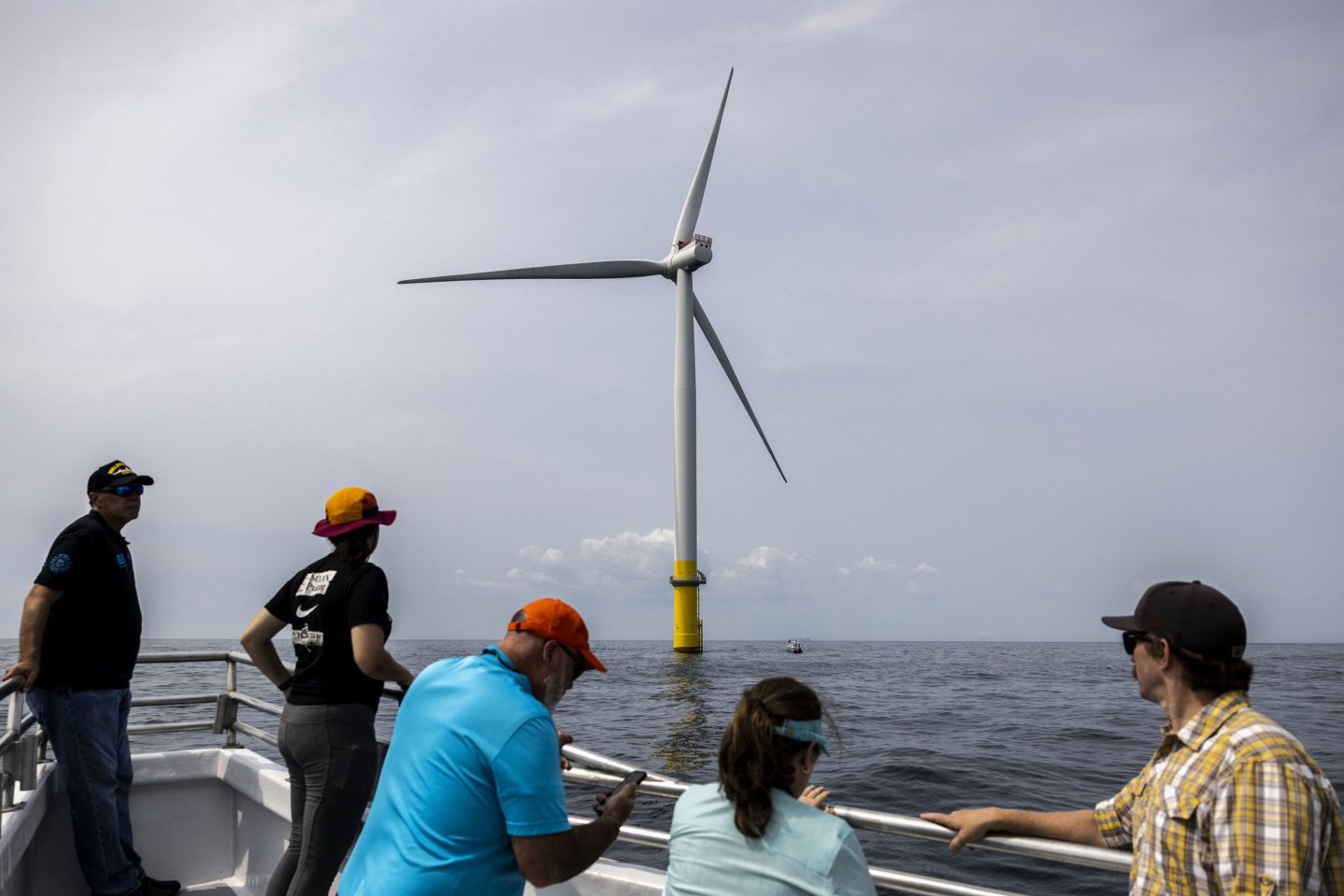
A federal judge said Dominion Energy Inc. can restart construction of a wind project off the coast of Virginia while it continues a legal fight over the Trump administration’s order to stop the $11 billion development.
The ruling marks the third time this week that an offshore wind project was allowed to resume despite a government stop-work order. US District Judge Jamar Walker in Norfolk, Virginia, issued a preliminary injunction Friday blocking the Interior Department from enforcing its order after Dominion claimed it was losing millions of dollars every day the project sits idle.
The Virginia unit of Dominion Energy is among several companies suing the government over a Dec. 22 order suspending five East Coast wind projects for 90 days over unspecified national security concerns. Earlier this week, a federal judge ruled Norway’s Orsted A/S can resume development of its project off Rhode Island and a different judge issued a similar ruling for Equinor ASA’s Empire Wind project near New York.
On Friday, the judge in Virginia echoed concerns expressed by other courts. Walker said the government had failed to demonstrate that the “national security risk is so imminent” that the Dominion project should be halted. He added that department’s order was likely arbitrary and capricious and that further delays would cause irreparable harm to the company.
Dominion shares rose 0.6% after the ruling to touch an intraday high of $61.50.
Read More: Can Trump Foil the US Wind Industry He Loathes?: QuickTake
The White House echoed its response to earlier court losses by pledging to keep fighting against offshore wind. “The Trump administration has paused the construction of all large-scale offshore wind projects because our number one priority is to put America First and protect the national security of the American people,” said Taylor Rogers, a spokeswoman for the White House. “The administration looks forward to ultimate victory on the issue.”
Dominion said it will “now focus on safely restarting work” on the project’s 176 wind turbines, some of which will start delivering electricity in a matter of weeks. “While our legal challenge proceeds, we will continue seeking a durable resolution of this matter through cooperation with the federal government,” the company said in an emailed statement.
President Donald Trump has sought to thwart the growth of the industry as he rolls back Biden-era climate policies and champions fossil fuels. The stop-work order also comes after Trump froze permitting for all wind projects on federal land and oceans on his first day back in office, though a federal judge ruled that his decree was illegal.
The US offshore wind industry has faced other difficulties, including soaring inflation and supply chain snarls, in recent years. And even after some of those problems subsided, developers have since been hit by rising costs from Trump’s tariffs. All told, that’s led to project cancelations, delays and writedowns.
Mounting Losses
Dominion said in court papers that it has been losing about $5 million a day on vessel contracts alone because of the construction halt, with more costs from idled workers and contractual penalties. The company says more than two-thirds of the expected $11.2 billion total cost has already been spent on the Virginia project, which was expected to be completed this year and provide power for 660,000 homes.
Alternative investment firm Stonepeak Partners acquired a 50% stake in the wind project in 2024 and has agreed to fund 50% of project expenses up to $11.3 billion, with additional sharing of costs in excess of that amount. According to analysts at Jefferies Financial Group Inc., Dominion and Stonepeak are sharing about $225 million in monthly costs associated with the stop-work order.
Dominion said in a statement last month that the project is “essential for American national security and meeting Virginia’s dramatically growing energy needs.” That includes electricity for the “world’s largest concentration of data centers” and many federal government and military facilities, including the Pentagon, attorneys for the company wrote in court records.
The US government has argued the move to pause construction was valid because it was done for national security reasons. The stop-work order adequately explained that the Department of Defense provided new classified information about advances in “adversary technologies” that “could raise national security issues with offshore wind projects,” government lawyers said in a December court filing.
However, those arguments were rejected by three different judges, all of whom were able to review specific details of the national security claims that weren’t disclosed publicly. They included one judge appointed by Trump and another by former President Ronald Reagan. Walker was appointed by Joe Biden.
Attorneys for Dominion contend in court papers the agency’s reasons for the pause weren’t “plausible” because national security considerations were already addressed during the permitting process. They also claimed the government infringed on Dominion’s constitutional due process rights by failing to give notice and an opportunity for a hearing before issuing the order.
The case is Virginia Electric and Power Company v. United States Department of the Interior, 2:25-cv-00830, US District Court, Eastern District of Virginia (Norfolk).