Hybrid work has emerged as the preferred mode of work among the majority of Americans. That trend has sent a ripple effect across the commercial real estate industry.
With 52% of U.S. workers now saying they are hybrid workers, according to a recent Gallup poll and real- estate dealmaking having slowed, experts say that the industry is facing a demand shift that landlords can’t afford to ignore. Chase Garbarino is CEO of HqO, a software company that works across more than one billion square feet of office space globally and tracks the effectiveness of office amenities. He told Fortune that the number one rule of real estate remains location, location, location, but there are new rules for offices.
“The fact that the genie is out of the bottle on hybrid means there’s going to be a lot of structural changes in how landlords need to operate their business models,” Garbarino told Fortune. “The whole industry is kind of predicated upon the 10-year-plus lease as the one product skew that they want. They’re going to have to think and act a lot more like hotels.”
The 10-year lease provides guaranteed long-term financial stability for landlords, handing them a predictable cash flow and minimized turnover costs. Yet that model, Garbarino says, has been upended by the rise of hybrid work because employers aren’t committing to 10-year leases as much as they used to. He says landlords must win tenants back, guaranteeing luxuries and services that can keep them long-term.
A K-Shaped Office Economy
A 2025 analysis by brokerage JLL and Commercial Observer found that lease length has diverged among sectors. The average lease term among financial services companies was 7.6 years, shrinking to 5.3 years for tech firms, and to just 3.5 years for AI startups. Even for Class A space, or the most prestigious real estate, leases were growing shorter.
“They have to earn the people back time and time again,” Garbarino said.
Amid return to work mandates, Manhattan’s luxury real estate market is on the rise among financial services, legal, and technology companies. The number of leases signed for Manhattan office space worth $100 per square foot reached an all-time high in 2025, according to reporting from the Financial Times. There were 313 leases signed at a price of at least $100 per square foot last year, up from 212 in 2024, nearly a 50% increase year over year, according to data from brokerages JLL and CBRE.
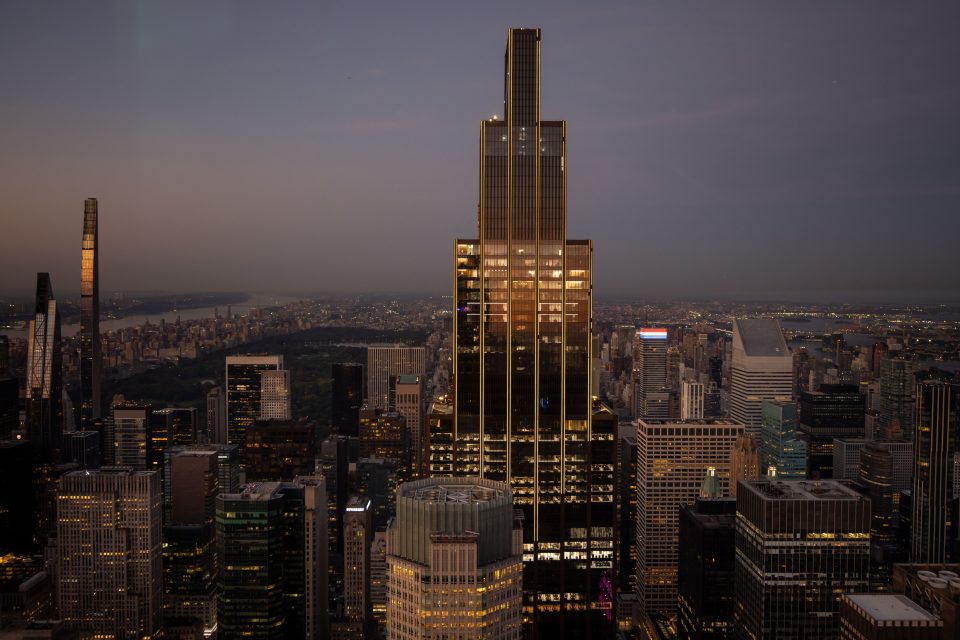
Companies like JPMorgan Chase have cashed in on luxury. In October, JPMorgan announced a move to 270 Park Ave. a $3 billion, 60-story office space—of which the company owns—equipped with all the furnishings of a luxury resort spa, from hot and cold plunges and meditation rooms, to 19 restaurants and an assortment of coffee shops.
But that transformation is not limited to New York. Companies across the U.S. are going all in on luxurious amenities for its employees. Larry Ellison’s Oracle—which is slated to take over U.S. operations of TikTok—is constructing a 70-acre tech campus in Nashville that will function as a town of its own, and will include a high-end Nobu restaurant and a hotel.
While Garbarino notes that nap pods are currently the most booked amenity at a building adjacent to JPMorgan’s headquarters, he maintains that amenities alone aren’t enough to drive workers back to the office. “All we’re really seeing in commercial real estate is that frankly space is a commodity,” he said. “Location is still important. It’s not enough of a differentiator.”
Instead, he argues that their effectiveness often depends on the office policy, and that amenities help to create a healthy environment for those required to be in the office full-time, rather than acting as the primary draw themselves. “These things are going to be the balancing factor,” Garbarino said. “If you’re going to work all day and night and be here all the time, we want to balance it with a healthy work environment.”